
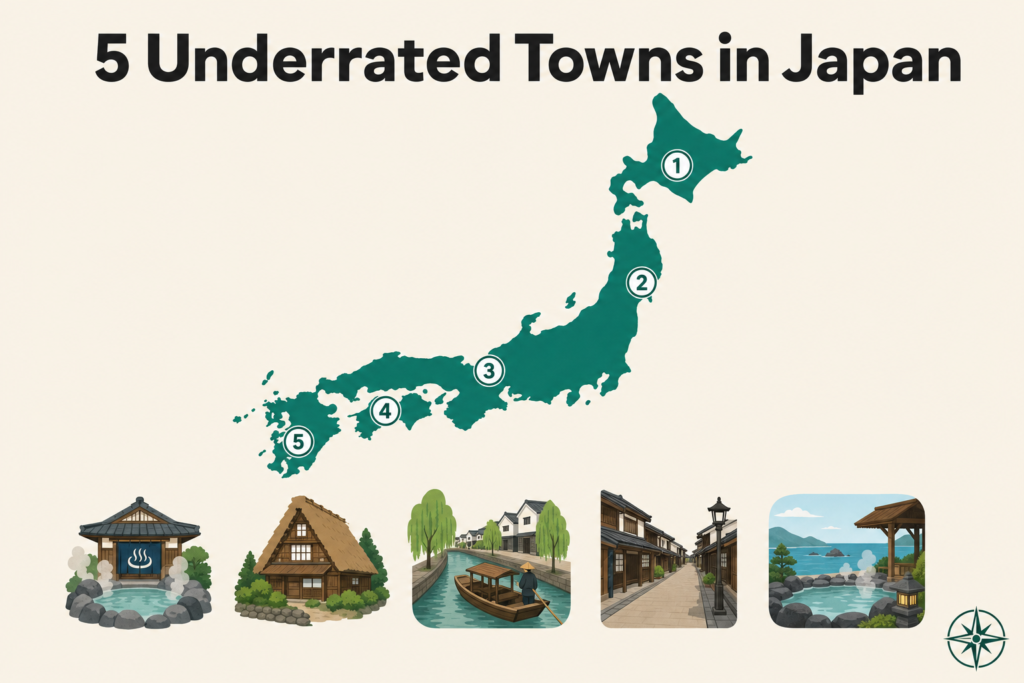
Tokyo’s neon crossings and Kyoto’s temple gardens get most of the attention when people plan a first trip to Japan — and for good reason. But some of the country’s most memorable places aren’t cities at all. They’re small towns and historic districts: a hot spring village where guests wander between bathhouses in cotton robes, a mountain post town frozen at Edo-period scale, a canal district where merchant-era storehouses still line the water. None of these five places are secret, and a couple of them are quietly becoming more popular every year — but all five still see a fraction of the visitor traffic of Japan’s headline cities, and all five reward the extra effort of getting there.
Last verified: August 27, 2026.Access details, admission information, and preservation status were checked against the official sources listed in the Sources & Verification section near the end of this guide, and this post will be revisited periodically as details change.
This post may contains affiliate links. If you make a purchase through one of these links, Tripvorra may earn a small commission at no extra cost to you. We only recommend items we believe are genuinely useful for the trip described.
How this guide was built: Tripvorra is a travel research and planning resource, and this guide was compiled through desk research rather than an in-person visit. Access details, historical background, and preservation status for each town were checked against the Japan National Tourism Organization (japan.travel), official prefectural and municipal tourism sites (including Fukushima Prefecture’s tourism portal), and other publicly available reference sources. We recommend confirming train schedules, seasonal closures, and reservation requirements directly with each town’s tourism office before you travel, since rural transit timetables change and some businesses close on specific weekdays. The “Estimated Budget” figures included for each destination below are Tripvorra’s general planning estimates for 2026, not official quoted prices — they’re meant to give you a rough sense of cost categories, and actual amounts will vary with season, exchange rates, and the specific property or ticket you book.
Quick Answers
- Kinosaki Onsen (Hyogo) — a canal-lined hot spring town where you bathhouse-hop in yukata and geta sandals.
- Ouchi-juku (Fukushima) — a mountain post town of thatched-roof houses, largely unchanged since the Edo period.
- Kurashiki Bikan Historical Quarter (Okayama) — a willow-lined merchant canal district with Japan’s first Western art museum.
- Tsumago-juku (Nagano) — a strictly preserved Nakasendo post town connected to neighboring Magome by a forest trail.
- Yunotsu Onsen (Shimane) — a hot spring town connected to a UNESCO World Heritage listing, with rare red-tiled roofs.
How We Chose These Five
We looked for places that meet three criteria: they’re reachable by ordinary domestic trains or a short bus/taxi connection rather than a private guide or rental car, they have documented cultural or historical significance from an official source (a preservation designation, a UNESCO listing, a centuries-old founding date), and they see meaningfully less foreign visitor traffic than nearby headline destinations, based on how they’re covered in JNTO’s own regional promotion material and prefectural tourism statistics. That last point comes with an honest caveat: none of these are undiscovered. Kurashiki and Tsumago-juku in particular are increasingly featured in Japan travel media, and both can get crowded around cherry blossom season and Japanese national holidays. What they still offer, even in a busier season, is a noticeably calmer experience than Tokyo, Kyoto, or Osaka on the same dates.
The 5 Underrated Places at a Glance
- Five different prefectures, spanning from northern Honshu to the Sea of Japan coast.
- Every destination is reachable using regular JR lines plus, in two cases, a short local bus or taxi transfer.
- Three are built around hot springs, one is a preserved Edo-period post town, and one is a merchant-era canal district.
- Best paired as a 1–2 night detour from a larger Kansai, Chubu, or San’in itinerary rather than a standalone trip.
- All are walkable on foot once you arrive — none require a car.
1. Kinosaki Onsen, Hyogo Prefecture
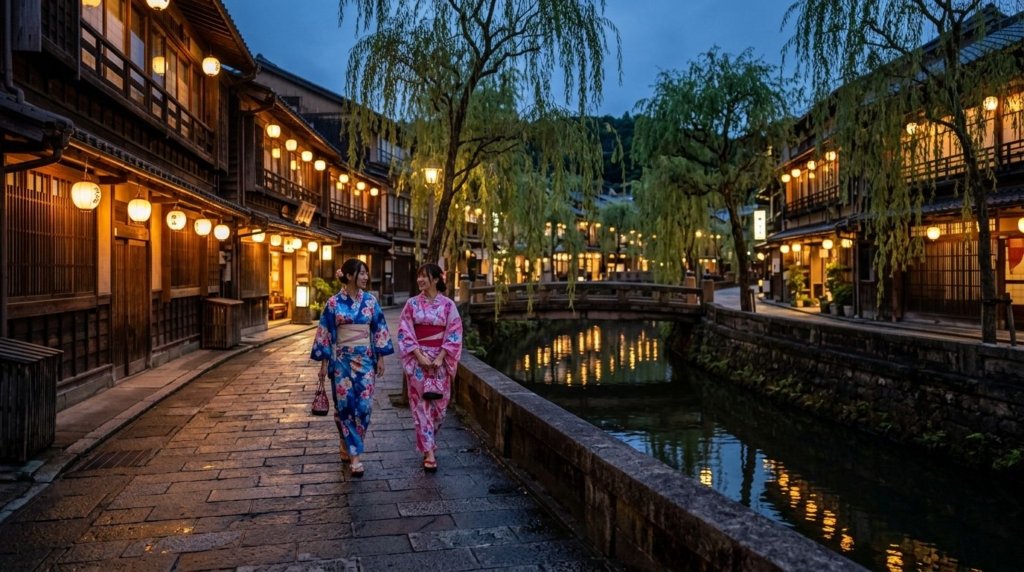
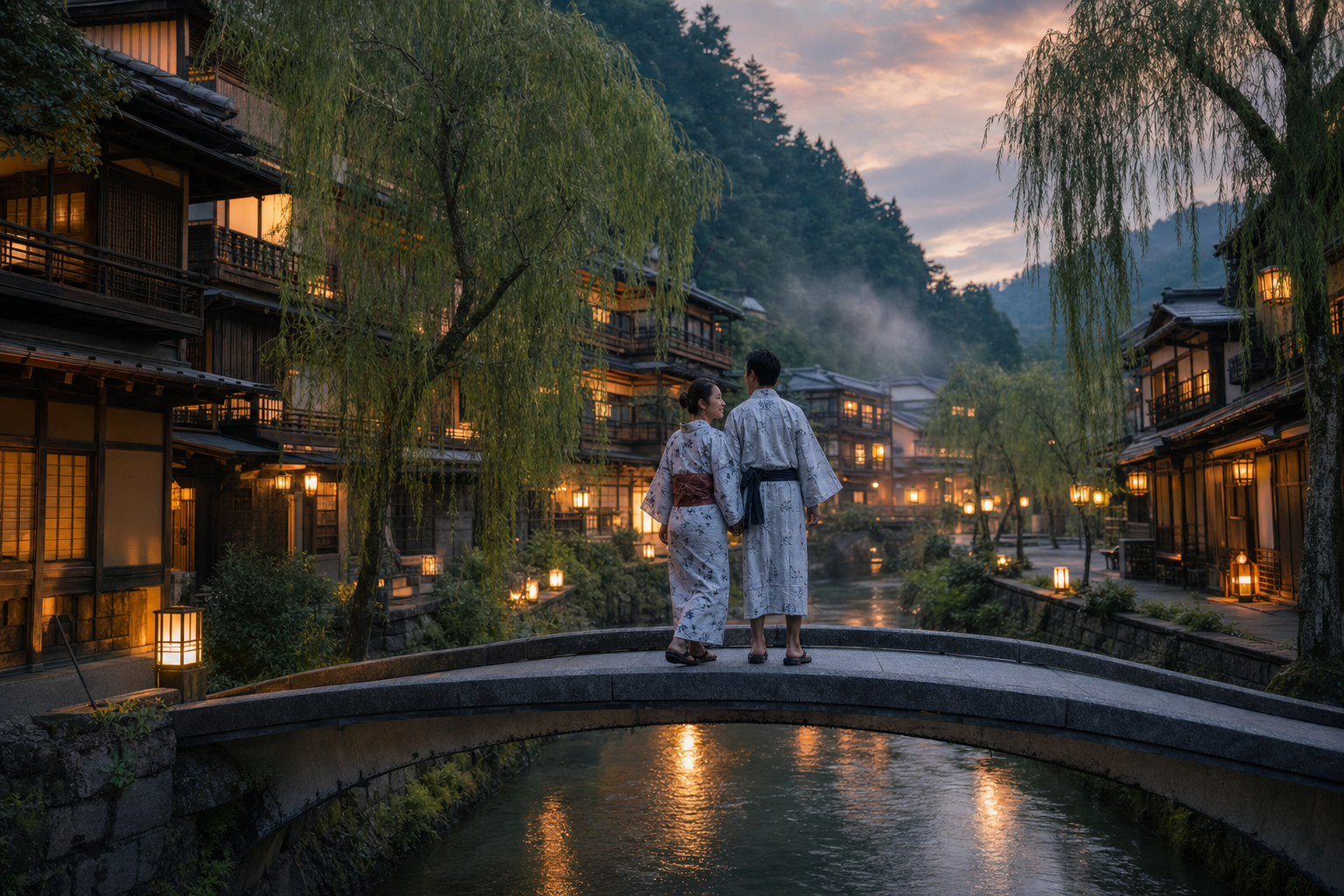
Kinosaki Onsen sits on the Sea of Japan coast of Hyogo Prefecture, built along a narrow canal lined with willow trees and wooden ryokan inns. According to local tradition, the town’s hot springs were discovered in the 8th century by the priest Douchi Shonin, and the town has grown around communal bathing ever since. What sets Kinosaki apart from most hot spring towns is the format: rather than bathing only at your own ryokan, guests are given a pass that grants access to all seven of the town’s public bathhouses (sotoyu), and the standard practice is to change into a yukata robe and geta sandals at your inn and walk between them over the course of an evening.
The atmosphere is part of the draw. Lantern-lit streets, the sound of geta on stone pavement, and small shops selling local crafts and snacks make an evening stroll feel like a genuine local ritual rather than a staged photo opportunity. Beyond the baths, Kinosaki Onsen Ropeway climbs to Onsenji Temple and an observation deck overlooking the town and coastline, and the nearby Konotori no Sato Park is a conservation center for the Oriental white stork, a species that was locally extinct in Japan and reintroduced through a decades-long breeding program.
Kinosaki has been featured in Japanese and international travel media for its onsen-hopping format, so it’s not unknown — but outside of peak weekends it remains far quieter than Japan’s larger hot spring resort towns, and most visitors are still domestic travelers rather than international tour groups.
| Nearest Hub | Kinosaki Onsen Station (JR San’in Main Line) |
| Getting There | About 2.5 hours by limited express train from Kyoto or Osaka |
| Best Season | Autumn and winter for the onsen atmosphere; snow crab season runs November–March |
| Typical Visit | One overnight stay at a ryokan, which typically includes a bathhouse pass |
| Estimated Budget (2026) | A day pass covering all seven public bathhouses runs ¥1,500 per person for non-guests (many ryokan include one at check-in). An overnight ryokan stay is the larger cost and varies widely by season and whether meals are included — a rough planning estimate only, so confirm current rates directly with your accommodation. |
Good to Know
- Many ryokan include a yukata and a communal bath pass in the room rate — check before packing bathing gear.
- Some of the seven public bathhouses close on a rotating weekly schedule, so plan which ones you want to visit in advance.
- Geta sandals take a little practice on uneven pavement; go slowly on the small arched bridges.
Is It Worth the Detour?
If you enjoy the ritual of communal bathing, yes — Kinosaki offers a version of it that’s hard to find elsewhere in Japan at this scale. The honest downside: it’s a dedicated 2.5-hour rail trip rather than a stop naturally on the way to somewhere else, and if public nude bathing isn’t something you’re comfortable with, several of the town’s signature experiences won’t apply to you.
2. Ouchi-juku, Fukushima Prefecture
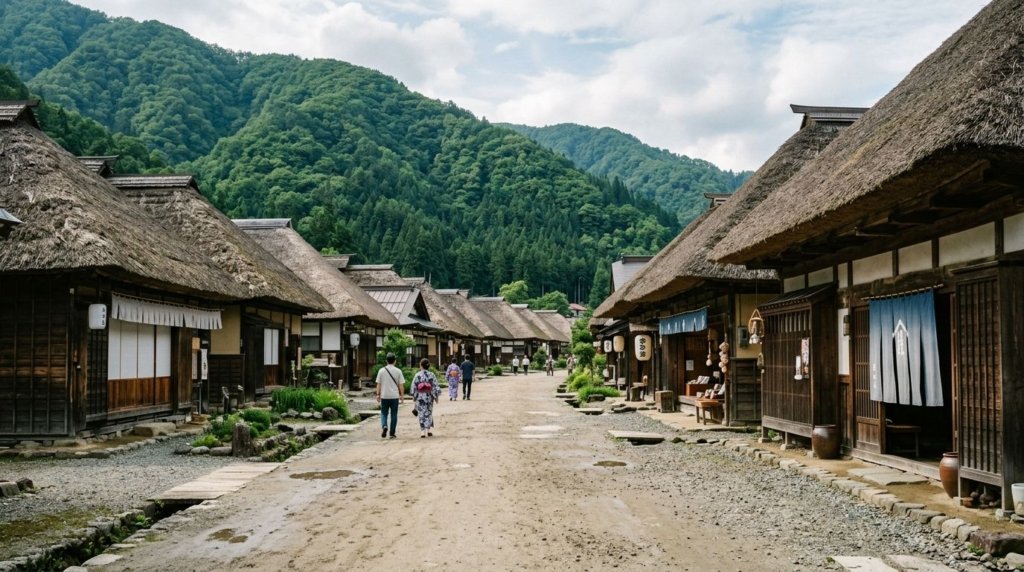
Ouchi-juku is a small mountain village in Fukushima Prefecture that once served as a post town along the Shimotsuke Kaido, a historic route connecting Aizu with Nikko. Its single unpaved main street is lined on both sides with thatched-roof wooden buildings, most of which now operate as shops, restaurants, and minshuku guesthouses. The government designated the village an Important Preservation District for Groups of Traditional Buildings in 1981, and residents maintain the thatched roofs and building facades to keep the streetscape consistent with its historic appearance.
Because the village is still lived in and worked rather than preserved as a museum piece, the experience feels closer to visiting a functioning rural community than an outdoor exhibit. A local specialty worth trying is negi-soba, a bowl of buckwheat noodles traditionally eaten using a single long green onion (negi) in place of chopsticks — you eat the noodles, then eat the onion. The village also hosts a well-known Snow Festival in February, when the thatched roofs and street are lit with candles and small snow lanterns, and a summer dance festival in July.
Ouchi-juku is genuinely rural and quiet on weekdays, though it draws sizable domestic day-trip crowds on weekends and during its festivals, so weekday mornings are the best window for a quieter visit. Some shops and restaurants close on Wednesdays, which is worth checking before you plan the trip around a meal.
| Nearest Hub | Yunokami Onsen Station, then a roughly 15-minute taxi or seasonal bus |
| Getting There | About 50 minutes by car from Aizu-Wakamatsu, or via train plus a short taxi/bus transfer |
| Best Season | February for the Snow Festival, or autumn for foliage |
| Typical Visit | A half-day trip; entry to the street itself is free |
| Estimated Budget (2026) | The street itself is free to walk, and a bowl of negi-soba is priced roughly like a typical regional soba lunch elsewhere in Japan. Budget mainly for the taxi or seasonal bus from Yunokami Onsen Station and any souvenirs or crafts — a rough planning estimate only. |
Good to Know
- Public transit to Ouchi-juku is infrequent — check the current seasonal bus timetable before relying on it rather than a taxi.
- Several restaurants close on Wednesdays; confirm ahead if negi-soba is a priority.
- Winters are cold and snowy; dress for mountain conditions even on a day trip.
Is It Worth the Detour?
For a half-day add-on to an Aizu itinerary, yes. The honest downside is scale: it’s a single street, and once you’ve walked it, eaten, and browsed the shops, there isn’t much more to fill an afternoon — so it competes directly with other worthwhile stops if your time in the region is limited.
3. Kurashiki Bikan Historical Quarter, Okayama Prefecture
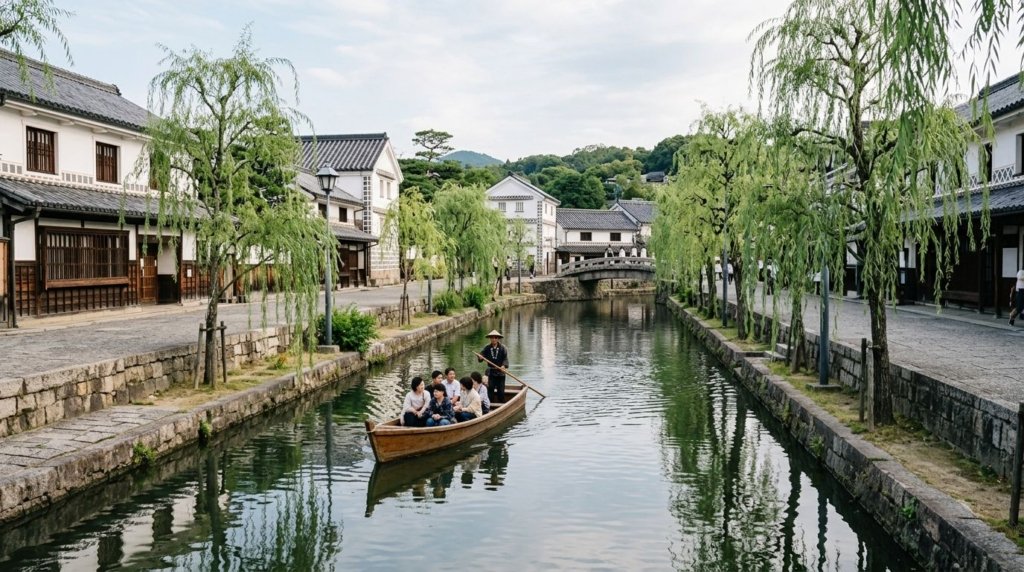
Kurashiki grew into an important rice-trading center during the Edo period, and its Bikan Historical Quarter still shows why: white-plastered, black-tiled kura storehouses line a willow-shaded canal that once moved goods through the town. Many of those storehouses have been converted into shops, cafes, and museums while keeping their original exterior, which is what gives the district its distinctive look.
The quarter’s best-known landmark is the Ohara Museum of Art, opened in 1930 by local industrialist Magosaburo Ohara and generally recognized as the first museum in Japan dedicated to Western art, with a collection that includes works by Monet, El Greco, and Gauguin alongside Japanese and Asian art in adjoining annexes. Beyond the museum, canal boat rides are a popular way to see the district from the water, and the wider Kurashiki area (particularly Kojima) has a long history in denim and indigo-dyed textiles, which shows up in several local shops.
Kurashiki is not a hidden find in the way a mountain village might be — it’s an established stop on Okayama tourism itineraries and shows up regularly in Japan travel guides, and it can be genuinely crowded on weekends and holidays. The honest reason it still belongs on this list is scale: compared with Kyoto’s canal and temple districts, Kurashiki draws a fraction of the foot traffic on an average weekday, and its canal walk rarely feels as packed.
| Nearest Hub | JR Kurashiki Station, about a 10-minute walk to the canal district |
| Getting There | A short local Sanyo Line ride from JR Okayama Station |
| Best Season | Spring and autumn for canal walks; check the Ohara Museum’s schedule for any closed days |
| Typical Visit | Half a day to a full day if you include the museum |
| Estimated Budget (2026) | Walking the canal district is free. The Ohara Museum of Art charges separate paid admission (check ohara.or.jp for current pricing), and kimono rental adds a further cost if you want that experience — a rough planning estimate only. |
Good to Know
- Weekends and holidays bring real crowds; a weekday morning is noticeably calmer.
- Kimono rental shops near the canal let you walk the district in traditional dress for a few hours.
- The Ohara Museum charges separate admission and is closed on some weekdays — check current hours before visiting.
Is It Worth the Detour?
Yes, especially if you can visit on a weekday morning. The honest downside: on weekends and holidays, the canal path can feel almost as crowded as parts of Kyoto, which undercuts the quieter experience described in this guide if a weekday visit isn’t an option for you.
4. Tsumago-juku, Nagano Prefecture
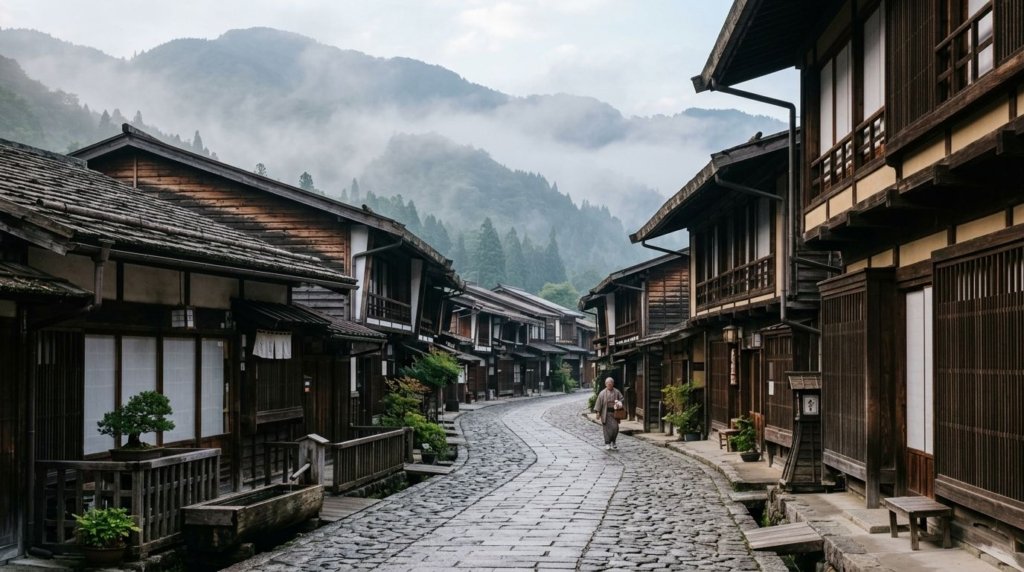
Tsumago-juku was the 42nd of 69 post towns along the Nakasendo, the inland route connecting Edo (present-day Tokyo) and Kyoto during the Edo period. By the mid-20th century the town had fallen into decline, but local residents began a restoration effort starting in 1968 and formalized it in 1971 with a preservation charter under which buildings in the town cannot be sold, rented, or altered — only maintained in their historic form. In 1976, the Japanese government designated Tsumago a Nationally Designated Architectural Preservation Site, one of the first of its kind in the country.
The result is a street with no visible power lines, vending machines, or modern signage, lined with dark wooden buildings that now operate as inns, shops, and small museums. Tsumago also connects to the neighboring post town of Magome via a well-preserved forest hiking trail of roughly two to three hours, and a shuttle bus service runs for travelers who want to walk it in one direction only.
Tsumago-juku is well documented in Japan travel guides and the Nakasendo trail has become a popular multi-day hiking route in recent years, so it’s fair to call it increasingly well known rather than obscure. Staying overnight in one of the town’s traditional inns, rather than visiting as a day-trip stop on the Magome walk, is still the more distinctive experience, since day-trip crowds thin out considerably by early evening.
| Nearest Hub | Nagiso Station (JR Chuo Main Line), then a local bus to Tsumago |
| Getting There | Reachable from Nagoya or Matsumoto via the Chuo Main Line |
| Best Season | Spring and autumn for the Magome-Tsumago trail; check winter trail conditions before hiking |
| Typical Visit | A half-day stop, or an overnight plus the Magome trail as a full day |
| Estimated Budget (2026) | The preserved street and the Magome-Tsumago trail are both free to walk; the optional luggage-forwarding service between the two towns costs ¥500 per item. An overnight inn stay is the main cost and varies by property — a rough planning estimate only. |
Good to Know
- The Magome-Tsumago trail takes roughly two to three hours on foot; the shuttle bus covers the return leg for one-way hikers.
- Because building alterations are restricted by the 1971 charter, don’t expect modern conveniences like ATMs on the main street — carry cash.
- Bear bells are provided at trailheads for the forest section of the walk, a normal precaution in this part of rural Japan.
Is It Worth the Detour?
Yes, particularly paired with the Magome hike or an overnight inn stay. The honest downside: it’s a preserved historic streetscape rather than a full town center, with a limited range of restaurants and shops, so travelers hoping for more to do beyond walking and photography may find an hour or two is enough.
5. Yunotsu Onsen, Shimane Prefecture
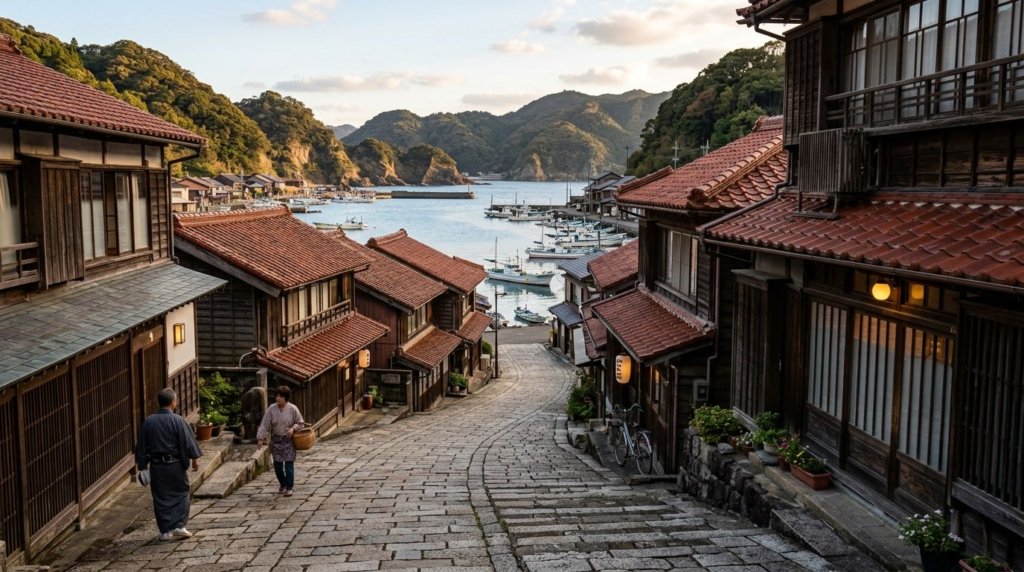
Yunotsu Onsen is a small coastal hot spring village in Shimane Prefecture with a hot spring said to be roughly 1,300 years old. Its historical importance goes beyond bathing: Yunotsu served as a shipping port for silver mined at the nearby Iwami Ginzan Silver Mine, and in 2007 it was inscribed as part of the UNESCO World Heritage listing for Iwami Ginzan and Its Cultural Landscape. Japan’s national tourism board describes it as the only World Heritage onsen in Japan, and that’s a fair general description — though it’s worth noting Yunotsu wasn’t inscribed as a stand-alone heritage site in its own right, but as a component of the wider mine landscape it once served as a port for. See the Sources & Verification section below for the exact wording.
The village’s narrow lanes are lined with wooden buildings topped with red clay-tiled roofs, a roofing style that’s uncommon elsewhere in Japan and gives Yunotsu a distinct visual character. The town has two public bathhouses, Yakushiyu and Motoyu, both fed by the same historic spring, and the old transport trails once used to move silver to the port now serve as hiking routes connecting the town to the wider Iwami Ginzan heritage area.
Yunotsu sees a fraction of the visitors that go to the Iwami Ginzan mine site itself, and even less than Japan’s larger, better-known onsen resorts. Its remoteness on the San’in coast, rather than any lack of significance, is the main reason it stays quiet — which also means transit options are limited and require more planning than the other towns on this list.
| Nearest Hub | Yunotsu Station (JR San’in Line) |
| Getting There | About 40 minutes from Izumo City or roughly an hour from Matsue by train |
| Best Season | Year-round for bathing; spring and autumn for the connecting Iwami Ginzan trails |
| Typical Visit | An overnight stay, or a day trip combined with the Iwami Ginzan mine site |
| Estimated Budget (2026) | The two public bathhouses, Yakushiyu and Motoyu, each charge their own separate admission. Budget mainly for the San’in Line fare to reach Yunotsu and, if you continue on to the Iwami Ginzan mine site, a separate entry fee there too — a rough planning estimate only. |
Good to Know
- San’in Line trains run infrequently — check the timetable in both directions before you arrive.
- The two public bathhouses have separate admission and hours; confirm which is open on your visit day.
- Yunotsu pairs naturally with a stop at the Iwami Ginzan Silver Mine site, part of the same UNESCO listing.
Is It Worth the Detour?
Yes, if a quiet, UNESCO-linked hot spring town appeals to you and you’re comfortable planning around limited transit. The honest downside: Yunotsu is the most remote and hardest to reach of the five places in this guide, with infrequent San’in Line service, so it isn’t a good fit for a spontaneous add-on.
General Tips for Visiting
These five places are spread across five different prefectures, so trying to see all of them on one trip isn’t realistic. A more workable approach is to pair one or two with a larger regional itinerary you’re already planning: Kinosaki Onsen fits naturally with a Kansai trip based in Kyoto or Osaka, Kurashiki pairs well with a Hiroshima or Okayama routing, Tsumago-juku suits a Nagoya-to-Matsumoto leg, and Yunotsu Onsen works best combined with a San’in coast trip through Izumo or Matsue. Ouchi-juku is the most logical add-on if you’re already spending time in the Aizu region of Fukushima.
Rural train and bus schedules in Japan can be far less frequent than what you’ll find in major cities, sometimes running just once or twice an hour, or only a handful of times a day on the smallest connecting routes. Before you build a tight schedule around one of these towns, check the current timetable for your specific travel date rather than assuming city-level frequency, and build in extra time for the connecting bus or taxi leg.
Traveling Responsibly at These Spots
Ouchi-juku and Tsumago-juku are both places where people still live and work inside the historic streetscape, not open-air museums. Stick to public areas, be mindful about photographing private homes and residents, and support the local economy by eating or shopping at the family-run businesses along the main street rather than treating the town purely as a photo backdrop. In Tsumago specifically, the preservation charter that keeps the town intact depends on continued community buy-in, so respecting posted guidelines around where you can walk and what you can photograph helps sustain that arrangement.
At Kinosaki and Yunotsu, basic onsen etiquette applies: wash thoroughly before entering a communal bath, keep long hair tied up and out of the water, and be aware that most public bathhouses in Japan still restrict entry for visible tattoos, so check each bathhouse’s policy in advance if this applies to you. At Kurashiki, paying admission to the Ohara Museum and other ticketed sites, rather than only walking the free canal path, is a direct way to support the preservation of the district’s buildings.
Frequently Asked Questions
They’re better described as less famous than hidden. All five have documented historical or cultural significance recognized by official sources, and Kurashiki and Tsumago-juku in particular are increasingly covered in travel media. What they consistently offer is a quieter experience than Tokyo, Kyoto, or Osaka on the same dates, not total obscurity.
Can I combine more than one of these towns in a single trip?
It’s possible if they’re on the same regional route, but three of the five (Kinosaki, Kurashiki, Yunotsu) sit in different directions from central Japan, so combining more than two in one trip usually means significant extra travel time. Pairing one town with a regional itinerary you’re already doing tends to work better than trying to chain several together.
Do I need to book accommodations in advance?
For an overnight stay, especially at a ryokan in Kinosaki Onsen or an inn in Tsumago-juku, booking ahead is strongly recommended, since these towns have a limited number of rooms compared with major cities. Day-trip visits to Ouchi-juku, Kurashiki, or Yunotsu don’t require reservations, but confirming opening days for specific restaurants or bathhouses in advance is worth the extra step.
Which of these is best for a first trip to rural Japan?
Kurashiki and Kinosaki Onsen are the most straightforward for a first-timer, since both have frequent train connections and a well-marked walkable core. Ouchi-juku, Tsumago-juku, and Yunotsu Onsen involve more planning around limited local transit, so they suit travelers who are comfortable double-checking rural timetables.
Will these towns stay this quiet?
Not necessarily. Tourism to smaller Japanese towns has been growing as travelers look for alternatives to crowded major cities, and both Kurashiki and the Nakasendo trail through Tsumago-juku have seen rising visibility in recent years. Visiting on a weekday, outside major Japanese holidays, is the most reliable way to see any of these five towns at their quietest right now.
Research & Sources:
This guide was compiled through desk research, not an in-person visit (see the disclosure near the top of this post). The facts, historical details, and preservation designations above were checked against the following official and primary sources:
- Kinosaki Onsen: Visit Kinosaki, official tourism site — history; Visit Kinosaki — the seven public bathhouses and day-pass pricing; Japan National Tourism Organization (JNTO) — Kinosaki Onsen.
- Ouchi-juku: Shimogo Town, official site — Ouchi-juku; Japan Tourism Agency — Ouchi-juku listing.
- Kurashiki Bikan Historical Quarter: Okayama Prefecture, official tourism site — Ohara Museum of Art; Ohara Museum of Art, official site; JNTO — Ohara Museum of Art.
- Tsumago-juku: Nagiso Tourism Association, official site — Tsumago-juku conservation area; Kiso Ontake Tourism Office, official site — the Magome-Tsumago trail; Japan Agency for Cultural Affairs — list of Important Preservation Districts for Groups of Traditional Buildings.
- Yunotsu Onsen: Shimane Prefecture, official tourism site — Yunotsu Onsen; Shimane Prefecture, official tourism site — Iwami Ginzan Silver Mine World Heritage Site; JNTO — Yunotsu; Shimane Prefectural Government — official English-language record of the Iwami Ginzan World Heritage listing.
On the Yunotsu UNESCO claim specifically: Yunotsu was not inscribed on its own as a stand-alone World Heritage hot spring town. It was listed in 2007 as part of the wider Iwami Ginzan Silver Mine and Its Cultural Landscape World Heritage Site, reflecting its historic role as the mine’s shipping port. JNTO’s own site describes it as “the only World Heritage onsen in Japan,” which is accurate as a general description, but the underlying UNESCO designation applies to the mine and its associated landscape rather than to the onsen town as an independent listing of its own.
If you spot an error or an outdated detail in any of the facts above, we’d genuinely like to know — tourism information like train access and admission policies changes over time, and we’d rather correct this guide than leave it wrong.
Final Thoughts
None of these five places require a private guide, an unusual visa, or a rental car to reach — just a little extra planning around regional trains and rural bus schedules. What you get in return is a side of Japan that’s easy to miss on a Tokyo-Kyoto-Osaka itinerary: canal districts, post towns, and hot spring villages that have kept their historic character largely intact, some by deliberate preservation charter and some simply by staying off the main tourist routes.
This post may contains affiliate links. If you make a purchase through one of these links, Tripvorra may earn a small commission at no extra cost to you.
For more Japan travel inspiration, see our guides to 3 Hidden Gems in Japan Beyond Tokyo and Kyoto, hidden gems in Europe, and other underrated travel destinations around the world.