
The ten places below each have a specific reason to go, from a UNESCO-listed national park to a museum of banned Soviet art, and each sits outside the usual itinerary for its region. Some are still very quiet. Others, such as Raja Ampat, the Ha Giang Loop and Salalah in monsoon season, now draw large numbers of visitors, and we say so where it applies.
Tripvorra researched this guide using official tourism, government and park sources linked throughout.
Last verified: October 2026.
How We Chose These Destinations
Each place on this list had to meet three conditions. It has a clearly documented draw, such as a World Heritage listing, a protected area or a significant collection. It sits off the most common routes in its own country or region. And an ordinary traveler can reach it with scheduled flights, standard visas and some extra planning. We did not run our own statistical analysis of visitor numbers; where a tourism office or government has published figures, we quote them. For country-level arrival data, the UN Tourism statistics database is the main international reference.
The 10 Destinations at a Glance
- Song-Kul Lake, Kyrgyzstan: summer yurt camps on a lake at about 3,000 m
- Jebel Akhdar & Salalah, Oman: mountain terraces and a coast that turns green in the monsoon
- Timor-Leste: reef diving off Atauro Island, two to three hours by ferry from Dili
- Guyana: Kaieteur Falls and the rainforest interior
- Nyungwe Forest, Rwanda: chimpanzee tracking and a canopy walkway in a World Heritage forest
- Raja Ampat, Indonesia: some of the richest reefs on Earth, with rising visitor numbers and fees
- Ha Giang Loop, Vietnam: karst mountain roads along the Chinese border
- Salento & the Coffee Triangle, Colombia: wax palms and working coffee farms
- Gros Morne National Park, Newfoundland, Canada: exposed mantle rock and a landlocked fjord
- Nukus & Karakalpakstan, Uzbekistan: the Savitsky art collection and the dried Aral Sea

1. Song-Kul Lake, Kyrgyzstan
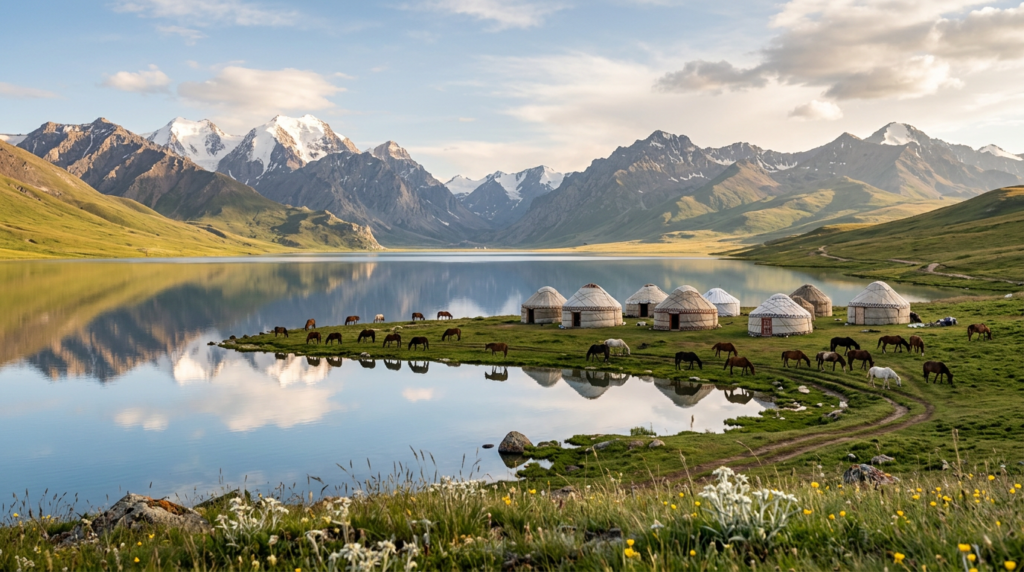
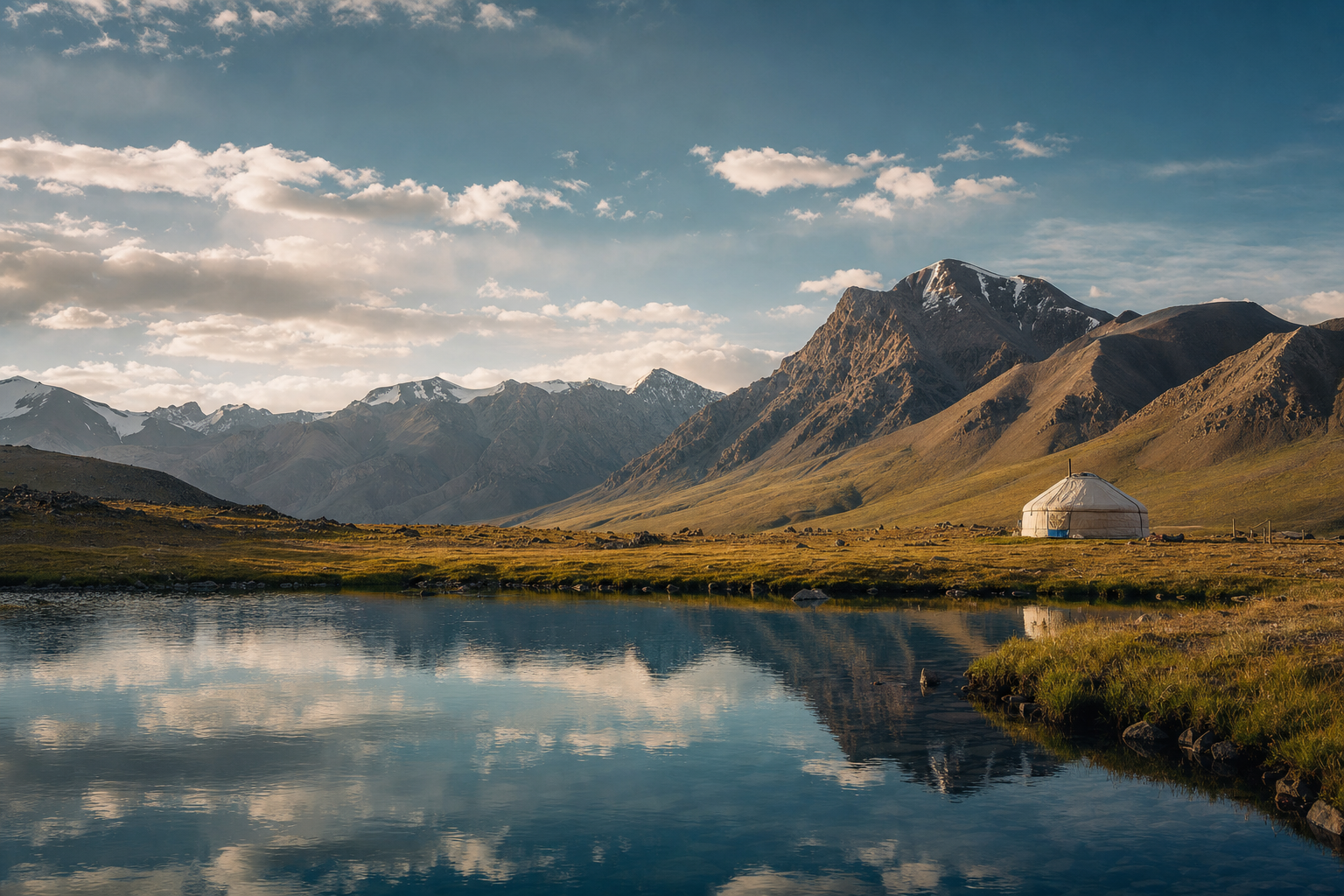
Song-Kul (also spelled Son-Kul or Song-Kol) lies at about 3,016 m in the Tian Shan and covers roughly 270 square kilometres, which makes it the largest freshwater lake in Kyrgyzstan. Part of the lake and its shore has been inside the Karatal-Japyryk Nature Reserve since 1998, and the wetland was listed under the Ramsar Convention in 2011, according to the lake’s Wikipedia entry. There are no permanent villages on the shore. Herding families bring livestock up to the summer pastures and run yurt camps for visitors while the grass lasts.
Most people come for a night or two in a yurt, short horse rides along the shore, and the night sky. A longer option is a two- or three-day horse trek over the passes from the Kochkor side, which the national community tourism network, CBT Kyrgyzstan, sells alongside jeep transfers and family-run camps. The ice thaws from mid to late April and is usually gone by late May, but camps only open once the access passes are clear of snow.
- Getting there: fly to Bishkek (Manas International), travel by shared taxi or minibus to Kochkor, then continue by 4×4 on unpaved tracks or on horseback. No public transport runs to the lake.
- Best time: roughly mid-June to mid-September. Early June can bring mud or closed camps, and nights below freezing are normal by mid-September.
- Costs (2026, third-party quotes): the travel guide Visit Kyrgyzstan quoted simple family yurt camps at about US$15 to $25 per person per night with dinner and breakfast in July 2026, while commercial camps such as Ak-Sai list double-occupancy rates from US$65 a night with breakfast. CBT does not publish prices online, so ask its Kochkor office for current rates. Jeep transfers from Kochkor are priced per vehicle, so sharing lowers the cost.
- Entry: since 31 December 2025, citizens of 55 countries, including the UK, US, Canada, Australia and most EU states, can stay visa-free for 30 days in any 60-day period, down from 60 days, according to UK government travel advice.
- Good to know: avoid landing in Bishkek and crossing the high passes to the lake on the same day; a night in Kochkor helps with the altitude. Pack warm layers even in July.
2. Jebel Akhdar & Salalah, Oman
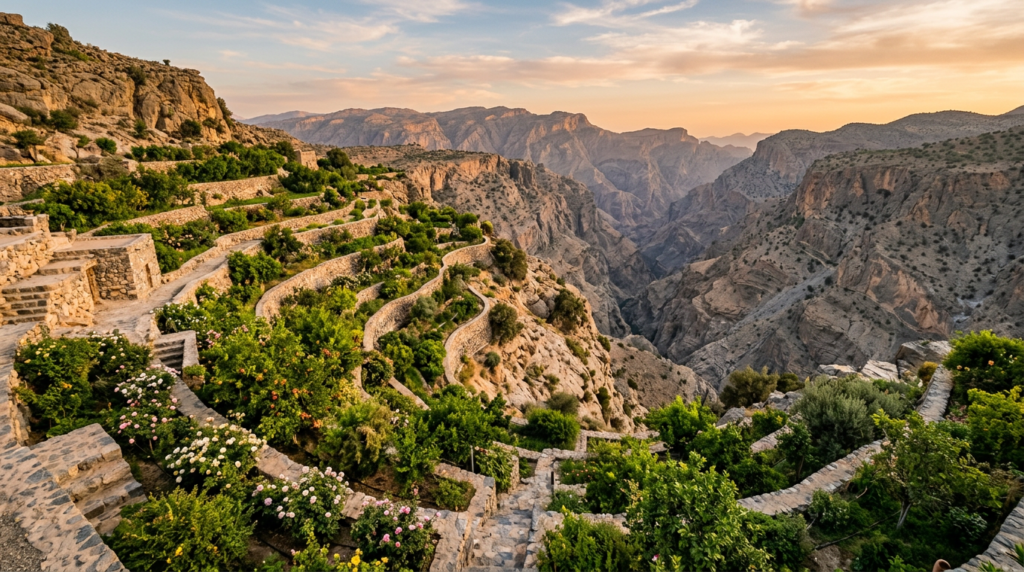
These two areas sit at opposite ends of Oman and work in opposite seasons. Jebel Akhdar, the “Green Mountain”, is a plateau in the Hajar range at around 2,000 m, roughly 2.5 hours by road from Muscat, depending on traffic. Its terraced villages grow pomegranates, walnuts and the damask roses that are distilled into rose water in spring. Summers are mild, and winter nights can drop low enough for frost or, occasionally, snow. Walks between the terraced villages above the Saiq Plateau are the main activity, along with viewpoints over the wadis below.
Salalah, in the southern Dhofar region, is known for the khareef, the southwest monsoon that wraps the coastal mountains in mist and drizzle from late June to 21 September and turns the hills green. It is not a quiet secret during those months. Oman’s statistics centre counted 1,070,738 khareef visitors in 2025, as reported by the Oman Observer. If you want the beaches, frankincense sites and old town of Salalah without the crowds, go between October and April instead, when the hills are brown but the weather is dry and warm.
- Getting there: fly to Muscat. For Jebel Akhdar, drive via Nizwa to Birkat al Mawz, where a police checkpoint lets only 4×4 vehicles continue up the paved mountain road. Salalah has its own airport with domestic flights from Muscat on Oman Air and SalamAir.
- Best time: October to April for Jebel Akhdar and most of Oman, with late March to April or May for the rose harvest. Late June to late September for Salalah’s green season.
- Entry: Oman’s Ministry of Foreign Affairs lists more than 100 nationalities, including UK, US and EU citizens, who can enter visa-free for up to 14 days. You need a passport valid for six months, a return ticket, a confirmed hotel booking, health insurance and proof of funds. Longer stays need an e-visa from the Royal Oman Police.
- Good to know: rent a 4×4 if Jebel Akhdar is on the plan, since a standard car will be turned back at the checkpoint (as described by the Oman specialist oman.de). Wadis can flood suddenly after heavy rain, mostly between October and March, so check the forecast before hiking in them.
3. Timor-Leste
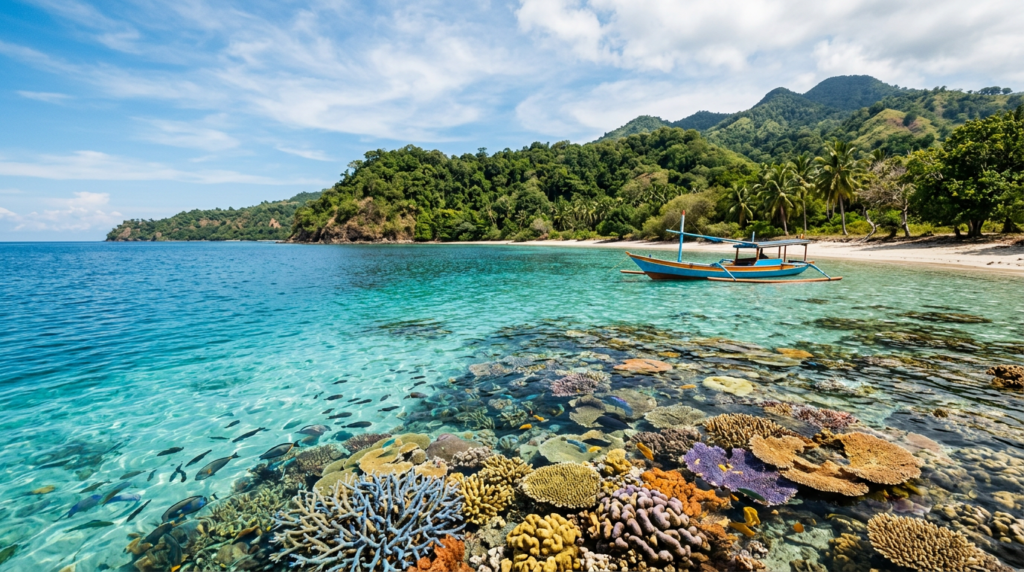
Timor-Leste became independent in 2002 and joined ASEAN as its eleventh member in October 2025, yet its tourism sector is still small. The main draw for most visitors is the sea. In a 2016 survey by Conservation International’s Rapid Assessment Program, reefs around Atauro Island averaged 253 reef fish species per site, with 315 at the richest site, which researchers described as the highest average recorded at the time, Mongabay reported. Atauro has a handful of eco-lodges and dive operators, and snorkelling starts right off the beach in several spots.
On the mainland, Jaco Island at the eastern tip near Tutuala is reached by a short boat ride from Valu Beach. Blue, sperm and pilot whales pass through the straits off the north coast between October and December, according to the official tourism portal, and boat trips leave from Dili.
- Getting there: flights reach Dili from Darwin, Bali and Kuala Lumpur, with weekly services from Singapore and Xiamen, according to the government’s official tourism portal (checked August 2026). The state operator APORTIL runs public ferries to Atauro six days a week, taking about 2.25 to 3 hours for US$4 to $5 one way, with tickets sold for cash at the port on the day, per the portal’s ferry timetable. Private fast boats are quicker and more expensive.
- Best time: May to November, the dry season. The wet season brings warm water for diving but can make rural roads impassable.
- Entry: Schengen-area citizens and several ASEAN nationalities are visa-exempt. Most others, including UK and US citizens, buy a 30-day visa on arrival at Dili airport or seaport for US$30, payable in cash only, per UK government advice.
- Good to know: the currency is the US dollar, and ATMs are limited outside Dili and the main towns. Carry enough cash for Atauro and the east, and bring small notes.
4. Guyana
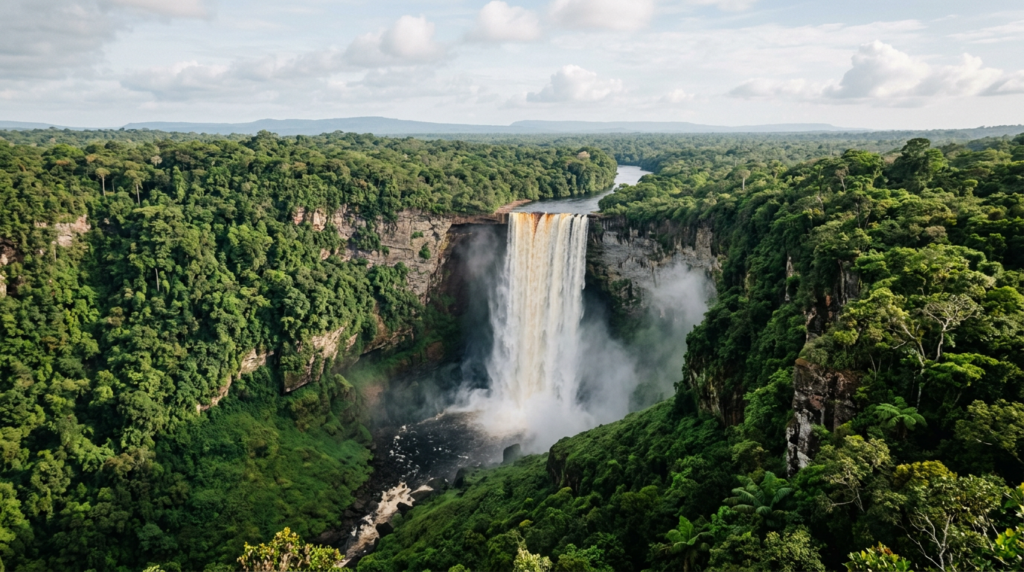
Guyana is the only English-speaking country in South America, and most of it is forest and savannah with few roads. Its best-known sight is Kaieteur Falls on the Potaro River, where water drops about 226 m (741 ft) off a sandstone plateau in a single fall, according to Britannica. The surrounding Kaieteur National Park was created in 1930, Britannica notes, making it one of the oldest protected areas in the region. Short guided walks from the airstrip lead to several viewpoints at the lip of the gorge.
Beyond Kaieteur, travelers head to the Rupununi savannah in the southwest for community-run lodges, birding and giant river otters, or to the Iwokrama forest reserve for guided wildlife walks. Tourism is growing quickly: the tourism minister said in December 2025 that arrivals for January to October had already passed the 2024 total, as reported by the Department of Public Information.
- Getting there: fly to Georgetown (Cheddi Jagan International). Kaieteur is usually visited on a day trip in a small plane from Georgetown, often combined with Orinduik Falls. No road reaches the falls.
- Best time: the coast has two wet seasons, roughly December to February and May to June. March to April and September to November are usually the easiest months for the interior.
- Entry: UK citizens do not need a visa and are normally given 30 days. A yellow fever certificate is required if you arrive from a country with transmission risk. Other nationalities should check with a Guyanese embassy.
- Good to know: small-plane trips are often delayed or cancelled by cloud, so leave a spare day. In Georgetown, UK advice warns of significant street crime and recommends pre-booked taxis and avoiding airport transfers late at night.
5. Nyungwe Forest, Rwanda
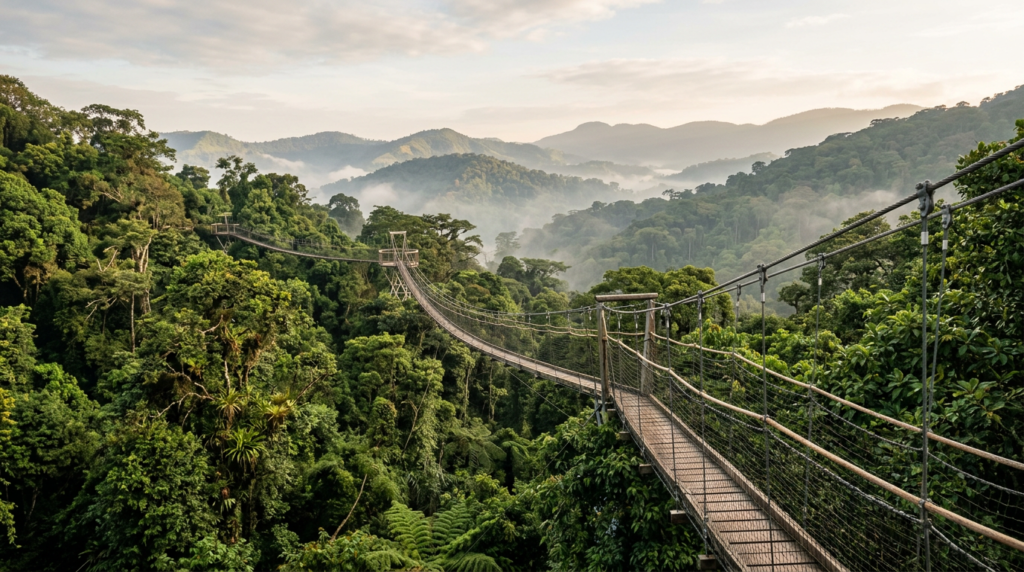
Most visitors to Rwanda go to Volcanoes National Park for mountain gorillas. Nyungwe, in the southwest, protects the country’s largest remaining montane rainforest and was inscribed as a UNESCO World Heritage site in 2023. UNESCO notes that roughly a fifth of Africa’s primate species occur in the park, including eastern chimpanzees, along with 317 recorded bird species and many plants and amphibians found only in the Albertine Rift.
The two signature activities are chimpanzee tracking, which starts before dawn and can involve steep, muddy hiking, and the canopy walkway at Uwinka, a series of suspension bridges about 160 m long and up to around 70 m above a ravine, as described by KT Press. It is not Africa’s only canopy walkway, as Ghana’s Kakum National Park has had one since 1995, but it is the one most Rwanda itineraries can include. Guided trails, colobus and other monkey tracking, and visits to tea estates near Gisakura fill a second or third day.
- Getting there: fly to Kigali, then drive about 225 km southwest, which takes roughly 5 to 6 hours; check a route planner. RwandAir resumed flights from Kigali to Kamembe on 23 March 2026, ATC News reported; check the airline for the current schedule.
- Best time: the drier months, June to September and mid-December to February, which the park treats as high season. Expect rain at any time of year.
- Fees (2025 to 2026 price list): for international visitors, the park’s official activity prices are US$150 for chimpanzee tracking, US$40 for the canopy walkway, and a park entry fee of US$100 for one night, US$150 for two and US$200 for three.
- Entry: every nationality can get a visa on arrival or apply online through Irembo. Citizens of Commonwealth, African Union and Francophonie countries receive a free 30-day visa; most others pay up to US$50 for single entry, according to Rwanda’s immigration directorate.
- Good to know: Kamembe airport lies in the part of Rusizi District within 10 km of the Democratic Republic of the Congo border, an area where the UK government advises against all but essential travel. That can affect insurance, so check your policy or take the road from Kigali. Bring rain gear and boots with grip for the chimpanzee trek.
6. Raja Ampat, Indonesia
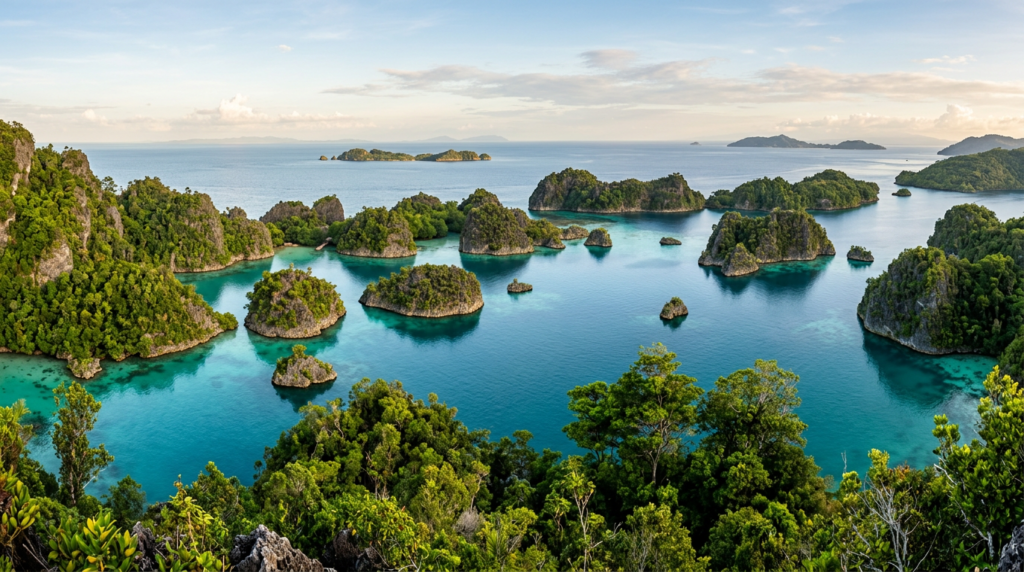
Raja Ampat is a group of islands off the western tip of New Guinea, in Indonesia’s Southwest Papua province, and sits at the heart of the Coral Triangle. Divers and snorkellers come for manta rays, soft corals and dense fish life; on land, the karst lagoons of Wayag and Piaynemo are the classic viewpoints. It is no longer obscure. Regional figures compiled by Katadata show around 25,000 foreign visitors in 2024, roughly ten times the 2020 level. That is still small next to Bali, and the islands are spread out enough that most sites never feel crowded.
In June 2025 the Indonesian government revoked four of five nickel mining permits in the archipelago after protests over damage to reefs and forests, leaving one mine operating on Gag Island, about 42 km west of Piaynemo, as Mining.com reported. Accommodation ranges from village homestays on Kri, Gam and Arborek to dive resorts and liveaboard boats.
- Getting there: fly to Sorong via Jakarta, Makassar or another domestic hub, then take the public ferry to Waisai on Waigeo island, where resorts and homestays arrange onward boats.
- Best time: roughly late September to April, when seas are calmer. May to August brings stronger winds, and many liveaboards stop operating in July to September.
- Fees (2026): in January 2026 the regency raised its tourism levy for international visitors to IDR 1,000,000, on top of the marine park entry tag, bringing the total to about IDR 1.7 million at the time, TTG Asia reported. Operators including Ocean Earth Travels report that the tag itself rose to IDR 1,000,000 in August 2026. The marine park authority’s online tag page showed no price when checked in October 2026, so budget about IDR 2 million in cash and confirm the amount before you go. The tag is valid for a calendar year and can be bought online, in Sorong or in Waisai, per the Bird’s Head Seascape conservation partnership.
- Entry: many nationalities can get Indonesia’s visa on arrival or e-VOA; check Indonesia’s official e-visa site for your passport. Operators also advise registering online in the regency’s SIPARI system before arrival.
- Good to know: boat safety standards vary. UK advice is to check for life jackets, avoid travel after dark, and ask dive operators whether oxygen is on board and how they would reach a recompression chamber, since Raja Ampat is far from major hospitals.
7. Ha Giang Loop, Vietnam
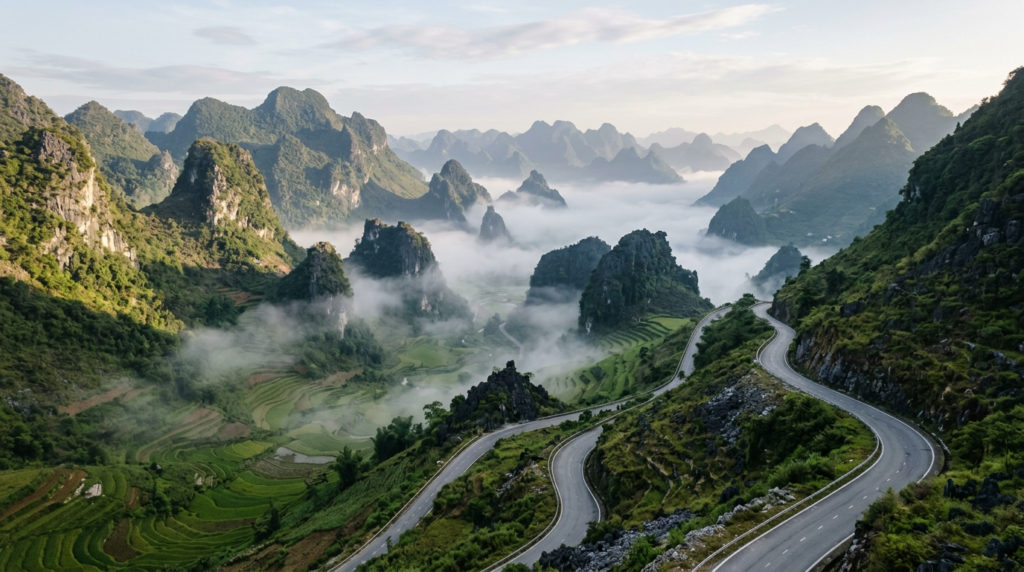
The Ha Giang Loop is a three- to four-day road circuit through Vietnam’s far north, along the border with China. Much of it crosses the Dong Van Karst Plateau, recognised as a UNESCO Global Geopark in 2013, a limestone landscape of about 2,530 square kilometres home to Hmong, Lo Lo, Tay, Dao and Giay communities, as VietNamNet describes. Highlights include the Ma Pi Leng Pass above the Nho Que River, Lung Cu flagpole near the northern tip of the country, and weekly highland markets such as those in Dong Van and Meo Vac.
Two updates matter for 2026. First, Ha Giang province was merged into Tuyen Quang province on 1 July 2025, so official notices now come from Tuyen Quang. Second, the loop is busy: more than 525,000 visitors from over 200 countries and territories came in 2025, according to Dan Tri. After a 19-year-old British traveler died on an “easy rider” tour in April 2026, provincial tourism authorities tightened the rules: only licensed travel companies may organise or sell loop tours, operators must hold insurance records and written contracts naming drivers, vehicles and routes, and riders must be given helmets and protective gear, Tuoi Tre News reported.
Road safety on the loop
Riding the loop: licence and insurance
- Licence: to ride a motorbike legally in Vietnam, UK travel advice says you need the 1968-convention International Driving Permit together with your home licence. Many visitors do not hold a motorcycle licence at home, which means they cannot ride legally.
- Insurance: third-party insurance is a legal requirement, and travel insurers often refuse motorbike claims from riders without a valid licence. Read your policy wording before you go.
- Safer option: unless you are an experienced, properly licensed rider, travel as a passenger with a driver (“easy rider”) or by car, booked through a licensed tour company that can show you its contract and insurance. Wear a good helmet; riding without one is illegal for drivers and passengers.
- Getting there: sleeper buses and limousine vans run daily from Hanoi to Ha Giang town, usually overnight or in roughly six to seven hours by day; times vary by operator and road conditions.
- Best time: September to November for clear skies and ripening rice terraces, and March to May for mild weather. Summer rain can cause landslides on the passes.
- Entry and permits: Vietnam issues 90-day e-visas to all nationalities through the official e-visa portal (US$25 single entry), and some nationalities are visa-exempt for shorter stays. Tour operators such as Frontier Travel Vietnam report (June 2026) that foreigners still need a border-area permit for districts such as Dong Van, costing roughly US$25 when arranged locally. We could not find an official online notice confirming this, so ask your guesthouse or tour company in Ha Giang town, which usually arranges it. Carry your passport on the loop.
8. Salento & the Coffee Triangle, Colombia
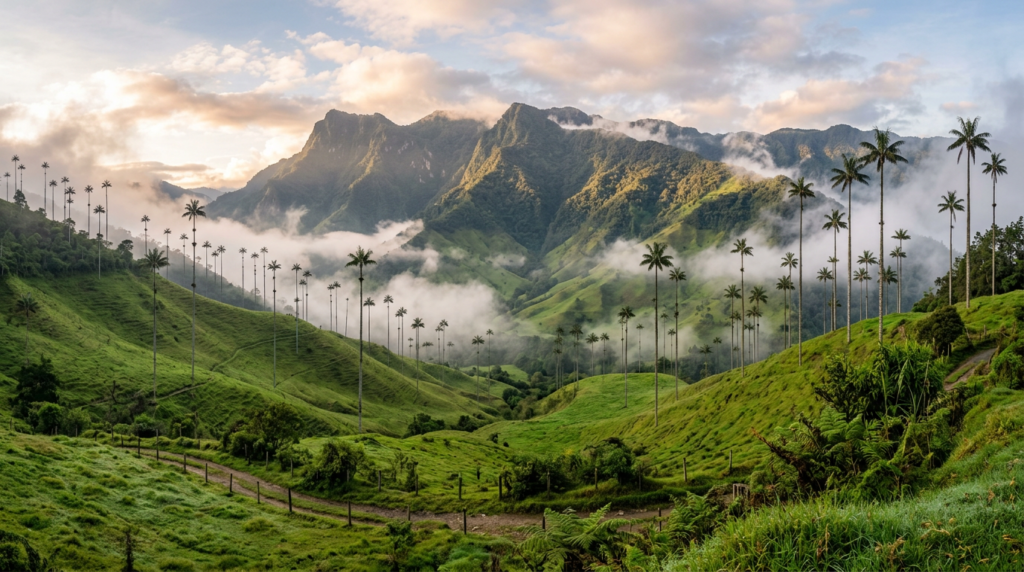
Colombia’s coffee region covers parts of Caldas, Quindío, Risaralda and Valle del Cauca, and UNESCO listed it in 2011 as the Coffee Cultural Landscape of Colombia, recognising a century of small-farm coffee growing and towns built with traditional bahareque walls. Salento, a small town of painted balconies in Quindío, is the usual base. Most international arrivals still focus on Cartagena, Medellín and Bogotá, although Salento itself is now a fixture on the backpacker route and gets busy at weekends.
The big draw is the Cocora Valley, a short jeep ride from town, where Quindío wax palms, Colombia’s national tree, can grow up to 60 m tall, according to the national tourism board, Colombia Travel. A loop hike of several hours climbs through cloud forest and back down among the palms. Coffee farm tours around Salento and Filandia explain the process from picking to roasting, and Filandia is a quieter alternative base.
- Getting there: fly to Pereira or Armenia, both with domestic connections from Bogotá and Medellín, then take a bus or taxi to Salento. Jeeps leave from Salento’s main square for the Cocora Valley.
- Best time: December to March and July to August are usually the drier months. Mornings are clearest in any season.
- Costs: the Cocora trails cross private land, and farms collect separate entry fees in cash pesos. Amounts change often, so carry small notes rather than relying on cards.
- Entry: UK and many other visitors can stay up to 90 days without a visa. The online Check-MIG form, filled in between 72 hours and one hour before travel, speeds up immigration but is not mandatory, per UK government advice.
- Good to know: start the Cocora hike early on a weekday. Cloud usually builds by early afternoon, and weekend crowds from nearby cities fill the jeeps and trails.
9. Gros Morne National Park, Newfoundland, Canada
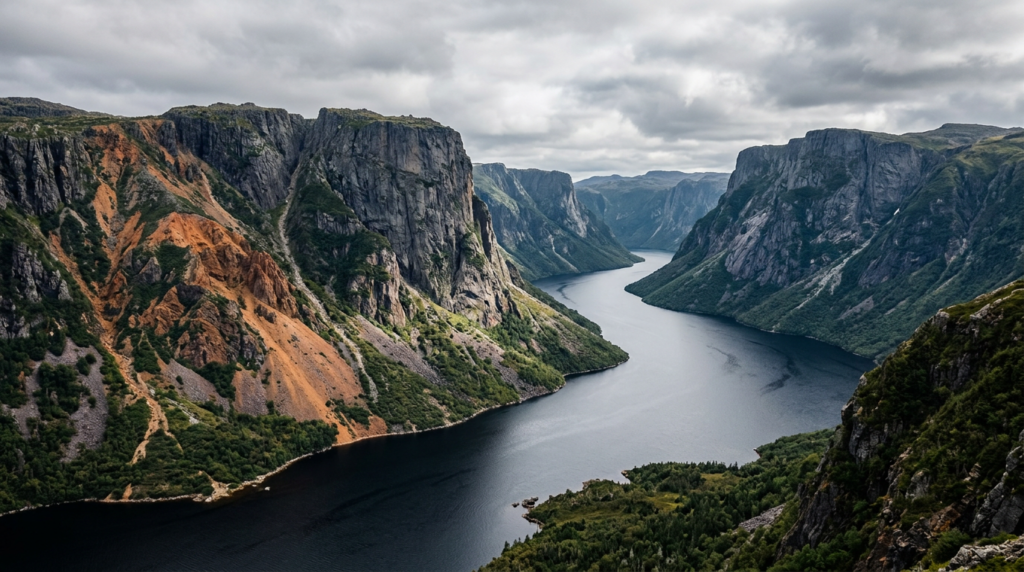
Gros Morne, on Newfoundland’s west coast, has been a UNESCO World Heritage site since 1987. UNESCO describes it as one of the world’s best illustrations of plate tectonics, with rocks from the Earth’s mantle exposed at the surface. The clearest example is the Tablelands, a bare, rust-coloured massif just off the road near Trout River, where a short trail lets you walk on peridotite.
The park’s other headline is Western Brook Pond, a landlocked fjord carved by glaciers, with cliffs and waterfalls dropping toward the water. Reaching the boat dock takes a moderate 3 km walk of about 45 minutes, and the boat tour is run by BonTours from mid-May to mid-October, weather permitting, according to Parks Canada. Hikers can also climb Gros Morne Mountain, a full-day trail, and the fishing villages of Rocky Harbour, Woody Point and Norris Point have places to stay and eat.
- Getting there: Deer Lake Regional Airport is about 35 km from the park’s southern boundary, with flights from Toronto, Halifax, St. John’s and, from May to October, Montreal. By sea, Marine Atlantic ferries run year-round from North Sydney, Nova Scotia, to Port aux Basques (about 6 hours), followed by a drive of about 300 km, or around four hours, per Parks Canada.
- Best time: June to September, when facilities and boat tours run fully. September is quieter than July and August.
- Fees (2026): the Parks Canada fee page lists daily admission of CA$12.25 per adult, CA$10.75 for seniors and CA$24.50 per family or group vehicle, with free entry for anyone 17 and under. A Discovery Pass for a year of access to all Parks Canada places costs CA$83.50 per adult. A national promotion made admission free from 19 June to 7 September 2026. Boat tour tickets are separate.
- Entry: visa-exempt visitors flying to Canada, such as UK and EU citizens, need an electronic travel authorization (eTA), which costs CA$7 on the Government of Canada site. US citizens do not need one.
- Good to know: book the Western Brook Pond boat ahead in July and August, and book ferry crossings early. Moose are common on roads in the park, so slow down around dawn and dusk.
10. Nukus & Karakalpakstan, Uzbekistan
Samarkand, Bukhara and Khiva draw most of Uzbekistan’s visitors. Nukus, capital of the autonomous Republic of Karakalpakstan in the far west, sees far fewer, but it holds the State Museum of Arts named after Igor Savitsky. Savitsky, a painter and collector, first came to Karakalpakstan in 1950 and built the collection after the museum opened in 1966, including work by Soviet-era artists whose styles were officially out of favour.
With more than 82,000 items, it holds what is often described as the world’s second-largest collection of Russian avant-garde art, a claim repeated by Uzbekistan’s national tourism site. Only part of the collection is on display at any one time, alongside Karakalpak jewellery, textiles and archaeology.
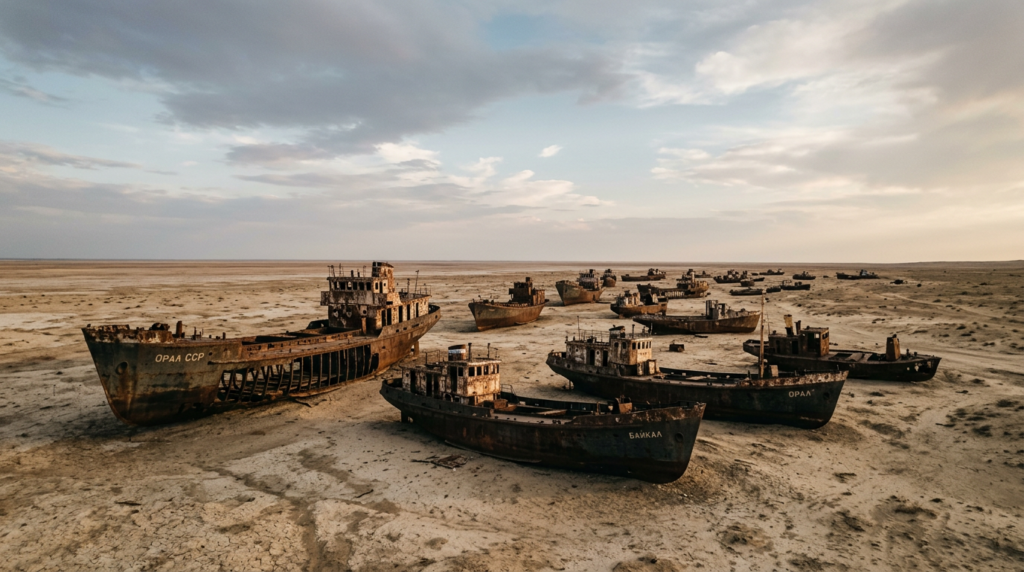
Nukus is also the base for Moynaq, a former Aral Sea fishing port about 200 km to the north. The sea has retreated far from the town, and rusting fishing boats sit on the old seabed beside a small museum on the town’s past. Most visitors make it a long day trip by hired car or join a tour that adds nearby ancient sites such as the Mizdakhan necropolis and the Chilpik tower.
- Getting there: Uzbekistan Airways flies Tashkent to Nukus in roughly 1 hour 45 minutes, and trains from Tashkent via Samarkand and Bukhara take around 17 hours, according to Wikivoyage; check current timetables before booking. Many travelers combine Nukus with Khiva, the nearest Silk Road city.
- Best time: April to May and September to October. Summers in the Kyzylkum and Aralkum deserts are very hot, and winters are cold.
- Entry: UK, EU and many other citizens can visit visa-free for up to 30 days, and from 1 January 2026 the same applies to all US citizens, as Fergana reported. Foreign visitors must be registered within three days of arrival, which hotels do automatically; keep your registration slips. See UK government advice for the details.
- Good to know: check the museum’s opening hours before you travel, as they differ between weekdays and weekends. Drones are largely banned in Uzbekistan without a licence, so leave yours at home for the Aral Sea trip.
Traveling Responsibly to Under-Visited Places
- Book locally where you can. Community networks such as CBT Kyrgyzstan, village homestays in Raja Ampat and community lodges in Guyana’s Rupununi keep more of the money in the area.
- Carry cash for fees. Timor-Leste’s visa on arrival, Raja Ampat’s levy and tag, and the Cocora farm fees are all cash payments.
- Build in buffer days. Small planes to Kaieteur, ferries to Atauro and boats in Raja Ampat all depend on weather.
- Check medical evacuation cover. Song-Kul, Guyana’s interior and Raja Ampat are hours from a major hospital. Make sure your insurance includes evacuation and any activities you plan, such as diving or riding.
Frequently Asked Questions
Which of these destinations need a visa arranged before travel?
For UK, EU and US passport holders, most do not. Kyrgyzstan, Uzbekistan, Colombia and Guyana (for UK citizens) are visa-free for short stays, Oman is visa-free for 14 days if you meet the booking and insurance conditions, and Rwanda and Timor-Leste offer visas on arrival. Vietnam is the main exception for many nationalities, since an e-visa is often needed, and Canada requires an eTA from visa-exempt air travelers other than US citizens. Rules depend on your passport, so check the official pages linked above.
Does travel insurance cover riding the Ha Giang Loop?
Often not if you ride yourself without a valid motorcycle licence and the correct International Driving Permit, because many policies exclude unlicensed riding. Travelling as a passenger with a licensed tour company is the simplest way to stay covered, but read the policy wording for motorbike passengers too.
Which of these places are getting busier?
Published figures show clear growth in Raja Ampat (about ten times more foreign visitors in 2024 than in 2020), the Ha Giang Loop (over 525,000 visitors in 2025) and Guyana, where the tourism minister reported record growth in 2025. Salalah drew more than a million visitors during the 2025 khareef season alone.
Final Thoughts
Fees, visa rules and road regulations on this list changed often in 2025 and 2026, from Kyrgyzstan’s shorter visa-free stay to Raja Ampat’s new levy and the Ha Giang tour rules. Check the linked official pages close to your departure date, book permits and boat tours early where they are limited, and carry cash for the places that need it. If you would rather stay in one region, our guide to 15 lesser-known places in Europe applies the same idea to a single continent.