
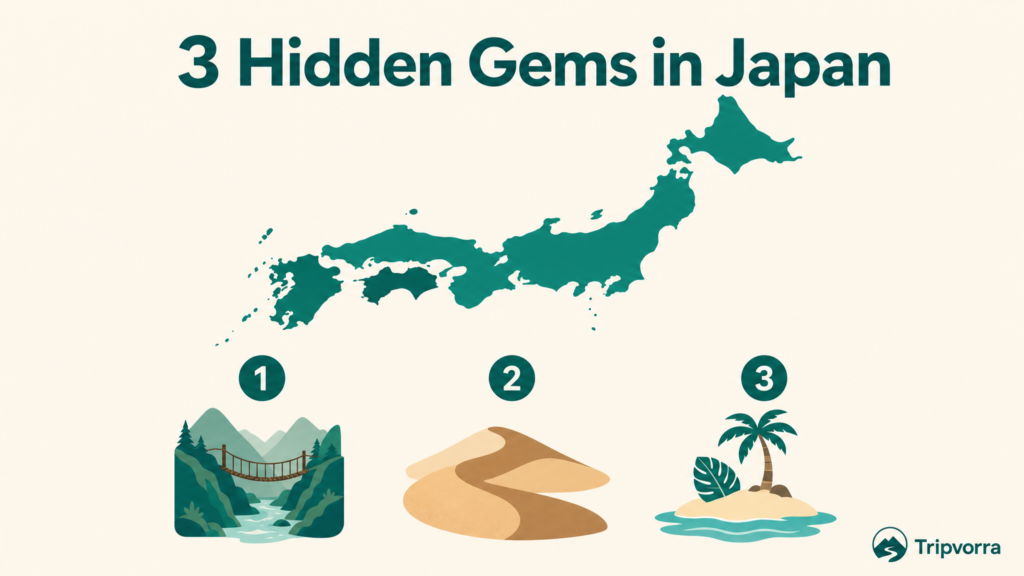
Tokyo and Kyoto get, by a wide margin, most of the international attention paid to Japan — and most of it is deserved. But Japan is a long, mountainous, island-heavy country, and a handful of genuinely distinctive places sit well outside that well-worn circuit. This list covers three: a mountain valley on Shikoku with centuries-old vine bridges, Japan’s largest sand dune field on the San’in coast, and a subtropical UNESCO World Heritage island in the Amami chain.
Affiliate disclosure: Tripvorra is a participant in the Amazon Associates program. Some links on this page may be affiliate links, and we may earn a small commission on qualifying purchases at no extra cost to you.
A note on how this guide was built: Tripvorra’s editorial team researched these three destinations using Japan National Tourism Organization (JNTO) prefectural visitor data, UNESCO’s World Heritage documentation, and each location’s official tourism sites — not a personal visit. We’ve linked to primary sources throughout so you can verify access details, seasonal conditions, and current advisories yourself before booking.
Quick Answer
- Iya Valley (Tokushima, Shikoku) — a remote mountain gorge with centuries-old vine suspension bridges and thatched-roof hamlets
- Tottori Sand Dunes (Tottori, San’in coast) — Japan’s largest dune field, a striking landscape in the country’s least-visited prefecture
- Amami Oshima (Kagoshima) — a subtropical island with UNESCO-listed rainforest, mangroves, and reef diving
How We Chose These Three
Each destination had to be genuinely overlooked relative to Japan’s headline sites — measured against visitor volumes for Tokyo and Kyoto, not against zero. We cross-checked this using JNTO’s prefectural visitor statistics, which consistently show Tokushima, Tottori, and the Amami island group receiving a small fraction of the inbound visitors that Tokyo and Kyoto Prefectures do. Each site also had to be reachable with normal domestic transport — train, bus, ferry, or a short domestic flight — not a local-only secret requiring a guide or private transport.
The 3 Hidden Gems at a Glance
- Iya Valley, Tokushima Prefecture — steep river gorge on Shikoku, known for its Kazurabashi vine bridges
- Tottori Sand Dunes, Tottori Prefecture — a 16km stretch of coastal sand dunes on the San’in coast
- Amami Oshima, Kagoshima Prefecture — subtropical island with UNESCO-listed forest and coral reefs
1. Iya Valley, Tokushima Prefecture
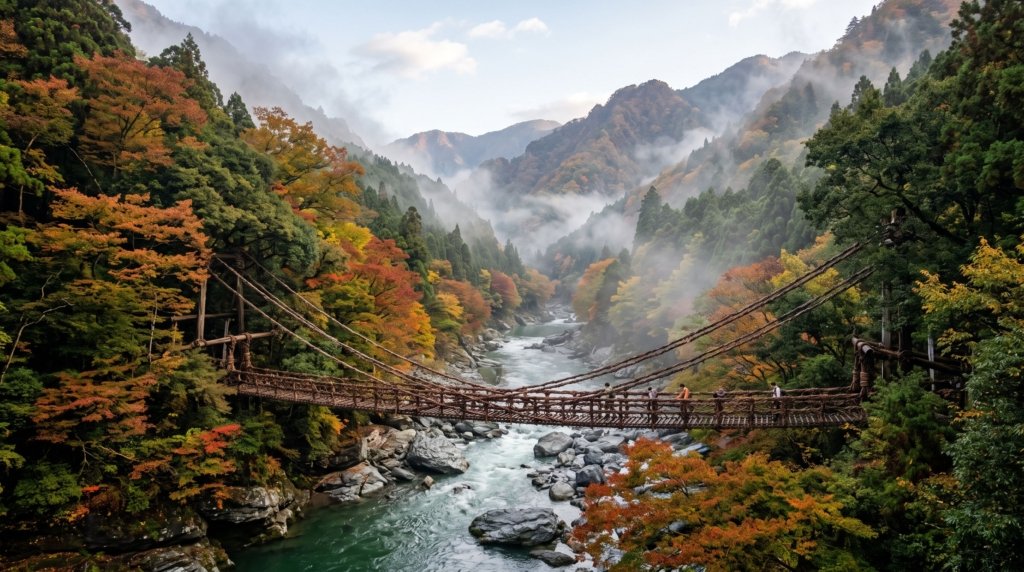
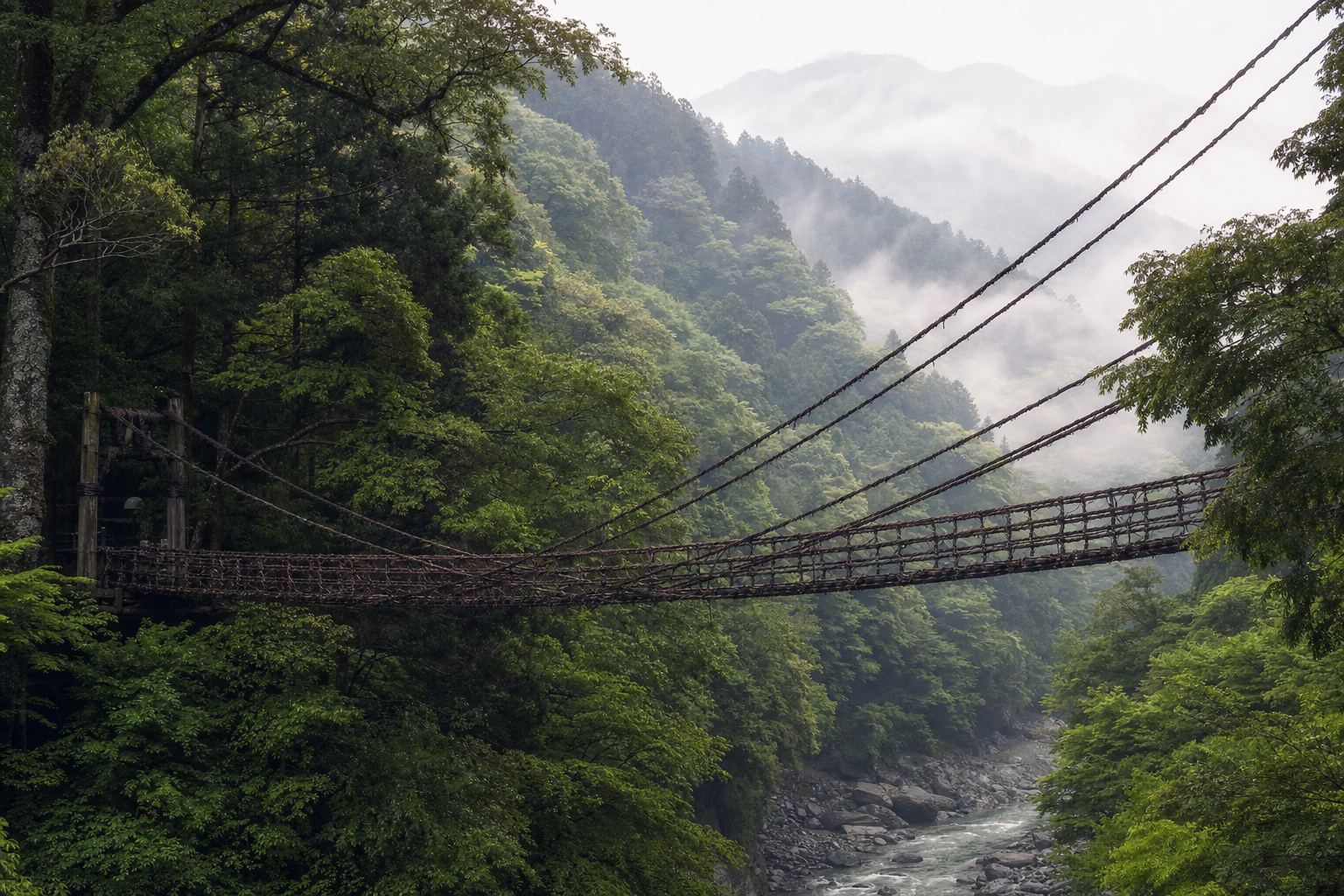
Iya Valley is a steep, forested gorge cutting through the mountains of western Tokushima Prefecture on the island of Shikoku, historically counted among Japan’s three most remote regions. Its best-known feature is the Kazurabashi vine bridges — suspension bridges woven from mountain vines, with a history local tradition traces to Heike clan warriors who reportedly fled here after their defeat in the 12th-century Genpei War. The bridges are rebuilt roughly every three years using the same traditional method, and walking across one, with the river visible through the gaps in the vines underfoot, is the valley’s signature experience.
Beyond the main Kazurabashi bridge, the quieter Oku-Iya double vine bridges — nicknamed the “husband and wife” bridges — sit deeper in the valley and see noticeably fewer visitors. The surrounding hamlets still have thatched-roof farmhouses and terraced fields worked on impossibly steep slopes, and the local specialty, Iya soba made from mountain-grown buckwheat, is worth seeking out in one of the small valley restaurants.
It’s worth being upfront that Iya Valley isn’t a total secret: its vine bridges have been featured in international travel coverage, including pieces by outlets like the BBC and CNN Travel, and the valley draws steady interest from domestic hikers and rafting groups on the Yoshino River in summer. What keeps it out of most first-time Japan itineraries is simply logistics — it requires a car or a well-timed bus connection from Oboke Station, and that alone filters out a lot of casual visitors.
| Nearest Hub | Oboke Station (JR Dosan Line) |
| Getting Around | Rental car or local bus |
| Best Season | Spring greenery & autumn foliage |
| Typical Visit | Half-day up to 2 nights |
Good to Know
- Entry: the main Kazurabashi bridge charges a small toll (a few hundred yen); the Oku-Iya double bridges have a separate, similarly modest fee
- Access: JR Dosan Line to Oboke Station, then a local bus or taxi — a rental car gives far more flexibility given how spread out the sights are
- Where to stay: Iyashi no Onsen Kyo and a handful of valley ryokan offer hot-spring stays with river views
- Caution: the bridges sway and the wooden slats have real gaps — sturdy shoes matter more here than at almost any other stop on this list



2. Tottori Sand Dunes, Tottori Prefecture
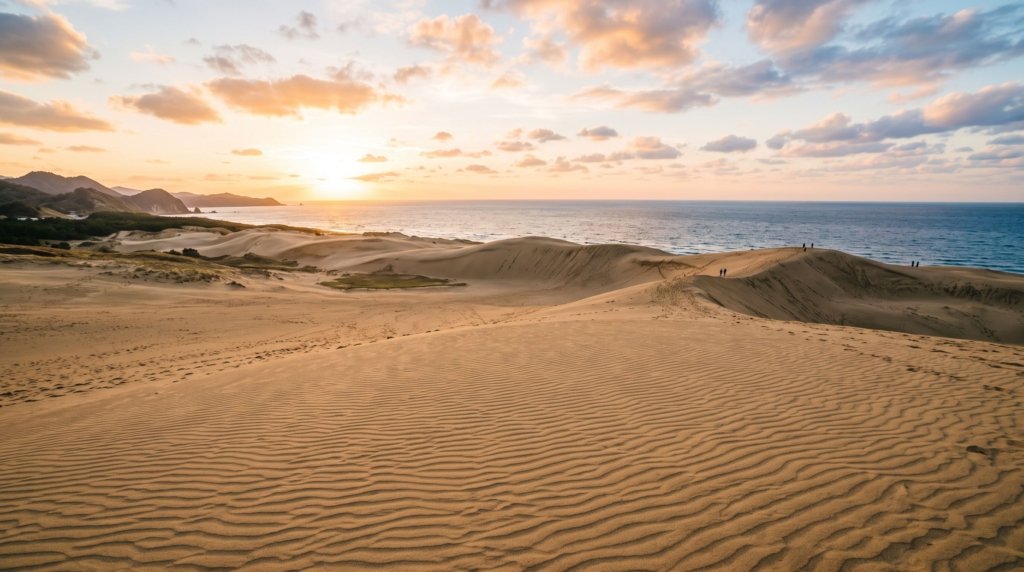
The Tottori Sand Dunes stretch roughly 16 kilometers along the San’in coast and reach up to 2 kilometers inland, formed over an estimated 100,000 years by sand carried down the Sendai River and reshaped by coastal currents and wind. They’re Japan’s largest dune system, and the scale is genuinely disorienting — rolling sand ridges against the Sea of Japan look more like a desert landscape than anything most visitors associate with Japan.
Tottori is Japan’s least populous prefecture, and that low profile extends to its signature landmark: the dunes see a fraction of the international visitors that better-known natural sites do. Activities on-site include paragliding over the dune ridges, sandboarding, and camel rides run by a local concession, plus the nearby Tottori Sand Museum, which builds elaborate sand sculptures around a different annual theme.
Sunrise and sunset are, by a wide margin, the best times to see the dunes — the low light exaggerates the ridgelines and the crowds thin out considerably. For a quieter alternative to the main dune viewing area, the Uradome Coast a short drive east offers sea-kayaking through small coves and rock formations, and gets even fewer visitors than the dunes themselves.
| Nearest Hub | Tottori Station |
| Getting There | ~20 min by bus from the station |
| Best Season | Year-round; sunrise or sunset light |
| Typical Visit | 2 to 4 hours |
Good to Know
- Entry: free to walk the dunes; paragliding, sandboarding, and camel rides are paid activities run by on-site operators
- Access: JR to Tottori Station, then roughly a 20-minute bus ride to the dunes
- Best time of day: early morning or late afternoon, both for lighting and for smaller crowds
- Nearby: Tottori Sand Museum and the Uradome Coast are both easy add-ons with a rental car


3. Amami Oshima, Kagoshima Prefecture
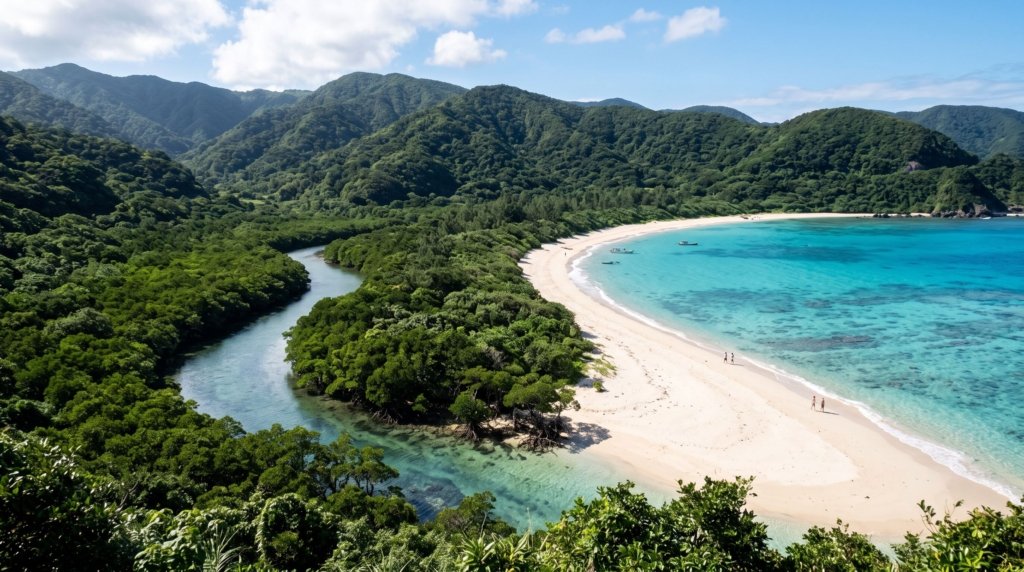
Amami Oshima is a subtropical island in the Amami chain, administratively part of Kagoshima Prefecture but geographically and culturally closer to Okinawa. In 2021, UNESCO inscribed “Amami-Oshima Island, Tokunoshima Island, Northern part of Okinawa Island, and Iriomote Island” as a World Natural Heritage site, citing the region’s exceptional biodiversity — including the Amami rabbit, a primitive, dark-furred species sometimes called a living fossil found nowhere else on Earth.
The island’s Amami Mangrove Primeval Forest is Japan’s second-largest mangrove forest and can be explored by kayak or SUP through the tidal channels. Offshore, coral reefs support snorkeling and diving that’s noticeably less crowded than comparable sites in Okinawa, and the island has a centuries-old textile tradition in Oshima Tsumugi silk weaving, still practiced by artisans using mud-dyeing techniques specific to the region.
Amami Oshima’s UNESCO listing has raised its international profile since 2021, and interest in the island is genuinely growing — it would be dishonest to call it undiscovered. What still sets it apart from Okinawa’s main islands is visitor volume: it remains a small fraction of Okinawa’s tourist numbers, with far less built-up infrastructure around its beaches and reefs. Typhoon season, roughly August through October, is worth planning around, since it can disrupt both flights and ferries.
| Nearest Hub | Amami Airport |
| Getting There | Direct flights or Kagoshima ferry |
| Best Season | Spring–autumn, avoid Aug–Oct typhoons |
| Typical Visit | 2 to 4 nights |
Good to Know
- Access: direct flights from Kagoshima, Osaka (Itami), and Tokyo (Haneda) to Amami Airport; a slower ferry from Kagoshima takes about 11 hours
- Best season: spring through autumn for swimming and diving, avoiding the August–October typhoon window if possible
- Where to go: Amami Mangrove Primeval Forest for kayaking, and the reefs off Kasari Bay or Sumiyo Bay for snorkeling
- Culture: Oshima Tsumugi weaving workshops in Amami City offer a look at the island’s textile tradition beyond its beaches


General Tips for Visiting
These three don’t pair easily into one trip — Shikoku, the San’in coast, and the Amami Islands are far apart, so treat each as its own leg rather than a single itinerary. Iya Valley works well combined with a wider Shikoku loop; Tottori pairs naturally with a San’in coast route that might also include Matsue or Izumo; Amami Oshima is best treated as a standalone island trip given the flight or ferry commitment.
- A Japan Rail Pass covers the train legs to Oboke and Tottori Stations, but not the local buses or a rental car once you arrive
- Rural bus schedules in Iya Valley and around the Tottori dunes can be infrequent — check timetables the day before, not the morning of
- Amami Oshima flights and ferries can be affected by typhoons between August and October; build a buffer day into your schedule during that window
- None of these three require advance reservations for general entry, unlike some of Japan’s more heavily visited sites
Traveling Responsibly at These Spots
- Iya Valley’s hamlets are small, lived-in communities, not open-air museums — keep to public paths and be mindful around private farmhouses
- The Kazurabashi bridges are rebuilt by hand every few years using traditional methods; stick to posted weight limits and crossing guidance
- Tottori’s dunes are a protected natural monument — stay off roped-off sections where vegetation is being restored
- Amami Oshima’s reefs and mangroves sit inside a UNESCO World Heritage area; use reef-safe sunscreen and keep a respectful distance from wildlife, including the Amami rabbit
Frequently Asked Questions
Less famous, and we’ve tried to say that plainly throughout. Iya Valley’s bridges have appeared in international travel media, and Amami Oshima’s profile has risen since its 2021 UNESCO listing. What they share is a low visitor volume relative to Japan’s headline cities, not true obscurity.
Can I visit more than one of these in a single trip?
It’s possible but demanding — Shikoku, the San’in coast, and the Amami Islands are spread across different parts of Japan with no direct connections between them. Most travelers will get more out of treating each as part of a separate regional trip.
Do I need a car to visit Iya Valley or the Tottori Sand Dunes?
A car isn’t strictly required for either, but it helps considerably. Both are reachable by train plus local bus, though bus frequency is limited, especially in Iya Valley, where a rental car gives far more flexibility to reach the quieter Oku-Iya bridges.
Is Amami Oshima affected by typhoons?
Yes — the Amami Islands sit in a typhoon-prone part of the Pacific, with the highest risk roughly from August through October. Check forecasts before booking flights or ferries in that window and build flexibility into your plans.
Will these places stay underrated?
Not necessarily, and we’d rather say that upfront than promise a secret that might not hold. Amami Oshima in particular has seen rising interest since its UNESCO inscription, and Iya Valley’s vine bridges continue to draw international media coverage.
Final Thoughts
None of these three needed exaggeration to earn a spot on this list — a mountain gorge with hand-rebuilt vine bridges, a sand dune landscape unlike anything else in Japan, and a UNESCO-listed island with reefs and mangroves few international visitors reach. If you’re planning a wider trip built around lesser-known spots, our guides to 15 hidden gems in Europe and 10 underrated travel destinations around the world cover similar ground elsewhere.
Go in with realistic expectations: this is quieter travel, not undiscovered travel, and each of these three requires a bit more planning — a rental car, a flight connection, a checked bus schedule — than a first stop in Tokyo or Kyoto would.
Affiliate disclosure: Tripvorra is a participant in the Amazon Associates program. Some links on this page may be affiliate links, and we may earn a small commission on qualifying purchases at no extra cost to you.