
Every Hawaii itinerary starts the same way: Waikiki, Kaanapali, Poipu, Hanalei Bay. And for good reason — the beaches are genuinely spectacular. But the islands hold plenty that has nothing to do with sand, and almost none of it makes the front page of a typical trip-planning list. This guide covers three places, on three different islands, that reward the traveler willing to look past the shoreline: a remote peninsula with one of the most moving stories in the Pacific, a canyon most Kauai visitors drive right past, and a cattle-ranching town that feels more like inland California than anyone’s idea of Hawaii.
Last verified: September 1, 2026. This guide was built from official National Park Service and Hawaii state agency pages, county government notices, and regional tourism sources — not personal visits — and every factual claim below is linked to its source in the sentence that makes it.
Quick Answer: Beyond the famous beaches, three places worth building a Hawaii itinerary around:
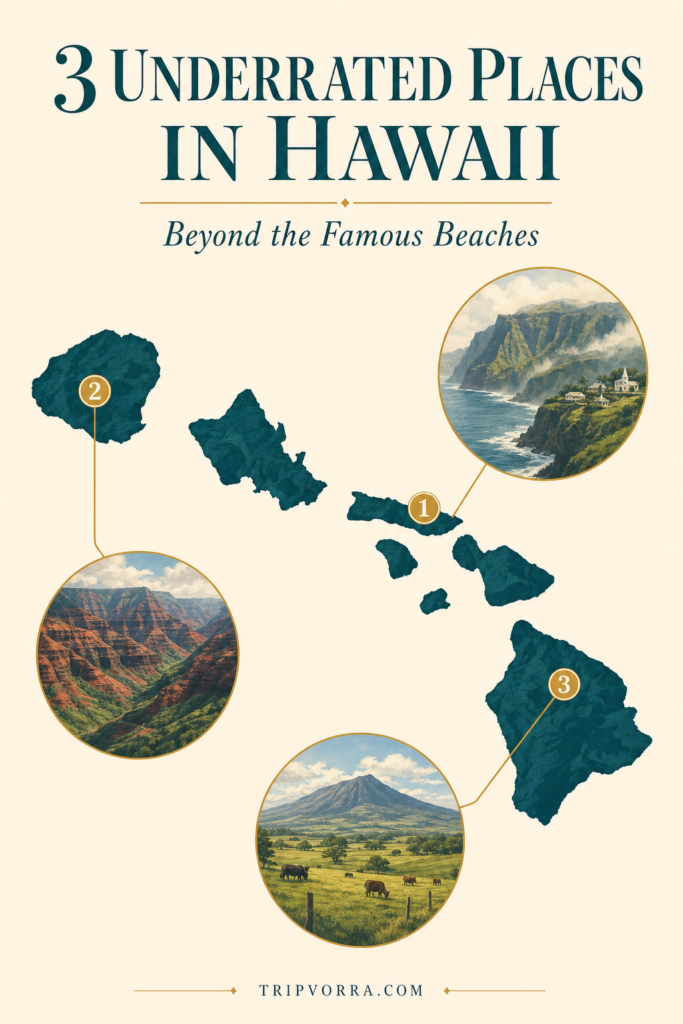
Map key: 1) Kalaupapa Peninsula, Moloka‘i • 2) Waimea Canyon & Koke‘e State Park, Kaua‘i • 3) Waimea Town & Parker Ranch, Hawai‘i Island
1. Kalaupapa Peninsula, Moloka‘i
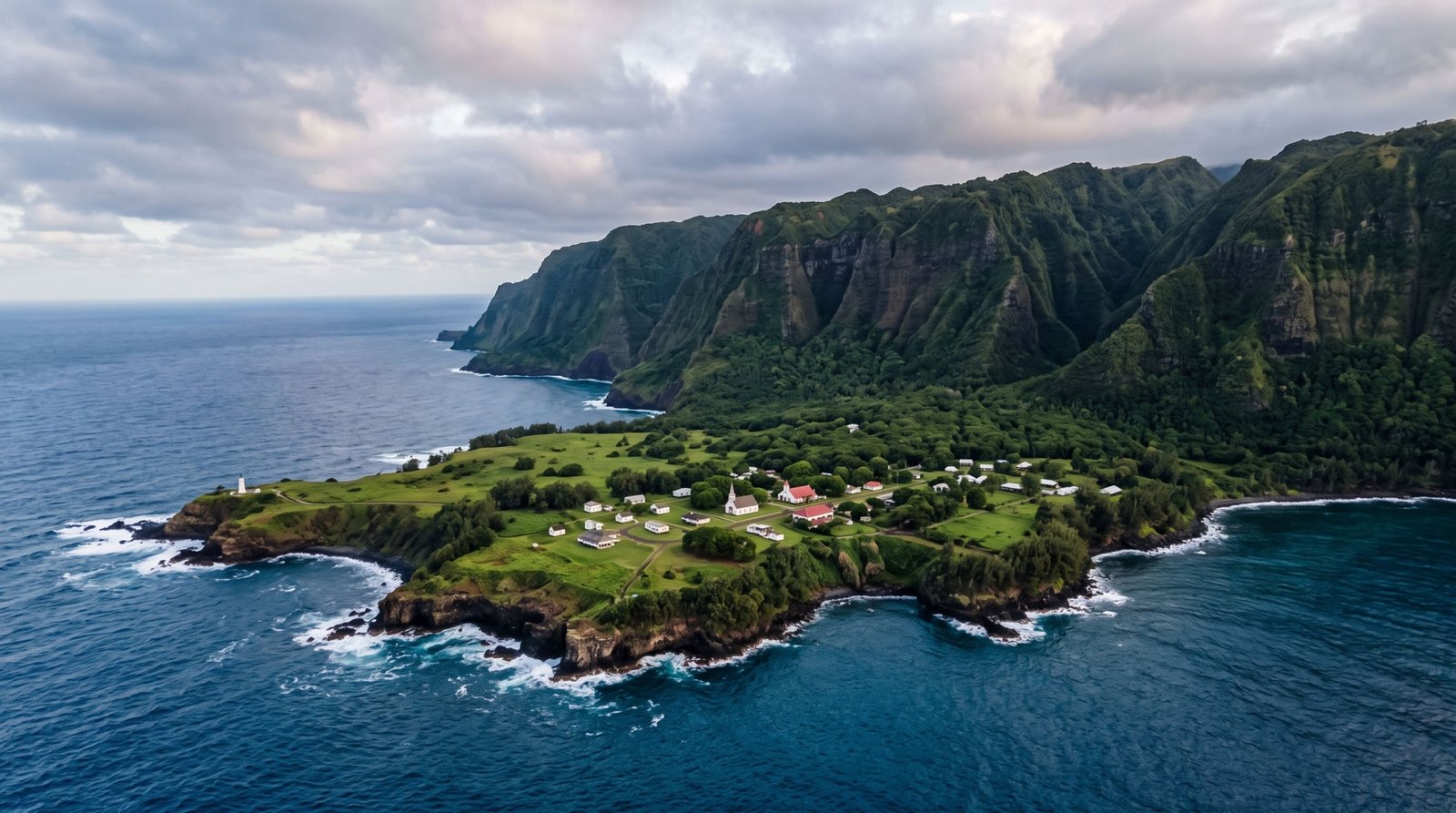
Moloka‘i already gets a fraction of the visitors its neighboring islands do — it consistently records Hawaii’s lowest tourism numbers, has no traffic lights, no resorts, and only one operating hotel. Within that already-quiet island, Kalaupapa is quieter still: a flat, green peninsula cut off from the rest of Moloka‘i by some of the tallest sea cliffs on Earth, accessible only by a switchback mule trail, a strenuous hike, or a small charter plane.
From 1866 to 1969, the Kingdom and later the Territory of Hawaii forcibly exiled more than 8,000 people diagnosed with Hansen’s disease (leprosy) to this peninsula, isolating them from their families for life. Father Damien, a Belgian priest later canonized as a saint, arrived in 1873 and spent 16 years there, personally building roughly 300 of the settlement’s 325 structures — churches, water systems, roads — before dying of the disease himself in 1889. Effective treatment arrived in the late 1940s, and patients were given the choice to leave; a small community of former patients and their families still calls Kalaupapa home today.
Getting There and Practical Info
- Permit required: Hawaii state law requires a permit from the state Department of Health before entering the park — independent visitors cannot simply show up. Damien Tours arranges permits for its guests.
- How to get down: a guided mule ride down the 3-mile, 26-switchback trail, a hike down the same trail on foot, or a short flight into Kalaupapa Airport — all followed by a guided ground tour, since independent exploration of the settlement isn’t permitted.
- Time to allow: the mule ride and tour together typically take most of a day; flying in shortens the trip but still requires booking the same guided tour.
- Respect the place: this is an active community and a solemn historical site, not a photo backdrop — tours are run accordingly, with restrictions on where cameras are appropriate.
Is It Worth the Trip?
For most travelers, yes — but go in expecting a memorial, not an adventure activity. The mule ride or hike is the means, not the point; the point is standing in a place that holds one of the most difficult chapters in Hawaiian history, told by guides connected to the community itself. It’s a poor fit for anyone short on time on a beach-focused Moloka‘i day trip, and the logistics (permit, advance booking, weather-dependent mule and flight schedules) mean it needs to be planned well ahead rather than added on impulse.
2. Waimea Canyon & Koke‘e State Park, Kaua‘i
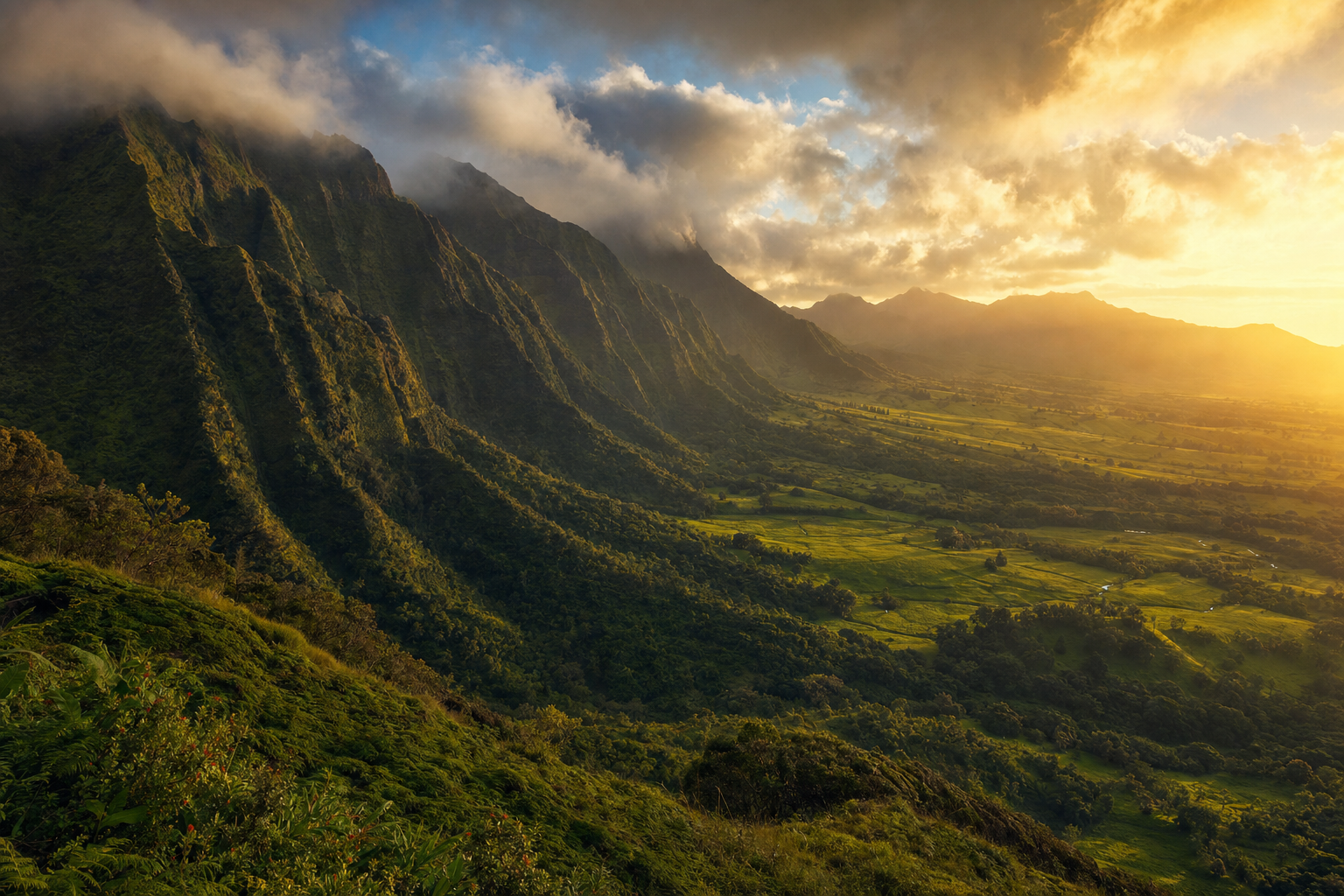
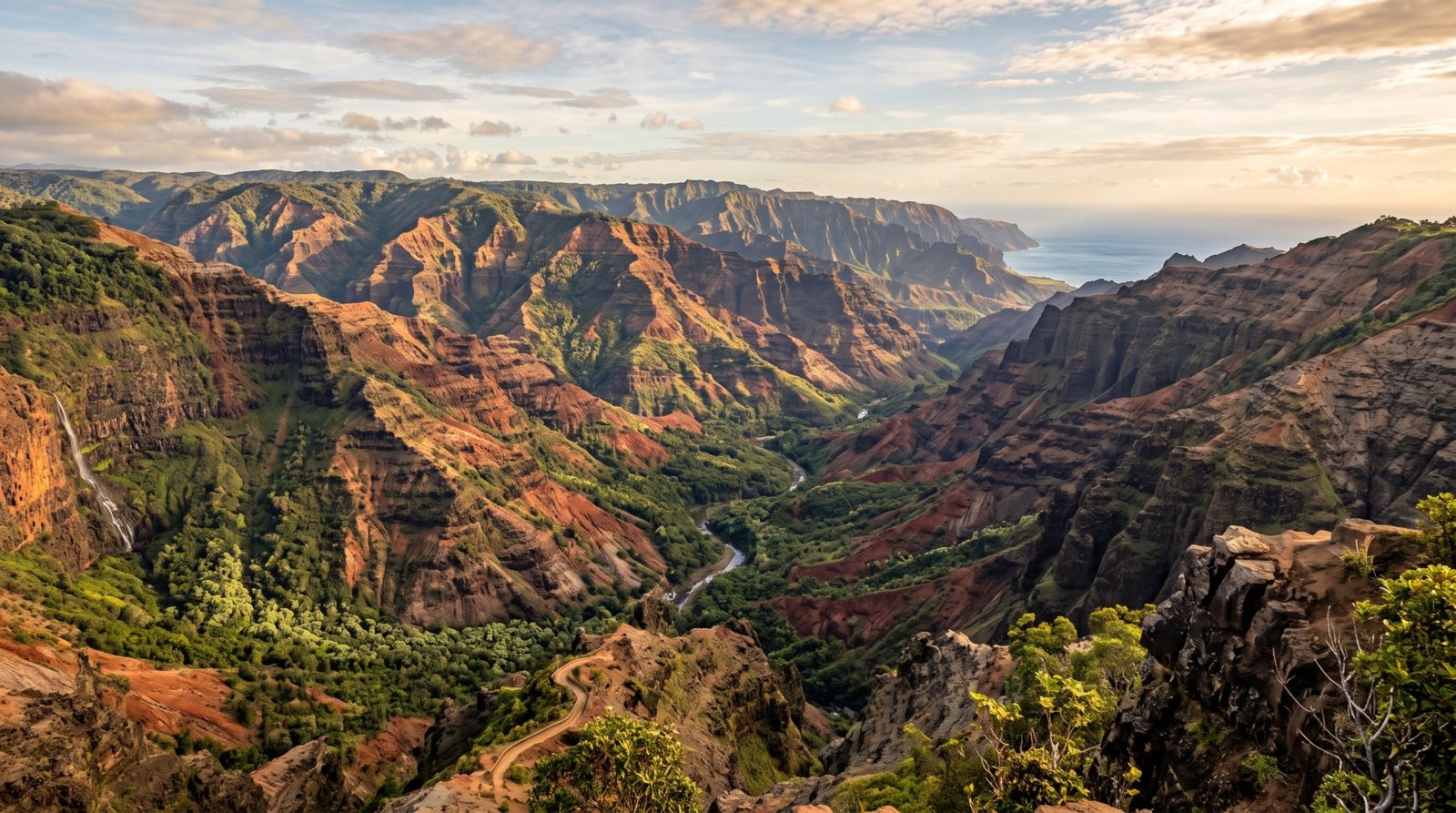
This one isn’t a secret on Kaua‘i itself — it’s a genuinely popular state park, nicknamed the “Grand Canyon of the Pacific” for a reason. But among travelers planning a Kaua‘i trip around Po‘ipu’s resorts or Hanalei Bay’s beaches, it’s routinely treated as a half-day detour at best, or skipped entirely in favor of one more beach day — which means a lot of visitors never see a canyon 10 miles long and up to 3,000 feet deep, carved partly by the Waimea River and partly by the collapse of an ancient volcanic caldera roughly 4 million years ago.
The Hawaiian name Waimea means “reddish water,” for the iron-rich basalt the river has exposed and eroded down to bright red-orange. The road continues past the main canyon lookouts into Koke‘e State Park, a cool, misty highland forest that sits at the edge of the Alaka‘i Swamp — a high plateau bog near Mount Wai‘ale‘ale, one of the wettest spots on Earth, averaging around 500 inches of rain a year. The 8-mile round-trip Alaka‘i Swamp Trail, a boardwalk through native cloud forest, is the reward for anyone willing to go beyond the drive-up lookouts.
Getting There and Practical Info
- Access: Hawaii State Route 550, about 18 miles from Waimea town, climbs directly to the main canyon lookouts and continues into Koke‘e State Park — no permit or tour needed for the lookouts themselves.
- Time to allow: a couple of hours for the main lookouts (Waimea Canyon Lookout, Pu‘u Hinahina), a half-day or more if adding the Alaka‘i Swamp Trail or another Koke‘e hike.
- What to bring: layers and rain-ready shoes — Koke‘e sits high enough to run 15–20°F cooler and considerably wetter than the coast.
- Best time: morning, before clouds typically build up over the canyon and before Mount Wai‘ale‘ale fogs in.
Who Is This For?
Anyone who assumes Kaua‘i is only a beach island. It’s an easy half-day add-on for visitors based on the west side, and a legitimate full-day trip for anyone who wants to hike the Alaka‘i Swamp boardwalk. It’s a weaker fit for a short trip built entirely around Hanalei or Po‘ipu, since the drive alone eats a meaningful chunk of a single day.
3. Waimea Town & Parker Ranch, Hawai‘i Island
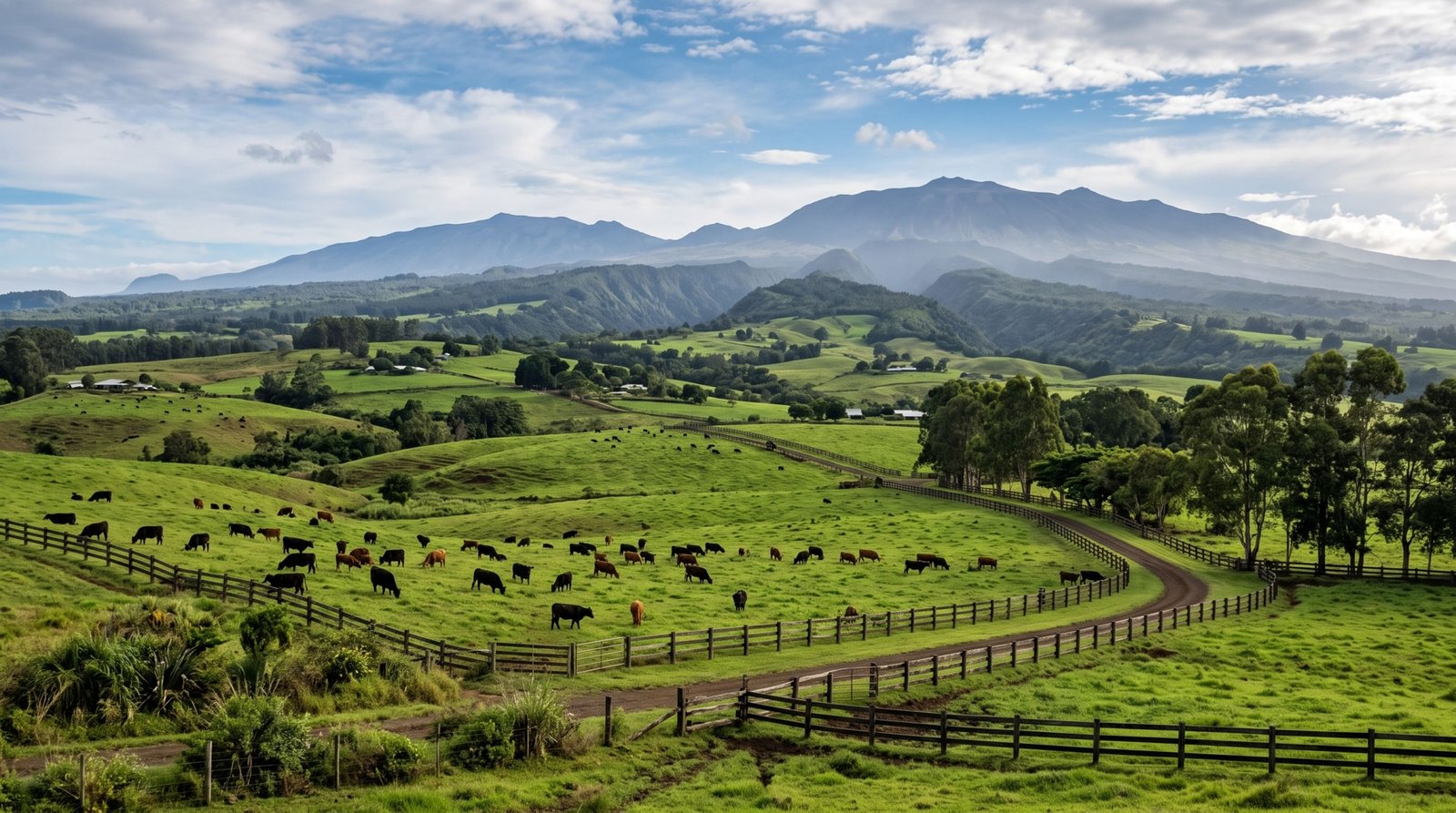
At nearly 3,000 feet elevation on the Big Island’s northern saddle, Waimea (also called Kamuela on mail, to distinguish it from Hawaii’s two other Waimea towns) looks nothing like the volcanic coastline most Big Island itineraries revolve around. It’s rolling green pastureland, cool and often misty, built around Parker Ranch, founded in 1847 by John Palmer Parker and still one of the largest working cattle ranches in the United States at roughly 130,000 acres.
Hawaiian cowboys — paniolo — predate their mainland counterparts by decades; Parker Ranch’s own history traces the tradition back to the early 1800s, when King Kamehameha I brought in Mexican vaqueros to manage feral cattle descended from animals gifted to the kingdom. That heritage is still visible in Waimea today: working ranches, rodeo events, and a small-town rhythm built around agriculture rather than resorts.
Getting There and Practical Info
- Nearest access: roughly 45 minutes from Kona International Airport or about an hour from Hilo by car; a rental car is effectively required, since there’s no meaningful public transit connecting Waimea to the coast.
- Things to do: Parker Ranch’s visitor programs, Anna Ranch and Kahua Ranch for horseback or ATV rides, the Saturday and Wednesday farmers markets, and live performances at the Kahilu Theatre.
- Best time: year-round, though the cooler, sometimes rainy upcountry climate is worth packing a layer for regardless of season.
- Budget: ranch tours and horseback rides run as TRIPVORRA PLANNING ESTIMATES in the moderate range for Hawaii activities; confirm current pricing directly with each operator, since it varies by season and experience length.
Best For
Travelers who want a genuinely different texture in a Big Island trip — pair it with a coastal or volcano-focused itinerary rather than in place of one. It’s less compelling if ranch life and cooler upcountry weather simply aren’t the vacation you’re after; there’s no beach here, and that’s rather the point.
Why We Left These Off
Two well-known non-beach spots came up repeatedly in research and were deliberately left out, for different reasons.
Haleakālā summit, Maui. The National Park Service introduced a mandatory sunrise reservation system back in 2017 after crowds regularly topped 1,000 people and vehicle counts more than doubled the summit’s parking capacity, with visitors climbing cliffsides in the dark and damaging fragile alpine habitat. It’s spectacular, but it’s the opposite of undiscovered.
Waipi‘o Valley, Hawai‘i Island. This dramatic black-sand valley isn’t excluded for being too popular — it’s excluded because, as of this writing, the general public simply can’t drive there. The county closed the steep access road to non-resident vehicles in February 2022 after a geotechnical survey found an elevated rockfall risk, and as of early 2025 that restriction was still being renewed month to month while repairs continue. Worth watching for a future trip, not worth recommending as a current plan.
Frequently Asked Questions
Can I visit Kalaupapa on my own, without a tour?
No. State law requires a permit, and independent exploration of the settlement isn’t allowed regardless of how you get down the cliff — the mule ride, the hike, and the flight are all paired with a required guided tour.
Is Waimea Canyon worth it if I only have one day on Kaua‘i’s west side?
Yes, for a couple of hours at the main lookouts — it doesn’t require the full-day Alaka‘i Swamp hike to be worthwhile. Go earlier in the day before clouds build up.
Do I need a 4WD vehicle to get to Waimea town on the Big Island?
No. Waimea sits on paved highways connecting Kona and Hilo, and is reachable in a standard rental car.
Are any of these three good beach alternatives for a family trip?
Waimea town’s farmers markets and ranch activities work well for families. Waimea Canyon’s main lookouts are an easy stop for most ages. Kalaupapa’s mule ride has a real physical and emotional weight to it — it suits older kids and adults more than young children.
Planning a Trip Around These Three
These three destinations sit on three different islands, so this isn’t a single day’s loop — it’s a reason to slow down an itinerary that would otherwise be beach-to-beach. If you’re drawn to islands with a similarly unhurried, un-Instagrammed character, our guide to 5 Underrated Greek Islands Beyond Santorini and Mykonos covers similar ground on the other side of the world. And if Waimea Canyon’s scale appealed to you, our roundup of 6 Hidden Natural Wonders Near San Diego You Can Visit in a Day has more of the same instinct — dramatic landscapes that get a fraction of the attention paid to the coastline nearby.