
San Diego’s tourism marketing leans hard on beaches, Balboa Park, and the zoo — for good reason, they’re excellent. But the county’s geography is stranger and more varied than the postcards suggest: a desert park with wind-carved caves an hour and a half from the coast, a mesa full of seasonal pools that come alive only after rain, and bubbling mud volcanoes within day-trip range if you’re willing to drive. None of what follows needs an overnight bag. All six are doable between a reasonably early start and dinner.
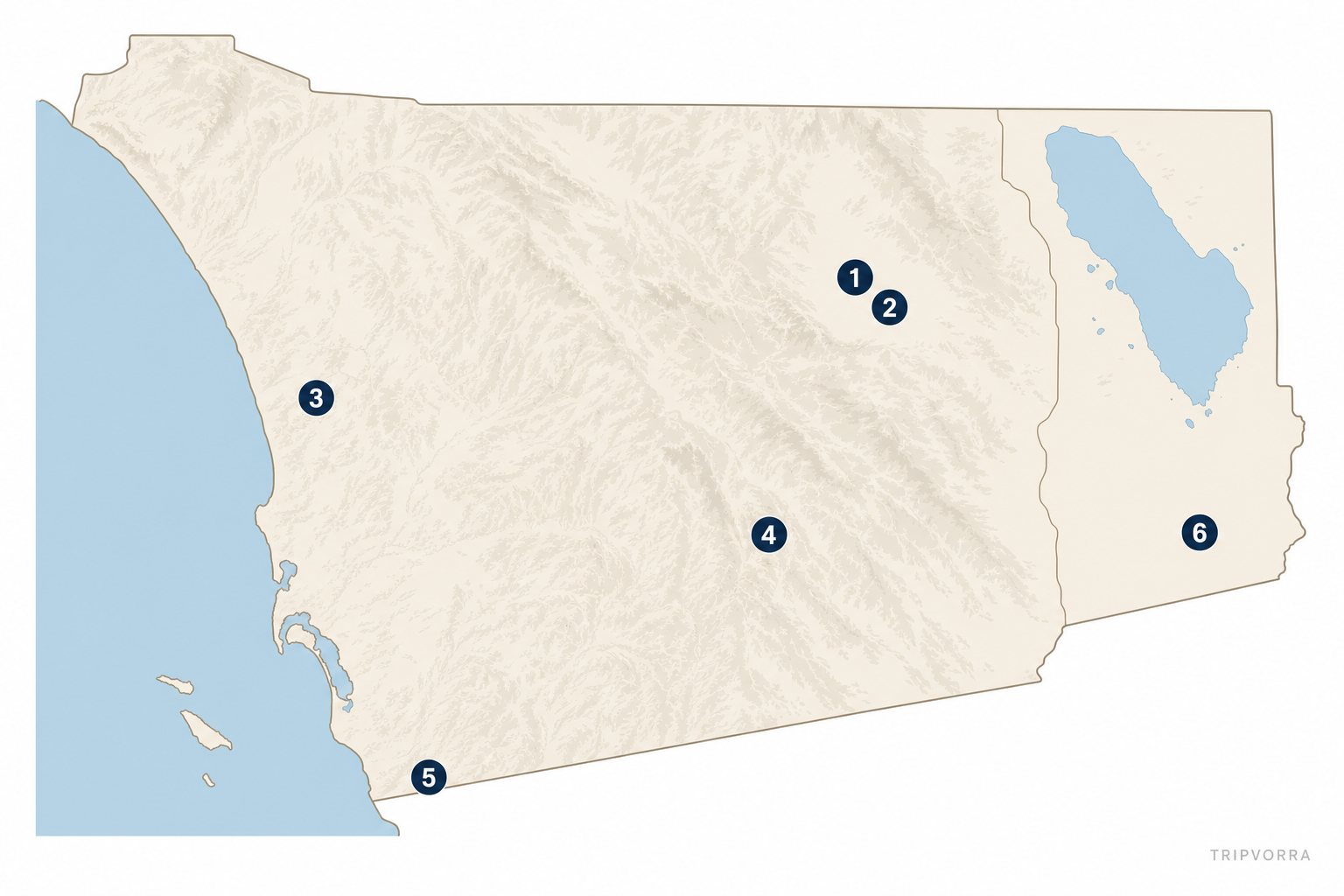
| Wonder | Region | Drive Time | Type |
|---|---|---|---|
| Wind Caves & The Slot | Anza-Borrego Desert | ~1 hr 45 min | Wind- & water-carved rock |
| Del Mar Mesa Vernal Pools | Carmel Valley | ~30 min | Seasonal ephemeral pools |
| Three Sisters Falls | Cleveland National Forest | ~1 hr | Waterfall |
| Border Field State Park | Imperial Beach | ~35 min | Coastal dunes & estuary |
| Salton Sea Mud Pots | Imperial County | ~2 hr 45 min | Geothermal mud pots |
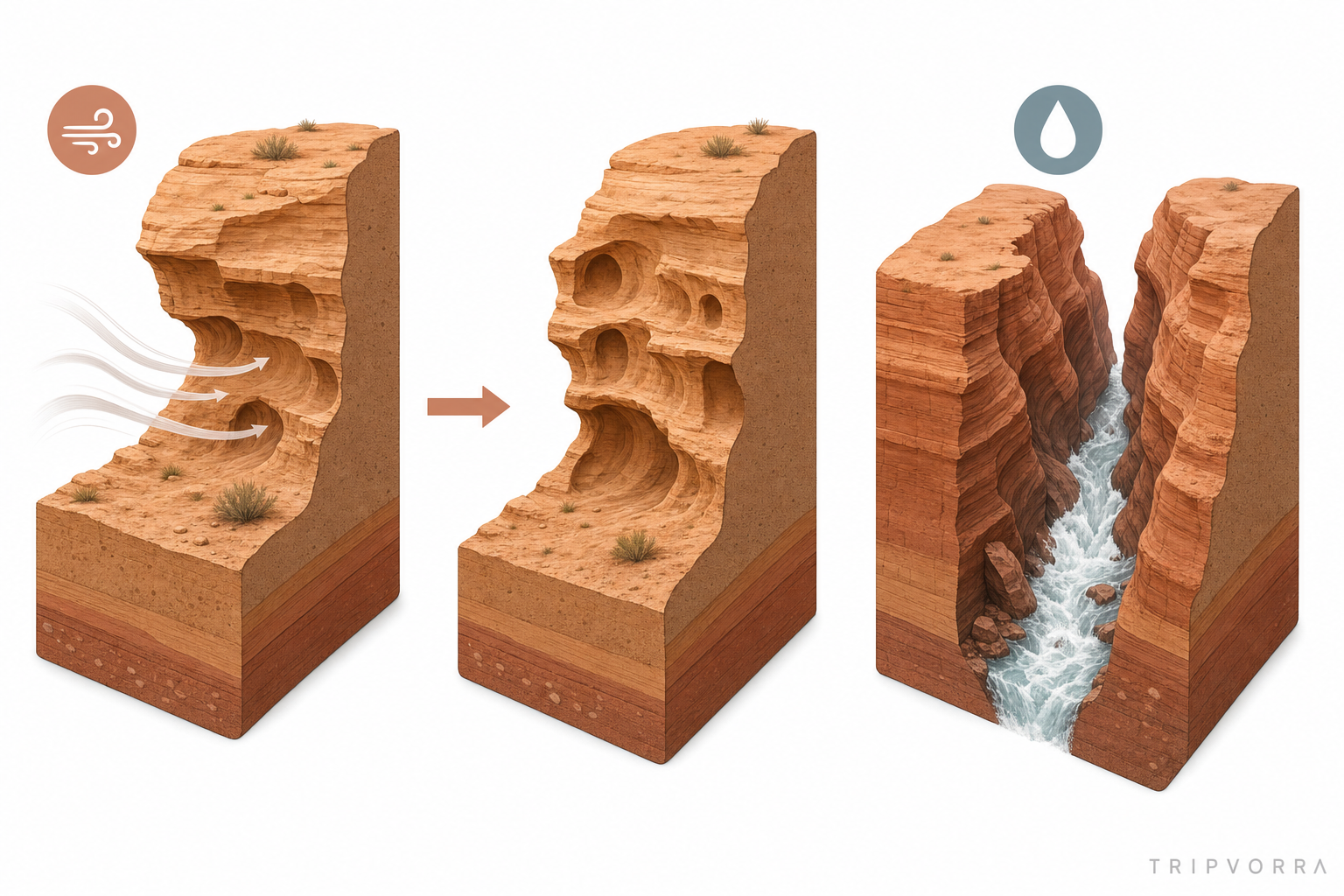
Wind Caves and The Slot: Two Ways the Desert Erodes the Same Rock
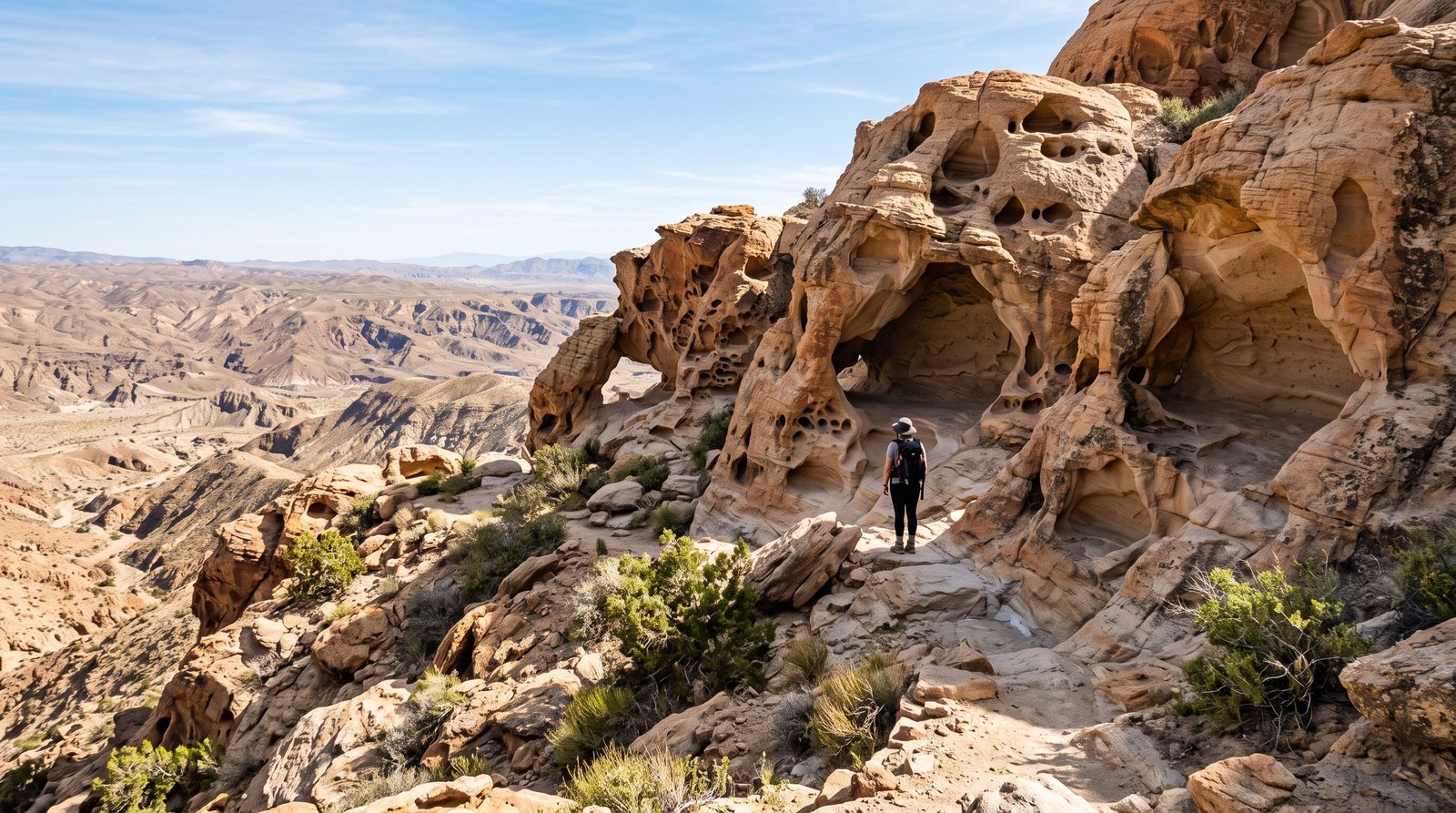
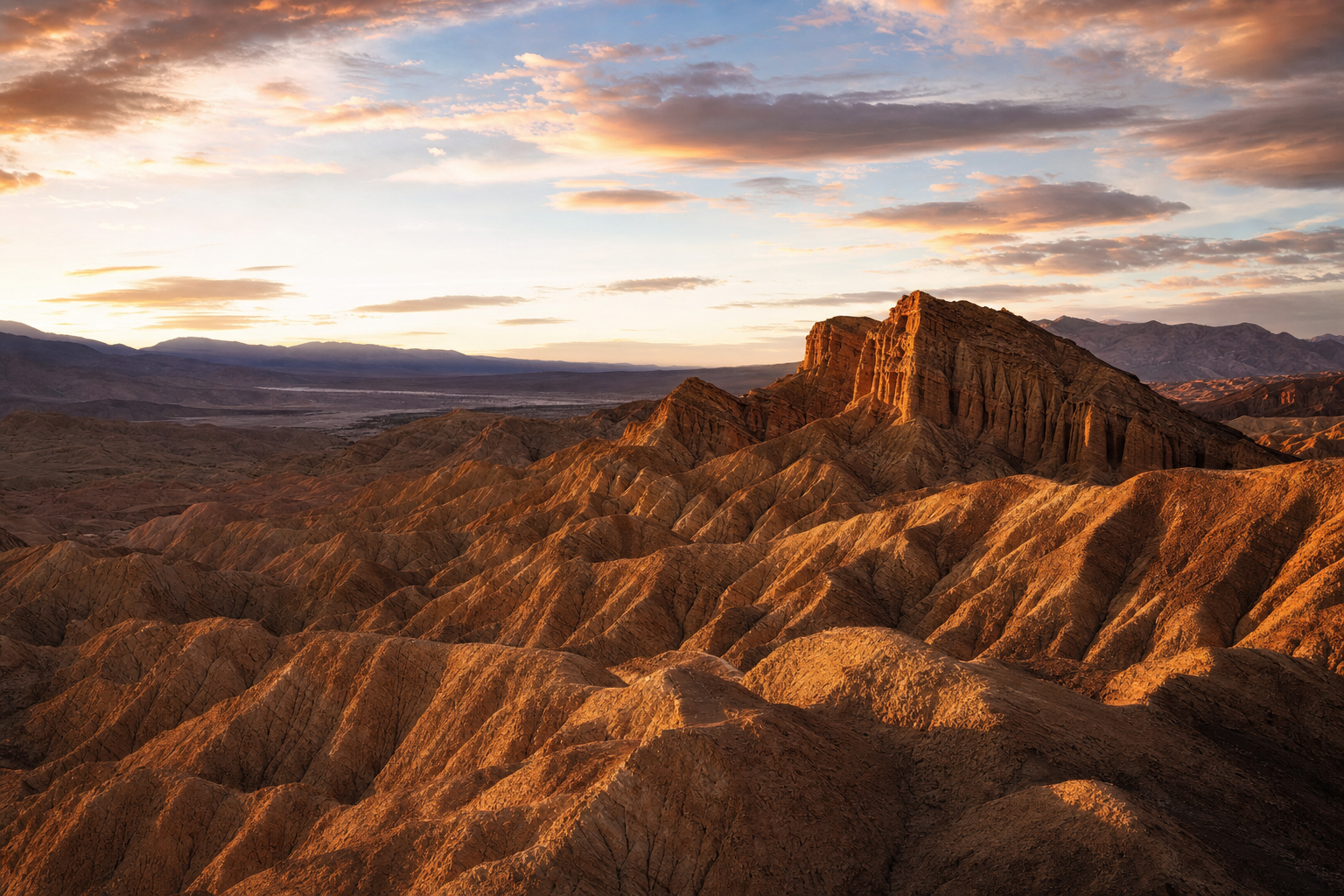
On a low sandstone hilltop on Fish Creek Mountain, thousands of years of wind have hollowed out a cluster of pockets, alcoves, and tunnels big enough to crawl through. The Wind Caves Trail covers just 1.25 miles round trip with about 250 feet of elevation gain — roughly 45 minutes — but the approach is the real filter: the last stretch runs down a rough dirt wash off Split Mountain Road, and a high-clearance vehicle is strongly recommended over a standard sedan.
Getting there: From Borrego Springs, take Borrego Springs Road southwest, then CA-78 East to Ocotillo Wells, then south on Split Mountain Road into Fish Creek Wash to the signed trailhead. Free, no permit required, and open year-round, though summer desert heat makes winter and spring the realistic visiting window.
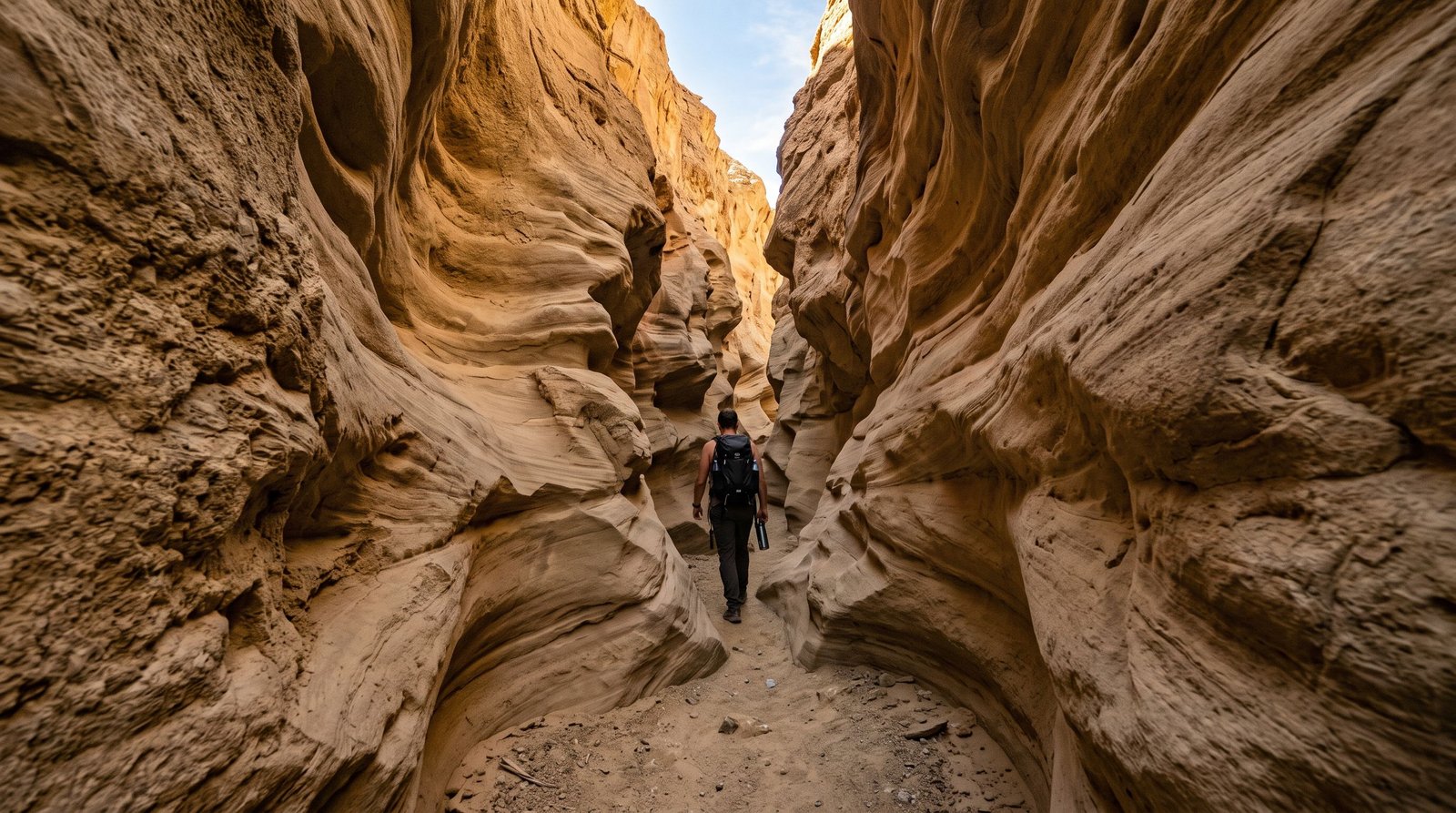
A short drive away, The Slot cuts the same story differently: instead of wind hollowing out a hillside, seasonal flash floods have carved a narrow passage through mudstone, in places barely wide enough to pass through sideways. At 0.8 miles round trip and rated suitable for most skill levels, it’s an easier outing than the Wind Caves — the access road is bumpy but passable in a low-clearance vehicle. It’s worth being honest here: The Slot is regularly described as one of the most photographed spots in the park, so “hidden” undersells its status among desert hikers — it’s simply invisible to anyone whose San Diego trip plan starts and ends at the coast.
Getting there: Off Buttes Pass Road, about 20 minutes by dirt road from the Anza-Borrego Visitor Center. Dogs are not permitted. Bring more water than feels necessary — there’s no shade in the canyon.
Worth Knowing Before You Go
Both features sit inside a desert park with real heat risk outside winter and spring, and cell service is unreliable in Fish Creek Wash — tell someone your plan if you’re driving out alone.
Del Mar Mesa’s Vernal Pools: A Desert-Style Ecosystem Fifteen Minutes From the Beach
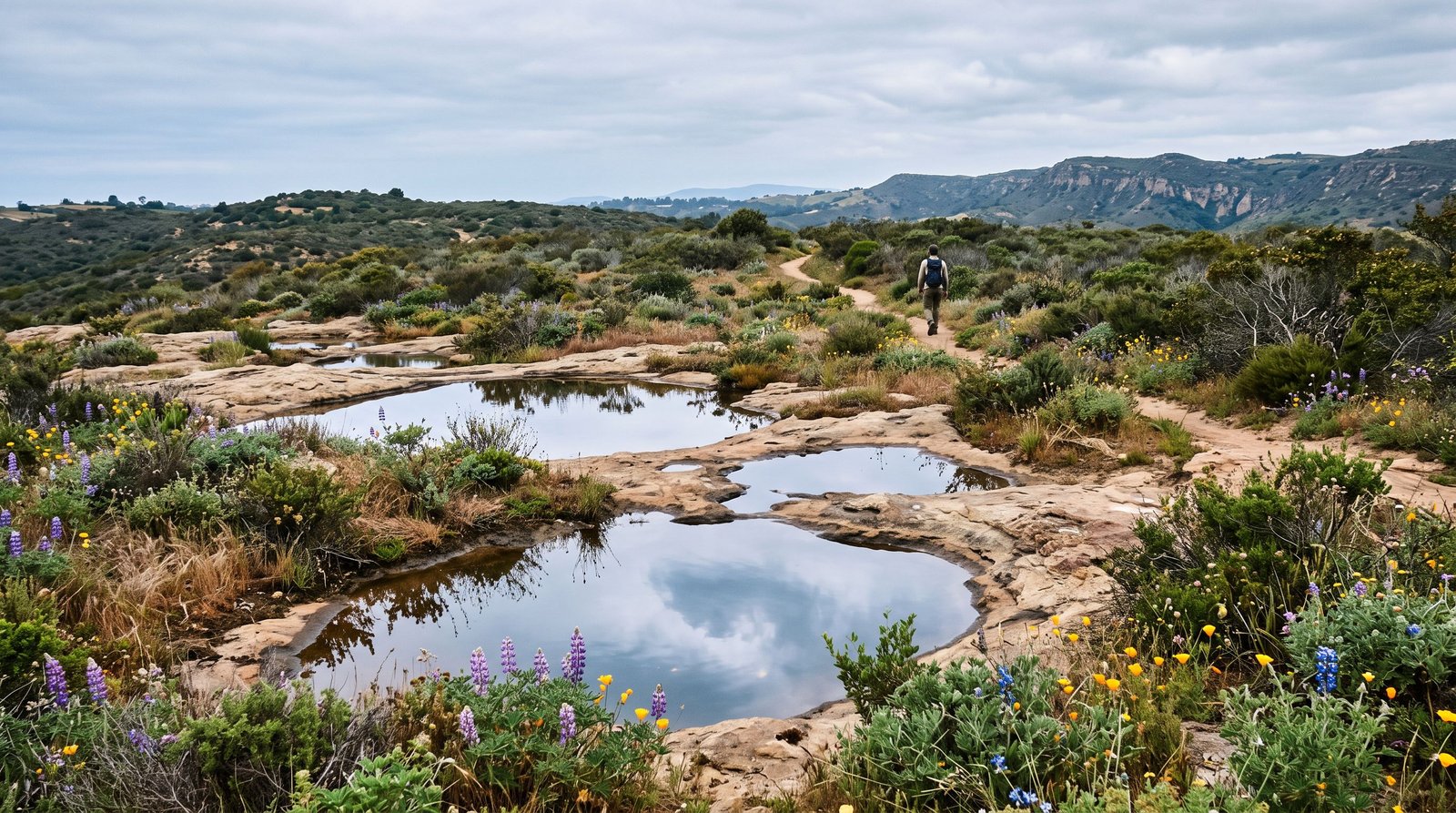
Vernal pools are shallow depressions that form on a layer of impermeable sandstone, filling with rainwater each winter and drying out completely by summer — an on-off ecosystem that supports fairy shrimp species found almost nowhere else, since the shrimp eggs can lie dormant in dry soil for years waiting for the next rain. Del Mar Mesa Preserve, tucked into the Carmel Valley/Sorrento Valley area, protects one of the county’s more accessible pool clusters via a 4.4-mile loop with about 500 feet of elevation gain, roughly two and a half hours at a relaxed pace.
Getting there: Street parking near the junction of Toyon Mesa Court and Rancho Toyon Place; the trail runs along Rancho Toyon Place around a subdivision before reaching open mesa. The Tunnel 4 Trail section sees heavy mountain bike traffic, so stay alert on the narrower stretches. The pools themselves sit behind a fenced, signed boundary — do not cross it, since foot traffic through a vernal pool can wipe out an entire season’s shrimp population.
Best Time to Visit
Any time the trail is accessible, but the pools themselves are only worth seeking out within a few weeks of meaningful winter rain — by early summer, most are bone dry and indistinguishable from the surrounding chaparral.
Three Sisters Falls: San Diego’s Best Waterfall, If You Beat the Crowd to the Parking Lot
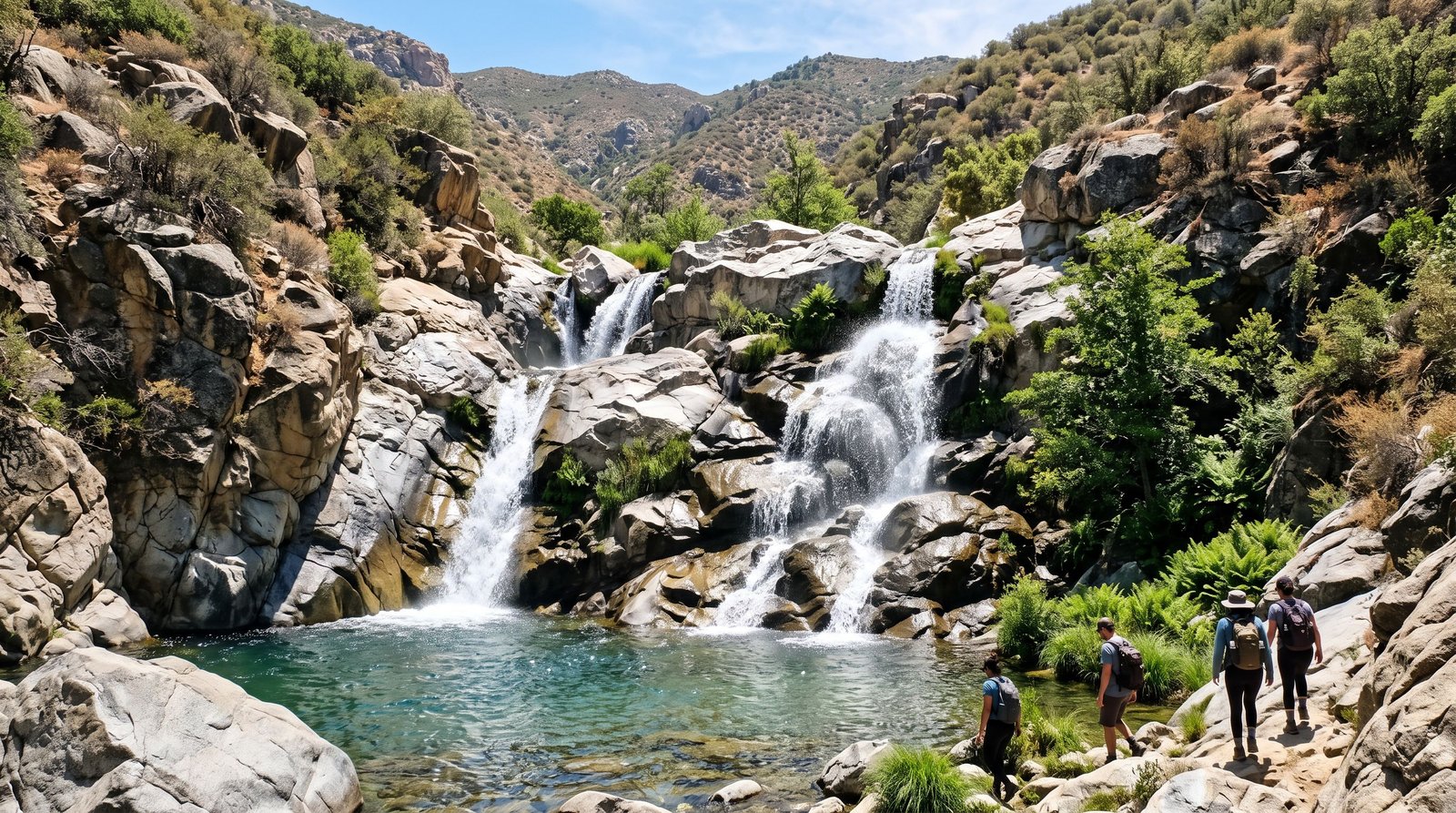
A series of granite cascades tumbles into clear pools in Cleveland National Forest, reached by a 4.4-mile round trip with about 950 feet of elevation gain — a hike built backward from most trails, since the initial descent means the climb back out, tired, is the hard part. An optional extension to Eagle Peak adds another 3.3 miles and 750 feet of gain, though that stretch can close seasonally to protect nesting peregrine falcons, so it’s worth checking the Cleveland National Forest’s own trail page before committing to it.
Here’s the honest caveat: this is not a secret. It’s routinely described as an extremely popular hike, and the trailhead parking lot fills before mid-morning on weekends. What keeps it off the standard tourist circuit is that almost nobody outside the Southern California hiking community has heard of it — this is a “hidden” wonder in the sense of being absent from mainstream San Diego itineraries, not in the sense of being empty.
Getting there: The Cha’Chaany Hamuk Trailhead, off Boulder Creek Road near Descanso. No permit required. The falls can run dry by mid-to-late summer, so winter and spring after rainfall give the most reliable flow.
Who Should Go Early
Anyone who wants the falls without a crowd — arriving at or before sunrise, or in late afternoon, are the two realistic ways to get a quiet visit here.
Border Field State Park: California’s Southwest Corner, Where Few Visitors Ever Go
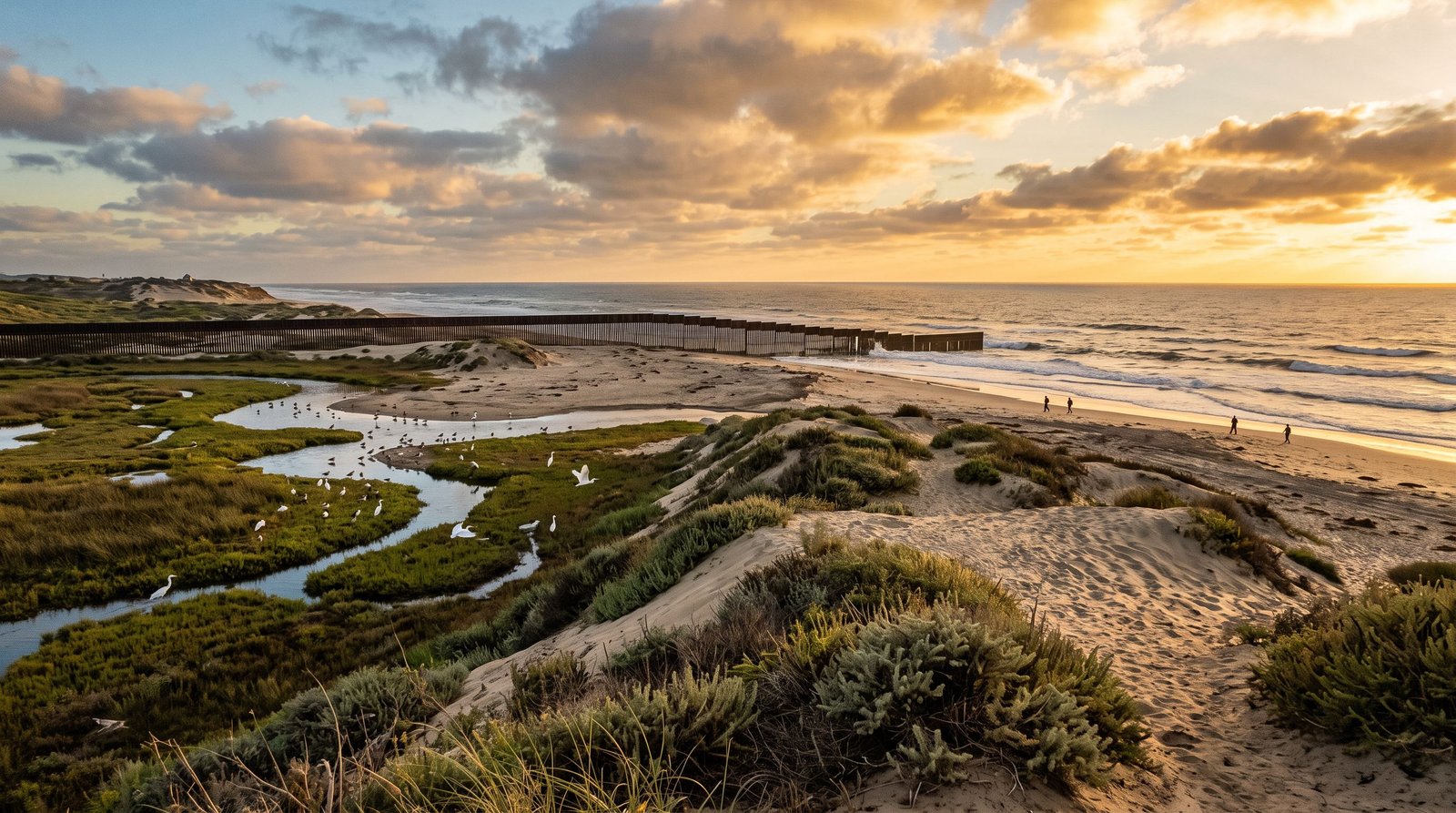
At the very southwestern tip of the continental United States, sand dunes and salt marsh meet the Pacific inside the Tijuana River National Estuarine Research Reserve — one of the largest coastal wetlands left in Southern California, and a critical nesting habitat for the threatened Western snowy plover and the endangered California least tern. The dunes themselves are fenced off in nesting season to protect both species, so the appeal here is less a single dramatic view and more the sense of standing somewhere genuinely unbothered — birdwatchers and photographers know it, but it barely registers as a San Diego day-trip idea for most visitors.
Getting there: Non-vehicular access runs daily 7am to sunset; vehicle access to Monument Road is seasonal, weekends and holidays only, and closes entirely if the road is flooded — a $5 per-vehicle fee applies when it’s open. Dogs are allowed only on Monument Mesa during vehicle-access hours. Swimming and wading are discouraged due to strong currents and pollution risk from the nearby river mouth, and Friendship Park, the border monument area itself, has been closed — check with Border Patrol (619-216-4182) for current status before planning around it.
Is It Worth the Trip?
Yes, with the caveat that this is a wildlife-and-solitude destination rather than a swimming beach — go for the birds, the dunes, and the strange feeling of the country simply running out, not for a day at the water.
The Salton Sea’s Bubbling Mud Pots: California’s Strangest Geothermal Field
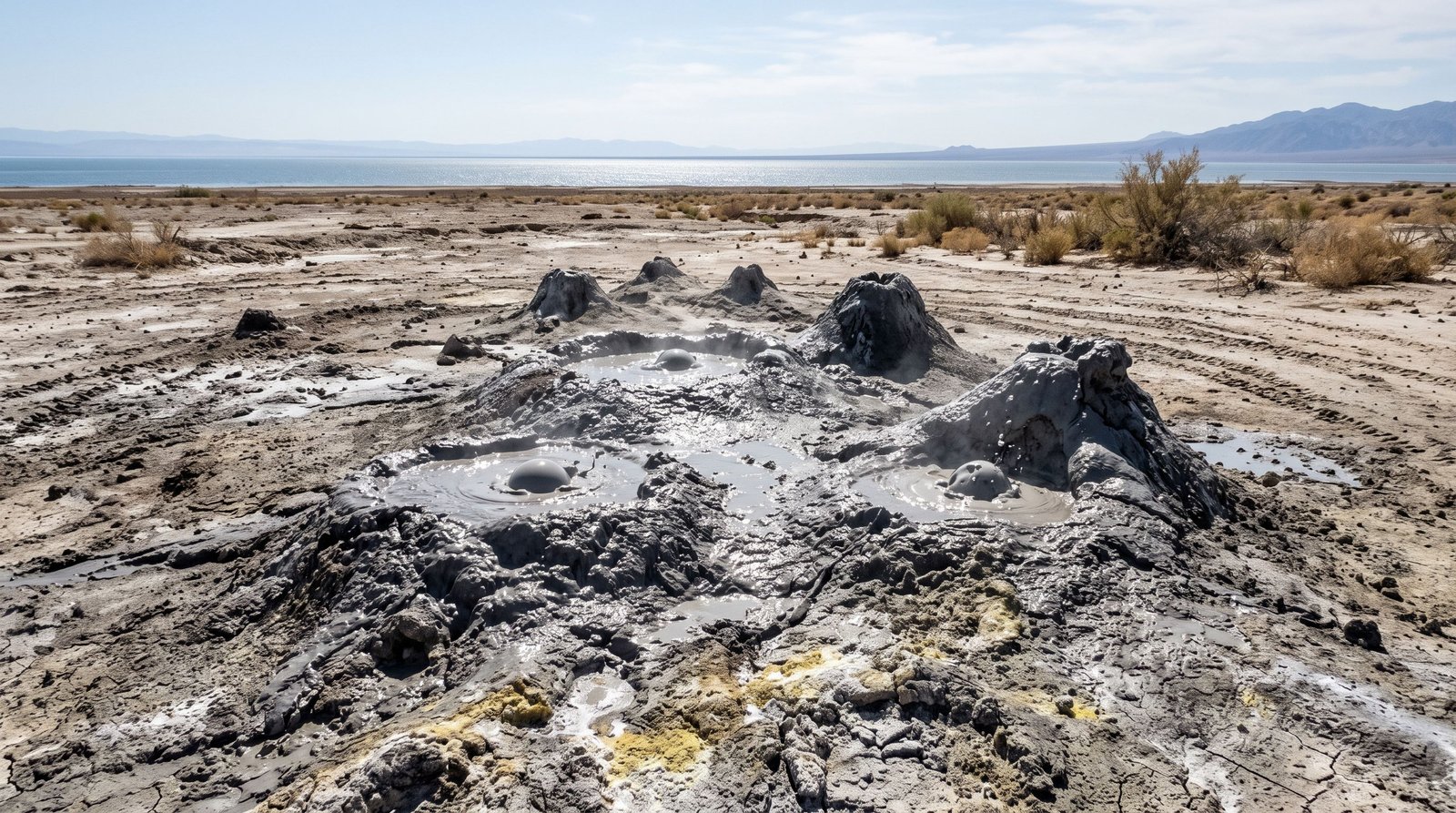
Near the southeastern shore of the Salton Sea, carbon dioxide escaping from a geothermal field pushes acidic mud up through small vents, building miniature volcano-shaped cones — some reported as tall as five feet — that bubble, spit, and occasionally collapse in on themselves. The Davis-Schrimpf Seep Field, at the intersection of Davis Road and Schrimpf Road, is the most accessible of the region’s three mud pot areas, with a short walk from a pullout to the fenced viewing area.
This is the longest drive on the list by a wide margin — close to three hours each way from San Diego — so it’s the one wonder here that only works as a dedicated full day rather than an add-on to something else. It earns the trip for sheer strangeness: nothing else in Southern California looks quite like it, and it remains almost entirely unknown outside a small circle of geology enthusiasts and desert photographers.
Getting there: Via CA-111 and Davis Road near Niland, in Imperial County. Free and always accessible, but exercise real caution: never climb on the mud volcanoes, keep a close eye on children, and leave pets at home — the ground near active vents can be unstable, and some areas are fenced specifically to keep visitors off fragile, hazardous soil.
Is the Drive Worth It?
Only if the mud pots themselves are the goal for the day — pairing this with anything else on this list would make for an exhausting amount of driving in one trip.
Why These Six and Not the Obvious Alternatives
Two San Diego “hidden gem” regulars didn’t make this list because the evidence says otherwise. Potato Chip Rock on Mt. Woodson is described by hiking guides as San Diego’s most popular trail — an Instagram-driven crowd magnet, not an overlooked one. Cedar Creek Falls is the more telling case: the U.S. Forest Service introduced a mandatory permit reservation system specifically to manage overcrowding at the falls — an official acknowledgment that a spot has outgrown “hidden” status, not a case for including it here.
Planning a Day Trip Around These Six
Five of these six cluster into realistic single-day pairings: Wind Caves and The Slot sit minutes apart in the same park and pair naturally into one desert day, Del Mar Mesa suits an easy half-day close to the coast, Three Sisters Falls rewards an early start on its own, and Border Field works well as a slower afternoon. The Salton Sea mud pots are the exception — at nearly three hours each way, they deserve their own dedicated day rather than a rushed add-on. If you’re building out a broader offbeat-California trip, the same research-first approach carried through our towns and trails worth the detour elsewhere in California and our underrated things to do in San Francisco — real sourcing, no invented superlatives, and honest tradeoffs stated plainly.
Frequently Asked Questions
Do I need a permit to visit the Wind Caves or The Slot?
No — both are free, first-come access within Anza-Borrego Desert State Park, with no reservation system in place as of this writing.
Is the Salton Sea safe to visit?
The mud pots themselves require basic caution (stay off the cones, supervise children, skip it with pets), but there’s no general safety concern with visiting the area during the day. The wider Salton Sea has real environmental issues with air quality and receding shoreline, which is part of why the region gets so little casual tourism in the first place.
Can I visit more than one of these in a single day?
Wind Caves and The Slot pair easily since they’re in the same park a short drive apart. Pairing any desert stop with Del Mar Mesa, Three Sisters Falls, or Border Field in the same day is possible but tight, given how spread out San Diego County actually is. The Salton Sea mud pots are best treated as their own trip.