
Ask most first-time visitors to Italy where they’re going, and the answer is almost always some combination of Rome, Florence, and Venice. That’s not a mistake — all three earn the hype. But Italy has 20 regions, and international attention concentrates on a handful of cities inside just three of them. The other regions aren’t empty of anything worth seeing; they’re just competing for attention against three of the most photographed cities on Earth, the same dynamic behind plenty of other overlooked corners of Europe.
This guide looks at five of them: a Byzantine mosaic city on the Adriatic, a Habsburg-era port that never quite became “Italian” in the way people expect, a Renaissance lake city that’s easy to reach and easy to skip, a Raphael’s hometown with no train station, and a Sicilian island old town with a documented, if modest, upward trend in visitors. None of these are secret. All of them see real, measurable domestic and international tourism. What they share is that they’re genuinely overshadowed by the fame of Italy’s three biggest names, for reasons that mostly come down to marketing history rather than a lack of substance.
How this guide was researched: Tripvorra is a travel research and planning publication; this article was compiled through desk research, not an in-person visit to any of the five places below. We prioritized official sources for every verifiable claim — UNESCO’s own World Heritage listings, Italy’s national tourism agency (ENIT/Italia.it), regional and municipal tourism boards, official museum and monument ticketing sites, and national rail operators — and we’ve flagged the handful of places where official sources disagreed with each other, or didn’t exist at all, rather than picking a number and presenting it as settled fact. Prices, hours, and transit schedules in Italy change; treat everything below as a starting point for your own final check, not a guarantee.
Last verified: August 28, 2026.
Why These Five, and Not Others
We didn’t set out to fill a quota of five. A sixth candidate, Matera, was seriously considered and dropped: Matera’s Sassi district became a UNESCO site in 1993, but its transformation into a mainstream destination is recent and well documented — 2019 European Capital of Culture status and a starring role in the James Bond film No Time to Die pushed it past one million visitors that year, and a 2021 report from the Global Sustainable Tourism Council specifically flagged rising housing costs, resident displacement, and strain on the historic center as consequences. Calling Matera “underrated” today would not be honest, so it isn’t on this list.
The five places that made the cut share three things: each has a genuine, verifiable historical or architectural claim to significance (mostly a UNESCO listing, in one case a specific and well-documented cultural history instead), each is reachable by regular Italian public transport without a private guide or specialized permit, and for each one we could find real practical information — transit times, admission fees, opening patterns — solid enough to help a reader actually plan a visit, not just admire a photo.
| Place | Region | Known For |
| Ravenna | Emilia-Romagna | Byzantine-era mosaics, Dante’s tomb |
| Trieste | Friuli Venezia Giulia | Habsburg port history, coffeehouse culture |
| Mantua (Mantova) | Lombardy | Renaissance Gonzaga court, lake setting |
| Urbino | Marche | Raphael’s birthplace, hilltop Ducal Palace |
| Ortigia (Syracuse) | Sicily | Ancient Greek and Baroque island old town |
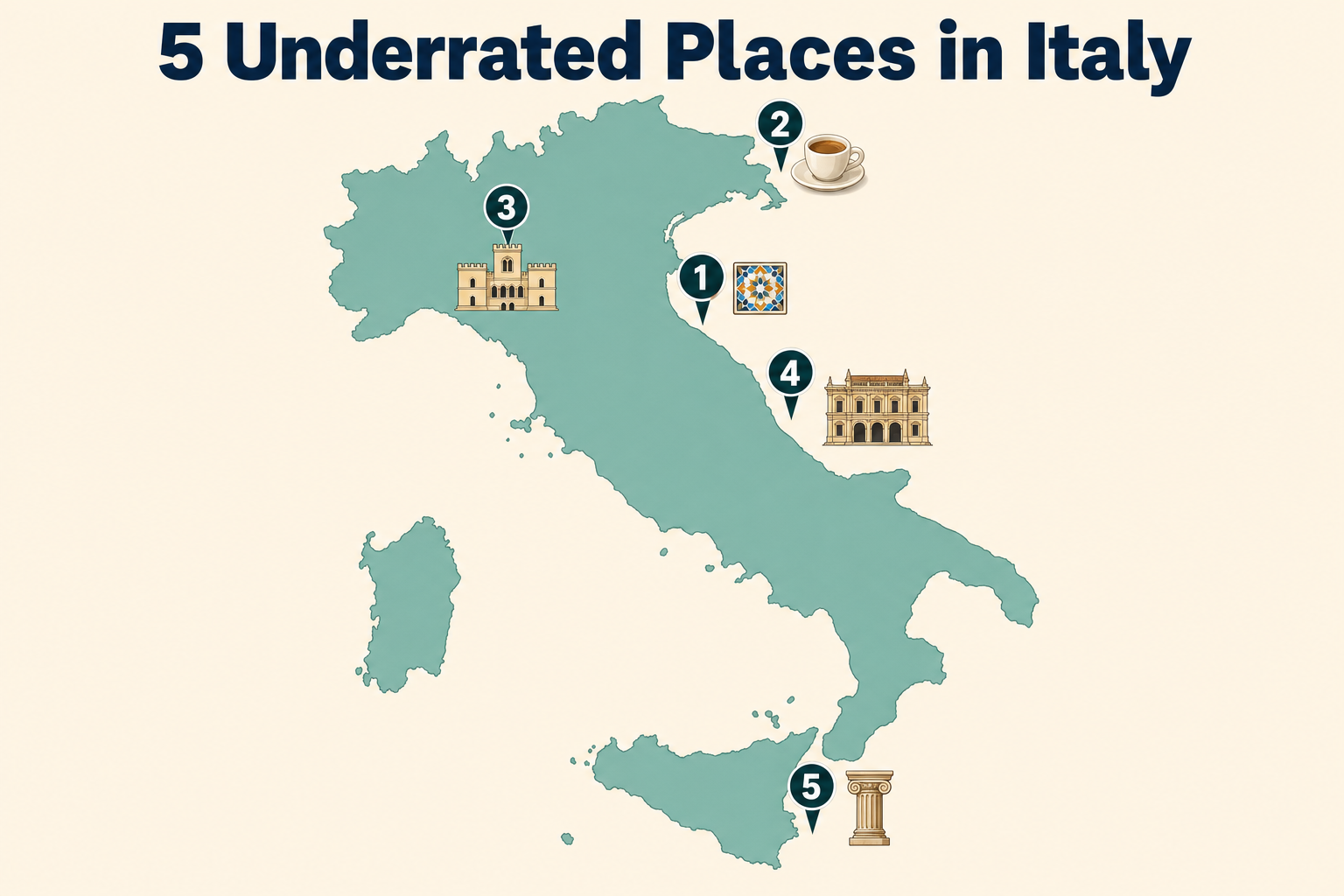
Map key: 1. Ravenna • 2. Trieste • 3. Mantua • 4. Urbino • 5. Ortigia (Syracuse)
1. Ravenna, Emilia-Romagna: Byzantine Mosaics Without the Venice Crowds
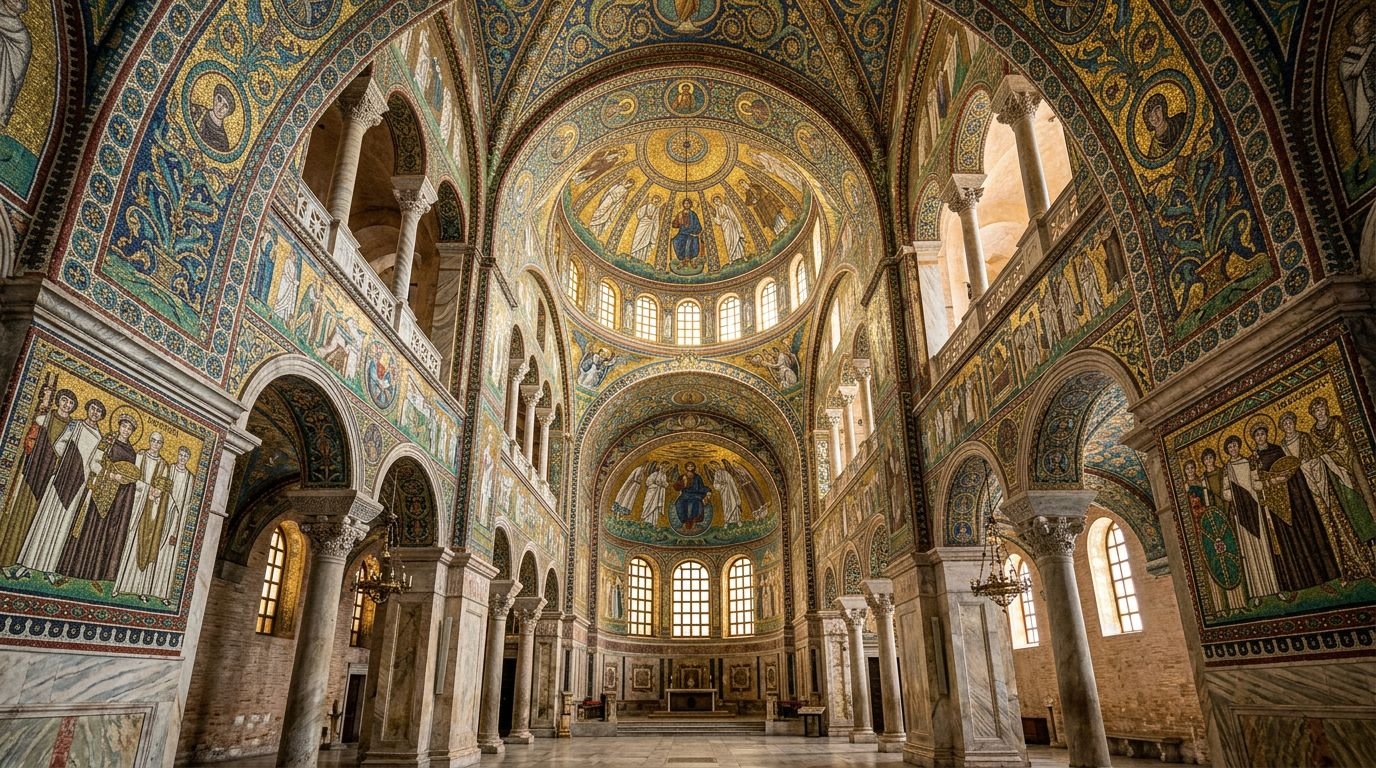
Ravenna was the capital of the Western Roman Empire starting in 402 CE, and later the seat of Byzantine Italy through the 8th century — a run at the center of power that most people associate with Rome or Constantinople, not a mid-sized city on Italy’s Adriatic coast. UNESCO inscribed eight of its buildings jointly in 1996 as the “Early Christian Monuments of Ravenna”: the Mausoleum of Galla Placidia, the Neonian Baptistery, the Basilica of Sant’Apollinare Nuovo, the Arian Baptistery, the Archiepiscopal Chapel, the Mausoleum of Theodoric, the Basilica of San Vitale, and the Basilica of Sant’Apollinare in Classe. The mosaics inside several of these — gold-ground, densely detailed, some over 1,500 years old — are the reason to come.
Ravenna also holds Dante Alighieri’s actual tomb. He died there in exile in 1321, and Florence spent centuries unsuccessfully trying to get his remains back; Franciscan friars hid them from a Medici-era attempt in 1519, and they went missing for roughly 200 years before being rediscovered in a monastery wall in 1865. The current tomb, a small neoclassical building constructed in 1780–81, is free to visit — a detail that says something about how the two cities’ claims to Dante still sit uneasily against each other.
What we couldn’t find is a direct, official comparison of Ravenna’s visitor numbers against Venice’s — that specific statistic doesn’t appear to exist in any government or tourism-board report we located, so we’re not going to invent one. What we can say with more confidence: Ravenna has no major airport of its own, its historic center is compact and walkable, and the mosaic sites are split between two separate ticketing bodies rather than one combined pass — practical friction that plausibly keeps casual day-trippers away in a way that Venice’s single, unmissable landmark doesn’t experience.
| Getting There | Regional train from Bologna, about 1 hour 15 minutes. No major airport in Ravenna itself; Bologna’s is the nearest. |
| Getting Around | The historic center is small enough to see almost entirely on foot; Sant’Apollinare in Classe is outside the center and needs a bus, bike, or short drive. |
| Tickets | Five of the eight UNESCO sites (including San Vitale and Galla Placidia) are sold through Ravenna Mosaici on tiered combined tickets (2, 4, or 5 monuments); the other three are ticketed separately through RavennAntica. Timed entry is required for the Mausoleum of Galla Placidia and the Neonian Baptistery. We found genuinely conflicting euro figures across different checks of the same official ticket page during research, so we’re deliberately not quoting a specific price here — check current tiers and prices directly at the official ticketing site before you go. |
Worth Knowing Before You Go
The two-operator ticketing split is a genuine planning annoyance, not a minor detail — budget extra time to sort out which sites need which ticket. On the upside, nothing here requires the kind of advance booking rush that a Venice or Florence landmark does; even the timed-entry sites have historically been easier to get into on short notice than their equivalents in bigger cities, though that can change with demand.
2. Trieste, Friuli Venezia Giulia: A Port City That Was Never Quite “Italy” the Way You’d Expect
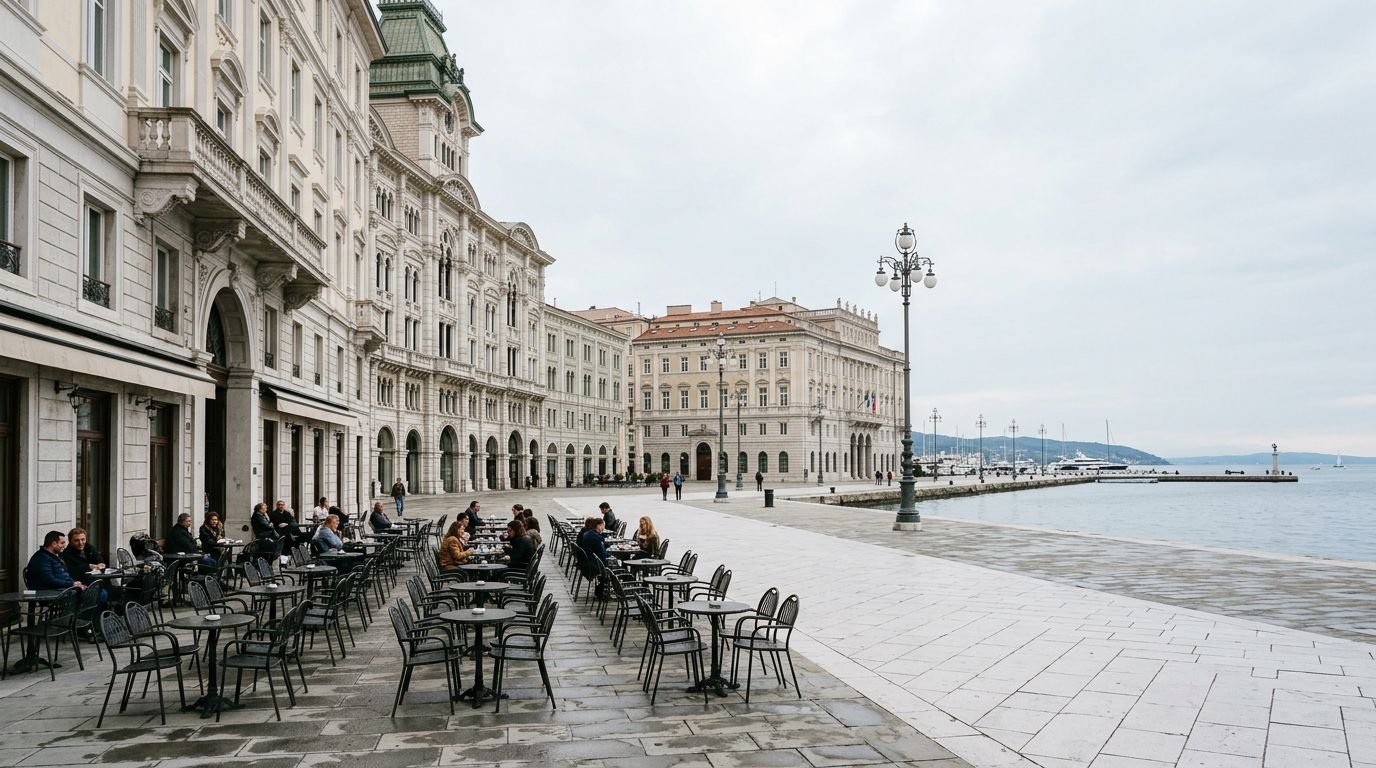
Trieste doesn’t have a UNESCO World Heritage listing, and we want to be upfront about that rather than imply otherwise — it’s included here for a different reason. From 1719, when Charles VI declared it a free port, until the end of the First World War, Trieste was the primary maritime outlet of the Austro-Hungarian Empire, not an Italian city in any meaningful sense. It only became part of Italy after the 1920 Treaty of Rapallo, and a further territorial dispute over the city wasn’t resolved until 1954. That history shows up everywhere: grand Central European architecture facing the Adriatic, a historic coffeehouse culture that the city’s own tourism board brands “la città del caffè,” and a literary connection to James Joyce, who lived there for roughly eleven years starting in 1904, taught English at the Berlitz school, and wrote most of Dubliners and drafted early sections of Ulysses while living in the city.
An NPR feature from 2021 makes the underrated case directly, describing Trieste as a city “few tourists venture as far as” while Venice deals with well-documented overtourism a couple of hours up the coast — a fair characterization, though it’s a journalist’s observation, not a government statistic, and we’re presenting it as such. One thing that’s fully verifiable: the bora, a powerful local wind descending from the Karst plateau, with gusts that Italy’s national tourism agency describes as capable of exceeding 150–160 km/h. It’s a real, sometimes disruptive weather factor for outdoor plans, not a bit of local color invented for atmosphere.
We looked for a claim that Trieste holds UNESCO Creative City of Literature status, since it comes up in some travel coverage — it does not currently hold that designation. There are press reports of the region supporting a candidacy bid, which is different from an actual listing, and we’re not going to blur that distinction.
| Getting There | Trieste Airport (Ronchi dei Legionari) has its own railway station on the Venice–Trieste line. By train from Venice, aggregator data puts the fastest journey around 1 hour 54 minutes on Frecciarossa/Intercity services — we couldn’t confirm this exact figure on Trenitalia’s own site, so treat it as a solid estimate rather than an official number. |
| Miramare Castle (official prices, Aug. 2026) | Castle plus exhibition: €17 full / €7 reduced (ages 18–25). The surrounding park is free year-round. Prices confirmed directly on the site’s official ministry-run ticket page. |
| Weather Note | The bora wind is most associated with the colder months; check a local forecast if you’re planning anything on the water or along the exposed seafront. |
Who Is This For?
Trieste rewards people who like history with an asterisk on it — a city whose Italian identity is genuinely recent and contested, not a given. It’s a weaker fit if you’re chasing the postcard version of Italy: the architecture here reads as Vienna-by-the-sea more often than it reads as la dolce vita, and if that’s not what you came to Italy for, this may not be the detour for you.
3. Mantua, Lombardy: A Renaissance Court City an Hour From Verona
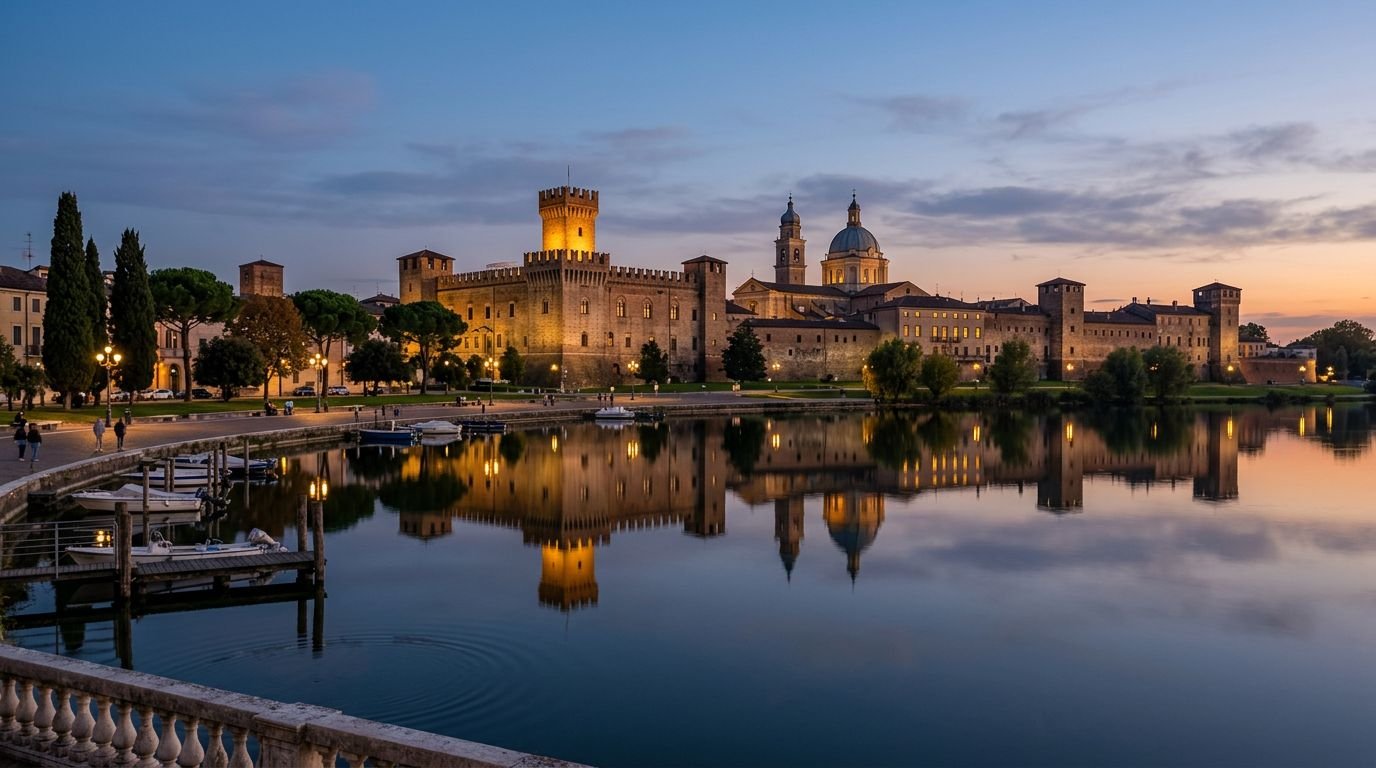
Mantua’s lakes look like a natural feature, but they aren’t: after the city became a free commune in 1115, the engineer Alberto Pitentino dammed and diverted the Mincio river to encircle the city with water for defensive purposes, incorporating an existing lake in the process. The result is the “city on the water” look Mantua has today, and it long predates the Renaissance court the city is actually famous for.
That court belonged to the Gonzaga family, who ruled Mantua from 1323 and turned it into one of the more important Renaissance capitals in northern Italy, hosting figures like Ariosto and Titian and commissioning the architect Giulio Romano to redesign parts of the city, including the Palazzo Te. UNESCO recognized the result in 2008, inscribing Mantua jointly with the nearby “ideal city” of Sabbioneta as a single World Heritage listing under the name “Mantua and Sabbioneta.”
Here’s where we want to be precise rather than lean on marketing language: Italy’s own national tourism site calls Mantua “one of Italy’s major art cities,” not a hidden one, and its flagship Palazzo Ducale had its best year on record in 2023, with local press reporting nearly 300,000 visitors. That’s real, measured growth, not stagnation, and it means the honest pitch for Mantua isn’t “nobody knows about this place” — it’s “this is a nationally significant Renaissance city that still draws a fraction of the crowds you’d hit in Verona, Florence, or Venice, on any given day.”
| Getting There | Direct train from Milan Centrale, about 2 hours, roughly 10 departures a day, fares reported from around €11.50 second class. From Verona Porta Nuova, around 46 minutes to 1 hour 15 minutes depending on the service, about 9 trains a day. Mantua has no airport of its own; the nearest is Verona, about 43 km away. |
| Palazzo Ducale (official prices, effective January 2026) | €18 full, €11 reduced, €2 for EU citizens aged 18–25. This includes the Camera degli Sposi (Mantegna’s frescoed Bridal Chamber), which requires a reserved, timed entry slot capped at 30 visitors per 10 minutes — book ahead through the museum’s official ticketing partner rather than assuming you can walk straight in. |
| Palazzo Te | Widely reported at around €15 full / €11 reduced by secondary sources, but we could not confirm this directly on the museum’s own site during research — verify before you budget around it. |
Is It Worth the Detour?
Yes, particularly if you’re already doing a Milan-to-Verona leg and can build in a stop. The honest downside is access: no airport of its own, train frequency that’s reasonable but not commuter-level, and one of its two headline sights running on a strict timed-entry system that punishes showing up without a plan.
4. Urbino, Marche: Raphael’s Hometown, Reachable Only by Bus
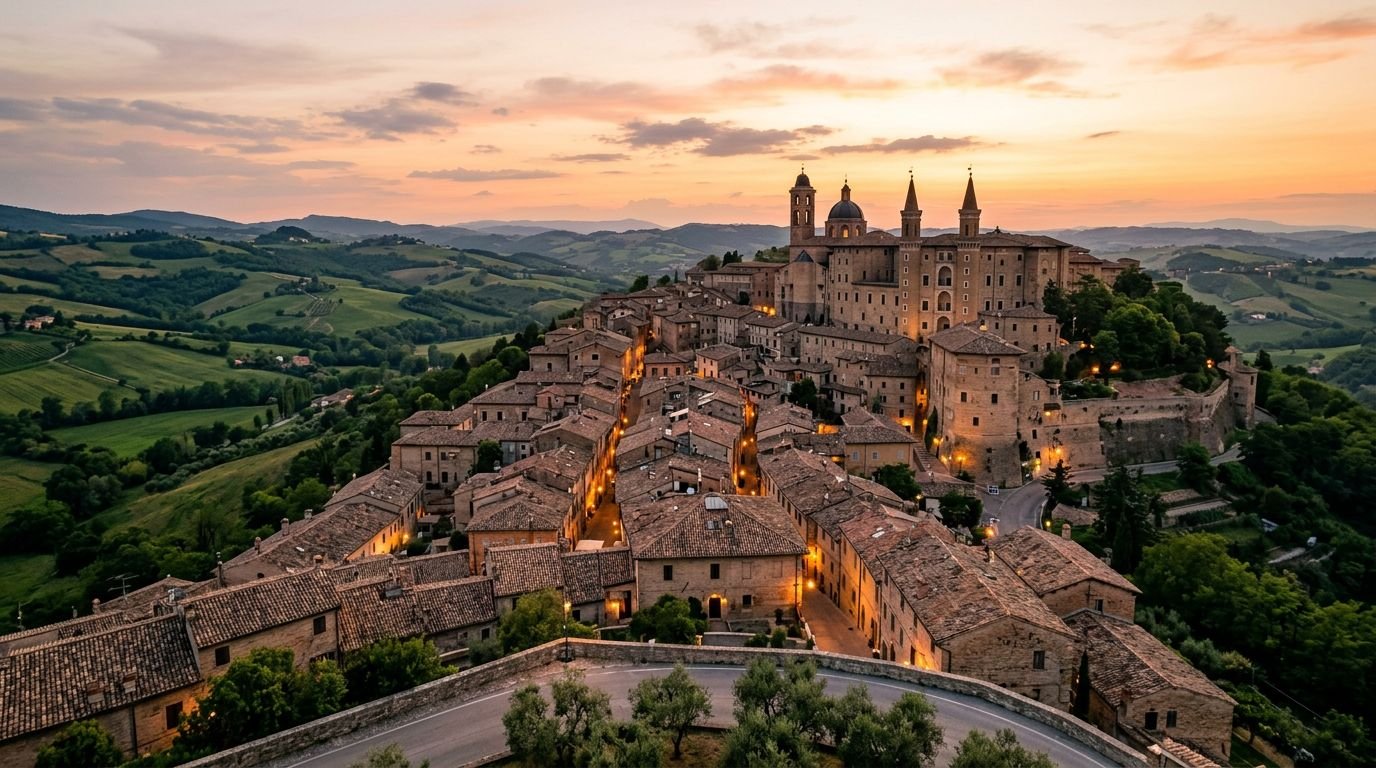
Urbino has no train station, full stop. The nearest one is in Pesaro, about 30 kilometers away on the Bologna–Ancona line, and getting from there into Urbino means a roughly 50-minute ride on the Adriabus regional bus line, which runs every 30 to 60 minutes and costs around €3.90 one-way. A free elevator lifts arriving visitors from the bus terminal up into the historic hilltop center. It’s a small, specific piece of friction that keeps a certain kind of casual tourist away entirely — you have to actually intend to go to Urbino; it’s not a stop you make by accident.
What’s waiting there is a UNESCO-listed historic center (inscribed 1998) built around the Palazzo Ducale, the court of the 15th-century condottiero and patron Federico da Montefeltro. It’s also, unambiguously, Raphael’s hometown: he was born there on March 28, 1483, and his childhood home is now a small museum. The city has run a university since 1506, and current enrollment figures put the student population in the tens of thousands — large enough, relative to Urbino’s small size, that the town’s character shifts noticeably between term time and the quieter summer months, though we couldn’t find an official source quantifying exactly how tourist crowds and term-time student life interact season to season, so we’re flagging that as a reasonable inference rather than a documented fact.
We looked for an official or statistical source calling Urbino “underrated” or comparing its visitor numbers to Rome, Florence, or Venice, and didn’t find one — the case for including it rests on the access difficulty and the small scale of the town itself, both of which are independently verifiable, rather than on a tourism-board endorsement of the underrated framing.
| Getting There | Train to Pesaro station, then the Adriabus “Linea Verde” bus to Urbino (about 50 minutes, roughly €3.90). Nearest airports are Rimini (about 60 km) and Ancona (about 90 km); expect a journey of around 2 to 2.5 hours from Ancona airport door-to-door. |
| Galleria Nazionale delle Marche / Palazzo Ducale (official prices) | €10 full, €2 reduced, plus a €1 reservation fee. Free on the first Sunday of the month and for under-18s. Open Tuesday–Sunday 8:30am–7:15pm (last entry 6:15pm); Mondays run shorter hours. |
Worth Knowing Before You Go
The bus-only access is the whole story here, practically speaking: it’s not difficult, but it does require checking the Adriabus timetable in advance rather than assuming a train will get you there. Outside the academic year and peak summer, expect a quieter, more small-town atmosphere with correspondingly fewer services open than in a major tourist city.
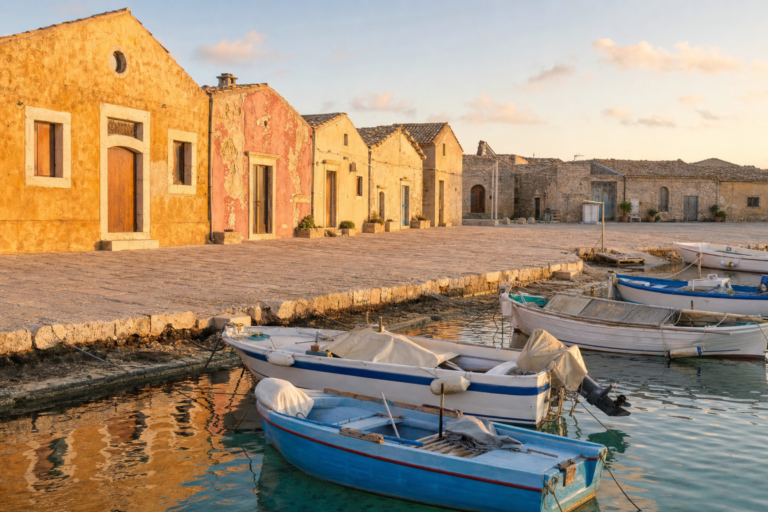
5. Ortigia (Syracuse), Sicily: An Island Old Town With Real, Measurable Growth
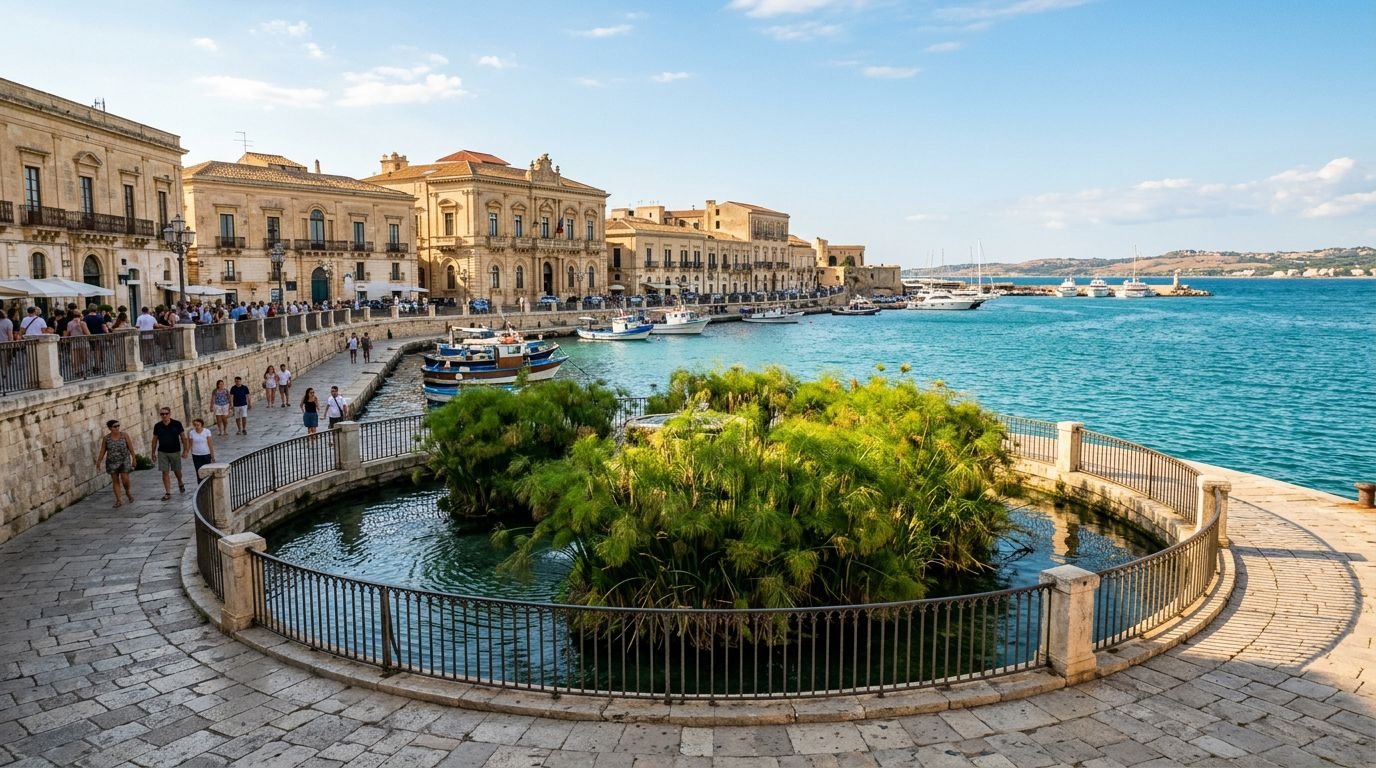
Ortigia is the small island that forms the historic core of Syracuse, on Sicily’s southeastern coast, and it’s the one destination on this list where we found actual comparative visitor data rather than having to rely on inference. A 2024 report from the Sicilian regional government’s tourism office puts Syracuse province’s overnight stays at just under 1.5 million for the year, against roughly 4 million each for the Palermo and Messina (which includes Taormina) provinces — while Syracuse posted the fastest year-over-year arrivals growth of the three, at 15%. That’s a genuinely sourced way of saying Ortigia is a real, growing destination that still receives meaningfully fewer visitors than Sicily’s other major draws, let alone Rome, Florence, or Venice.
The island was inscribed by UNESCO in 2005 as part of “Syracuse and the Rocky Necropolis of Pantalica,” alongside a separate archaeological site about 40 kilometers away. Ortigia itself holds the Temple of Apollo, described by Italy’s national tourism site as the oldest Doric temple in Sicily, and the Fountain of Arethusa, a freshwater spring on the waterfront tied to a Greek myth about a nymph transformed into water to escape a river god. Archimedes was born in Syracuse around 287 BCE, though the exact site of his birth within the ancient city isn’t something we could pin down to a specific verifiable location.
The city’s other major draw, the Neapolis Archaeological Park with its Greek theatre and Roman amphitheater, is not on Ortigia — it’s roughly a 35-minute walk away on the mainland part of Syracuse, which is worth knowing before you plan your day around staying on the island.
| Getting There | Nearest airport is Catania. By train, Catania Centrale to Siracusa runs about 14 times a day, average journey 1 hour 18 minutes, fastest around 1 hour 10 minutes. Direct airport buses also run the route in around an hour, though we couldn’t confirm exact minutes on the bus operators’ own sites. |
| Neapolis Archaeological Park (official regional price) | €14 full, €7 reduced, per the official regional park ticket page. Two other sources we checked gave different figures, which suggests pricing has changed at least once recently — confirm the current rate before you go. |
| Weather | July and August regularly reach the low 90s Fahrenheit (around 31°C) with little rain and little natural shade on Ortigia’s stone streets. May, June, and September are markedly more comfortable for walking. |
Who Is This For?
Ortigia suits travelers who want ancient history and Baroque architecture in one compact, walkable place, and who are comfortable that this is a rising destination rather than a permanently quiet one — the growth numbers above suggest it won’t stay this uncrowded indefinitely. It’s a weaker fit for high summer unless you’re prepared for real heat with little shade.
Planning a Trip Around These Five
These five places don’t form a natural single route — they’re spread across the north, center, and south of the country, and stitching all five into one trip would mean an unreasonable amount of transit time relative to time actually spent in any of them. If you’re building a wider trip around avoiding overtourism rather than sticking to Italy specifically, it’s worth browsing our broader roundup of underrated travel destinations around the world for other regions with the same access-friction logic. Within Italy, a more realistic approach is to treat each one as an add-on to a trip you’re already planning in its region: Mantua fits naturally alongside Verona or Milan, Trieste alongside Venice, Ravenna alongside Bologna or Florence, Urbino alongside a Marche or Emilia-Romagna coastal itinerary, and Ortigia alongside a wider Sicily trip that likely also includes Catania or Palermo.
Where we found conflicting or unverifiable numbers above — a ticket price, a journey time, a “best season” — we’ve said so directly rather than smoothing it over. Italian museum and transit pricing changes often enough that a number confirmed today can be wrong in three months; use the official links in the Sources section below to check current figures before you travel.
Visiting Thoughtfully
Mantua and Ravenna both depend on visitors actually paying for admission to their ticketed sites to help fund the upkeep of buildings that are, in several cases, well over a thousand years old — walking past on the free portions and skipping the paid interiors is an understandable budget choice, but it’s worth knowing that the interiors are where the maintenance money largely comes from. In Urbino, remember that this is a functioning university town with residents living around the tourist sites, not a place built for visitors; the same applies, to a lesser extent, to the residential parts of Ortigia beyond its most photographed waterfront. And if Matera’s overtourism experience is any indication, the more any of these five places gets written about — including in guides like this one — the more that could change; visiting with some awareness of that trajectory, rather than assuming quiet conditions are permanent, seems like the reasonable position to take.
Frequently Asked Questions
Are these places actually less crowded than Rome, Florence, and Venice, or just less famous?
Both, but to different degrees depending on the place. Ortigia has real, sourced visitor data showing it receives meaningfully fewer overnight stays than Sicily’s other major destinations, let alone Italy’s big three. For Ravenna, Trieste, Urbino, and Mantua, we could not find an official source directly comparing their visitor numbers to Rome, Florence, or Venice — the case for each rests on genuine access friction (no airport, no train station, split ticketing, timed-entry bottlenecks) and, in Mantua’s case, explicit acknowledgment that it’s a nationally promoted, growing destination rather than a secret.
Can these five be combined into one Italy trip?
Not comfortably as a single loop — they’re spread across four different regions in the north, center, and south, with Sicily requiring a separate flight or long ferry/train combination from the mainland four. Pairing one or two with a larger regional itinerary works better than trying to visit all five in sequence.
Do I need a car for any of these?
No. All five are reachable by train, regional bus, or a combination of the two, and each historic center is walkable once you arrive. Mantua and Ravenna are the most straightforward rail connections; Urbino specifically requires a bus rather than a train for the final leg.
Which one is the easiest starting point if this is your first trip beyond the major cities?
Mantua and Ravenna have the most direct, frequent train connections and the most centrally located historic centers, making them the least logistically demanding of the five. Urbino’s bus-only access and Ortigia’s need for a flight into Catania make those two better suited to travelers who are already comfortable with a bit of extra planning.
Could any of these become as popular as Venice or the Cinque Terre?
Mantua’s museum visitor numbers are already climbing, and Ortigia’s regional tourism data shows the fastest growth rate of the destinations we compared it against. Neither is at Venice-level saturation today, but both show a clearer upward trend than Ravenna, Trieste, or Urbino in the sources we found — worth factoring in if “quiet” is the main reason you’re considering a visit.
Research & Sources
This guide was compiled through desk research, not an in-person visit (see the note near the top of this article). The following official and primary sources were used to verify the facts above:
- Ravenna: UNESCO World Heritage Centre — Early Christian Monuments of Ravenna; Ravenna Turismo, official municipal tourism site; Ravenna Turismo — Dante Alighieri’s Tomb; Ravenna Mosaici, official ticketing site; RavennAntica, official ticketing site.
- Trieste: Italia.it (ENIT) — Trieste history and facts; Discover Trieste, official tourism portal; Miramare Castle, official ministry ticket page; Museo Joyce Trieste, official chronology.
- Mantua: UNESCO World Heritage Centre — Mantua and Sabbioneta; Italia.it (ENIT) — Mantua; Ministero della Cultura — Palazzo Ducale di Mantova; Trenord, official rail operator.
- Urbino: UNESCO World Heritage Centre — Historic Centre of Urbino; Galleria Nazionale delle Marche, official site; Italia.it (ENIT) — Raphael’s Birth House.
- Ortigia / Syracuse: UNESCO World Heritage Centre — Syracuse and the Rocky Necropolis of Pantalica; Regione Siciliana, official Neapolis Archaeological Park ticket page; Regione Siciliana, Assessorato del Turismo — “Il turismo in Sicilia, Rapporto 2024” (PDF); Italia.it (ENIT) — Temple of Apollo.
- Matera (context, not featured): Global Sustainable Tourism Council / Destination Stewardship Center — “Resurrected Matera Faces Overtourism”.
If you find a price, schedule, or fact above that’s changed since our last check, we’d like to know — this article will be revisited periodically as source information updates.