
“Hidden gem” gets used loosely in travel content, so let’s be precise about what it means here: a place that most visitors to New York never see, that isn’t difficult or dangerous to reach, and that has real substance once you arrive. This guide covers three of them, spread across New York City and upstate New York, and it’s deliberately short. Three places done honestly beats fifteen padded with filler.
A note on how this guide was built: Tripvorra’s editorial team researched these three destinations using New York State Parks visitation data, NYC borough tourism statistics, and reporting from regional travel writers and local publications — not a personal visit. We’ve linked to primary sources throughout so you can verify details yourself, and we’ve included practical budget and packing information pulled from official park and transit sites rather than guesswork.
How We Chose These Three Places
Every destination on this list had to clear three bars. First, it had to be genuinely overlooked relative to New York’s headline attractions — measured against visitor numbers for sites like Times Square, the Statue of Liberty, or Niagara Falls, not against zero. Second, it had to be reachable by an average traveler without technical hiking skills, a permit, or a multi-day expedition. Third, it had to offer enough to justify the trip on its own, not just a photo op. You can see New York State Parks’ own attendance figures on their annual visitation report, which is part of what we used to compare parks against each other.
The 3 Hidden Gems at a Glance
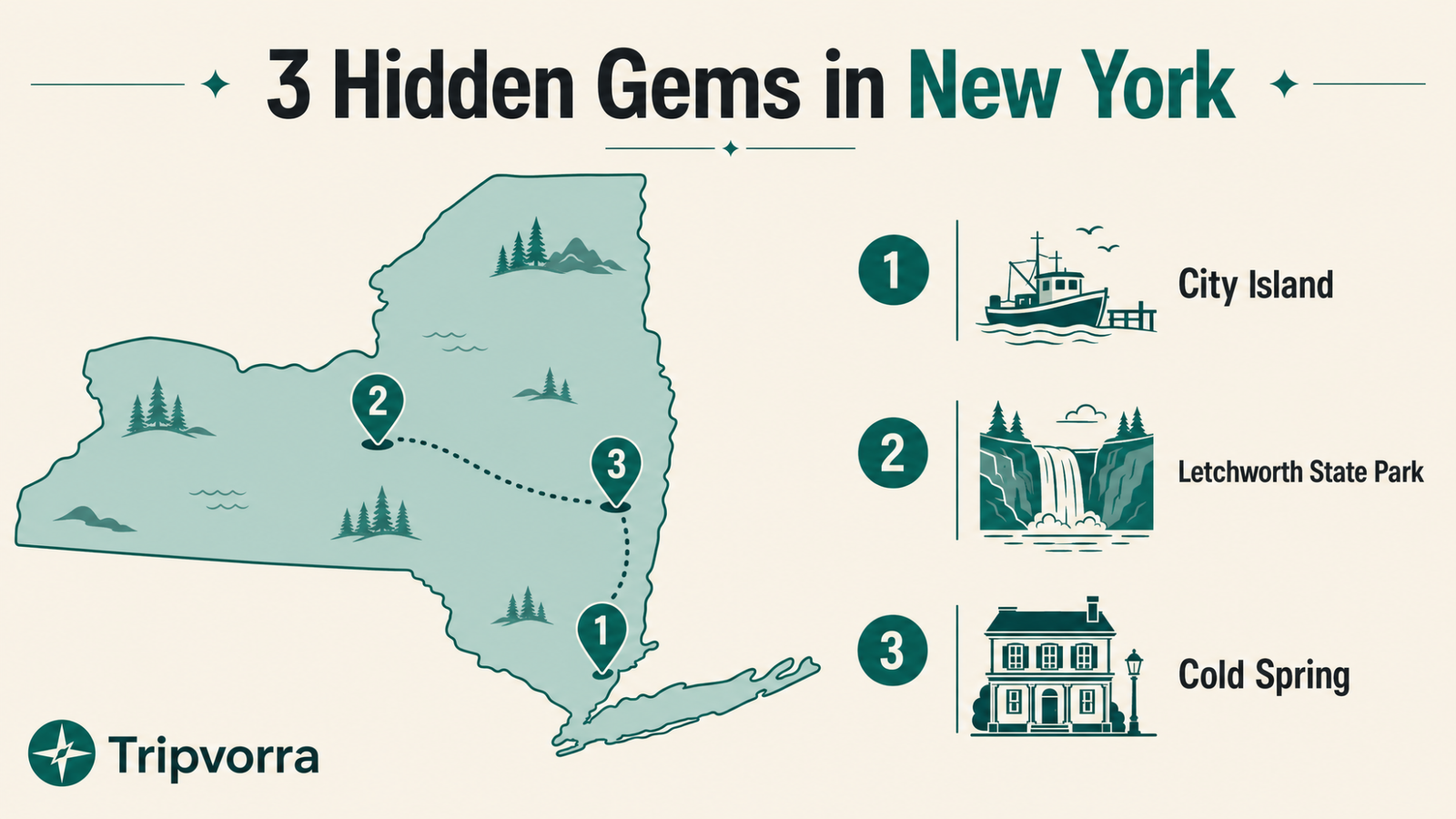
- City Island, The Bronx — a small fishing-village neighborhood inside New York City itself
- Letchworth State Park — a 17-mile river gorge in western New York with three major waterfalls
- Cold Spring — a Hudson Valley river town with hiking, antiques, and Hudson River views
1. City Island, The Bronx
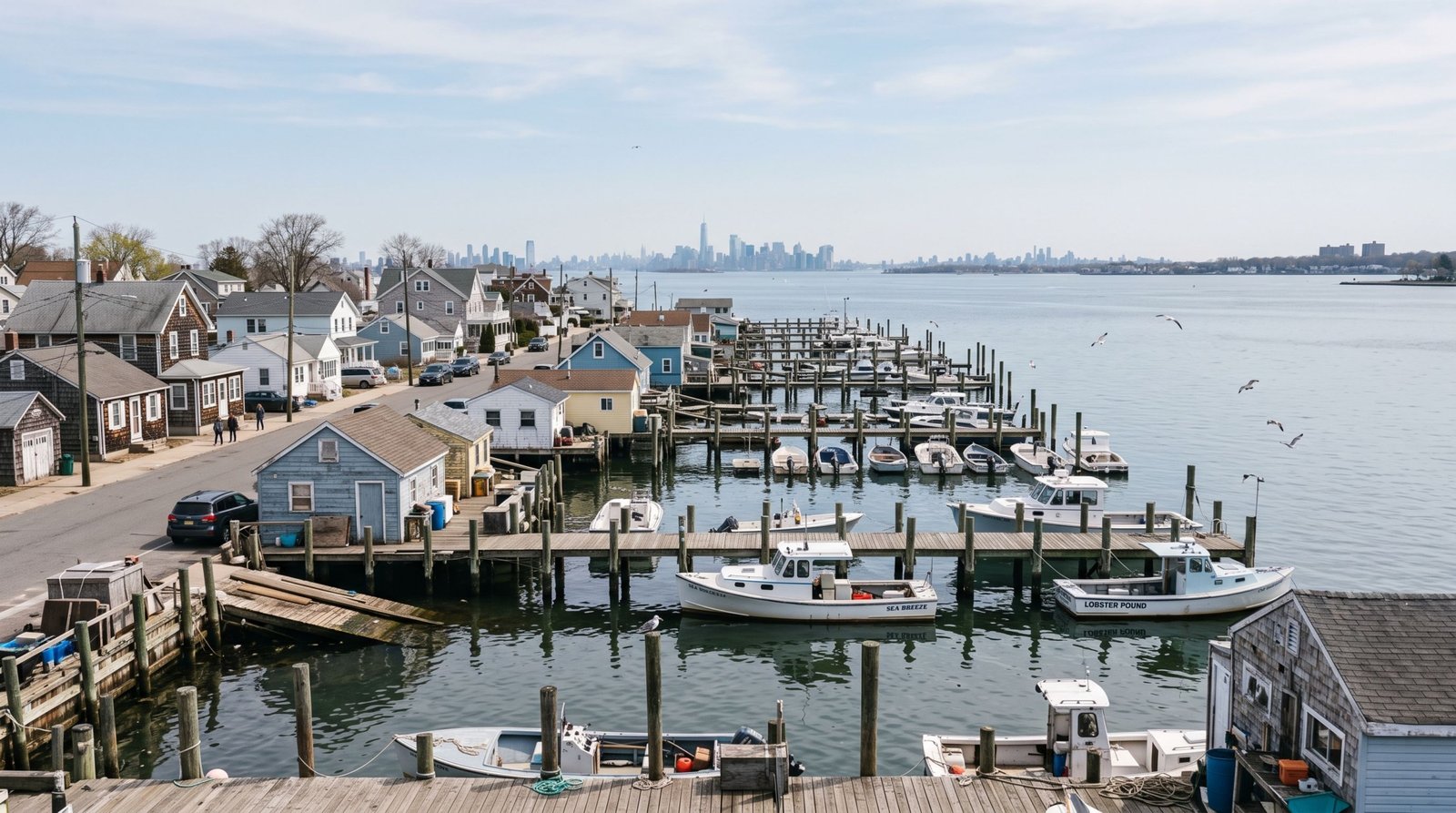
City Island sits at the far northeastern edge of the Bronx, connected to the rest of New York City by a single bridge, and it barely feels like part of the same city. It’s a mile-and-a-half-long strip of clapboard houses, boatyards, and seafood restaurants that has more in common with a small New England fishing town than with Manhattan twenty miles south. Most visitors to New York never make it this far into the Bronx, and that’s exactly why it holds up as a genuine hidden gem rather than a marketed one.
The main draw is simple: walk City Island Avenue end to end, stop at a seafood shack for lunch, and spend an hour at the free City Island Nautical Museum, which covers the neighborhood’s long history building America’s Cup racing yachts. Pelham Bay Park, the largest park in New York City and more than three times the size of Central Park, is a short bus ride away if you want a beach or hiking trail afterward.
Budget to Visit
- Getting there: $2.90 one-way by MTA subway + Bx29 bus from Manhattan (a standard MetroCard/OMNY fare covers the transfer)
- Parking: free street parking is generally available, unlike almost anywhere else in NYC
- Entry fee: $0 — the neighborhood, waterfront, and museum grounds are free to walk
- Museum admission: free, donations welcome
- Food: $20–$45 per person for a seafood lunch, depending on the restaurant
- Typical day-trip total: roughly $25–$50 per person, mostly food
Essentials to Bring
- Comfortable walking shoes — the whole visit is on foot along one main avenue
- Cash or a transit card loaded for the subway-plus-bus fare
- A light jacket if you’re near the water in spring or fall; it’s noticeably breezier than inland Bronx
- Check restaurant hours in advance — several close on weekdays outside peak season
- Best for: a slow half-day trip, seafood, and a break from Manhattan crowds
- How to get there: 6 train to Pelham Bay Park, then the Bx29 bus
- Best time to visit: May through October, when restaurant patios and the museum are fully open
- Worth knowing: it’s still an active NYC neighborhood with residents going about their day, not a tourist attraction, so it’s quiet outside summer weekends
2. Letchworth State Park
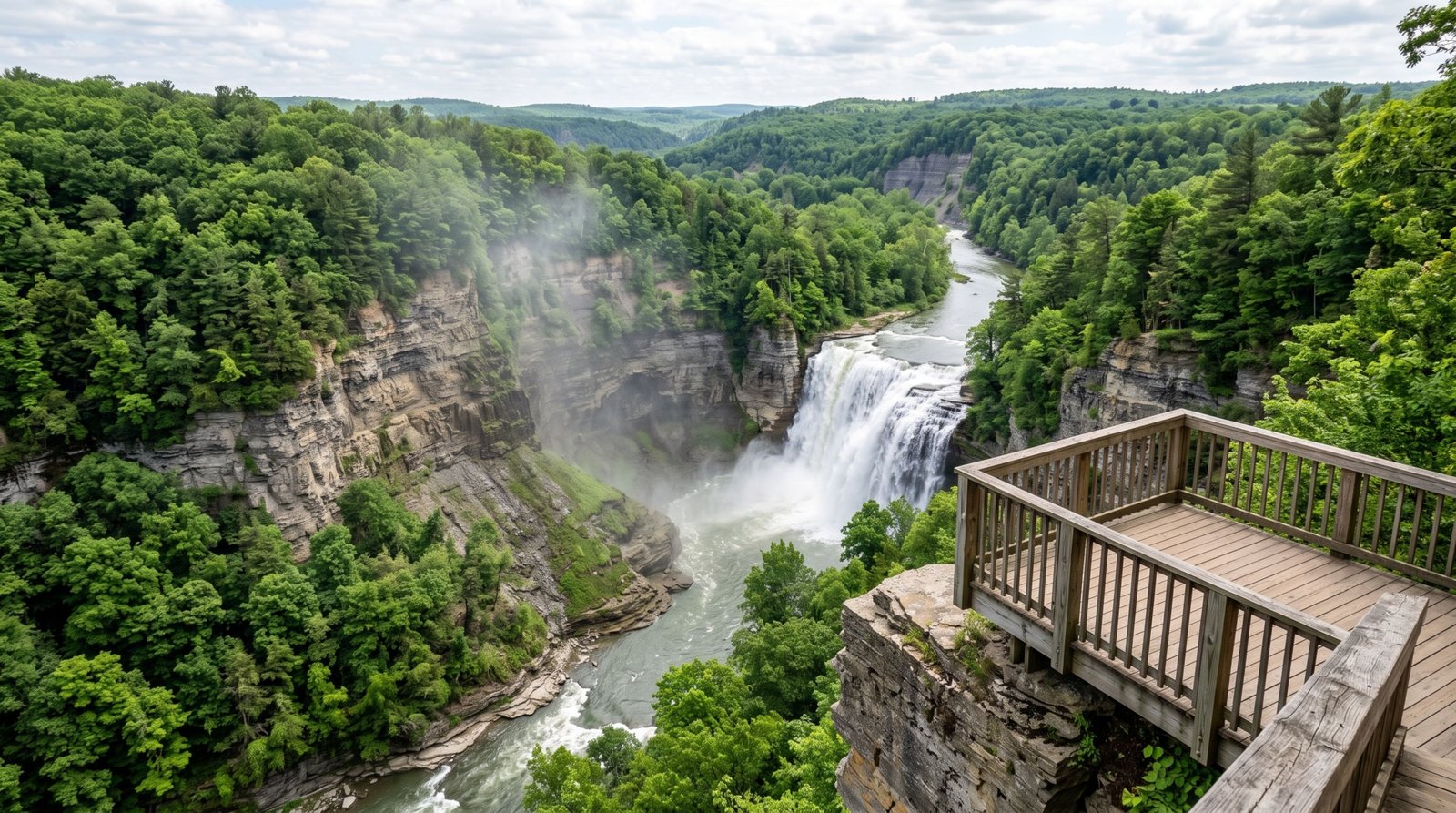
Letchworth State Park runs for 17 miles along the Genesee River in western New York, cutting a gorge up to 600 feet deep with three major waterfalls along the way. It’s often nicknamed the “Grand Canyon of the East,” and while that’s a stretch in scale, the comparison isn’t dishonest — it’s a genuinely dramatic landscape that draws far fewer visitors than Niagara Falls, roughly 90 minutes north. According to New York State Parks’ own attendance data, Letchworth sees a fraction of Niagara’s visitor volume despite being one of the state’s most-praised parks among hikers.
The Middle Falls, visible right from a parking-lot overlook near the Glen Iris Inn, requires no hiking at all if you just want the view. For more, the Gorge Trail runs along the rim past all three falls, and it’s suitable for most fitness levels. Fall foliage season (early-to-mid October) is when the park is at its most photographed, which also means it’s the closest thing this list has to “not undiscovered” — weekends in peak leaf season get genuinely busy, so a weekday visit or an off-peak month is where the “hidden” part still holds true.
Budget to Visit
- Vehicle entry fee: $10 per car (current as of the 2026 season; check the official park page before you go)
- Empire Pass (unlimited NY state parks for a year): $80, worth it if you’re visiting more than a few state parks annually
- Gas/driving: figure this in if you’re coming from NYC, roughly 5.5 hours each way
- Food: $15–$40 per person; there are a few park concessions plus the Glen Iris Inn restaurant
- Camping (optional): cabins and campsites run roughly $30–$150+/night depending on type and season
- Typical day-trip total: $10–$50 per person if you’re already in western New York; add gas and possibly a hotel night if driving from further away
Essentials to Bring
- Sturdy hiking or walking shoes with grip — some overlook paths are uneven or can be slick near the falls
- Water and snacks; concession stands are limited and seasonal
- A camera or phone with a wide lens — the gorge views are hard to capture on a standard lens
- Layers; the gorge can be noticeably cooler and windier than the surrounding countryside
- Cash or card for the entrance fee (both are typically accepted)
- Best for: waterfall views, moderate hiking, and fall foliage photography
- How to get there: car is the only realistic option; the park sits between Rochester and Buffalo
- Best time to visit: June through early October; go on a weekday if you want to avoid peak fall crowds
- Worth knowing: October weekends are busy enough that you should book any lodging well in advance — this is the one spot on this list that’s trending toward “well-known among hikers,” even if it’s still off the radar for typical New York City visitors
3. Cold Spring, Hudson Valley
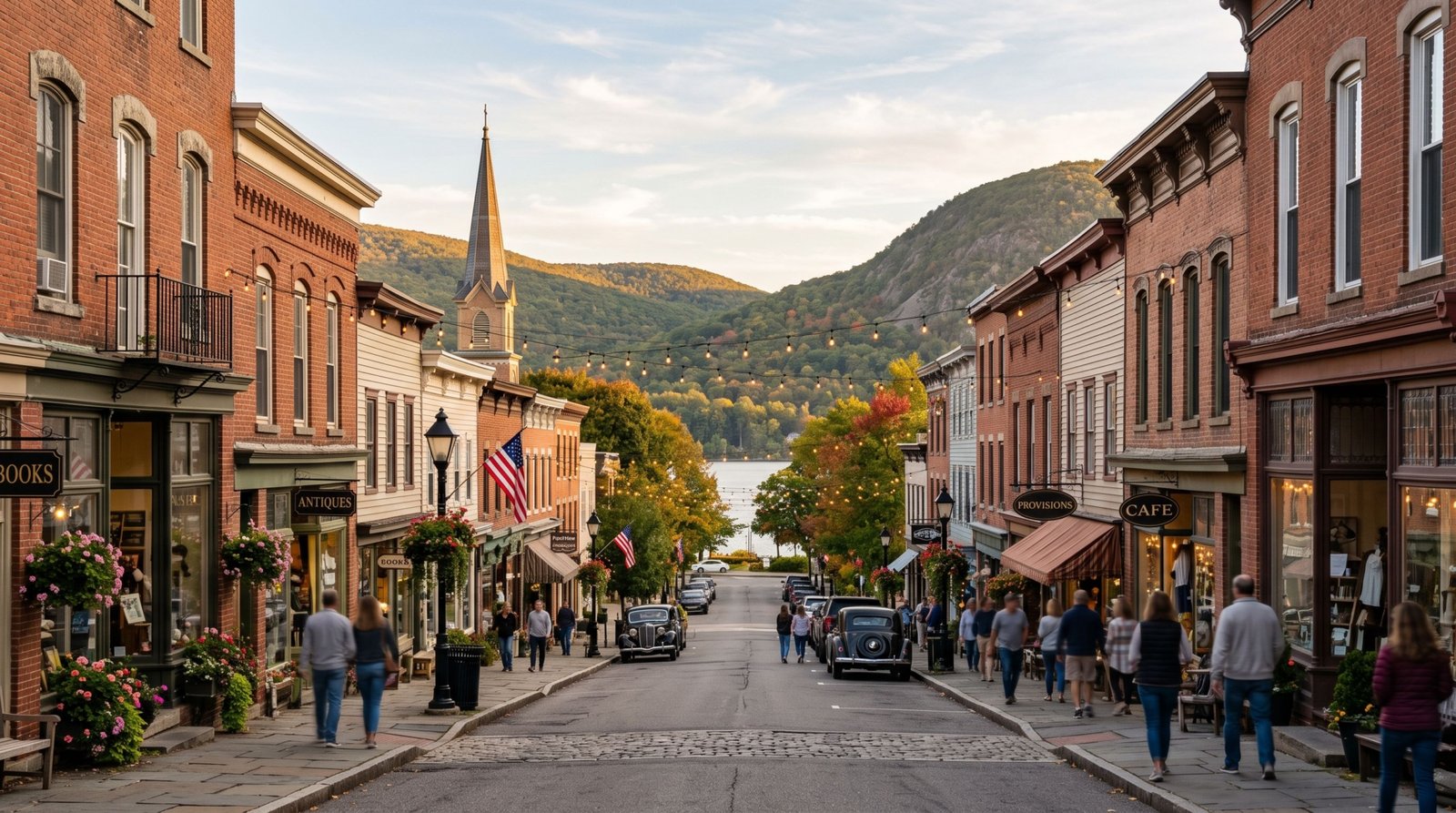
Cold Spring is a village on the east bank of the Hudson River, about an hour north of New York City by train, with a Main Street of 19th-century storefronts running downhill straight toward the water. It gets a modest but steady stream of day-trippers from the city, yet it’s still nowhere near as visited as Hudson Valley towns like Beacon or Tarrytown — and unlike a lot of “charming small town” content online, this one genuinely doesn’t require a car, which makes it unusually easy to reach for a New York City-based traveler.
Main Street is lined with antique shops, small galleries, and cafes, and it ends at a riverside park with unobstructed views across the Hudson to Storm King Mountain. For anyone who wants more than browsing, the Breakneck Ridge and Mount Taurus trails start just outside the village and offer some of the best river-gorge views in the region, though Breakneck Ridge specifically is a steep scramble better suited to experienced hikers.
Budget to Visit
- Getting there: Metro-North train from Grand Central, roughly $18–$30 round trip depending on time of day (check MTA fares before booking)
- Entry fee: $0 — the village and riverside park are free to explore
- Trail parking/access: free, though Breakneck Ridge trailhead parking fills early on weekends
- Food: $15–$45 per person for a cafe lunch or sit-down meal
- Shopping: highly variable; antique prices range from a few dollars to several hundred
- Typical day-trip total: $40–$80 per person including the train, without shopping
Essentials to Bring
- Comfortable shoes at minimum; proper hiking shoes if you’re doing any of the nearby trails
- A refillable water bottle, especially if hiking — there are limited refill points on the trails
- Cash for smaller antique shops that don’t take cards
- A train schedule saved in advance; Metro-North service to Cold Spring is less frequent on weekends
- Trekking poles if attempting Breakneck Ridge, which involves some hand-over-hand scrambling
- Best for: a car-free day trip combining a walkable village with optional serious hiking
- How to get there: Metro-North Hudson Line train directly from Grand Central Terminal
- Best time to visit: April through November; fall foliage season is beautiful but the train and trails both get busier
- Worth knowing: Breakneck Ridge is genuinely strenuous and has required rescues in the past — if you’re not an experienced hiker, the flatter Main Street and riverside park are still a full afternoon on their own
General Budget Tips for a New York Hidden-Gems Trip
If you’re combining more than one of these in a single trip, a few things change the math. City Island and Cold Spring are both reachable by public transit from New York City, so a NYC-based traveler can do either as a car-free day trip for well under $100 total. Letchworth is the outlier: it’s a genuine road trip from the city, so it only makes sense on its own trip, ideally paired with other western New York stops, or as a detour if you’re already driving between NYC and Niagara Falls or Buffalo.
- Buy a 7-day unlimited MetroCard/OMNY pass ($34 as of 2026) if you’re doing City Island plus other NYC exploring in the same week
- Book Metro-North tickets in advance on the app for a small discount over buying at the station
- An Empire Pass ($80/year) pays for itself after two or three New York State Parks visits
- Weekday visits are cheaper and quieter across all three destinations — lodging, when needed, drops noticeably outside weekends
Traveling Responsibly to Under-the-Radar Places
- Remember that City Island and Cold Spring are places people live, not attractions built for visitors — keep noise down on residential streets
- Stay on marked trails at Letchworth; the gorge edges are unstable in places and erosion from off-trail foot traffic is a real problem
- Support small, independent restaurants and shops in all three places rather than defaulting to chains where they exist
- Pack out what you bring in, especially on trails with limited trash service
Frequently Asked Questions About Hidden Gems in New York
Are these places actually unknown, or just less famous?
Less famous, and we’ve been upfront about the difference throughout this guide. All three receive visitors every year and none of them are secret to locals. What they share is a low profile relative to New York’s headline attractions, verifiable through state park and tourism attendance data rather than a marketing claim.
Can I visit all three in one trip?
Not comfortably in a single day. City Island and Cold Spring can each be done as a day trip from New York City on separate days. Letchworth is roughly 5.5 hours from the city by car, so it’s best treated as its own trip or combined with other western New York destinations.
Do I need a car for any of these?
Only for Letchworth, which has no practical public transit option. City Island and Cold Spring are both reachable entirely by public transit from New York City.
Will these stay underrated?
Not necessarily, and this guide is honest about that. Letchworth in particular is already well-known among hikers and gets genuinely busy during fall foliage weekends. City Island and Cold Spring have stayed quieter for longer, but travel trends shift, and we’d rather flag that upfront than promise a secret that might not hold.
What’s the cheapest of the three to visit?
City Island, if you’re already in New York City. A subway-and-bus day trip with lunch can come in under $50 per person, with no entrance fees anywhere on the itinerary.
Final Thoughts
None of these three places needed exaggeration to earn a spot on this list — a fishing-village neighborhood inside New York City, a river gorge with waterfalls that rival far more famous ones, and a walkable Hudson Valley town, each with a real reason to go and a realistic budget attached. If you’re planning a wider trip, our guide to 10 underrated travel destinations around the world and our list of 15 hidden gems in Europe cover similar ground on a bigger scale.
Whichever of these three you choose, go with realistic expectations: this is quieter travel, not undiscovered travel, and that’s a good thing to plan a trip around.