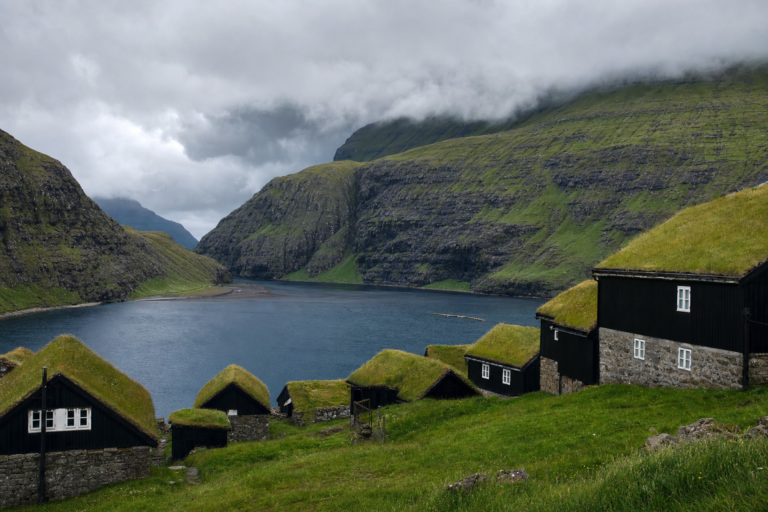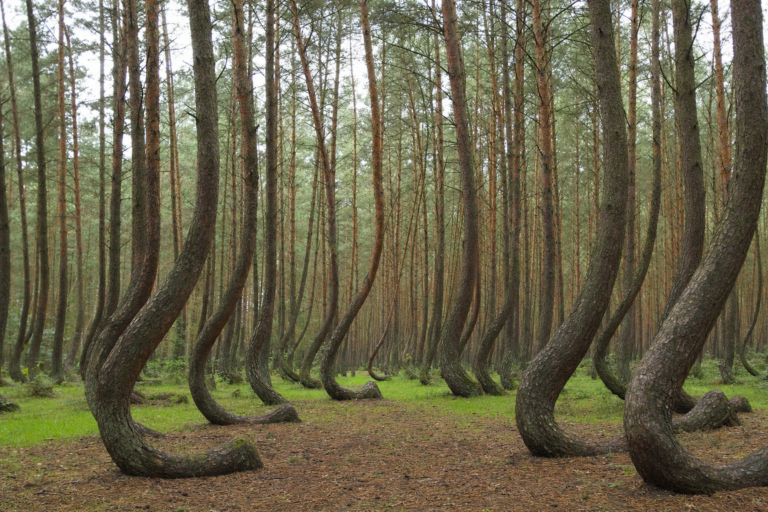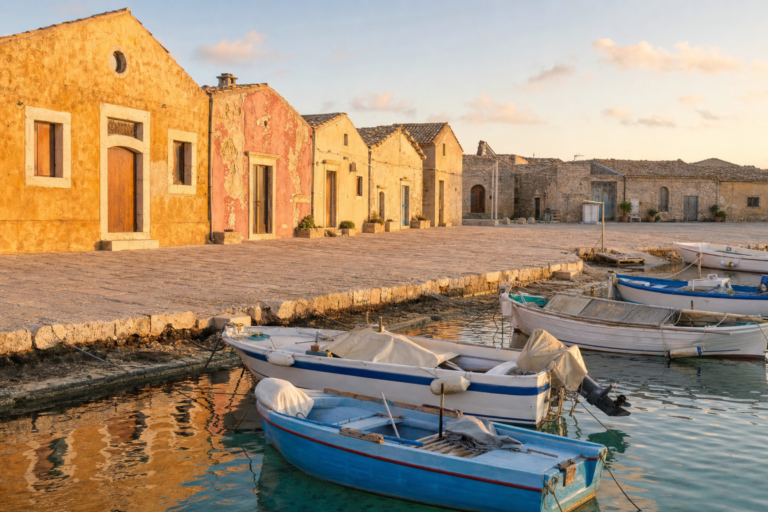

“Underrated” gets thrown around a lot in travel writing, often to describe places that are actually very well known — just not to the person writing the headline. We wanted to do this differently: every destination on this list is genuinely under-visited relative to what it offers, based on real tourism data and reporting, not on how it feels scrolling through Instagram.
A note on how this guide was built: Tripvorra’s editorial team compiled this list using tourism-board statistics, visitor-arrival data, aviation numbers, and reporting from travel journalists and long-term residents in each region — not firsthand visits. Where it matters, we’ve flagged destinations that are becoming more popular so you know exactly what you’re getting, and we’ve linked to primary sources throughout so you can verify details yourself before you book.
How We Chose These Destinations
Three things had to be true for a place to make this list. First, it needed comparatively low visitor numbers relative to its natural, cultural, or historical significance — measured against published tourism statistics rather than vibes.
Second, it needed to actually be reachable by an ordinary traveler with standard flights, visas, and infrastructure, even if that takes some extra planning.
Third, if a destination has been gaining attention recently, we say so directly instead of pretending it’s still a secret. A few places here are trending upward in visitor numbers — we’ve noted that in each case rather than leave you to find out after booking. Visitor-volume comparisons throughout this guide draw on published figures from national tourism boards and international bodies like the UN Tourism statistics database.
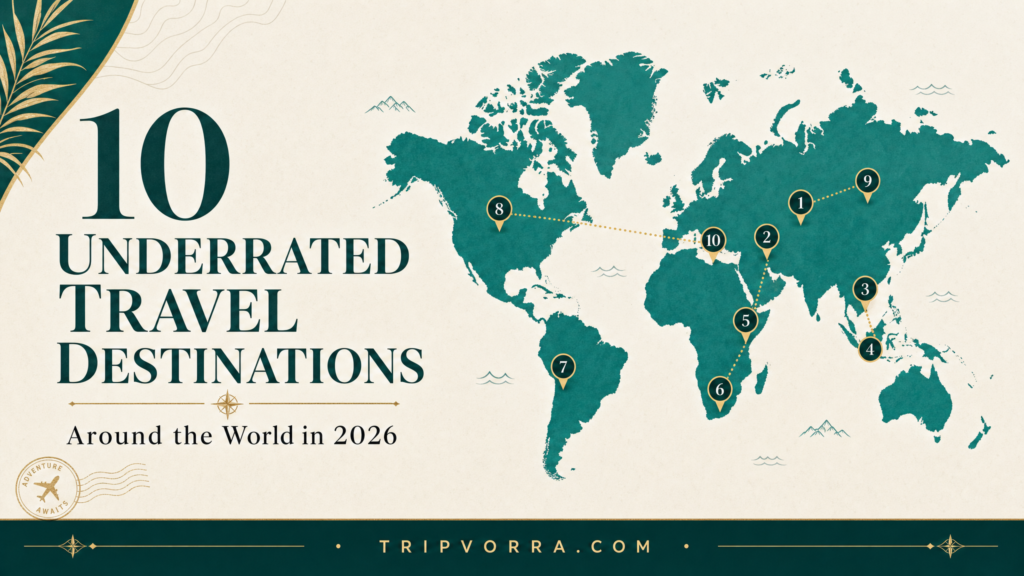
The 10 Destinations at a Glance
- Song-Kul Lake, Kyrgyzstan — high-altitude nomadic yurt country in Central Asia
- Jebel Akhdar & Salalah, Oman — mountain terraces and a monsoon-green desert coast
- Timor-Leste — one of the least-visited countries on Earth, with world-class diving
- Guyana — South America’s least-visited country, home to Kaieteur Falls
- Nyungwe Forest, Rwanda — Africa’s only canopy walkway, overshadowed by gorilla trekking
- Raja Ampat, Indonesia — extraordinary reefs, though visitor numbers are climbing
- Ha Giang Loop, Vietnam — dramatic karst mountains, calmer than Sapa
- Salento & the Coffee Triangle, Colombia — wax palm valleys and coffee country
- Gros Morne National Park, Newfoundland, Canada — a UNESCO fjord landscape few Americans visit
- Nukus & Karakalpakstan, Uzbekistan — a world-class art museum in the middle of nowhere
Save this guide for later, and keep reading for what makes each place worth the extra effort, how under-visited it actually is, and what to know before you plan a trip.
1. Song-Kul Lake, Kyrgyzstan
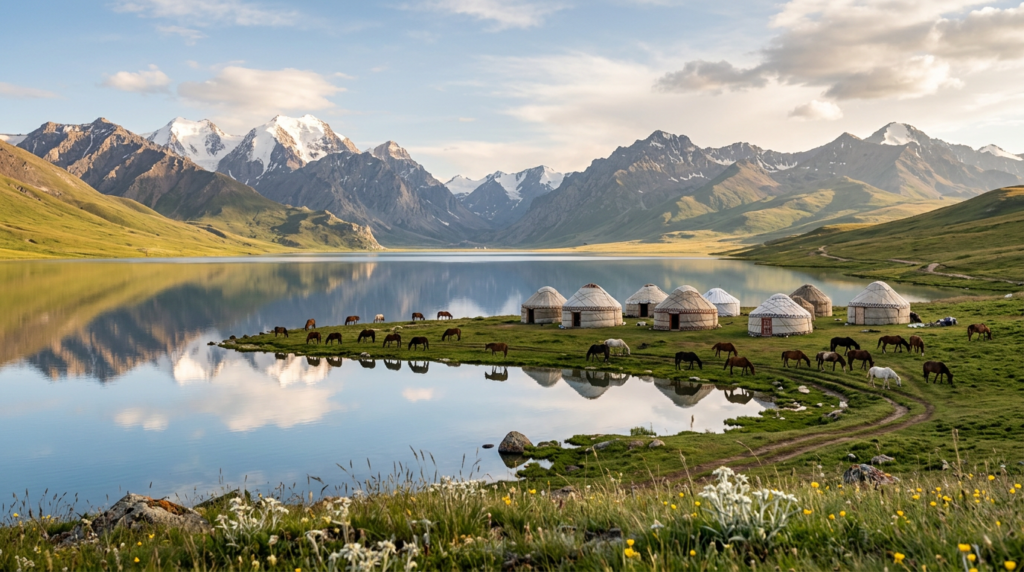
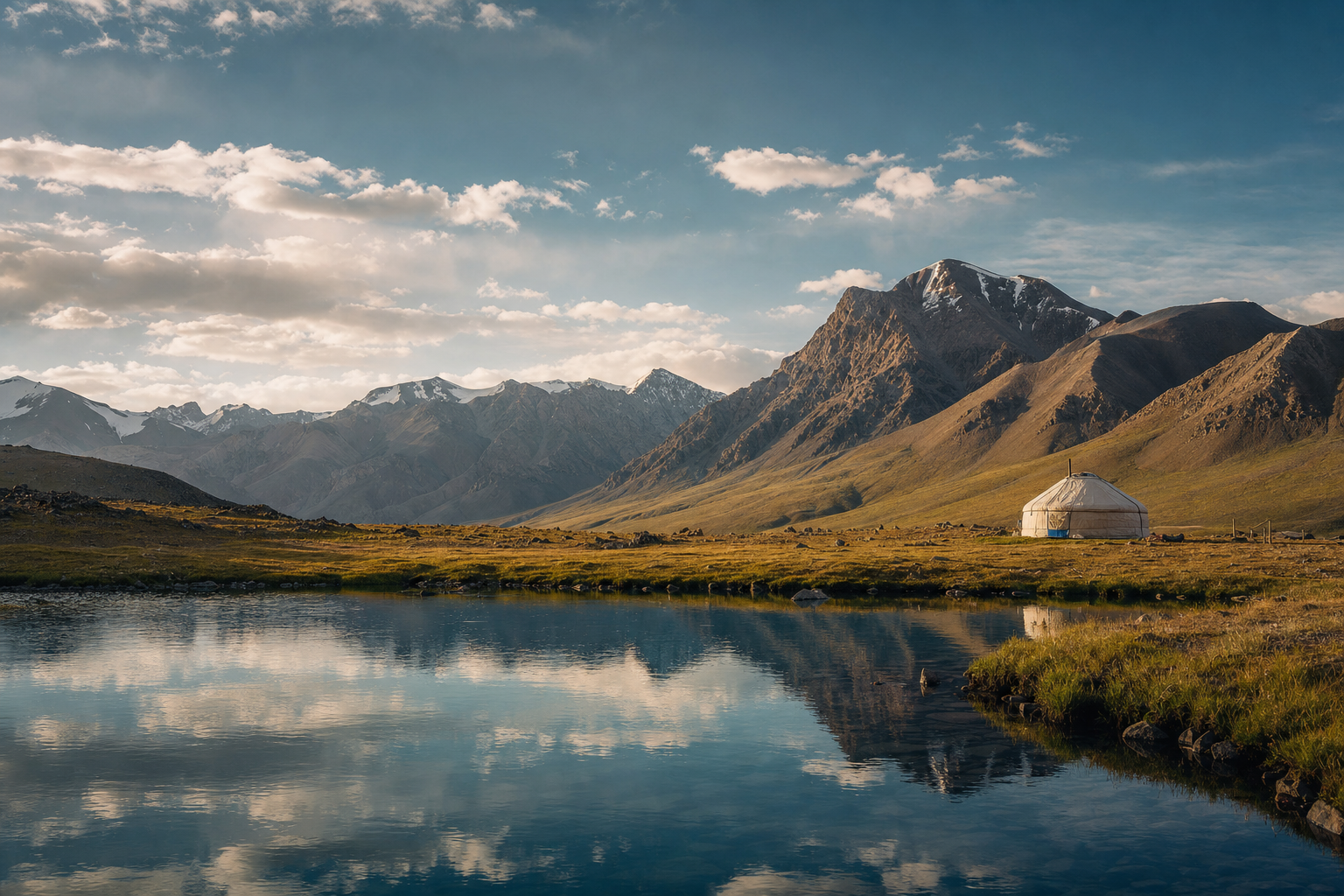
Song-Kul is a high-altitude lake in Kyrgyzstan’s Tian Shan range, sitting at roughly 3,000 meters with no permanent settlements on its shores — only seasonal yurt camps run by nomadic families who move their herds up from the valleys each summer. Kyrgyzstan as a whole receives a fraction of the visitors that neighboring tourist circuits in Central Asia see, and Song-Kul sits well outside even that limited flow, reachable only by unpaved road or on horseback.
The lake is snowbound for most of the year, which naturally limits visits to a short summer window and helps explain why it hasn’t developed the infrastructure of better-known alpine destinations.
- Best for: horse trekking, yurt stays, and genuinely remote scenery
- How to get there: fly into Manas International Airport in Bishkek, then travel by shared taxi or private car to Kochkor, followed by a horse or 4×4 trek to the lake
- Best time to visit: June through September — the lake is inaccessible or frozen the rest of the year
- Worth knowing: accommodation is almost entirely community-run yurt camps, so book through a local tour operator or Community Based Tourism Kyrgyzstan rather than expecting hotel-style options
2. Jebel Akhdar & Salalah, Oman
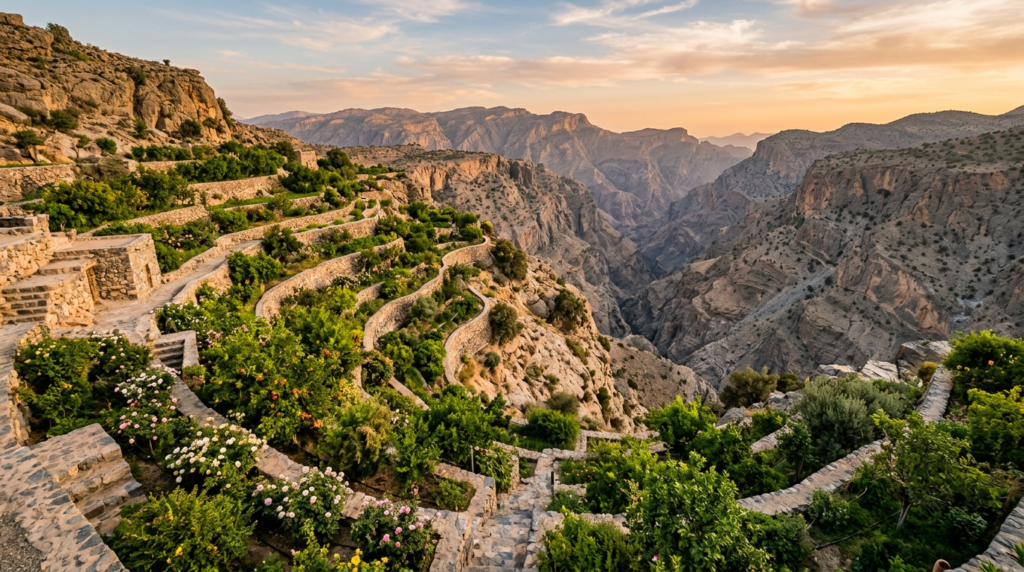
Oman sits next to the UAE on the map but receives a small fraction of Dubai and Abu Dhabi’s visitor numbers, despite offering similarly dramatic desert and mountain scenery with far less development. Jebel Akhdar, the “Green Mountain,” rises to around 2,000 meters and is terraced with rose and pomegranate gardens that most travelers to the Gulf never hear about. Salalah, in Oman’s far south, is even more unusual: during the khareef monsoon season the surrounding desert turns green with mist and waterfalls, a landscape that looks nothing like the Arabian Peninsula most people picture.
Oman’s tourism sector has been actively expanding, but growth has been deliberately measured compared to its neighbors, and infrastructure outside Muscat remains comparatively light.
- Best for: mountain scenery, a monsoon-green desert coastline, and Gulf travel without the crowds
- How to get there: fly into Muscat International Airport; Jebel Akhdar is about a 2-hour drive, while Salalah has its own domestic airport with regular flights from Muscat
- Best time to visit: October–April for Jebel Akhdar and most of Oman; July–September (khareef season) specifically for Salalah’s green landscape
- Worth knowing: a 4×4 is required for the Jebel Akhdar access road, and Salalah’s khareef season is also Oman’s most crowded period regionally, so book accommodation early if visiting then
3. Timor-Leste
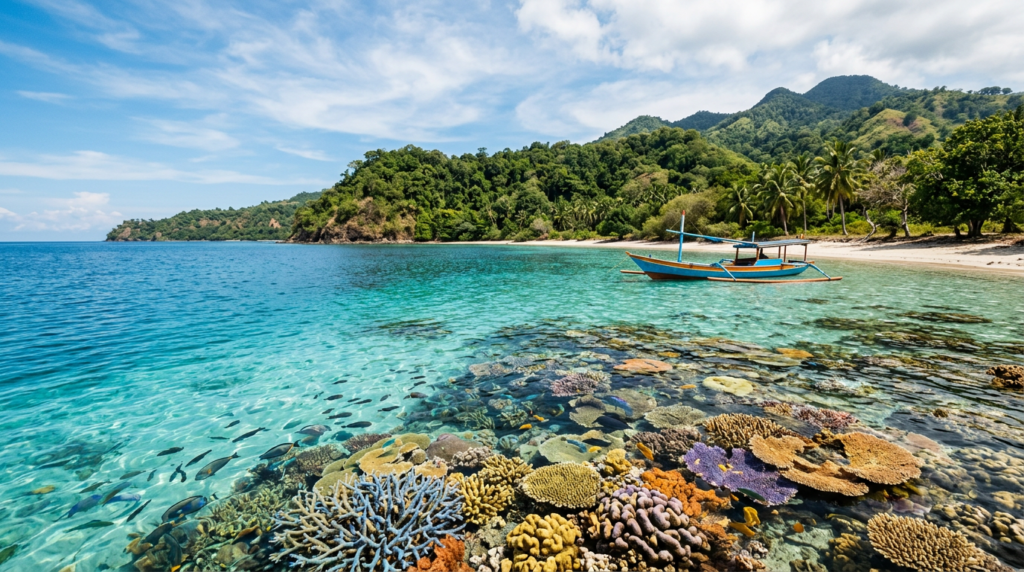
Timor-Leste (East Timor) consistently appears on lists of the world’s least-visited countries, a legacy of its difficult path to independence in 2002 and the limited tourism promotion since. That low profile is arguably its main draw for divers: the reefs off Atauro Island, a short boat ride from the capital Dili, have been documented by marine researchers as having some of the highest reef fish biodiversity counts recorded anywhere, rivaling far more famous dive destinations in the region at a fraction of the cost and with almost no other boats in the water.
Tourism infrastructure is genuinely limited outside Dili and Atauro, which is part of the appeal for experienced travelers but means this isn’t a good first international trip — go in with realistic expectations about comfort and connectivity.
- Best for: diving and snorkeling, and travelers who want a country genuinely off the standard circuit
- How to get there: fly into Dili’s Presidente Nicolau Lobato International Airport via Bali, Singapore, or Darwin, then take a public ferry or fast boat to Atauro Island
- Best time to visit: May–November, the dry season
- Worth knowing: ATMs and card payment are unreliable outside Dili, so carry enough US dollars (Timor-Leste’s official currency) for your whole trip
4. Guyana
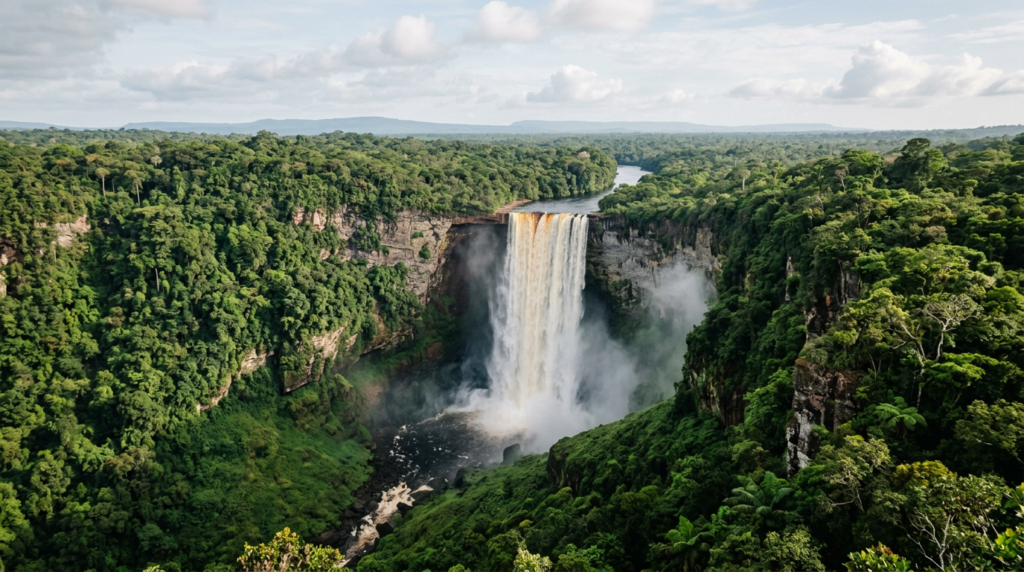
Guyana is South America’s least-visited country by most tourism counts, overshadowed by neighbors like Brazil and Venezuela and rarely featured on typical South America itineraries at all. Its centerpiece, Kaieteur Falls, drops water in a single sheer plunge nearly five times the height of Niagara Falls, sitting inside a national park that receives only a small number of visitors a year — most arriving on small charter flights rather than by road, since no highway reaches it. English is the official language, a rarity in the region, which makes independent travel easier than in most of the countries around it.
The rest of the country is covered in largely untouched rainforest managed partly through community-run ecolodges, which is both the appeal and the logistical challenge — this is a destination that rewards planning ahead.
- Best for: waterfalls, rainforest wildlife, and a South America trip well off the typical route
- How to get there: fly into Georgetown’s Cheddi Jagan International Airport, then book a small-plane day trip or overnight tour to Kaieteur Falls
- Best time to visit: February–April or August–November, avoiding the heaviest rains
- Worth knowing: most interior travel is arranged through licensed tour operators rather than independently, since roads into the rainforest interior are minimal
5. Nyungwe Forest, Rwanda
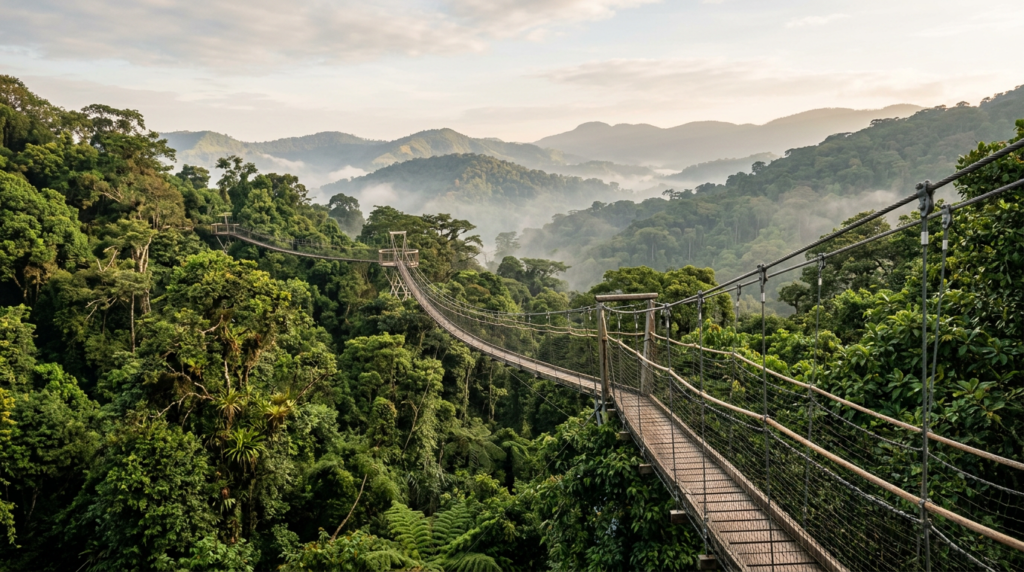
Rwanda’s Volcanoes National Park and its mountain gorilla trekking get most of the international attention, along with the high permit prices and booked-out availability that come with fame. Nyungwe Forest, in the country’s southwest, is often skipped entirely despite housing Africa’s only canopy walkway, a suspension bridge strung nearly 60 meters above the forest floor, and a healthy population of chimpanzees that can be tracked at a much lower permit cost than gorilla trekking.
The forest is also one of the oldest rainforests in Africa and a genuine biodiversity hotspot, home to over 300 recorded bird species, without anywhere near the visitor volume of Rwanda’s headline park.
- Best for: chimpanzee trekking, canopy walks, and a lower-cost alternative to gorilla permits
- How to get there: fly into Kigali International Airport, then drive roughly 5 hours southwest or take a short domestic flight to Kamembe
- Best time to visit: June–September or December–February, the drier seasons for forest trekking
- Worth knowing: chimpanzee permits and canopy walk tickets should be booked in advance through the Rwanda Development Board, though availability is far less competitive than gorilla permits
6. Raja Ampat, Indonesia
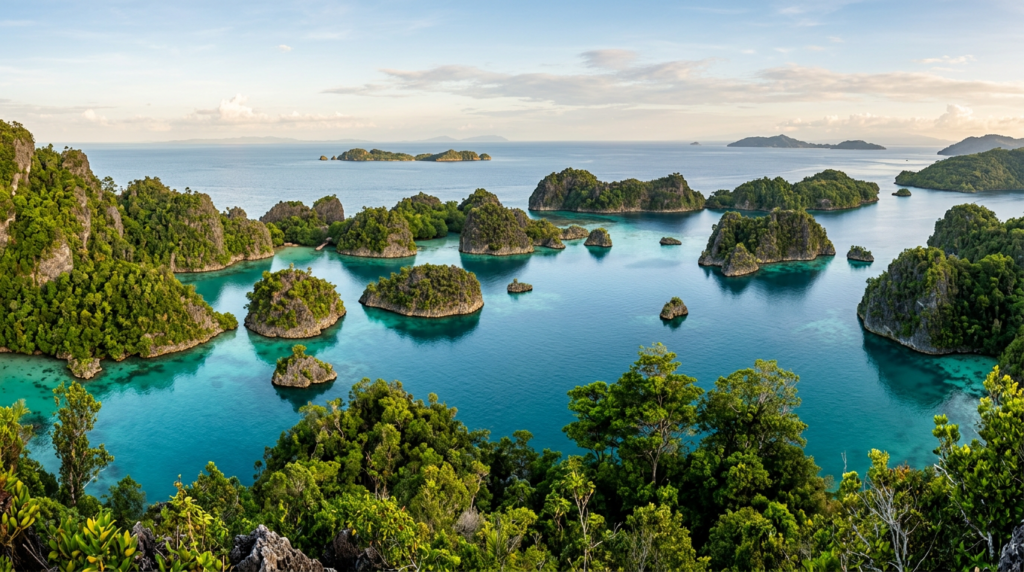
Raja Ampat, an archipelago off the coast of West Papua, is regularly cited by marine scientists as sitting within the most biodiverse reef system on the planet — more coral and fish species per square kilometer than almost anywhere else surveyed. It’s worth being direct about this one: Raja Ampat is no longer a true secret, and visitor numbers have been rising year over year as its reputation among divers has spread. It still receives only a small fraction of the tourists that Bali does, and much of the archipelago remains reachable only by liveaboard boat or homestay, which naturally caps how crowded any one spot gets.
If you’re looking for a destination nobody has heard of, this isn’t quite it anymore — but if you’re comparing it honestly to Indonesia’s mainstream islands, it’s still a different order of quiet.
- Best for: diving, snorkeling, and marine biodiversity
- How to get there: fly into Sorong via Jakarta, Bali, or Makassar, then take a public or chartered boat to the islands
- Best time to visit: October–April for the calmest seas and best visibility
- Worth knowing: a marine park entry fee funds local conservation and community programs — bring cash, as it’s collected on arrival and isn’t always payable in advance
7. Ha Giang Loop, Vietnam
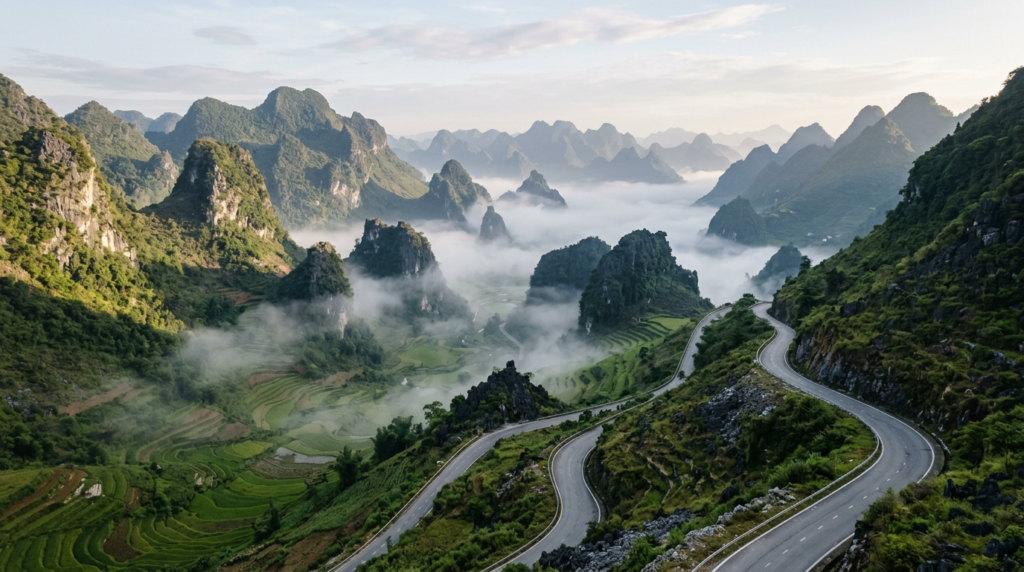
Vietnam’s Sapa region has developed rapidly over the past two decades, with cable cars, hotel towers, and a built-up town center that surprises travelers expecting a quiet mountain outpost. Ha Giang, further north along the Chinese border, offers similarly dramatic karst limestone scenery, terraced valleys, and ethnic minority villages, reached via a winding multi-day motorbike or car loop that has become popular with backpackers but hasn’t seen anywhere near the same scale of development.
The Ha Giang loop has grown noticeably in popularity in recent years among independent travelers, so it’s not undiscovered — but its infrastructure is still homestays and family-run guesthouses rather than resort hotels, which keeps the experience closer to the ground.
- Best for: motorbike touring, mountain scenery, and ethnic minority markets and villages
- How to get there: take a night bus or private car from Hanoi to Ha Giang city (about 6–7 hours), then rent a motorbike or join a guided loop tour
- Best time to visit: September–November for rice terrace colors, or March–May for mild weather and buckwheat/canola blooms
- Worth knowing: the loop includes narrow mountain roads with steep drop-offs — an international driving permit and real motorbike experience are strongly recommended, or hire a driver instead
8. Salento & the Coffee Triangle, Colombia
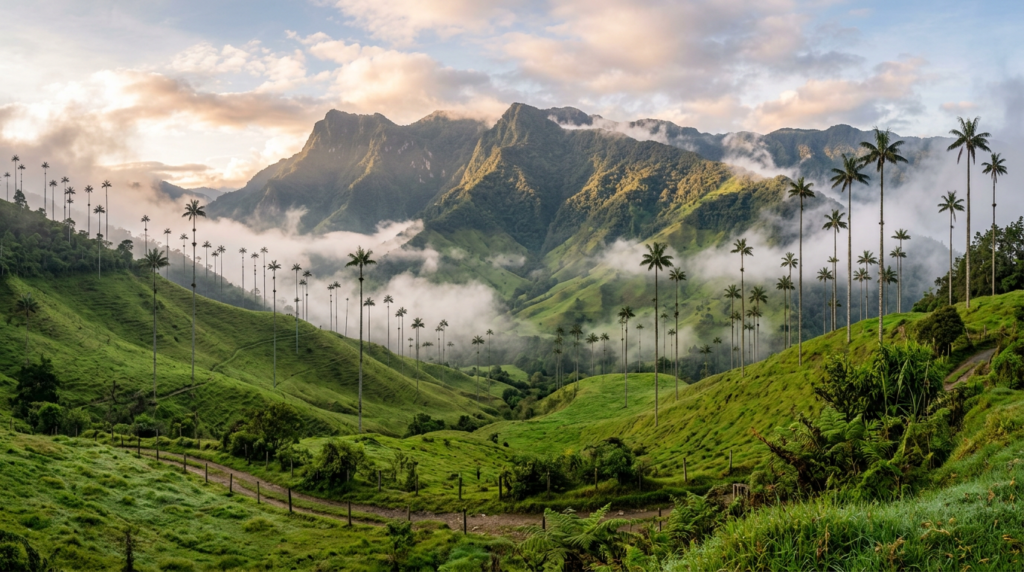
Colombia’s tourism has grown substantially since safety conditions improved in the 2010s, but the growth has concentrated heavily on Cartagena, Medellín, and Bogotá. Salento, a small town in the coffee-growing region between those cities, sees far fewer international visitors despite offering some of the country’s most striking scenery: the Cocora Valley’s wax palms, the tallest palm trees in the world, rise out of misty green hillsides that look almost artificial in photos.
The town itself has been discovered by the backpacker circuit and gets busy on weekends, so it’s fair to call it a rising rather than a completely undiscovered destination — but it remains a small town, not a resort zone, and weekday visits are notably quieter.
- Best for: coffee farm tours, hiking, and a slower-paced base in Colombia
- How to get there: fly into Pereira or Armenia (both connect via Bogotá), then take a short taxi or bus to Salento
- Best time to visit: December–March or July–August, the driest months
- Worth knowing: visit the Cocora Valley on a weekday morning — weekend crowds and afternoon cloud cover both build up quickly
9. Gros Morne National Park, Newfoundland, Canada
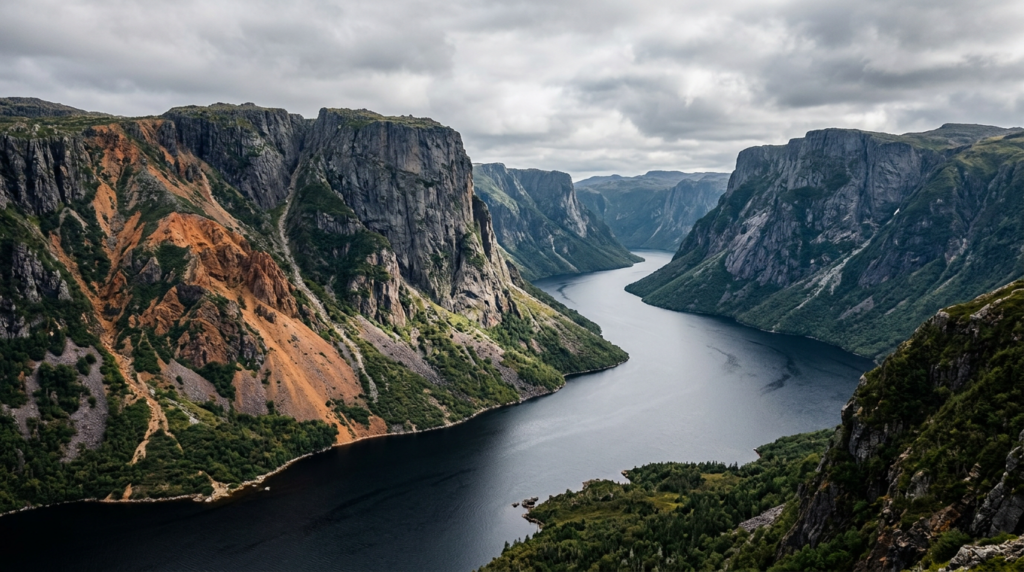
Gros Morne is a UNESCO World Heritage site on Newfoundland’s west coast, known among geologists for the Tablelands — a section of the Earth’s mantle exposed at the surface, its rust-orange rock unlike almost anywhere else accessible by road. The park also includes fjord-carved lakes, sheer cliffs, and coastal boat tours, landscapes comparable to Norway’s fjords or western Canada’s mountain parks, yet Newfoundland as a whole receives a small fraction of the visitors that Banff or Jasper draw each year.
Distance is the main reason: reaching Newfoundland typically requires a domestic flight connection or a long ferry crossing, which filters out a lot of casual visitors compared to more accessible parks on the mainland.
- Best for: geology, fjord scenery, and hiking without crowded trailheads
- How to get there: fly into Deer Lake Regional Airport, a short drive from the park, or take the ferry from Nova Scotia to western Newfoundland
- Best time to visit: June–September, when park facilities and boat tours are fully operating
- Worth knowing: the Western Brook Pond fjord boat tour requires a roughly 45-minute walk to the dock — book tickets in advance in July and August, the only genuinely busy stretch of the year
10. Nukus & Karakalpakstan, Uzbekistan
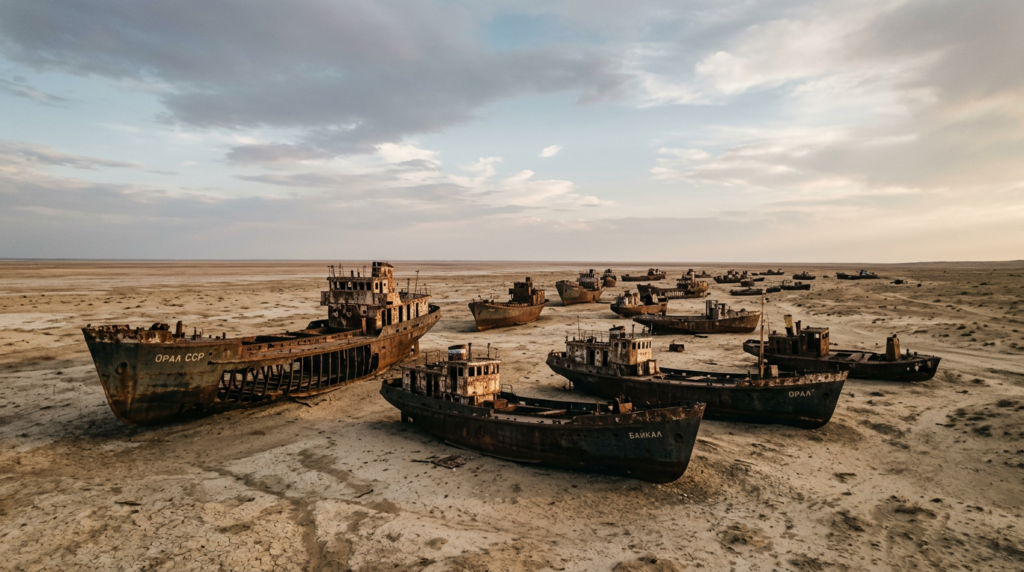
Uzbekistan’s Silk Road cities — Samarkand, Bukhara, and Khiva — have seen tourism grow substantially in recent years. Nukus, the capital of the semi-autonomous Karakalpakstan region in Uzbekistan’s remote west, remains almost entirely off that circuit despite housing the Savitsky Museum, home to the world’s second-largest collection of Russian avant-garde art, assembled and hidden from Soviet censors by collector Igor Savitsky over decades. Most visitors who make the trip are art specialists or genuinely dedicated travelers rather than typical tourists.
Nukus is also the practical base for visiting Moynaq, the former Aral Sea fishing port now stranded amid desert where its rusting fishing fleet sits on dry seabed — a stark and sobering look at one of the 20th century’s major environmental disasters.
- Best for: art history, and a genuinely unusual add-on to a Silk Road itinerary
- How to get there: fly into Tashkent, then take a domestic flight to Nukus (about 1.5 hours) rather than the much longer overland route
- Best time to visit: April–May or September–October, avoiding the extreme summer heat of the Kyzylkum desert region
- Worth knowing: the Savitsky Museum’s full collection rotates and only a portion is on display at any time — check their website ahead of your visit if a specific piece is the draw
Traveling Responsibly to Under-Visited Places
Low visitor numbers are often a sign of limited local infrastructure and income from tourism, which cuts both ways: it’s part of what makes these places worth visiting, and it means your choices as a visitor carry more relative weight than they would in a destination built to absorb millions of tourists a year. A few practical habits help:
- Book locally where you can. Community-run lodges, homestays, and local guides in places like Kyrgyzstan, Guyana, and Rwanda put tourism income directly into the communities you’re visiting.
- Budget extra time. Under-visited destinations usually mean less transport frequency, not less to see — flights, ferries, and buses run less often, so build in buffer days.
- Check entry and permit requirements early. Visa rules, national park permits, and marine park fees vary widely and can require advance booking, unlike more tourism-optimized destinations.
- Travel insurance matters more here. Medical evacuation coverage is worth confirming specifically for remote destinations like Guyana’s interior or Kyrgyzstan’s high-altitude routes, where the nearest major hospital may be hours away.
Frequently Asked Questions About Underrated Travel Destinations
What makes a travel destination “underrated” rather than just unpopular?
A destination is genuinely underrated when its visitor numbers are low relative to the quality of what it offers — measurable through tourism statistics — rather than simply because it’s hard to reach or lacks appeal. Every destination on this list has documented low visitor numbers alongside a specific, verifiable draw: a UNESCO site, a unique ecosystem, or a significant cultural landmark.
Are underrated destinations more affordable than popular ones?
Generally yes, though not universally. Destinations like Guyana, Timor-Leste, and Kyrgyzstan tend to have lower accommodation and food costs than mainstream tourist hubs. Others, like parts of Oman and increasingly Raja Ampat’s liveaboard diving trips, can be comparably expensive due to logistics and limited competition, even with fewer crowds.
Do underrated destinations stay underrated?
Not always, and this list is honest about that. Raja Ampat, Ha Giang, and Salento have all seen rising visitor numbers in recent years and are more accurately described as “still comparatively quiet” rather than undiscovered. Places like Timor-Leste, Guyana, and Nukus remain far less visited by any measure.
Is it harder to plan a trip to an underrated destination?
Usually, yes, in the sense that it takes more research: fewer direct flights, less English-language tourism infrastructure in some cases, and fewer all-in-one booking options. It’s rarely harder in terms of safety or feasibility for a reasonably experienced traveler — it just requires more planning than picking a package deal to an established resort destination.
What is the best time of year to visit most underrated destinations?
It varies significantly by region and climate, from Kyrgyzstan’s short summer window to Oman’s cooler October–April season to Guyana’s drier months. There’s no single answer — check the specific seasonal notes for each destination above before booking, since “shoulder season” means something different in the Tian Shan mountains than it does on the Arabian Peninsula.
Final Thoughts
None of these destinations are secret in the sense of being unknown or undocumented — they all have real tourism infrastructure, published visitor statistics, and, in most cases, a small but growing base of travelers who’ve already found them. What they share is a gap between how much they have to offer and how many people currently visit, and that gap is exactly what tends to close over time. If any of these are on your list, sooner rather than later is generally the better time to go. If Europe is more your speed, our guide to 15 hidden gems in Europe covers a similar idea on a single continent.
Save this guide for your next trip planning session, and let us know in the comments which of these underrated destinations you’d add to your own list.