
Everyone’s Ireland itinerary looks the same: Dublin, then Kilkenny or Kinsale, then the Cliffs of Moher, then Galway. That’s not bad advice, but it skips a lot of the country. These five towns sit off that well-worn route, and each earns its place for a different reason.
Last verified: August 30, 2026. This guide was built from official tourism sources (Ireland.com, Discover Ireland, county council tourism pages), heritage-site operators’ own pages, and Bus Éireann’s route information — not from personal travel, since Tripvorra’s research is desk-based. Facts that couldn’t be confirmed from a reliable source were left out rather than guessed at.
None of these five are secret in any real sense — Irish tourism boards know about all of them. What they share is a lower profile than the handful of towns that dominate “best of Ireland” lists, usually because they sit off the main coach-tour routes rather than because there’s anything wrong with them.
Five Towns at a Glance
- Ardara, Co. Donegal — a working tweed-weaving town on the Wild Atlantic Way, best reached by car since Donegal has no rail line at all.
- Carlingford, Co. Louth — a medieval walled quarter on a lough shore, an easy day trip from Dundalk by bus or car.
- Birr, Co. Offaly — a Georgian midlands town built around a castle demesne with a 19th-century giant telescope.
- Lismore, Co. Waterford — a quiet Blackwater Valley town anchored by a working castle estate’s gardens.
- Youghal, Co. Cork — a walled medieval port town with a clock tower you can climb and three beaches nearby.
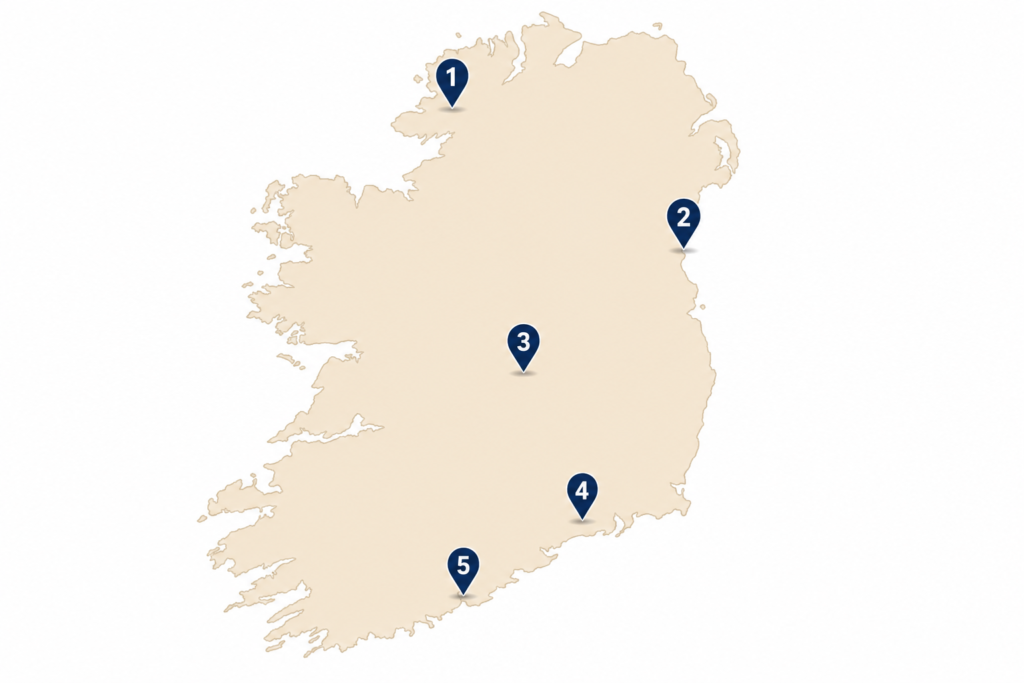
Map key: 1) Ardara, Co. Donegal — 2) Carlingford, Co. Louth — 3) Birr, Co. Offaly — 4) Lismore, Co. Waterford — 5) Youghal, Co. Cork.
1. Ardara, Co. Donegal
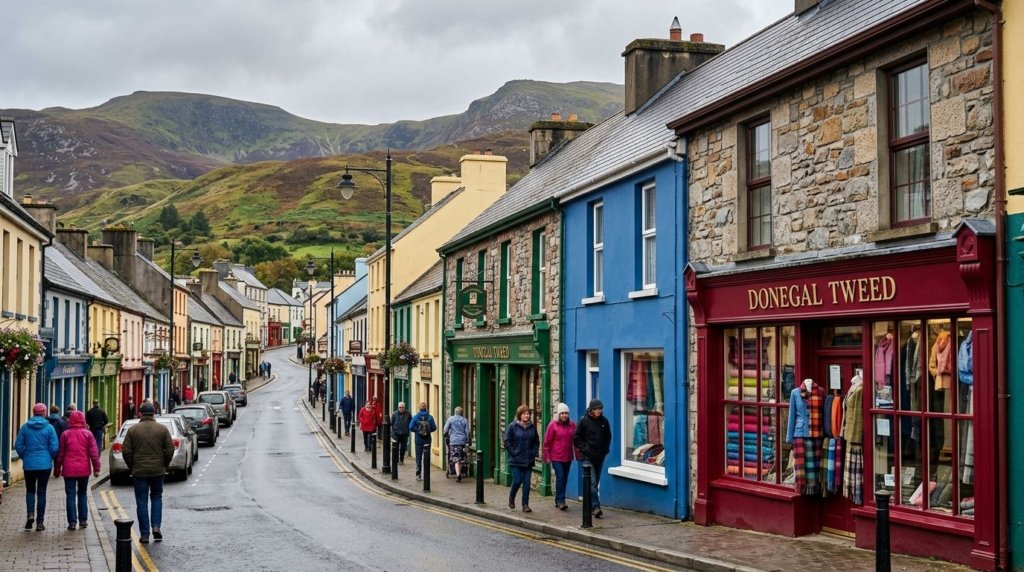
Donegal gets a fraction of the attention that Kerry and Galway do, largely because it’s a longer drive from Dublin and sits outside the country’s densest concentration of famous sights. Ardara, a small town on the Wild Atlantic Way’s Slieve League coast section, is a good example of what that leaves overlooked.
What makes Ardara distinctive is that its tweed industry isn’t a museum piece. An 1893 government scheme turned home-weaving into commercial production, and two of the original export firms are still weaving Donegal tweed today. The Triona Tweed Visitor Centre on Main Street lets you watch looms in action rather than just look at finished cloth behind glass.
Just outside town, the Glengesh Pass is a genuinely dramatic hairpin mountain road with valley views that rival anything on the Ring of Kerry, and it costs nothing to drive. Ardara also calls itself Donegal’s “festival capital,” anchored by the Cup an Tae traditional music festival.
- Nearest city: Donegal Town, about 24 miles away.
- Getting there: No rail service exists anywhere in County Donegal. Rural bus routes reach Ardara (Bus Éireann Route 492, Bus Feda, and local Local Link services), but schedules are limited.
- Car necessary? Effectively yes — the bus network connects the town but won’t support flexible sightseeing, especially for Glengesh Pass.
- Time to allow: Half a day for the town and tweed centre; add an hour or two for the Glengesh Pass drive.
- Seasonal notes: The Wild Atlantic Way’s west coast weather is genuinely changeable year-round — pack for rain regardless of season.
- Where to stay: Small B&Bs and guesthouses rather than hotel chains; book ahead during the Cup an Tae festival.
- Budget: Glengesh Pass is free to visit (Wild Atlantic Way’s own official listing). No official admission price could be confirmed for the Triona Tweed Visitor Centre — treat any figure elsewhere as a TRIPVORRA PLANNING ESTIMATE, not a quoted rate, and call ahead if a specific tour time matters to your plans.
Who Is This Best For?
Travelers already routing along the Wild Atlantic Way who want a genuine craft-heritage stop rather than a gift-shop version of one. It’s a poor add-on if you’re not already headed toward Donegal — the drive from Dublin is long enough that Ardara alone won’t justify it.
2. Carlingford, Co. Louth
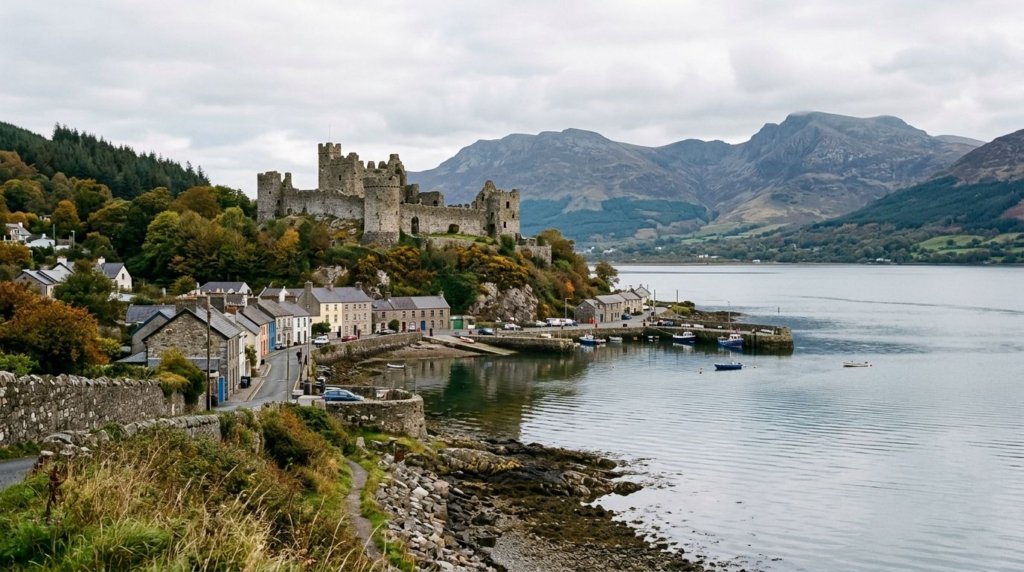
County Louth has a specific, documented visibility problem: in 2024, local councillors publicly criticized Fáilte Ireland for leaving the entire county out of a national tourism ad. Carlingford is the county’s best case for inclusion — a compact medieval quarter on Carlingford Lough that most itineraries skip on the way north to Belfast or south to Dublin.
The 12th-century castle ruins (sometimes called King John’s Castle) sit right above the water, and the town’s narrow medieval streets are genuinely walkable in an afternoon. Carlingford Lough itself, framed by the Cooley Mountains, gives the town a setting that’s easy to underestimate from photos alone.
The Carlingford Greenway adds an easy cycling or walking option along the old railway line, and the surrounding Cooley Peninsula is worth a slow drive if you have a car. This isn’t a place that needs a full day, but it rewards more than a rushed hour.
- Nearest city: Dundalk, the nearest rail hub on the Dublin–Belfast line.
- Getting there: Bus Éireann’s Route 161 runs Dundalk–Newry via Carlingford. A car adds flexibility for the wider Cooley Peninsula loop.
- Car necessary? Not for the town itself, but useful for the peninsula and Greenway.
- Time to allow: Half a day for the medieval quarter and castle; a full day if adding the Greenway or a Cooley Peninsula drive.
- Seasonal notes: Castle guided tours run seasonally (roughly spring through autumn); exact dates vary by year, so confirm current hours before visiting.
- Where to stay: A small stock of guesthouses and B&Bs — book ahead for festival weekends, including the town’s known oyster festival.
- Budget: The castle site is managed by a local heritage trust rather than the state Heritage Ireland network, so a national Heritage Card won’t get you in — this is a TRIPVORRA PLANNING ESTIMATE worth knowing before you plan around one. No single unambiguous official price could be confirmed at time of research; check directly before your visit.
Worth Knowing Before You Go
Carlingford isn’t unmarketed — it’s one of Louth’s three headline destinations in official tourism material. The honest framing here is that the whole county is underrated relative to its neighbors, not that Carlingford itself is a secret.
3. Birr, Co. Offaly
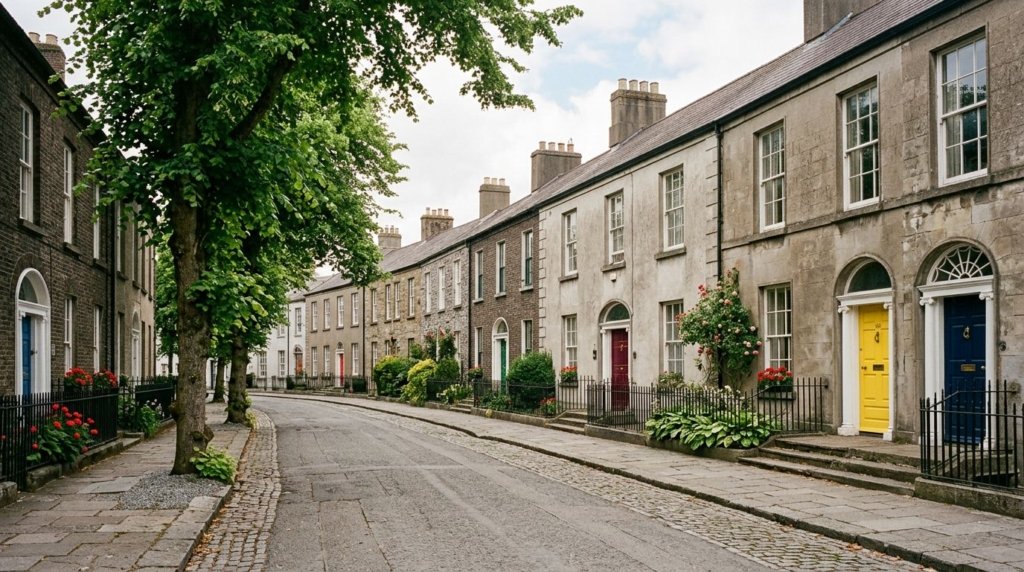
Fáilte Ireland markets Ireland’s midlands region as “Hidden Heartlands,” a deliberate contrast to the coastal and heritage routes that get most of the marketing budget. Birr is the clearest example: the castle at its center is genuinely well-known to garden and astronomy enthusiasts, but the town itself rarely appears on general “best towns in Ireland” lists.
Birr Castle Demesne is the reason to come. Its Great Telescope, built in 1845, was the largest in the world for over 70 years and was the first instrument to observe the spiral structure of a galaxy. The surrounding 120-acre gardens hold more than 5,000 plant species, and the grounds include a science centre covering the family’s history in astronomy and early photography.
The town around the castle is one of Ireland’s better-preserved Georgian streetscapes, worth a slow walk on its own. Birr works well paired with a wider midlands or Shannon-region itinerary rather than as a single-purpose day trip from Dublin.
- Nearest city: No direct rail; the nearest stations are Tullamore or Portlaoise, with a bus or taxi onward.
- Getting there: Bus Éireann Route 72 connects Birr toward Limerick and Athlone; a direct Dublin service could not be confirmed from official sources.
- Car necessary? Effectively yes, given the limited and unconfirmed bus frequency.
- Time to allow: Half a day for the castle demesne and gardens; a full day if combining the town with the nearby Slieve Bloom Mountains.
- Seasonal notes: Castle guided interior tours run May through September only; grounds hours are shorter in winter.
- Where to stay: A small market-town stock of guesthouses and hotels — reasonable availability outside peak summer weekends.
- Budget: OFFICIAL PRICE — general admission to the gardens and science centre is €9.50 for adults, €5.00 for children 5-16, and €26.00 for a family of four, per Birr Castle Demesne’s own ticketing page. A guided interior castle tour is a separate additional charge not included in this price — confirm the current tour fee directly, since sources checked at research time gave inconsistent figures.
Best For
Garden and history enthusiasts, and anyone building a midlands or Shannon-region route rather than a coastal one. It’s a weaker fit if you’re only in Ireland for a short coastal trip — Birr is genuinely inland and doesn’t pair naturally with a Wild Atlantic Way itinerary.
4. Lismore, Co. Waterford
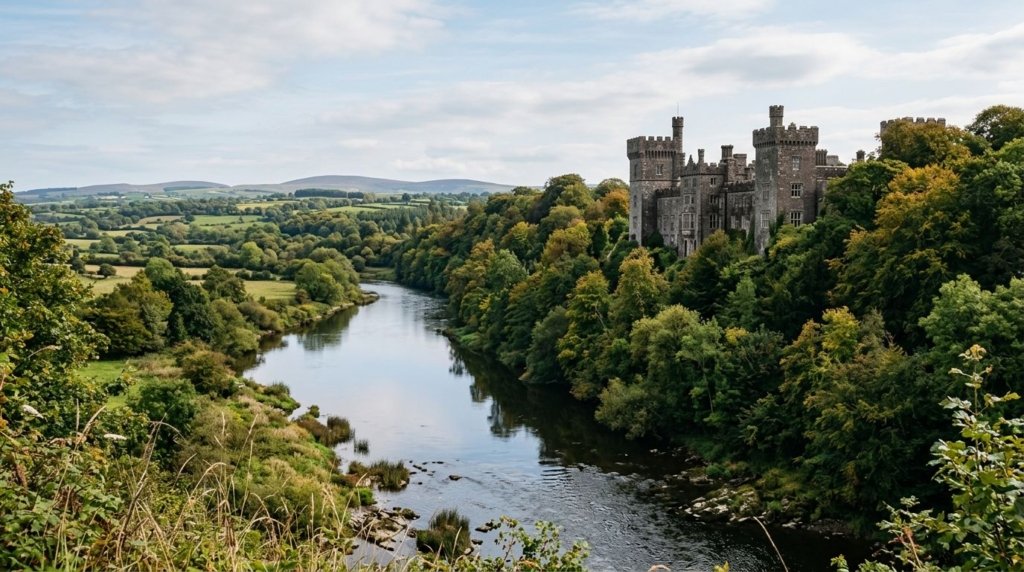
County Waterford as a whole gets less attention than Kerry, Cork, or Galway, and travel writers have specifically called it “overlooked” in print. Lismore, a small town on the Blackwater River, is a good test case: it has a genuinely significant estate garden and almost none of the crowds you’d find at a comparable site elsewhere in Ireland.
Lismore Castle Gardens are the draw — historic walled gardens on the Duke of Devonshire’s estate, paired with a contemporary art gallery inside the castle’s grounds, an unusual combination for a property this old. St. Carthage’s Cathedral and the Blackwater River valley round out a quiet, scenic town center.
If you have a car, the Vee Gap drive through the Knockmealdown Mountains just outside Lismore is one of the best short scenic drives in the southeast, with a viewpoint over the valley that rarely appears in guidebooks.
- Nearest city: Waterford city, or the smaller rail halt at Cahir.
- Getting there: Bus Éireann Route 366 runs Waterford–Dungarvan–Lismore directly; there’s no rail station in the town itself.
- Car necessary? Not for the town center, but necessary for the Vee Gap and Blackwater valley viewpoints.
- Time to allow: Half a day for the castle gardens and town; a full day if adding the Vee Gap drive.
- Seasonal notes: Garden and gallery visits require timed entry slots booked in advance — confirm the current season’s opening months before planning around it.
- Where to stay: Limited but present — a small hotel and a handful of guesthouses; this is a town best visited as part of a wider Waterford or Cork-region route rather than a standalone base.
- Budget: OFFICIAL PRICE — Lismore Castle Gardens admission is €8.50 for adults, €7.00 concession, €6.50 for children, and €20.00 for a family of two adults and three children, per the gardens’ own official site.
Is It Worth the Detour?
Yes, particularly for garden and art enthusiasts who want a quieter alternative to Powerscourt or Mount Usher. The honest downside is accommodation: with limited lodging in the town itself, Lismore works best as a day stop on a wider Waterford or Cork itinerary rather than an overnight base.
5. Youghal, Co. Cork
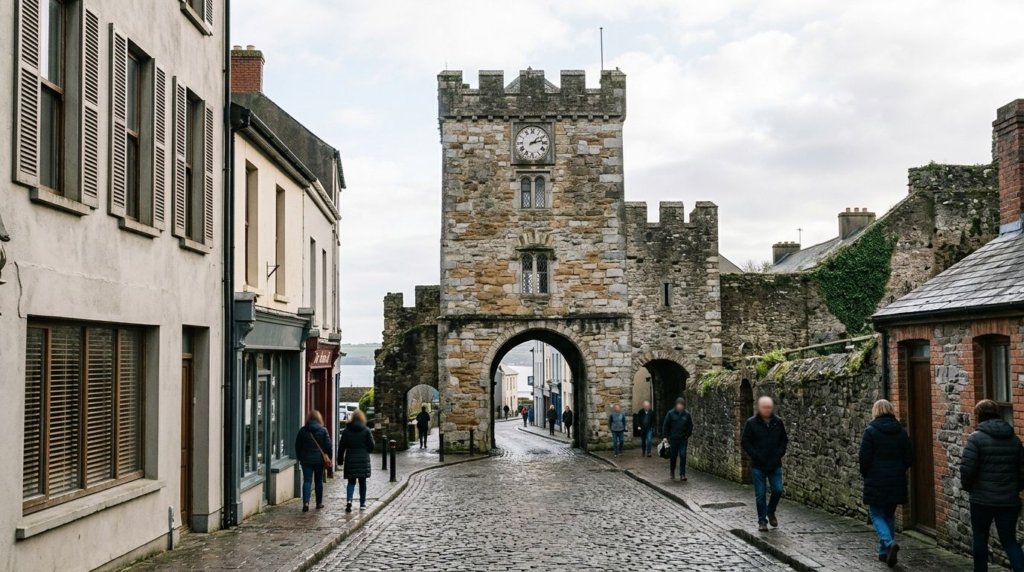
Cork’s tourism attention concentrates heavily on Kinsale and Cobh — one for food, the other for its Titanic connection. Youghal, a walled medieval port town about 45 minutes east of Cork city, has comparable historic substance and noticeably less profile, without a single global marketing hook driving visitors there.
The 18th-century Clock Gate Tower, built on the site of a medieval gaol and castle, is the centerpiece — guided storyteller tours climb to a fifth-floor platform with views over Youghal Bay. The surviving medieval town walls are part of the official Irish Walled Towns Network, and the town has a genuine literary and film footnote: Sir Walter Raleigh’s associated house, Myrtle Grove, sits here (privately owned, viewable from outside only), and parts of the 1956 film adaptation of Moby-Dick were shot in the harbor.
Three beaches sit within easy reach of the town center, which makes Youghal a reasonable base for a slower coastal day rather than a single-stop history visit.
- Nearest city: Cork city, about 48 km away.
- Getting there: No passenger rail — the line closed in 1963. Bus Éireann Route 260 runs Cork–Youghal–Ardmore.
- Car necessary? Not strictly, given the bus route, but a car adds flexibility for the beaches and onward travel toward Ardmore.
- Time to allow: Half a day for the walls and Clock Gate Tower; a full day if adding beach time.
- Seasonal notes: The Clock Gate Tower reopens each year on May 1st and runs on a reduced schedule (Wednesday-Saturday in shoulder months, Tuesday-Saturday in July and August); it’s by-appointment-only in the off season.
- Where to stay: A modest stock of guesthouses and hotels typical of a seaside market town, with more availability outside July and August.
- Budget: OFFICIAL PRICE — Clock Gate Tower tours are €9.50 for adults, €5.00 for children 6-12, €7.50 for seniors/students, and €25.00 for a family of five, per the tour operator’s own site.
Who Should Skip It?
If your only interest is a single marquee attraction, Youghal’s appeal is more cumulative than dramatic — the walls, the tower, and the beaches add up to a good half-day rather than one unmissable sight. It’s a better fit as a stop on a wider Cork coastal route than as a dedicated day trip from the city.
One Town We Left Off: Cong
Cong, on the Mayo-Galway border, was on our initial research list. It has a genuinely interesting abbey ruin and a striking lakeside setting, but it isn’t overlooked by any honest definition. It’s the filming location of “The Quiet Man” (1952), a fact Ireland’s own tourism board leads with, and it’s home to Ashford Castle, one of the country’s most famous five-star hotels, regularly featured in luxury and bridal travel media. Including it on an “underrated” list would be a stretch this guide isn’t willing to make.
Planning Around These Five
These five towns span most of the island — Donegal in the far northwest, Louth on the northeastern border, Offaly in the midlands, and Waterford and Cork in the south — so treat this as five separate stops to weave into wider regional itineraries rather than one connected route. Ardara pairs naturally with a Wild Atlantic Way trip, Lismore and Youghal both fit a southern Ireland loop through Waterford and Cork, and Birr and Carlingford each work best as a single detour from a midlands or east-coast route respectively.
If you’re building out a wider list of underrated towns beyond Ireland, our guide to underrated towns in Spain and our guide to underrated towns in France cover similar ground elsewhere in Europe.
A Few Common Questions
Do I need a car for this itinerary? For all five towns comfortably, yes. Carlingford and Youghal are reachable by bus alone, but Ardara, Birr, and Lismore are all considerably easier with a car, and none of the five connect to each other by public transport in a practical way.
Which one is best for a first-time visitor to Ireland with limited time? Carlingford or Youghal, since both are reachable without a car and pair naturally with a wider coastal or Dublin-adjacent route.
Are any of these good winter destinations? Be cautious — several of the featured sites (Birr Castle’s interior tours, Youghal’s Clock Gate Tower, Lismore Castle Gardens) run on seasonal schedules and are limited or by-appointment-only outside spring through autumn.
Is Dublin worth skipping in favor of these towns? No — this list is meant to extend a Dublin-based trip, not replace it. Each of these towns works best as a detour from a wider itinerary rather than a Dublin substitute.
Research & Sources
Ardara:
Discover Ireland — Triona Donegal Tweed Visitor Centre
Ardara.ie — Donegal handwoven tweed history
The Wild Atlantic Way — Glengesh Pass
Carlingford:
Ireland.com — Carlingford guide
Heritage Ireland — Carlingford Castle
Dundalk Democrat — Louth’s omission from a national tourism ad
Birr:
Birr Castle Demesne — general admission tickets
Ireland.com — Birr Castle
Visit Offaly — Birr
Lismore:
Lismore Castle Gardens — visitor information and pricing
Discover Ireland — Lismore
Youghal:
Living Youghal — Clock Gate Tower tours and pricing
Irish Walled Towns Network — Youghal
Discover Ireland — Youghal Clock Gate Tower
Cong (context, not featured):
Discover Ireland — Cong
Heritage Ireland — Cong Abbey