
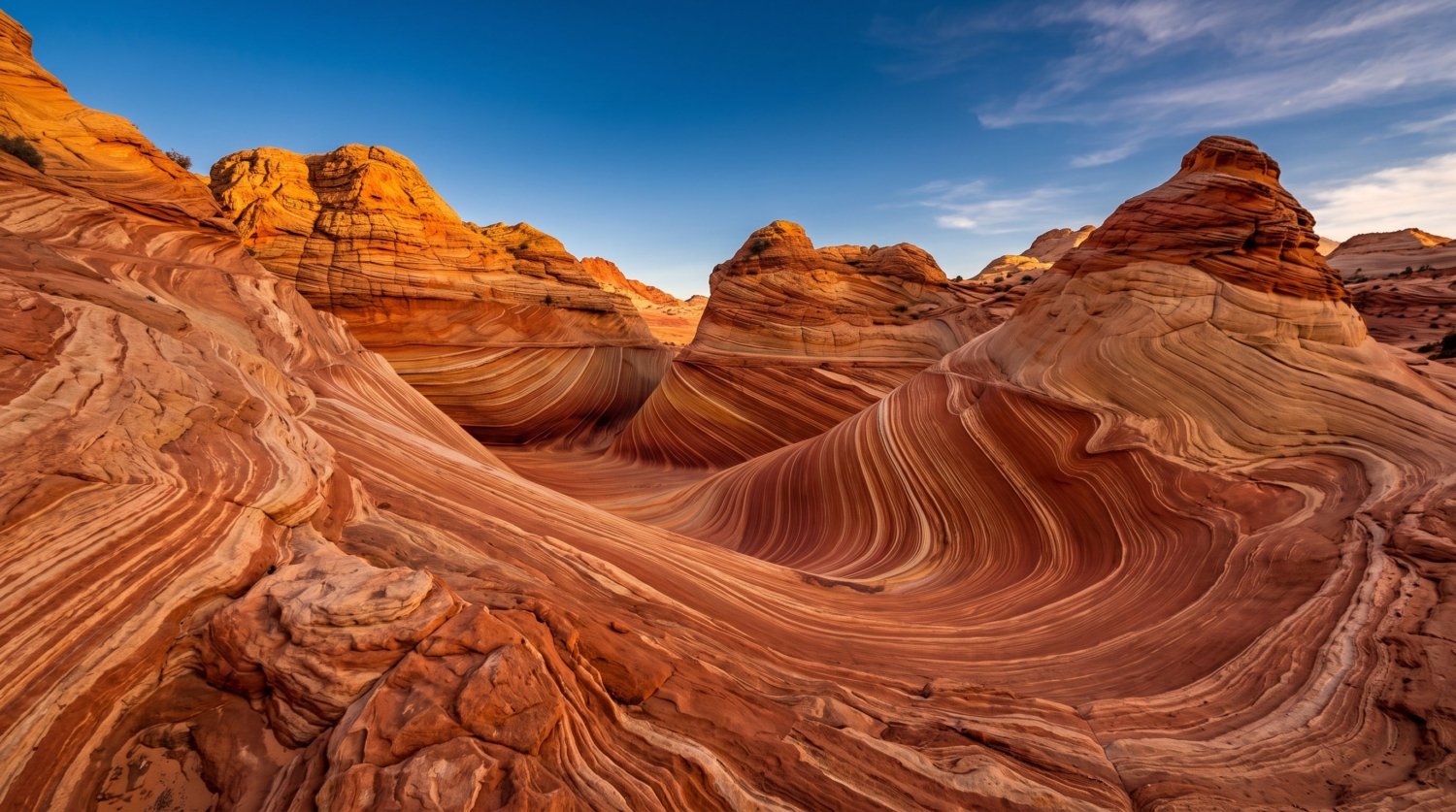
The Wave doesn’t look fragile. Photographs of its swirling red-and-cream sandstone make it look like solid rock that’s been there for millions of years and will be there for millions more, no matter how many boots cross it. That’s exactly why the numbers surprise people: the Bureau of Land Management caps access to just 64 people a day, split across two separate lottery systems, for a formation that thousands of people would happily visit at once if they were allowed to. The gap between how permanent the rock looks and how tightly it’s rationed is the real story here — and it comes down to soil, heat, and a formation that’s more delicate than it photographs.
Last verified: September 2026, against the Bureau of Land Management’s own Coyote Buttes North permit fact sheets, a U.S. Geological Survey report on Navajo Sandstone geology, and independent permit-tracking sites including Wilderness Beta and TheWaveAZ.
The Wave, By the Numbers
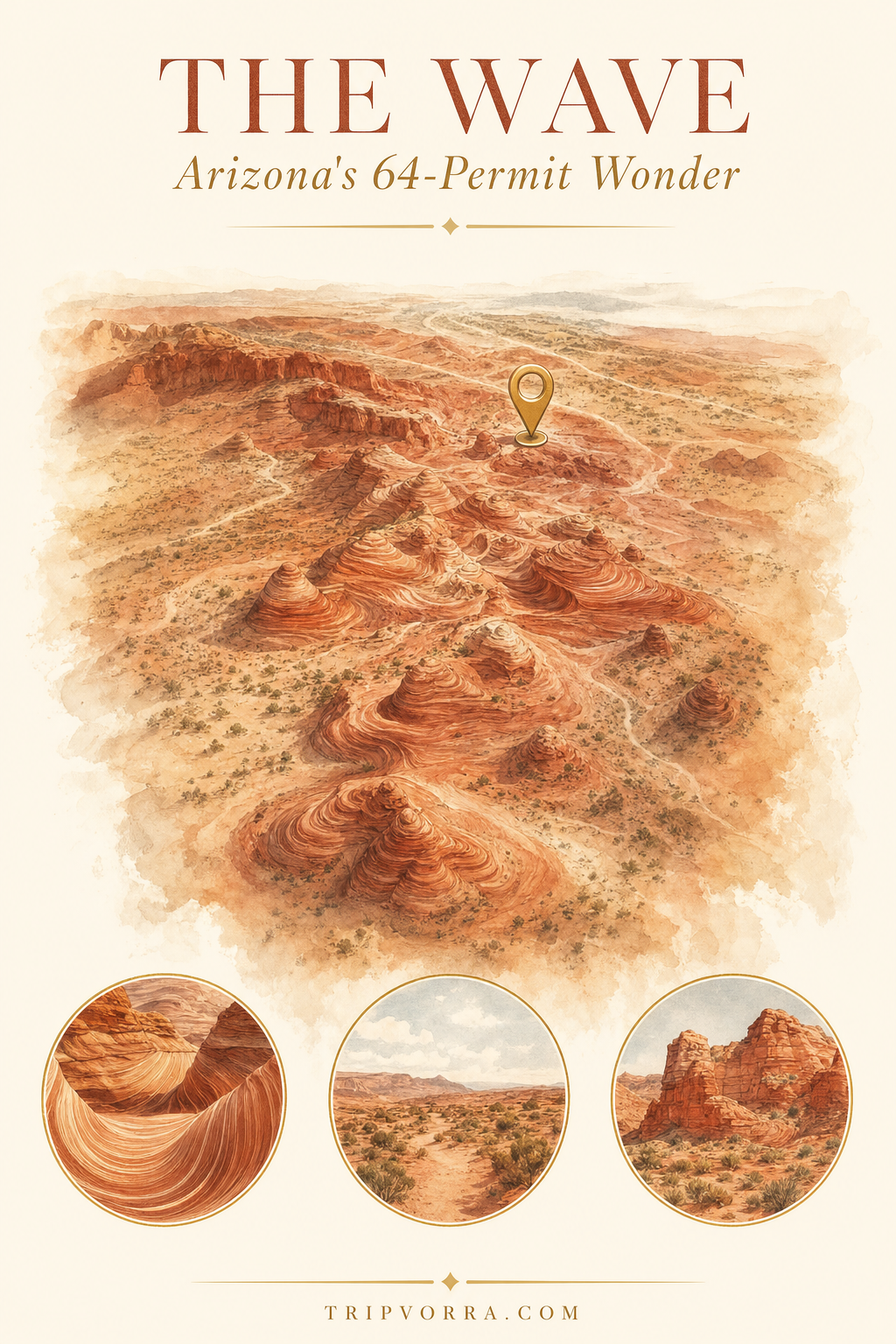
| Location | Coyote Buttes North, Paria Canyon-Vermilion Cliffs Wilderness, Coconino County, Arizona, near the Utah border |
|---|---|
| Rock and age | Navajo Sandstone, formed roughly 190 million years ago in the Jurassic period |
| Daily permit cap | 64 people and/or 16 groups per day, whichever comes first |
| How permits are split | 48 through an advance online lottery (four months out); 16 through a mobile geofence lottery applied for two days before the hike |
| Cost | $6 non-refundable application fee per entry for either lottery, plus $7 per person or dog if selected |
| Hike distance | 6.4 miles round trip from Wire Pass Trailhead, roughly 350 feet of elevation gain, no marked trail |
What’s Actually Being Protected
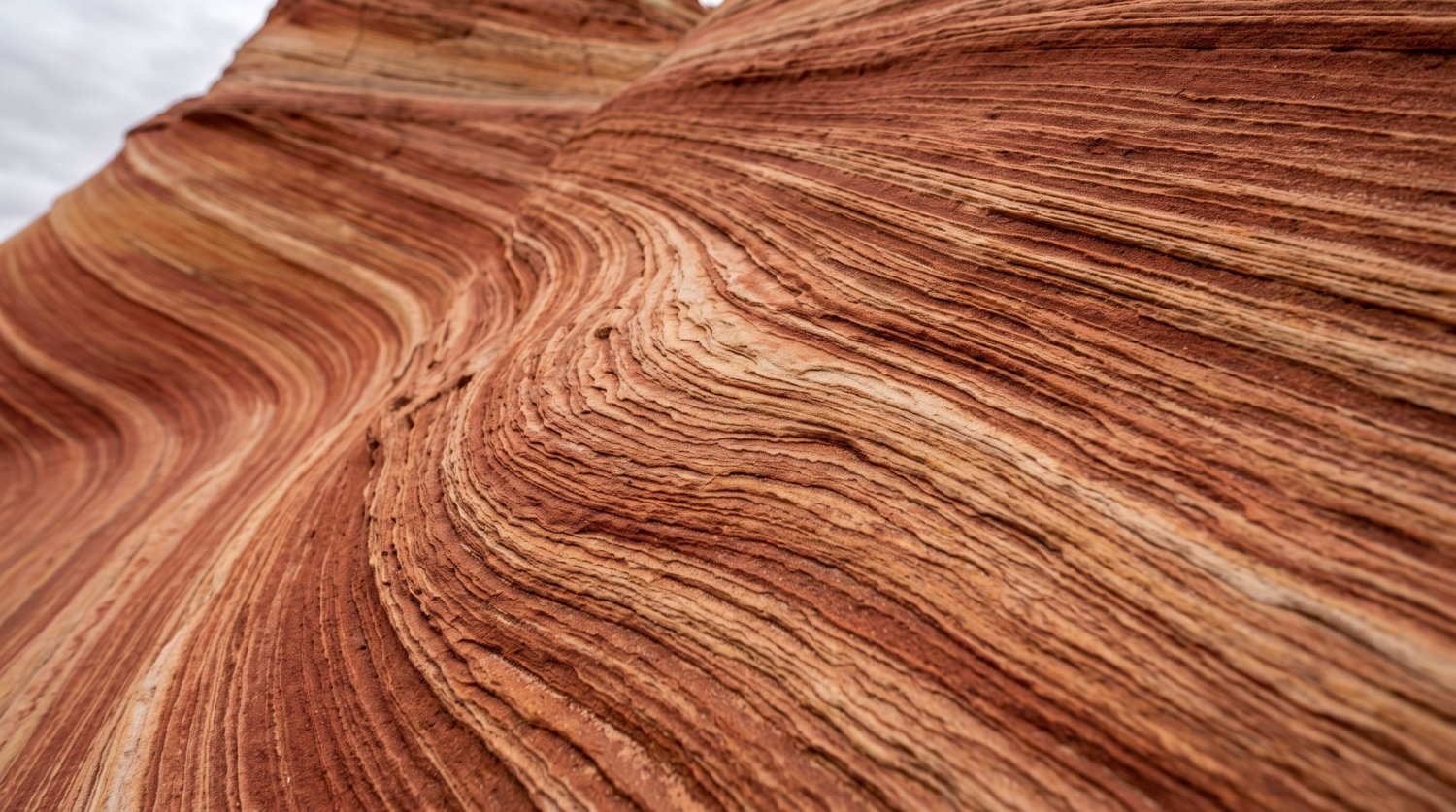
The Wave’s rippled surface is Navajo Sandstone, laid down as wind-blown desert dunes roughly 190 million years ago. According to a U.S. Geological Survey report on the region’s geology, the alternating bands of color and texture are cross-bedded layers — each one a record of a shifting wind direction as ancient dunes migrated across a Jurassic desert. Softer and harder layers erode at different rates, which is what gives the rock its rhythmic, wave-like ridges. That erosion hasn’t stopped: wind is still actively reshaping the surface today, the same process that carved it in the first place. A rock formation that’s still being sculpted by the wind is not the same thing as a rock formation that’s finished and indestructible — foot traffic that compacts sand, breaks down thin surface crusts, or scuffs the exposed rock face adds to a process that’s already ongoing, just on a much faster timescale than geology intended.
Two Separate Lotteries, One Combined Cap
The 64-person daily limit isn’t one lottery — it’s two, run by the BLM in parallel. Per the BLM’s own advance lottery fact sheet, 48 of the 64 spots are awarded through an online lottery that opens four months ahead of the visit date: applicants apply during a full calendar month, and the drawing happens on the first day of the following month. The remaining 16 spots go through a separate daily lottery, run through a mobile geofence app that the BLM introduced in March 2022, replacing an older in-person walk-in lottery that used to require showing up at a visitor center in Kanab, Utah. Applications for the daily lottery must be submitted through the app two days before the hike date. Both lotteries charge a non-refundable $6 application fee per entry; if selected, permit holders then pay $7 per person or dog. Groups are capped at six people, and permits are non-refundable and non-transferable once issued. Running two systems side by side means a visitor who misses the four-month advance window still has a real, if slim, second chance just two days before their trip.
Why the Odds Keep Getting Worse
The BLM doesn’t publish daily applicant counts or success percentages for either lottery, but independent trackers who monitor the system closely describe a clear trend. According to TheWaveAZ’s lottery analysis, odds for the 16 daily-lottery spots can run as long as 1-in-200 or worse during peak season — spring (March-May) and fall (September-November) — when the site describes “thousands of applicants” competing for those spots each day. Summer months (July-August) offer meaningfully better odds, largely because triple-digit heat discourages casual applicants, not because the BLM changes the cap. This wasn’t always this competitive: the daily cap was raised from an original 20 people a day to the current 64 on February 1, 2021, specifically because rising demand meant the BLM was fielding as many as 400 applications a day for a small handful of spots. Widening the cap more than tripled access, and the odds still got harder, not easier — a sign of how much demand has grown since, driven in large part by the formation’s ubiquity on social media and travel photography.
The Permit System Is Also a Safety System
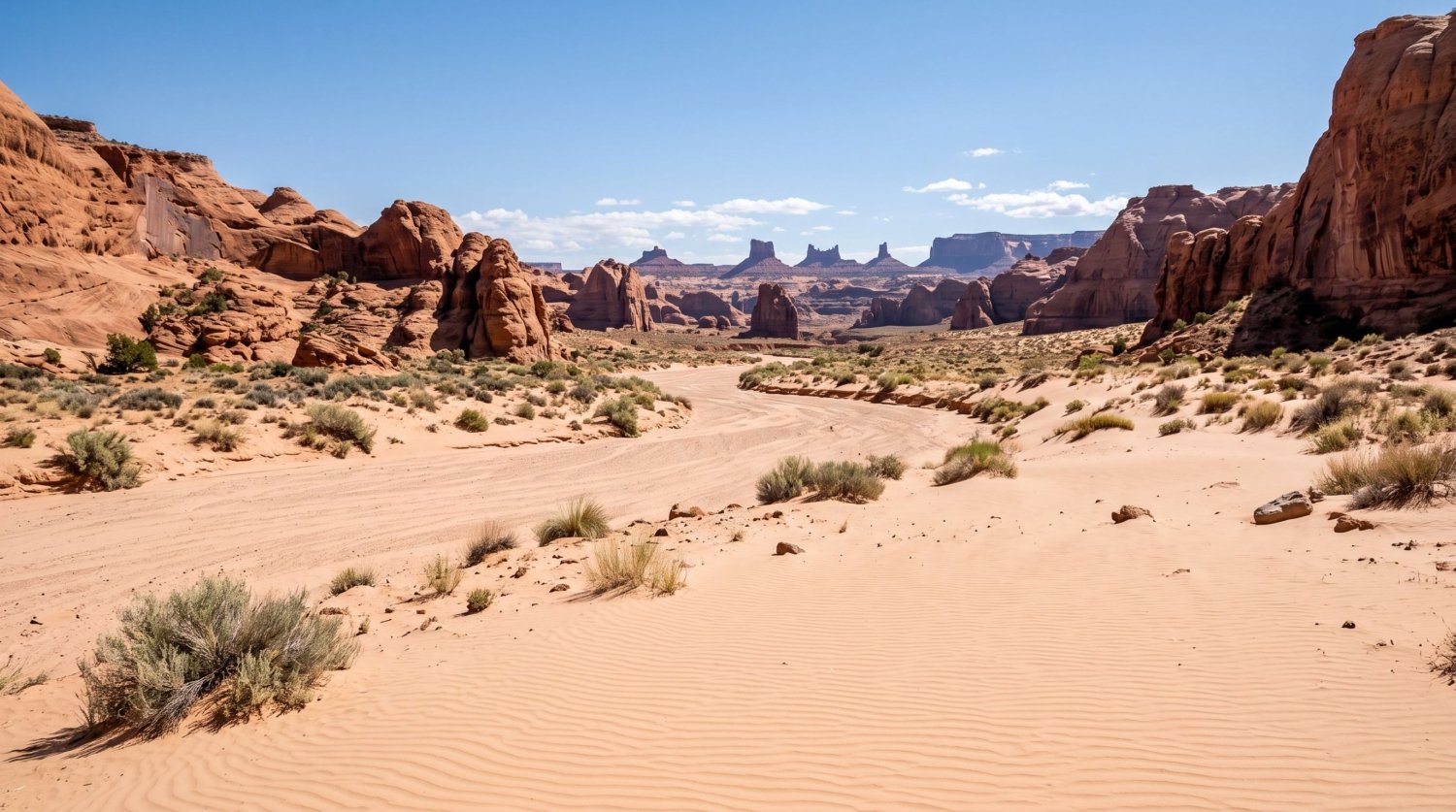
The BLM frames the permit cap around protecting the fragile sandstone and surrounding soil, not as an official safety measure — but it’s reasonable to infer the low number also functions as a de facto safety limit. The hike itself is genuinely dangerous in a way that’s easy to underestimate from photos: 6.4 miles round trip across open, shadeless desert with no marked trail, where summer temperatures regularly exceed 100°F and the only guidance is a GPS coordinate and a paper map handed out with the permit. In July 2013, three hikers died within about a month of each other near The Wave from heat-related causes, a cluster of fatalities serious enough that the BLM reviewed its safety messaging and permit procedures afterward. Whatever the agency’s stated rationale, capping the number of people on an unmarked, exposed route at any given time would, as a side effect, also limit how many people could be out there if conditions turn dangerous, which matters more on a route with no trail markers to follow back out.
Is It Worth Chasing the Permit?
That depends on what you’re weighing it against. Applying to either lottery costs a small non-refundable $6 fee whether or not you’re selected, so trying the daily lottery repeatedly adds up in application fees even before you factor in the $7-per-person cost of an actual permit. Neither guarantees anything, and neither should be built into a trip’s only plan without a backup. What you get if you win is genuinely rare: a rock formation shaped by 190 million years of wind, seen by at most 64 people on any given day, with none of the boardwalks, guardrails, or crowd noise that come with more heavily developed natural landmarks. For travelers who can build real flexibility into their Southwest itinerary — applying months ahead, then trying the daily lottery repeatedly during a multi-day visit to the Kanab/Page area — the odds become less about luck and more about how many attempts you can afford to make.
Frequently Asked Questions
How many permits are issued for The Wave each day?
Up to 64 people or 16 groups per day, whichever limit is reached first — split between a 48-person advance online lottery and a 16-person daily lottery, applied for two days before the hike.
Why is the permit cap so low for a rock formation?
The Navajo Sandstone is still actively eroding from wind, and its surface and surrounding soil are more fragile than they look in photos. The BLM’s stated reason for the cap is limiting how much foot traffic accelerates that erosion; a side effect, though not an official rationale, is that it also limits how many people are on an unmarked, exposed desert route at once.
Has the daily limit always been 64 people?
No. The BLM raised the cap from an original 20 people a day to 64 on February 1, 2021, in response to rising demand, but permit odds have continued to get harder since, not easier.
Is there a marked trail to The Wave?
No. From Wire Pass Trailhead it’s about three miles of open desert navigation by GPS coordinate, with no trail markers or signage, across exposed terrain that can exceed 100°F in summer.
The Wave is a reminder that a landscape can look indestructible in a photo and still be one careless season away from real damage — which is exactly why permit systems like this one exist at some of the world’s most photographed natural sites. If you’re planning more trips that involve genuine access limits, our guides to the science behind Havasu Falls’ impossible blue-green water and planning a car-free weekend in the Azores cover two more places where the honest logistics matter as much as the scenery.