
Most travel advice about famous landmarks focuses on what to see. It rarely mentions when — and at a lot of the world’s most photographed places, the hour on the clock changes the experience more than almost anything else you can plan for. The same fountain that feels like a scene from a film at 7am can feel like a subway platform at 1pm, and the same monument that’s a five-minute walk-through before the tour buses arrive becomes a 45-minute shuffle once they do.
This isn’t about chasing “secret” hours — at popular sites, plenty of people have already found the quiet windows too. It comes down to two forces that govern the experience at each place: how crowds move through a site over the day, and how light, heat, weather, or an access system change what’s actually possible to see. Get the timing wrong and you pay full price for a worse version of the same visit; get it right and it often costs nothing extra.
Last verified: September 2026, against each attraction’s official visitor information (national park services, tourism boards, heritage authorities, and official ticketing sites) at the time of writing. Opening hours, prices, and reservation rules at every one of these sites change without much notice — treat the times below as planning guidance, and always confirm the current hours and booking rules on the official source linked for that attraction before you go.
Quick Reference: When to Go, and Why
| Attraction | Destination | Best Time of Day | Why |
| Eiffel Tower | Paris, France | 9:30–10:30am or the last hour before closing | Official queue guidance shows late morning through late afternoon as the busiest stretch |
| Trevi Fountain | Rome, Italy | Before 9am or after 9pm | One of Rome’s smallest piazzas holds one of its biggest crowds by mid-morning |
| Machu Picchu | Cusco region, Peru | The first entry slot of the day | Train-based tour groups from Cusco concentrate mid-morning to early afternoon |
| Taj Mahal | Agra, India | Sunrise | Official guidance recommends dawn for both cooler temperatures and lighter crowds |
| Upper Antelope Canyon | Arizona, USA | Late morning (roughly 11am–1:30pm) in the light-beam season; otherwise the earliest tour available | The overhead light beams only appear near solar noon, and only in specific months |
| Uluru | Northern Territory, Australia | Sunrise or sunset | Low, angled light produces the rock’s color change; midday heat makes walking uncomfortable |
| Sagrada Fàmilia | Barcelona, Spain | Whatever slot you book — but book morning if you want the Nativity façade’s light | Entry is timed and mandatory, so your “best time” is largely decided when you book |
| Grand Canyon South Rim | Arizona, USA | Early morning or the hour before sunset | Popular viewpoint parking fills by late morning in busy seasons |
| Cliffs of Moher | County Clare, Ireland | Before 10am or after 5pm | The visitor centre’s own advice is to avoid the 11am–4pm coach-tour window |
| Mutianyu, Great Wall of China | near Beijing, China | Right at opening, on a weekday if you can | Cable car queues can run close to an hour once tour buses arrive |
Every entry above is explained in more detail below, including where the “best time” answer gets more complicated than a simple rule of thumb — and there’s a section further down specifically about the situations where showing up early is not the right call.

Eiffel Tower, Paris
Best time: 9:30–10:30am, or the last hour before closing.
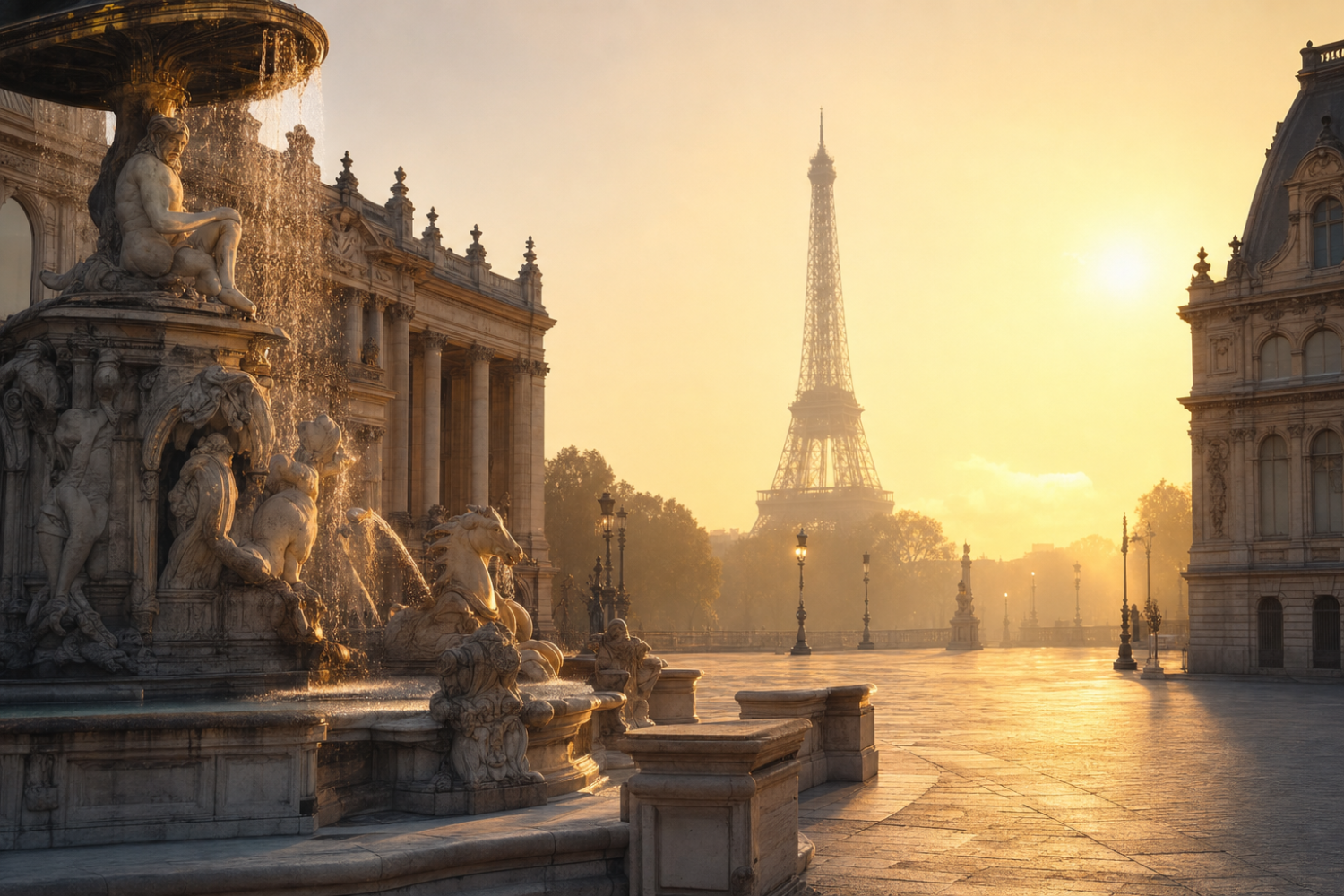
The tower’s own visitor information is unusually direct about this: queues are shorter in the mornings and in the evenings, and the stretch from roughly 11am to 5pm is the busiest part of the day, especially from June through September and during French school holidays. Every ticket is stamped with an entry time, so arriving right at opening (9:30am) or booking one of the last slots before closing (last ascent is 10:45pm) is the most reliable way to get a materially shorter wait than a midday visit.
There’s a booking quirk worth knowing before you plan around a specific date: elevator tickets open for booking 90 days in advance, while stair tickets open only 60 days out — two different windows for what looks like one ticket type. The tower’s official guidance is to book “as early as possible” for summer and school-holiday travel, which lines up with how quickly elevator slots for popular hours disappear during peak season.
An evening visit isn’t just a fallback for avoiding crowds — the tower is lit after dark, and the third floor is windy at any hour, so a cooler evening visit is arguably more comfortable than a hot midday one in summer. If a sunset-then-lit-up-at-night combination matters more to you than avoiding the busiest hours, book a slot in the two hours before closing rather than the first hour after opening.
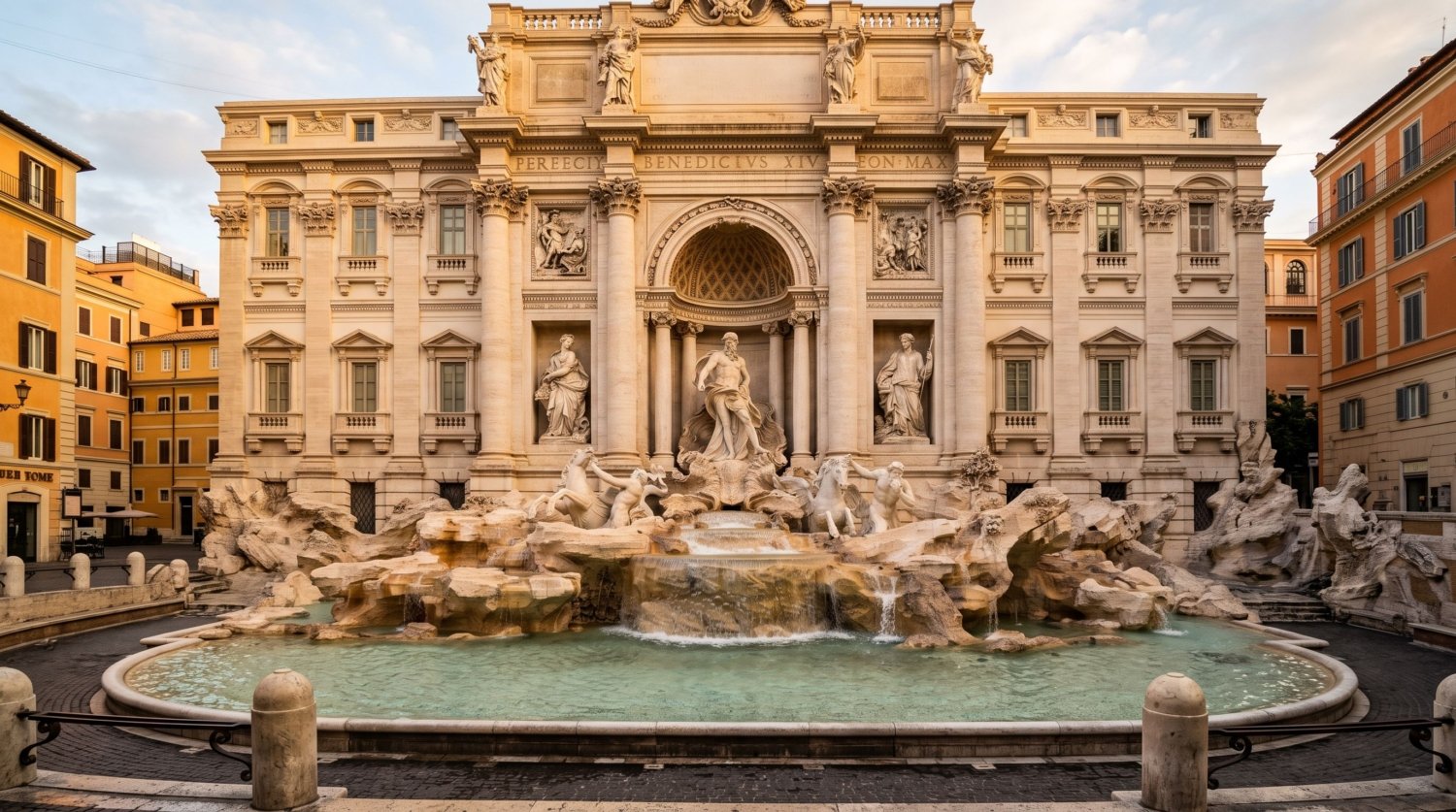
Trevi Fountain, Rome
Best window: before 9am or after 9pm.
The Trevi Fountain doesn’t have an entry gate you can time a ticket around in the usual sense — since February 2026, non-residents pay a small open-dated fee (no fixed date or time attached to it) to stand in the closer viewing area in front of the basin, while the fountain itself remains visible from outside that perimeter at any hour. The real obstacle isn’t a ticket window, it’s the piazza itself: it’s one of the smallest public squares attached to any major landmark in Rome, and it fills solid for most of the daylight hours.
The most consistent advice from people who visit repeatedly is simple: go before 9am or after 9pm. Before 9am, the square is closer to empty than crowded, and the light on the travertine stone is soft rather than harsh. After 9pm, the fountain is floodlit and the daytime crowd has mostly thinned, though it’s rarely completely quiet on a warm evening. The middle of the day — especially between roughly 11am and 4pm — is when the piazza is at its most packed, and it’s also when tour groups doing a Rome highlights circuit are most likely to pass through.
One thing worth knowing before you go: access hours themselves shift on a rotating basis for basin cleaning (typically starting later than normal on certain Mondays and Fridays), and the fountain has occasionally closed on short notice for public-order reasons. It’s worth a same-week check of the official fountain site rather than assuming the schedule is fixed.
Machu Picchu, Peru
Machu Picchu is one of the few places on this list where “best time of day” and “which ticket you can actually get” are the same question. Entry requires booking both an hourly time slot and a walking circuit in advance, and the citadel has no regular weekly closure day, so demand spreads across every day of the week rather than concentrating around a single busy day.
The crowd pattern follows the train schedule from Cusco and Ollantaytambo: the ruins are calmest in the very first entry slots of the morning and again in the early afternoon, once day-tripping groups start heading back toward the trains. The busiest window is roughly mid-morning through early afternoon, when multiple tour groups are moving through the same circuits at once.
The tradeoff with an early slot is weather, not crowds: at this altitude, the ruins are frequently wrapped in mist at sunrise, and that mist can take anywhere from a few minutes to over an hour to clear. Getting the classic postcard view often means arriving early and being patient rather than arriving early and seeing it immediately. Reaching an early slot in the first place usually means staying overnight in Aguas Calientes rather than day-tripping from Cusco, since the first shuttle buses up the mountain run from around 5:30am.
Book as far ahead as you can, particularly for May through October’s dry season, when the clearest skies also mean the fastest-selling tickets. The rainy season, November through April with the heaviest rain typically in January and February, brings muddier trails and a higher chance the mountain backdrop is obscured — but tickets are easier to get, and mist rolling through the ruins has its own kind of appeal if you’re not counting on a clear-sky photo.
Taj Mahal, Agra
Best time: sunrise — and never on a Friday.
The Archaeological Survey of India’s own visitor guidance recommends sunrise specifically, and for two stated reasons: it’s before the day’s heat sets in, and it’s before the crowds build. The white marble genuinely does read differently depending on the light — warmer and pinker at dawn, cooler and more silver-toned by sunset — which is the closest thing to an official confirmation you’ll find that the “golden hour” framing isn’t just marketing.
One date to build around without exception: the Taj Mahal is closed every Friday to all non-worshippers, with no workaround for tourists. Beyond that, gates open and close relative to sunrise and sunset rather than at a fixed clock time, so the exact hour shifts through the year — check the current times on the official site close to your visit rather than assuming last year’s schedule still applies.
General entry gets you onto the grounds; seeing the mausoleum’s interior requires an additional ticket bought on top of the base entry. There’s also a rarer option worth knowing about if your dates align: night viewing is permitted only on the night of the full moon and the two nights before and after it, in a strictly capped, timed 30-minute viewing window that has to be booked roughly a week ahead — a genuinely different way to see the monument, but only available a handful of nights each month.
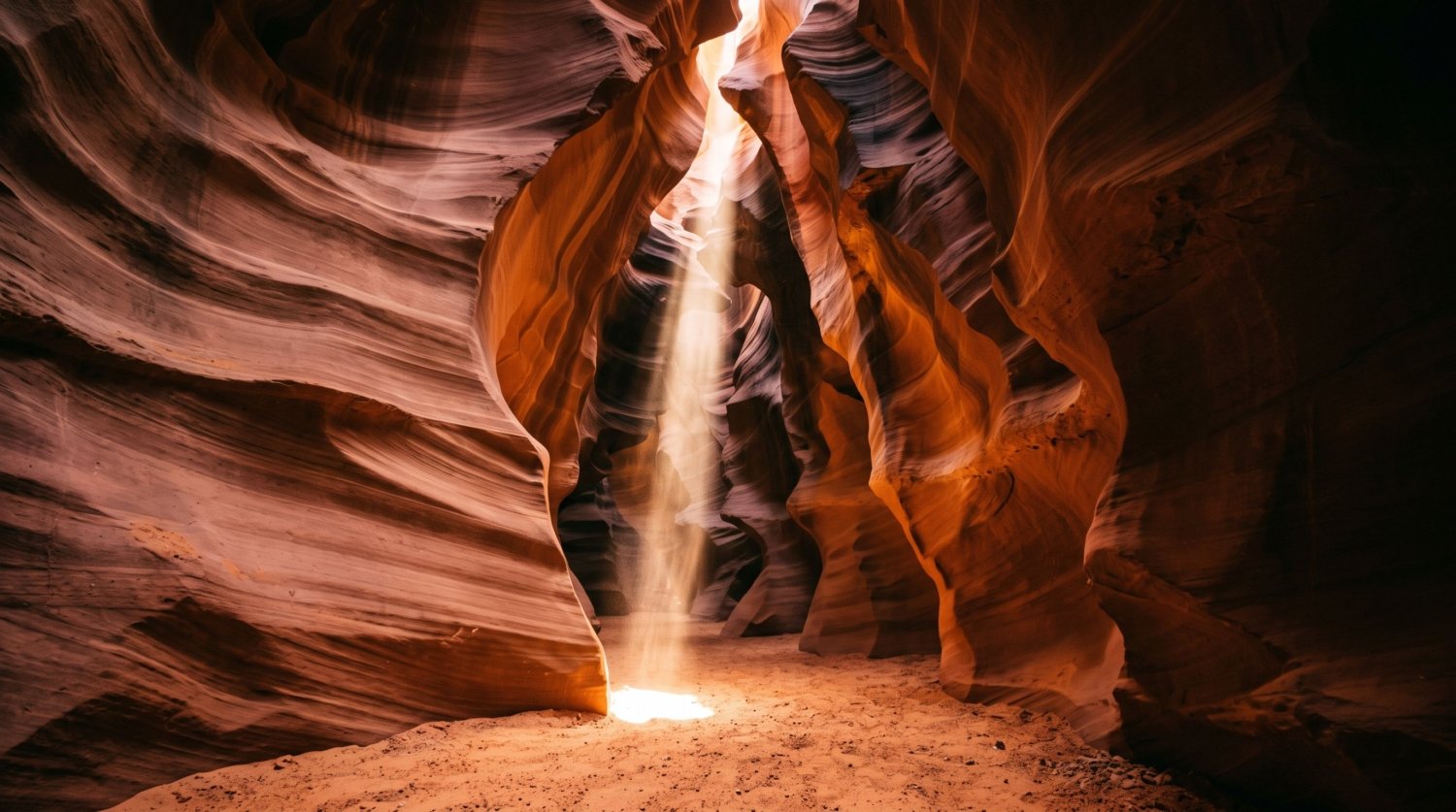
Upper Antelope Canyon, Arizona
Best time for the light beams: roughly 11am–1:30pm, in season.
This is the clearest example on this whole list of a place where the “obvious” advice — go early to beat the crowds — is actually the wrong instinct, at least if the reason you’re going is the light beams. Access to Upper Antelope Canyon is guided-tour-only through Navajo-owned operators, no independent entry, and the famous shafts of light that appear to pour down from the canyon’s narrow opening only happen when the sun is high enough overhead to reach the canyon floor directly — roughly late morning through early afternoon, in the months when the sun’s angle allows it (broadly spring through summer). Outside that window, and outside that season, the canyon still glows with warm reflected color on its sandstone walls, which is its own kind of striking, but it isn’t the beam effect most people picture.
Because the light-beam hours are the whole point for a lot of visitors, those specific slots are the first to sell out, often weeks ahead during peak season — tour operators generally recommend booking as soon as your travel dates are confirmed rather than waiting until you arrive in the area.
One seasonal exception matters more here than almost anywhere else on this list: Arizona’s monsoon season, roughly mid-June through the end of September, brings fast-moving storms that can send flash floods through the canyon even when the sky directly overhead looks clear. Operators monitor conditions in real time and will delay or cancel tours for safety — if you’re visiting during monsoon season, build in a flexible day rather than a single tightly scheduled slot.
Uluru, Australia
Best time: sunrise or sunset.
Uluru’s defining visual trick — the way the rock shifts through shades of orange, red, and violet — is a function of low-angle light, which means sunrise and sunset are both genuinely correct answers, not a case of one being secretly better than the other. What actually separates them is logistics and comfort rather than the color itself: sunrise viewing areas fill up because everyone wants the same shot at once, and by the time the sun is high, Parks Australia’s own advice notes the coolest, most comfortable months for visiting are May through September — the Southern Hemisphere’s dry winter season, when the desert heat that defines this region is at its most manageable.
A correction worth making here, since it’s a common mix-up: Uluru sits deep in Australia’s arid interior, well away from the tropical, cyclone-prone coastline further north. The seasonal thing to actually plan around is heat, not storms — December through February regularly brings temperatures well into the 40s Celsius (over 104°F), which is a genuine reason to shift any walking you plan to do toward the cooler edges of the day, sunrise and the couple of hours right after.
Climbing Uluru itself is not an option to plan around at any hour — the climb closed permanently in October 2019 out of respect for its significance to the Anangu traditional owners, and it’s now against Australian federal law. The base walk and the many designated viewing areas remain the way to experience the rock, at whichever end of the day you choose.
Sagrada Família, Barcelona
This is the other clear case on this list where “best time of day” isn’t really a choice you make on the day — it’s a choice you make when you book. Entry to the basilica is timed and mandatory: your ticket assigns you a specific slot, and the basilica’s own ticketing page is explicit that you need to arrive within that window to guarantee getting in.
Where timing still matters is which slot you choose. Gaudí’s two most famous façades face roughly opposite directions — the Nativity façade toward the east, the Passion façade toward the west — so a morning booking is the more deliberate choice if you specifically want to see the stained glass and stonework on the Nativity side lit by direct light, and a late-afternoon slot does the same for the Passion side. Neither is objectively “the” best time; it depends on which part of the building you care most about seeing in good light.
Opening hours change by season — the basilica opens and closes later in spring and summer than in the winter months — and the schedule can be adjusted around special events inside, so it’s worth checking the current hours for your travel dates directly on the official site rather than assuming a fixed year-round schedule.
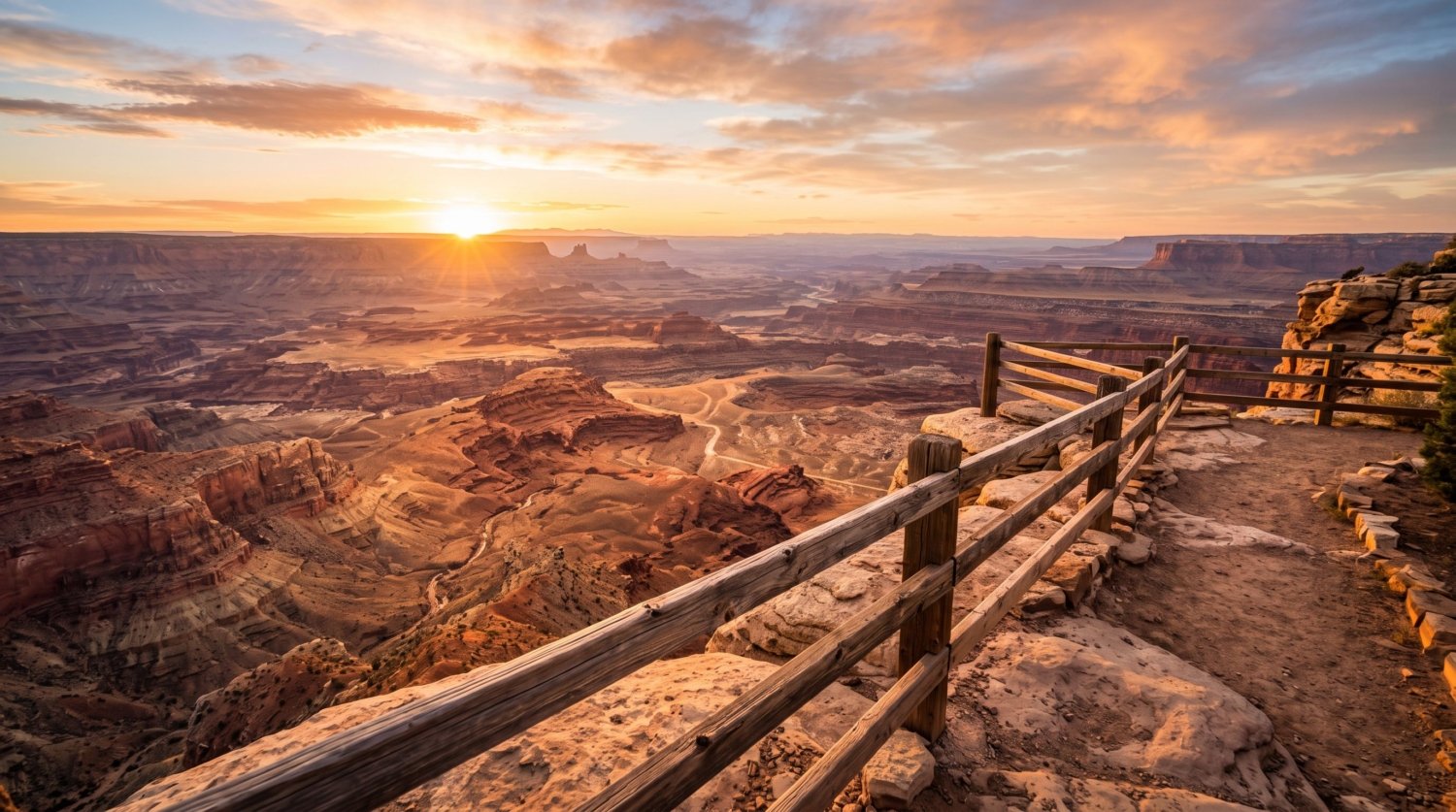
Grand Canyon South Rim
Best time: early morning, or the hour before sunset.
The South Rim stays open year-round, unlike the North Rim, which closes seasonally — but “open” doesn’t mean uncrowded. At the most accessible, most photographed overlooks (Mather Point and Yavapai Point among them), the National Park Service’s own visitor guidance notes that the main visitor-center parking lots often fill by late morning during busy periods — spring break, summer, and holidays specifically. Arriving by 10am during those stretches generally still finds a spot; arriving at noon is a genuine gamble.
Access to some of the rim’s best-known points isn’t just about parking, either. The road to Yaki Point and the South Kaibab Trailhead is closed to private vehicles year-round — it’s shuttle-only — and Hermit Road follows the same shuttle-only rule for most of the year, reopening to private cars only during the winter off-season. Building your morning or evening visit around the free seasonal shuttle schedule, rather than assuming you can just drive to a viewpoint, avoids a frustrating surprise.
Sunrise and sunset both draw the biggest crowds at the most famous overlooks for the same reason they do everywhere else on this list — that’s when the canyon’s layered rock catches the most dramatic light. If a quieter version of that same experience matters more to you than the single most iconic viewpoint, a short walk to a less-trafficked spot along the Rim Trail tends to trade a few minutes of walking for a meaningfully smaller crowd at the same hour.
Cliffs of Moher, Ireland
The Cliffs of Moher’s own visitor site gives a direct recommendation here: visit outside the 11am–4pm window for what it calls “a more pleasant and peaceful experience,” and calls out sunrise and sunset specifically as special times to visit. That daytime window lines up with when coach tours from Dublin and Galway tend to arrive and linger, filling the car park and the main viewing platforms until the crowds thin out again in the late afternoon.
Weather matters here more than at almost anywhere else on this list, and not just for comfort. The site runs an official three-tier weather-status system: a caution-level status where the cliffs stay open but visitors are urged to stay well back from the edge, a more serious status where the visitor centre closes and evacuates, and a top-tier status where the site stays closed entirely. Atlantic storms, most common in autumn and winter, have forced full closures before with winds strong enough to make the cliff-edge paths genuinely dangerous. None of this runs on a fixed seasonal calendar — it’s assessed conditions on the day — so checking the live status before you drive out, especially outside summer, is worth the two minutes it takes.
Bring proper rain gear and sturdy footwear regardless of what the forecast says the night before — the cliffs sit fully exposed to the Atlantic, and conditions here can shift faster than a phone forecast updates.
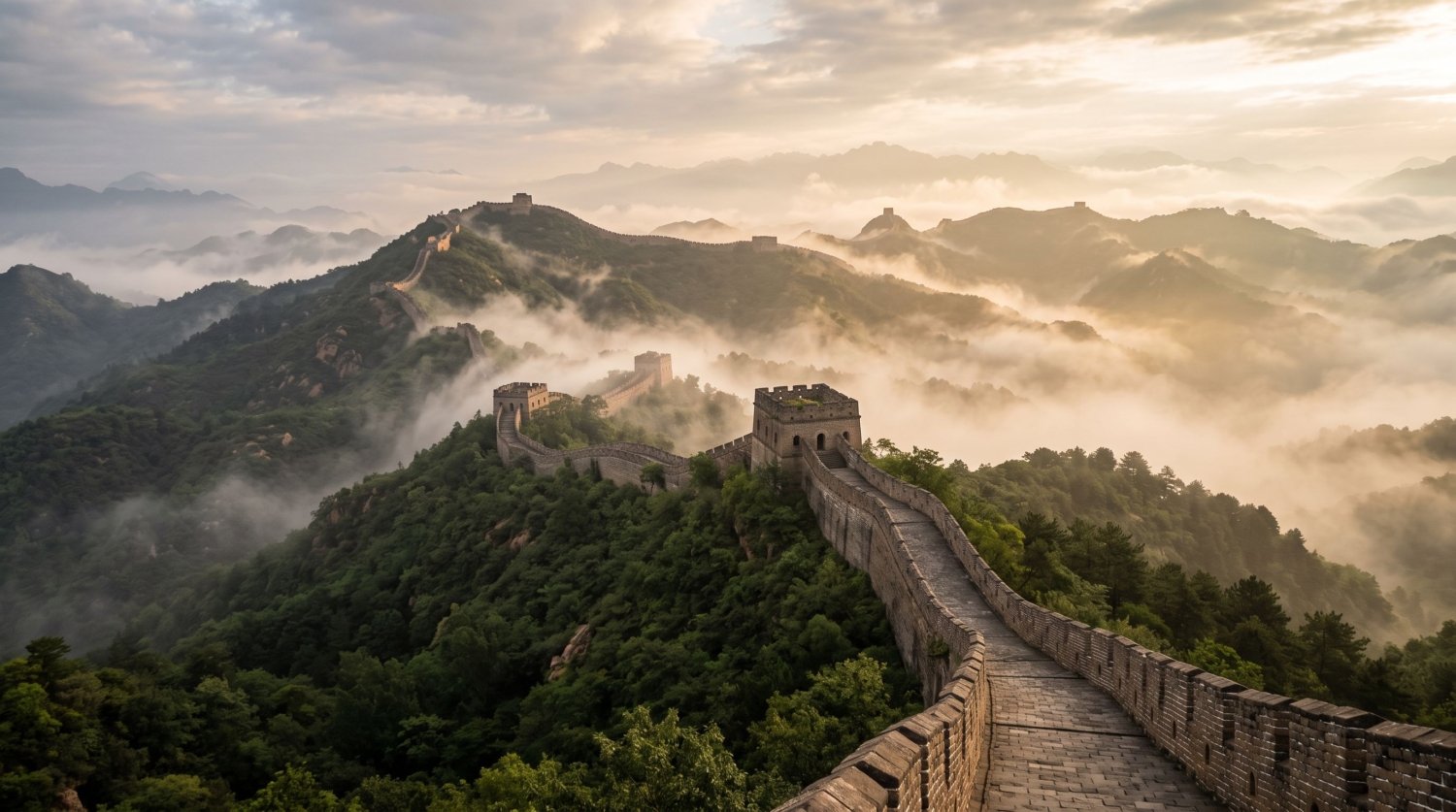
Mutianyu, Great Wall of China
Best time: right at opening, ideally on a weekday.
Mutianyu is one of the most visited sections of the Great Wall specifically because it’s a manageable day trip from Beijing — roughly 1.5 to 2 hours by road — which also means its crowd pattern tracks tour-bus departure times from the city almost exactly. Arriving right at opening, before the first buses arrive mid-morning, is the single most effective way to get a meaningfully quieter wall-top experience and a shorter wait for the cable car, chairlift, or toboggan up and down — all three draw from the same queue infrastructure, and that combined wait can run close to an hour once the site is at its busiest.
Weekdays are consistently quieter than weekends, and Chinese national holiday periods (Golden Week in particular) bring the heaviest crowds and the longest queues of the year by a wide margin — worth actively avoiding if your travel dates are flexible at all.
Mutianyu stays open through the winter rather than closing for snow, with seasonal programming that leans into the cold months rather than working around them. Advance online booking is the standard way most visitors arrange entry now — it lets you skip the ticket-window queue entirely with a QR code — though it isn’t a strict timed-slot system in the way Machu Picchu’s or the Sagrada Família’s tickets are; it mainly saves you the line at the gate rather than reserving you an exact hour.
When “Go Early” Isn’t Actually the Best Advice
Sunrise gets recommended so often in travel advice that it’s easy to assume it’s always the right call. At several of the places above, it genuinely isn’t — or at least it isn’t the whole story:
- When the phenomenon itself needs midday light. Upper Antelope Canyon’s light beams are a solar-angle effect, not a crowd-avoidance one — they physically don’t exist before roughly late morning, so “go early” would mean missing the exact thing you came for.
- When your ticket already fixes your hour. Machu Picchu and the Sagrada Família both use timed, mandatory entry slots. The useful decision isn’t “what time should I show up,” it’s “which slot should I book,” made weeks or months in advance rather than the morning of.
- When sunset genuinely rivals or beats sunrise. Uluru’s color-shifting light and the Grand Canyon’s rim-lighting both happen at both ends of the day. Sunset also has a practical edge in hot climates: at Uluru especially, the worst heat of the day has already passed by the time the light gets good again in the evening.
- When weather, not the clock, is the deciding factor. The Cliffs of Moher’s opening status changes with wind and storm conditions, not a fixed schedule — the “best” time on a calm day can be entirely closed on a stormy one. Antelope Canyon’s tours run on the same logic during monsoon season. In both cases, a same-day or same-week check of live conditions matters more than any general rule about morning versus afternoon.
- When the last departure matters more than the first. At Mutianyu, arriving early beats the crowds on the way up — but the cable car and chairlift also have a last-departure time each day, and missing it means a long walk down instead of a short ride. Knowing the closing schedule is just as important as knowing the opening one.
The itinerary problem this creates is a familiar one to anyone who’s tried to cram a fixed list of must-sees into a fixed number of days — the same tension shows up in how much time a destination like the Faroe Islands actually needs once ferry schedules and weather cancellations are accounted for, rather than the number a recycled itinerary assumes.
The Practical Takeaway
Before you lock in a time for any of these, ask three questions: Is entry timed or first-come? Does the thing I actually want to see (light, color, an empty frame) depend on a specific hour rather than just low crowds? And is there a weather or seasonal system that could override the “ideal” time entirely? Most of the disappointment that comes from getting a famous place’s timing wrong traces back to skipping one of those three questions — not to bad luck.
Two of the places on this list — Arizona’s permit-capped Wave formation and Havasu Falls’ own reservation system — show the same principle taken even further: at some places, the booking system decides your hour for you long before you arrive, which makes research before you travel more valuable than any advice about what to do once you’re standing at the gate.
Frequently Asked Questions
Is sunrise always the best time to visit a popular attraction?
No. It’s the right call at places like the Taj Mahal and Trevi Fountain, where the goal is beating heat and crowds together. It’s the wrong frame at places like Antelope Canyon, Machu Picchu, and the Sagrada Família, where light physics or a timed ticket decide the hour for you.
Why do so many of these places require booking a specific time slot?
Timed entry is primarily a crowd- and preservation-management tool at high-traffic heritage or natural sites — it spreads visitors more evenly across the day instead of letting everyone arrive at once, which reduces wear on fragile sites and makes the experience more predictable for visitors too.
How far in advance should I book timed-entry tickets for places like these?
It varies by site and season, so there’s no single number to memorize — popular slots sell out weeks or months ahead, while off-season hours often stay available closer to your travel dates. Check each attraction’s own official booking page for its current window before you go.
Research & Sources
Every practical detail above was checked against each attraction’s own official visitor information as of September 2026. Hours, prices, and booking rules change — use these as your starting point for a final check before you travel, not as a substitute for it.
Eiffel Tower — official site
Trevi Fountain — official visitor info (Rome)
Taj Mahal — Archaeological Survey of India
Uluru-Kata Tjuta National Park — Parks Australia
Sagrada Família — official site
Grand Canyon National Park — National Park Service
Cliffs of Moher — official visitor site
Mutianyu Great Wall — official site
Navajo Nation Parks & Recreation (Antelope Canyon tour operators)