
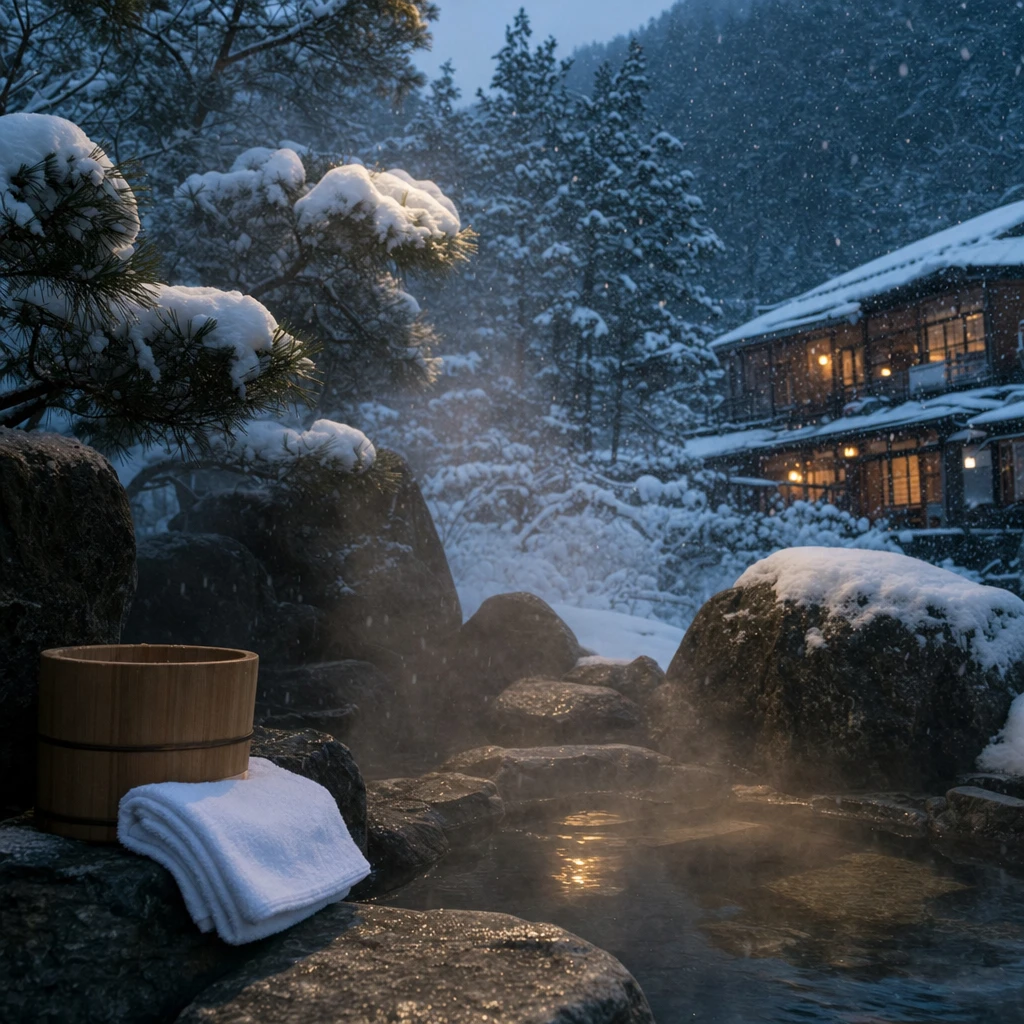
Soaking in a steaming outdoor bath while snow lands on your shoulders is one of the most photographed images of Japan in winter, and it lives up to the picture more often than most travel clichés do. The practical side is where trips go wrong: rules that change by season, baths that are shut for repairs, snow that stops trains, and a body that reacts badly to going from freezing air into hot water. This guide covers three very different winter onsen towns in Japan, Ginzan Onsen, Shibu Onsen and Kinosaki Onsen, and what to plan for in each. Fees, hours and winter rules are the details most likely to have changed since this was written, so treat the numbers as a starting point and confirm them with the official sources linked below.
Last verified: October 2026. How this guide was built: it draws on the official websites of the towns and attractions named below, supplemented by national tourism sources and secondary travel guides. Where those sources disagreed, the text says so rather than picking a number.
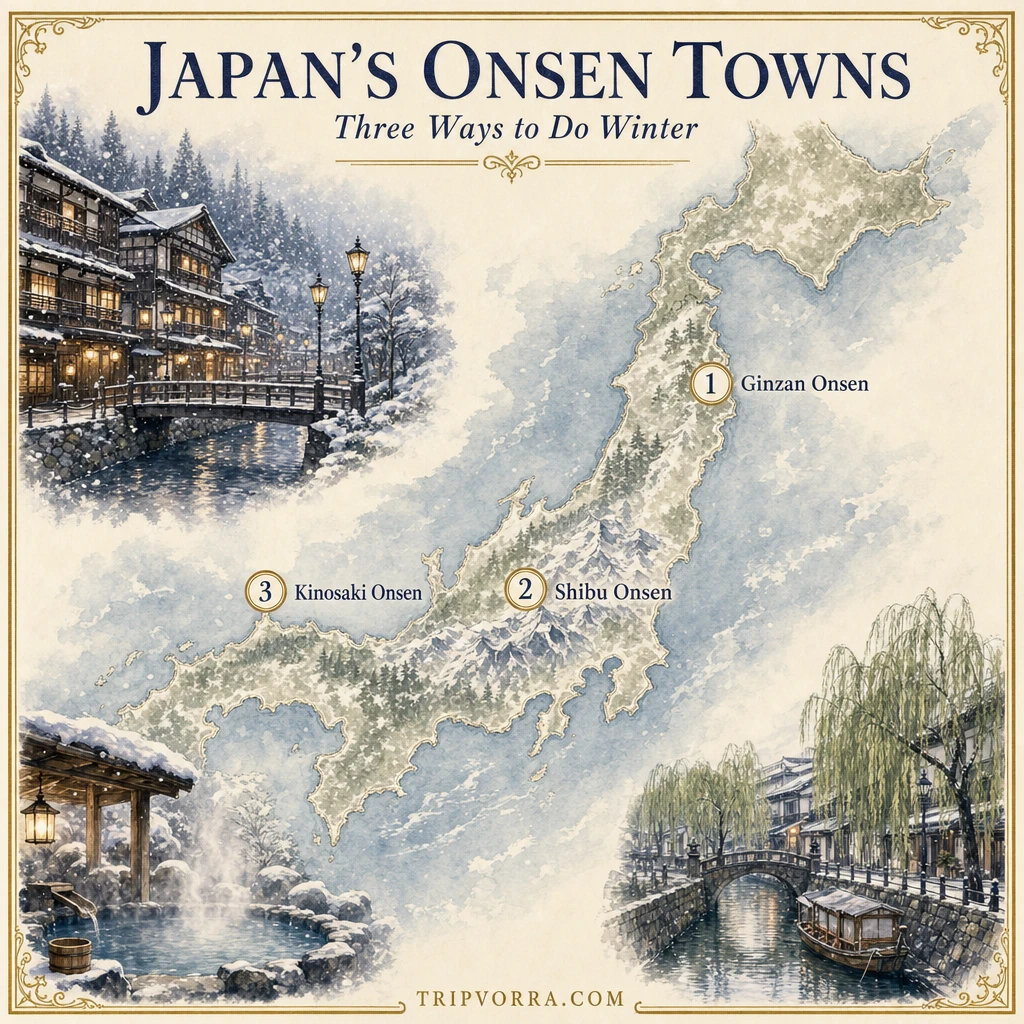
The three towns at a glance
- Ginzan Onsen (Yamagata, northern Honshu): a small ryokan village along a river, famous for snow-covered wooden inns lit by gas-style lamps. Best for atmosphere, snow and photography; a night here suits it better than a day trip. Trade-off: it is the most tightly managed for crowds.
- Shibu Onsen (Nagano): a traditional bathhouse town and the usual base for the Jigokudani snow monkeys. Best for pairing old-style public baths with the snow monkeys; worth at least one night given the journey. Trade-off: a snowy walk to the park, and the monkeys are wild.
- Kinosaki Onsen (Hyogo, Sea of Japan coast): a walkable willow-lined canal town where guests stroll between public bathhouses in yukata. Best for a first onsen trip and a fuller bath-hopping experience, with winter crab menus; one night is the practical minimum. Trade-off: not every bath is open, and it suits the Kansai area better than a trip from Tokyo.
How winter changes the onsen experience
Winter is high season for a reason. The contrast between cold air and hot mineral water is the whole appeal, and snow turns ordinary village streets into something photogenic. It also means more visitors on the same few weekends, tighter lodging, and weather that can delay trains or close mountain roads with little notice. Build slack into any itinerary: a spare night, flexible train tickets where possible, and no hard deadline the day you travel.
Pack for the walk, not just the bath. Waterproof boots with real grip matter more than anything else on the list, because the short walks between baths, stations and lodgings are on packed snow and ice. A thin extra layer is useful for the wet walk back from an outdoor bath, and a small plastic bag keeps a damp towel away from the rest of the bag.
Etiquette and tattoos, briefly
The core rules are the same everywhere: wash thoroughly at the seated shower stations before entering the water, keep towels and swimwear out of the bath, tie up long hair, and keep your voice low. Bathing is nude and separated by gender in most public baths.
Tattoos are the common worry. Policies vary by facility, and a Japan Tourism Agency survey from 2015, now dated, found that a little over half of the accommodations surveyed accepted tattooed guests in some form, often with conditions such as covering stickers or private baths. Kinosaki’s official guide states that its public bathhouses allow tattoos, which makes it an easy first choice. Elsewhere, ask the specific bath or ryokan before you book, since a general town-level answer does not always apply to every facility.
Winter safety: the part guides skip
Japan’s Consumer Affairs Agency data, as reported by Nippon.com, shows bath-related accidents and deaths concentrated in the cold months, largely because of sudden temperature changes (often called heat shock) that stress the heart and blood pressure. The risk is highest for older people and anyone with heart or blood-pressure conditions, but sensible habits help everyone: warm up in the changing room if there is heating, rinse with warm water before getting in, enter slowly, keep sessions short, drink water, and never bathe after drinking alcohol. If you have a medical condition, check with a doctor before the trip.
Ginzan Onsen: the snowy lamplit village
Ginzan Onsen, in Obanazawa, Yamagata, is the village behind many of the winter photos of Japan: a narrow river, a handful of wooden multi-storey inns, and snow along the railings at dusk. It is also small, and its popularity has pushed the town to manage visitors firmly. In recent winters, the pattern has been an evening cap on day visitors (about 100 per hour has been reported), advance online tickets, restrictions on cars entering the village with visitor parking outside it, and a shuttle between parking and the village, while overnight guests are generally exempt. The exact dates, fees and cap change from season to season, and published sources disagree on shuttle prices, so check the official Ginzan Onsen site before you go.
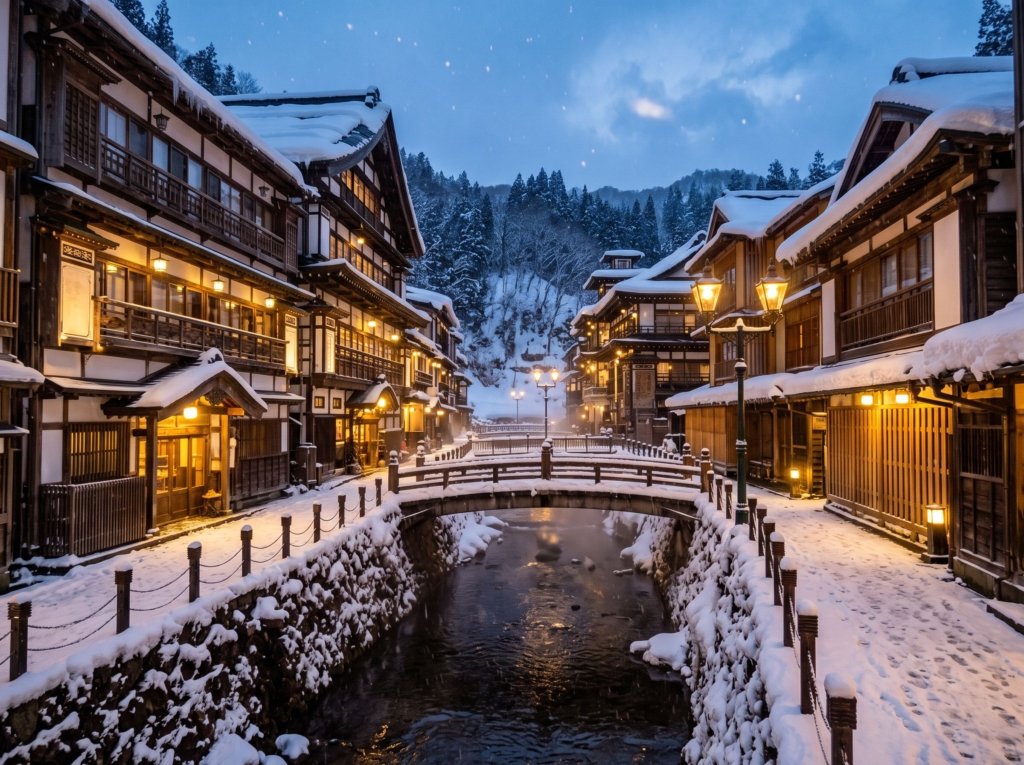
The practical advice: if the budget allows, stay overnight. It sidesteps the evening restrictions, and the village is at its best after the day visitors leave. Bathing facilities are limited to the inns’ own baths and a small public bath, so the appeal is atmosphere rather than a bath-hopping circuit. It is the strongest pick for snow, lamplight and traditional village scenery, and less suited if you want to move between many baths or visit without planning around the visitor rules.
Shibu Onsen and the Jigokudani snow monkeys
Shibu Onsen, in Nagano Prefecture near Yudanaka, is a compact old bathing town with a tradition of small public bathhouses, usually numbered nine. Overnight guests have historically been given access to those baths, while arrangements for day visitors, including the price and hours of the main public bath (the Oyu), are reported differently across sources, so confirm them locally on arrival.
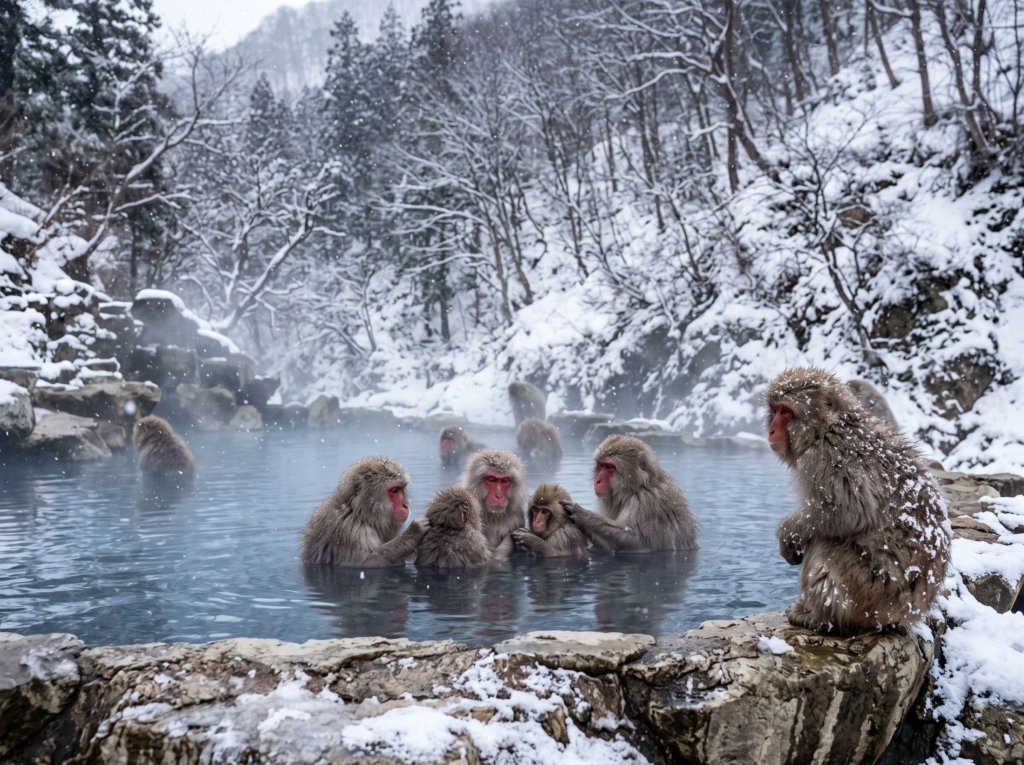
The big winter draw nearby is the Jigokudani Monkey Park, where wild Japanese macaques bathe in a hot spring pool among the snow. The park is reached on foot along a forest path from the Kanbayashi Onsen side; allow around half an hour each way on snowy ground. The admission fee was ¥800 per the park’s official guide at the time of writing, but a fee revision was announced on 20 September 2026, and the details were not clearly published in text, so check the park’s official site for the current price. The monkeys are wild: keep your distance, do not feed them, and do not expect them in the pool on demand, since behaviour varies with weather and the day. For travellers who want to combine an onsen town with the snow monkeys, this is the strongest choice, provided you are comfortable with a snowy walk and with wild animals keeping their own schedule.
Kinosaki Onsen: seven baths, but check which are open
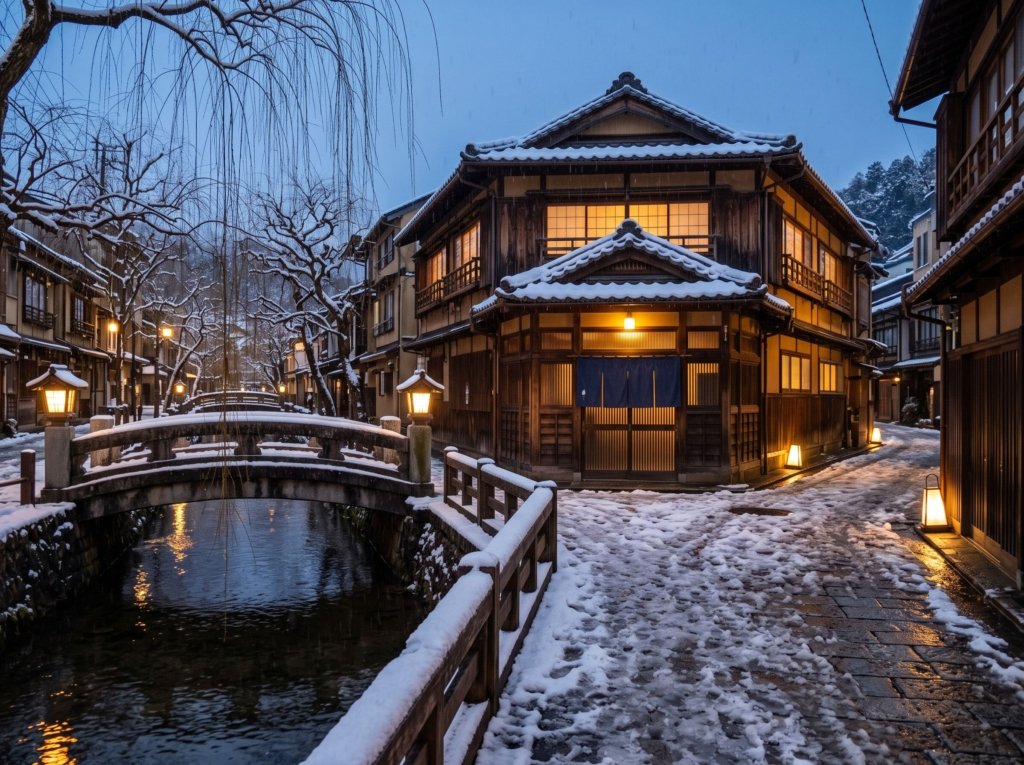
Kinosaki is the easiest of the three for first-timers: a flat, walkable canal town where guests move between public bathhouses in yukata and wooden sandals. A one-day pass for the public baths has been listed at ¥1,500, and the official Kinosaki guide is the place to confirm current terms.
One honest detail the “seven baths” marketing glosses over: as of early October 2026, Sato-yu has been closed since April 2024, and Kono-yu is listed as closed from 11 May to 30 October 2026. That leaves winter visitors with at most six of the seven, and possibly fewer if schedules change, so check before you plan a full circuit around a specific bath. Even so, it is the strongest choice for a fuller traditional onsen-town experience, as long as you treat the bath line-up as changeable.
Winter here is also crab season. Matsuba crab menus are commonly said to run from roughly November into March, though that timing comes from secondary sources, so confirm with your ryokan when booking.
Getting there
Journey times below are approximate and depend on connections and weather. Kinosaki is the easiest to fold into a Kansai itinerary; Ginzan and Shibu each need a shinkansen plus a local rail or bus leg, which is where snow delays bite.
- Ginzan Onsen: shinkansen from Tokyo to Oishida station in Yamagata (roughly three hours or a little more), then a local bus to the village. The bus and the last leg are the most weather-sensitive part of the trip. Better as an overnight stay than a day trip.
- Shibu Onsen and Jigokudani: shinkansen from Tokyo to Nagano (around 80 minutes), then the Nagano Electric Railway to Yudanaka (about 45 to 50 minutes) and a short bus or taxi to Shibu. Works best as an overnight stay.
- Kinosaki Onsen: limited express trains run from Kyoto and Osaka (roughly two and a half hours), so it works as a stop from the Kansai area rather than a day trip from Tokyo.
For planning the rest of a Japan trip around these stops, our guides to three hidden gems beyond Tokyo and Kyoto and five underrated places worth the detour pair well with a winter route.
The honest downsides
- Winter weekends and holidays are crowded, and Ginzan in particular can feel managed rather than quiet.
- Rules, fees and bath closures change between seasons, and some of the figures above could be out of date by the time you travel. Kinosaki’s bath line-up and Ginzan’s visitor rules are the two to check first.
- Snow can delay or cancel trains and buses, and the remote stretches are the first to be affected: the local bus and rail legs to Ginzan and Shibu, and icy ground when walking between baths or to the monkey park.
- Wild monkeys are not guaranteed to be in the pool, and nude shared bathing is not for everyone, though private baths exist at many ryokan.
Frequently asked questions
Which onsen town is best for a first winter trip?
Kinosaki is the easiest: it is walkable, simple to reach from Kyoto and Osaka, and its public baths allow tattoos according to the official guide. Ginzan suits travellers who prioritise atmosphere and will stay overnight.
Can I visit Ginzan Onsen as a day trip in winter?
Often yes, but day visitors have faced evening caps, advance ticket requirements and vehicle restrictions in recent winters. Check the official site for the current season’s rules before planning around it.
Are tattoos allowed in Japanese onsen?
It depends on the facility. Kinosaki’s public baths allow them per the official guide; elsewhere, ask the specific bath or ryokan before booking, or look for a private bath.
Is it safe to use an outdoor bath in freezing weather?
For most healthy adults, yes, if you take it slowly and keep sessions short. Sudden temperature changes are the main risk, so people with heart or blood-pressure conditions should speak to a doctor first and avoid bathing after alcohol.