
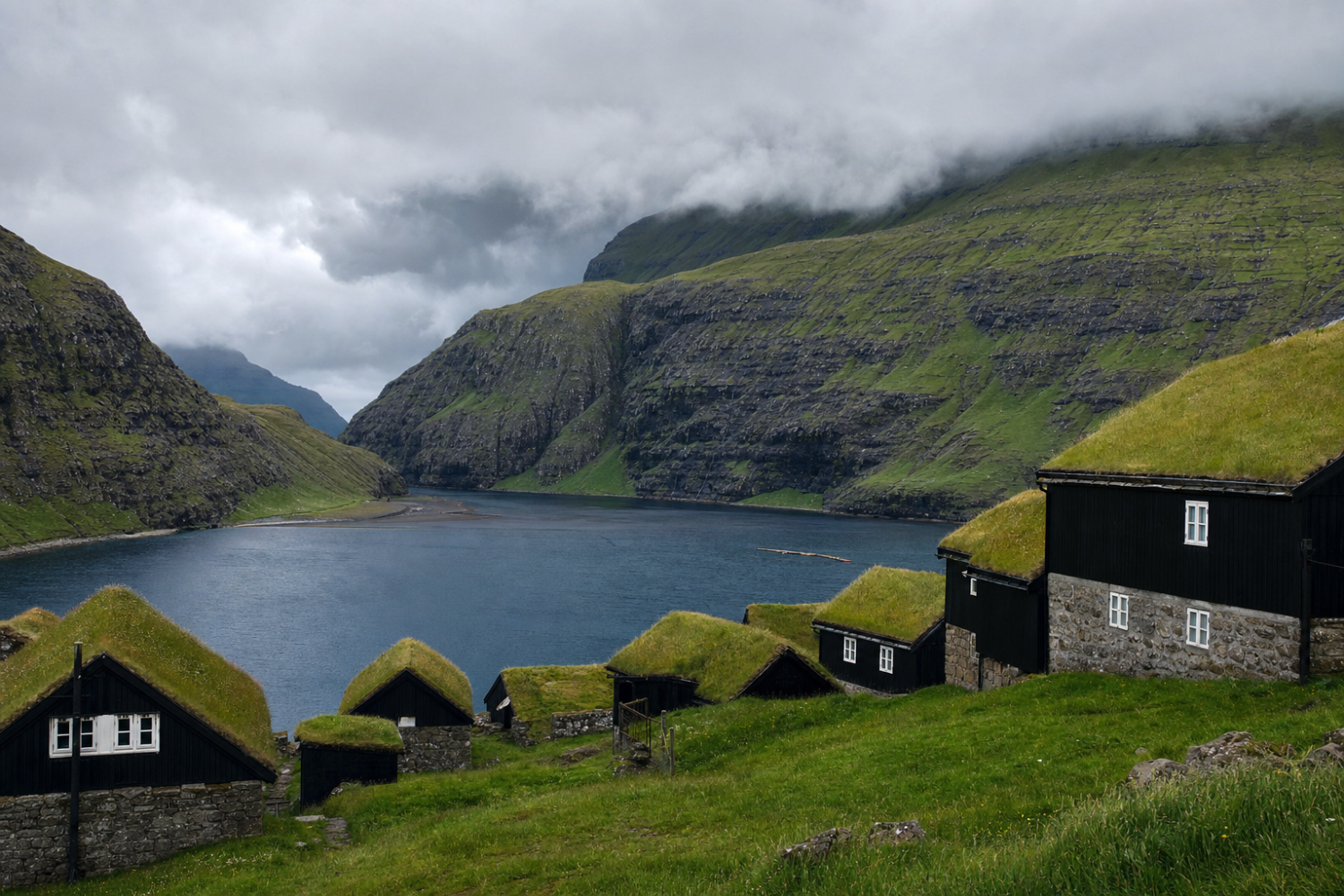
Search “Faroe Islands itinerary” and you’ll find the same three days recycled across a hundred blogs and reels: a grass-roof village, an optical-illusion lake, a lighthouse hike, a puffin cliff, all shot in golden light with nobody else in frame. What that itinerary doesn’t show is the ferry it needed to cancel-proof, the tunnel it drove through twice, or the day it quietly dropped because the fog never lifted. The real math behind a Faroe Islands trip has less to do with how many sights you can list and more to do with how many of them depend on a boat, a narrow one-lane tunnel, or weather that changes its mind by lunchtime.
Last verified: September 2026, against ferry and tour operator schedules, and the trip reports and itinerary guides cited throughout.
| Islands | 18 total; most connected by road tunnels and bridges, several reachable only by ferry |
| Daylight, June | Up to roughly 19 hours 50 minutes |
| Daylight, December | As little as roughly 5 hours |
| Mykines ferry/helicopter season | Roughly May through September, and weather-cancellable at short notice |
| Widely recommended minimum | 4–5 full days, with most guides and forums adding a caveat about weather buffer |
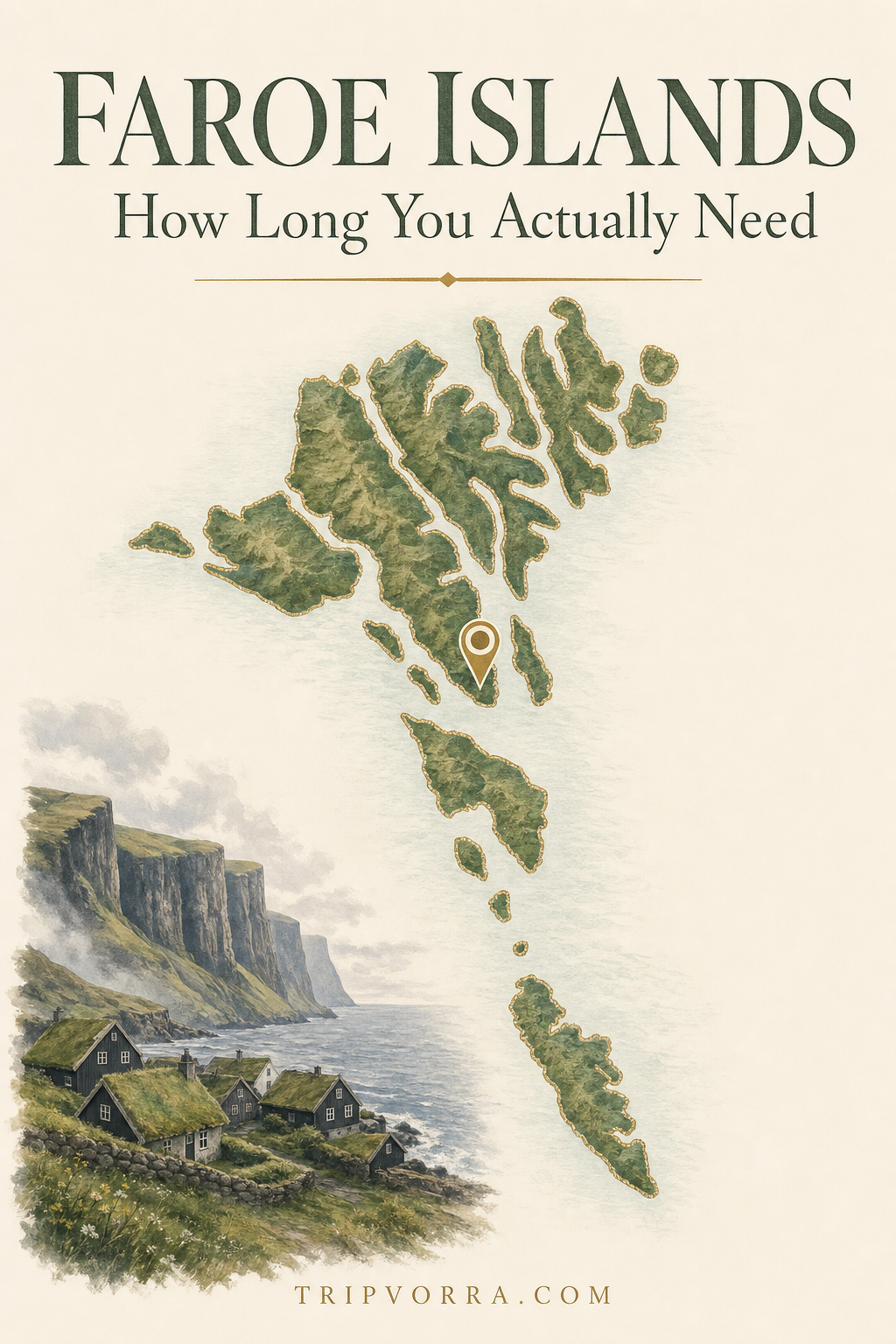
The Itinerary Everyone Copies
The three-day version that circulates online tends to follow the same shape: a day around Streymoy hitting Saksun and Tórshavn, a day split between the Vestmanna bird cliffs boat tour or a Kalsoy day trip — rarely both — and a final day reserved for Mykines and its puffins. It’s not a dishonest itinerary; every stop on it is real and worth seeing. What it doesn’t say out loud is that it has zero slack built in. It assumes every ferry runs on schedule, every boat tour sails, and the fog cooperates on exactly the day you need it to. It also quietly leaves out the northern islands, Suðuroy in the south, and nearly all of the multi-hour hiking the Faroes are actually known for among people who’ve been more than once.
The Math Behind a Single Day Trip
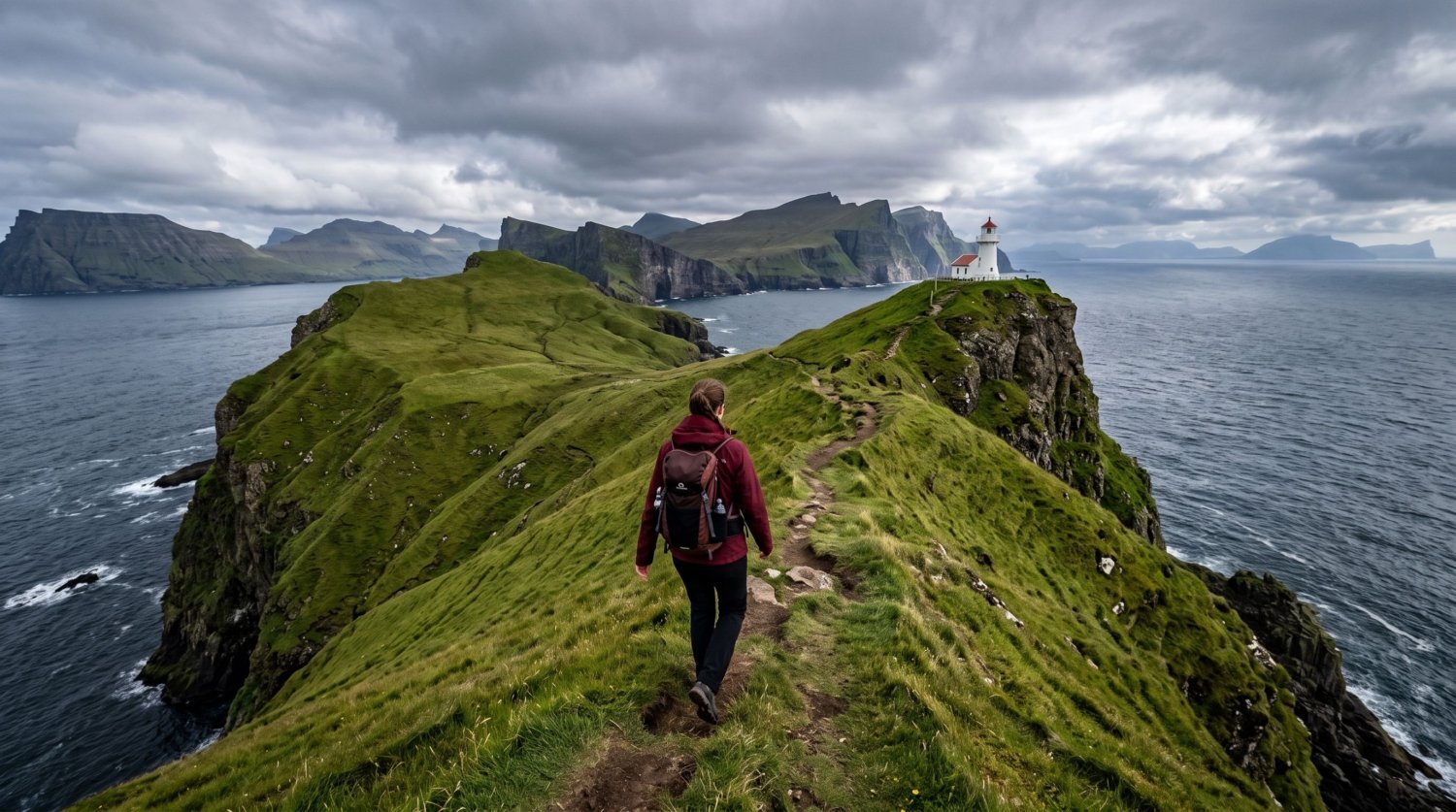
Take the Kallur lighthouse hike on Kalsoy island, one of the most-photographed shots in Faroese tourism marketing. Getting there isn’t a quick detour: the ferry from Klaksvík runs a handful of times a day, the crossing takes about 20 minutes, and the drive from the ferry landing to the Trøllanes trailhead covers roughly 16 kilometers of narrow road through single-lane tunnels — one of them over two kilometers long, unlit in places, and tight enough that rental-car drivers regularly mention it as the most stressful part of the day. The hike itself is a round trip of a few miles, comfortably three hours with photo stops. Add the ferry queue, the drive, and the return crossing, and experienced visitors budget a full eight hours for what looks, in a single photo, like a five-minute walk to a lighthouse. That’s one stop. A three-day itinerary has room for maybe two or three stops of this size, total.
Weather Is the Actual Itinerary Variable
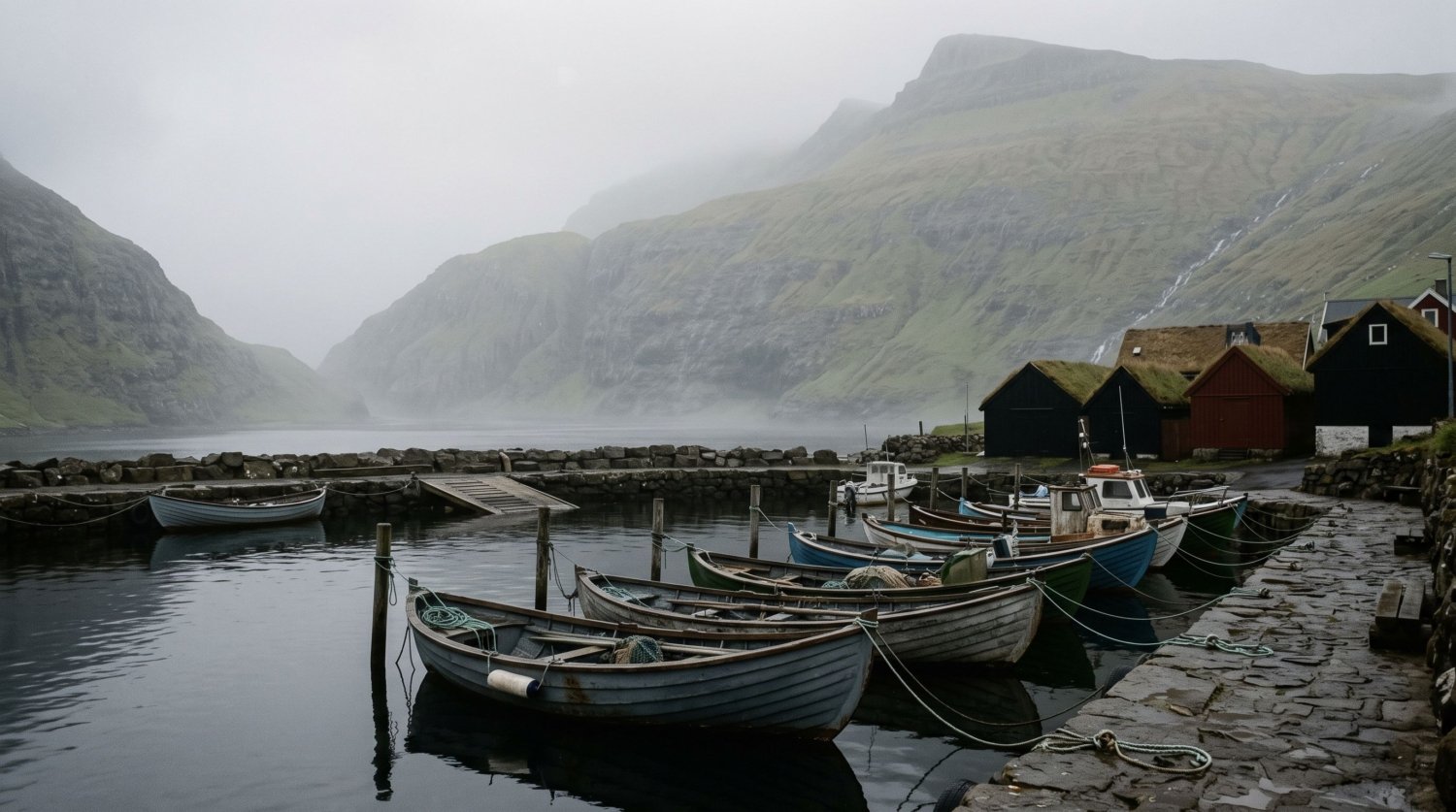
Mykines is the clearest example of why a fixed day count is the wrong way to think about this trip. The ferry and helicopter to the island run only from roughly May through September, in a landscape prone to dense fog and gale-force wind, and both can be cancelled on only a few hours’ notice. Guides who’ve made the crossing repeatedly recommend scheduling it in the first day or two of a trip specifically so there’s still time left to reschedule if it falls through — because there’s no guarantee an extra sailing gets added to clear the backlog. Boat tours to sights like the Drangarnir sea stacks carry the same built-in asterisk: they run “weather permitting,” full stop, with no published statistic on how often that permission gets withheld, only universal agreement among operators and visitors that it happens often enough to plan around. A trip that treats every day as fully booked has no room to absorb a single one of these cancellations without losing the thing it was booked for.
What Three Days Actually Forces You to Cut
Run the honest version of the three-day itinerary and the casualties are consistent: no Kalsoy and Vestmanna in the same trip, no northern islands like Viðoy or Kunoy, no Suðuroy at all, and functionally no weather buffer, which means a single fogged-in morning can cost you Mykines entirely with no day left to try again. It also assumes the puffin season lines up with your travel dates, since Mykines is only reachable by boat or helicopter for roughly five months a year. None of this makes three days a bad trip — it makes it a highlight reel of the most photogenic 15% of the country, taken on faith that nothing goes wrong.
So How Many Days Do You Actually Need?
The honest range, drawn from both tour operators and travelers who’ve done this more than once, is 5 to 7 full days for a first trip that covers the well-known highlights with at least one built-in buffer day for weather. That’s enough time to split Vestmanna and Kalsoy across separate days, schedule Mykines early with a spare day behind it, and still get a full day of hiking that isn’t rushed. Travelers who want the northern islands, Suðuroy, or a more relaxed pace consistently point to 7 to 10 days instead. Three days works only as a deliberate trade-off — a taste of the country accepted with the knowledge that weather, not your itinerary, has the final say over what you actually see.
Frequently Asked Questions
Is 3 days in the Faroe Islands enough?
It’s enough to see several of the most famous sights, but only if every ferry, boat tour, and weather window cooperates, and it leaves no time for the northern islands, Suðuroy, or a weather-cancellation backup plan.
What’s the realistic minimum for a first visit?
5 to 7 full days, which is enough to separate day trips that each take the better part of a day (like Kalsoy or Mykines) and still hold a buffer day for weather-dependent boats and ferries.
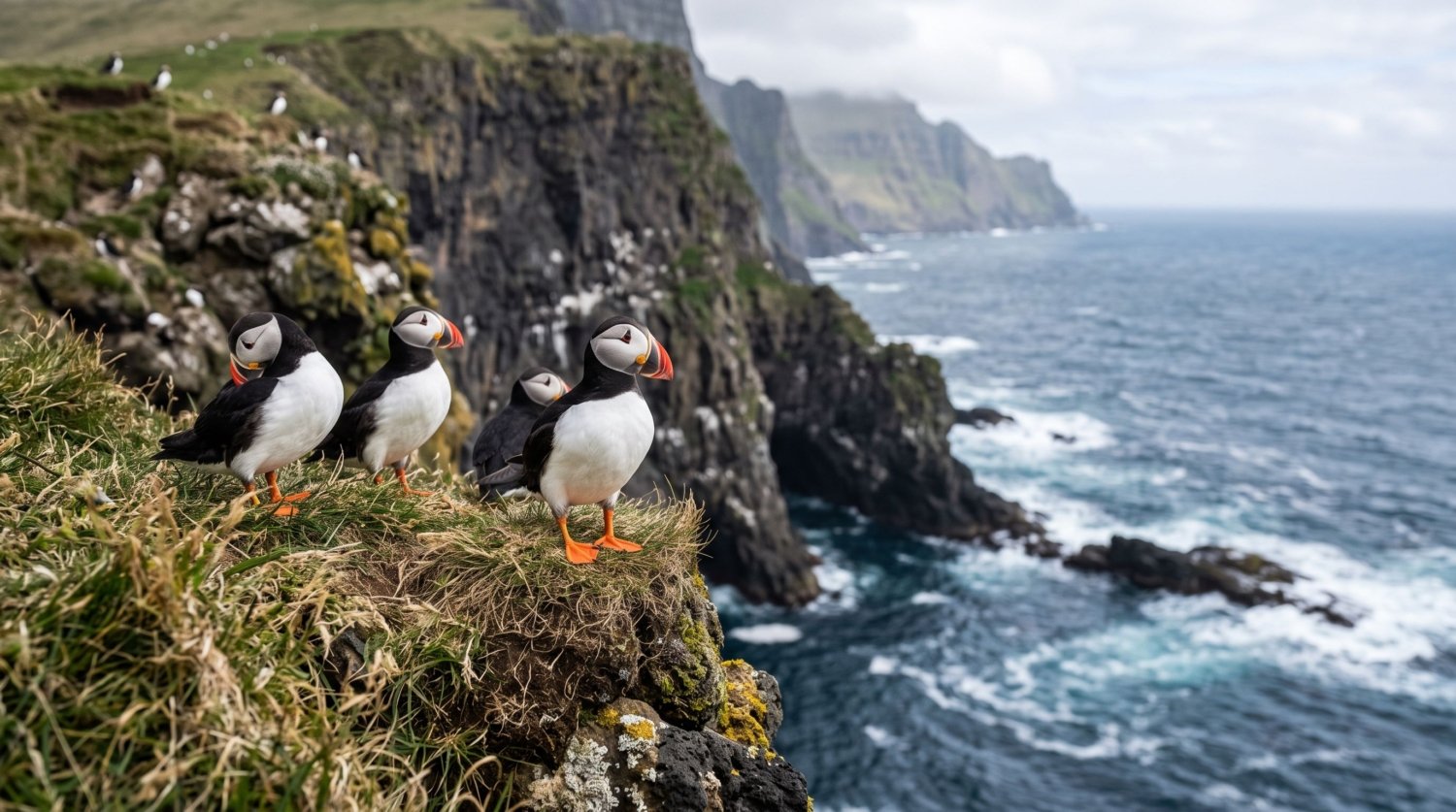
When can you see puffins on Mykines?
Roughly May through September, which is also when the ferry and helicopter to the island operate. Outside that window, the island isn’t reachable by scheduled transport at all.
Why do so many day trips take a full day?
Limited ferry schedules, narrow single-lane tunnels, and driving distances between islands mean a single hike or sight often requires several hours of transit on either side, even when the destination itself is a short walk.
For another place where the popular version of the story skips the logistics that actually shape a visit, see our piece on why trees grow sideways at Poland’s Crooked Forest, and no one really knows, and for another honest look at what a famous itinerary actually requires, our profile of how a Sicilian fishing town became Europe’s quietest film backdrop covers a different kind of gap between reputation and reality.