
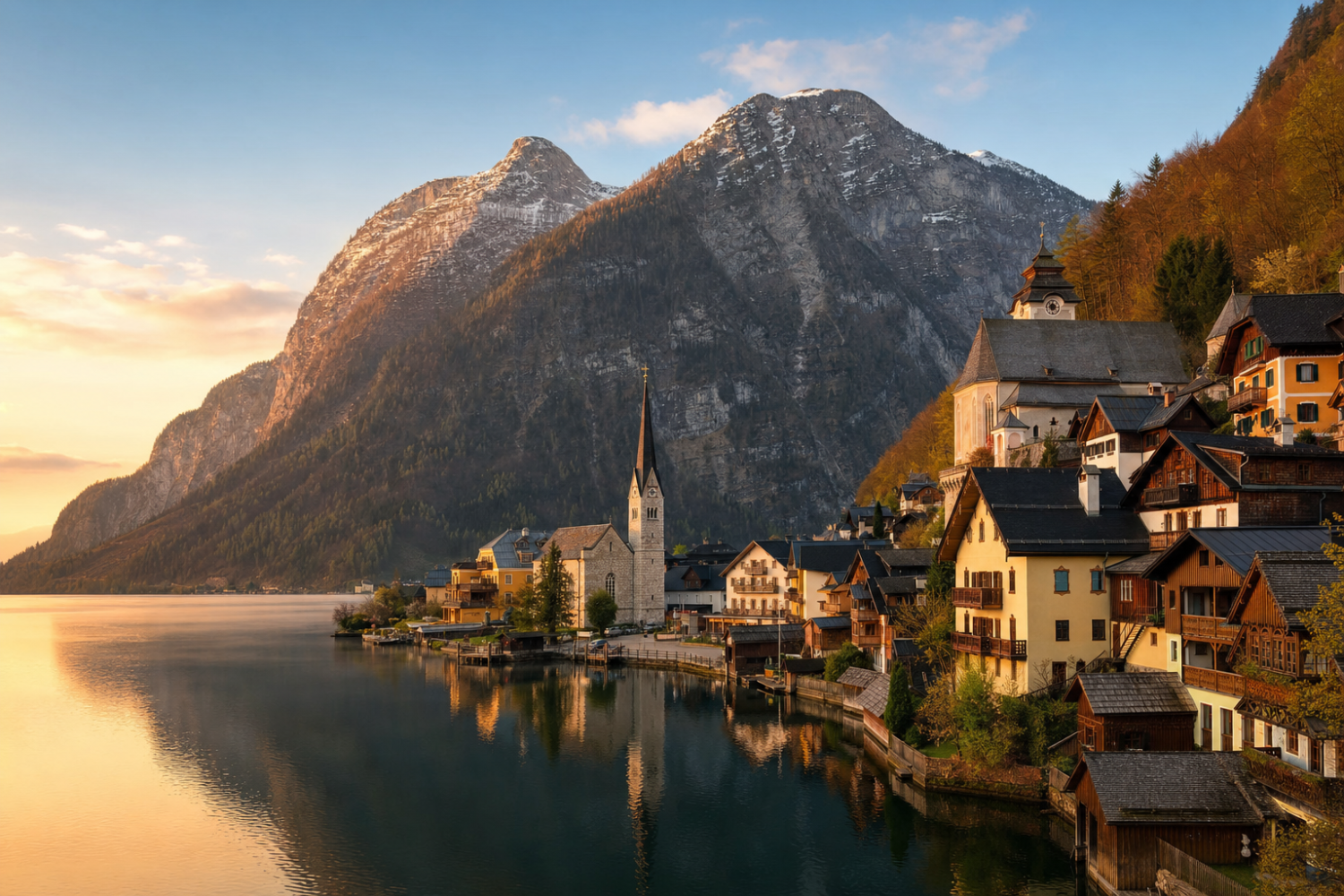
Hallstatt is a village of roughly 750 people wrapped around a lake in Austria’s Salzkammergut, and on a peak summer day it can receive more visitors than it has residents by a factor of ten or more. Locals have blocked their own access road in protest, the village built a fence to block a famous photo spot and then tore it down, and officials are now floating the same kind of digital visitor-cap system used at overwhelmed national parks — not for a monument, but for a place people actually live. This is the honest version of how a genuinely small alpine village ended up fighting the fame that a viral rumor, not its real history, mostly built for it.
Last verified: September 2026, against reporting from The Local Austria, NBC News, Time Out, Wikipedia, and Smithsonian Magazine, plus Hallstatt’s own tourism and heritage sites.
Hallstatt, By the Numbers
| Location | Salzkammergut region, Upper Austria, on the shore of Lake Hallstatt (Hallstätter See) |
|---|---|
| Permanent residents | Roughly 750–780 |
| Peak daily visitors | Up to 10,000 — compared with roughly 100 a day as recently as 2010 |
| Tour buses | Cut from about 90 a day in 2019 to roughly 30–35 under a booking/time-slot system |
| UNESCO status | Inscribed 1997 as part of the Hallstatt–Dachstein/Salzkammergut Cultural Landscape |
| What’s actually old here | The world’s oldest working salt mine, with mining activity dating to the Bronze Age |
The Village Before It Was Famous
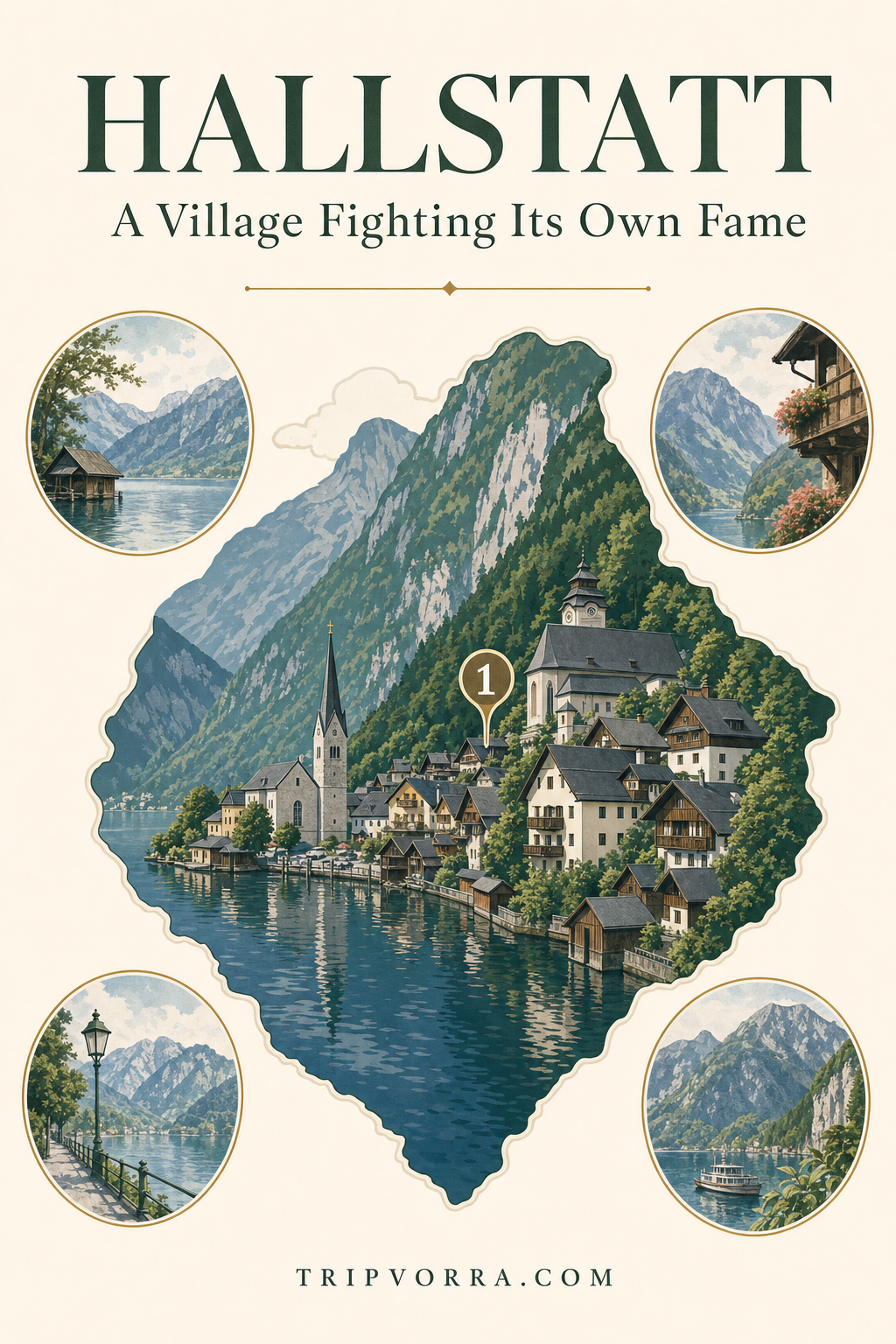
Long before anyone photographed Hallstatt for Instagram, it was already historically significant enough to give its name to an entire era of European prehistory. The Hallstatt salt mine is the oldest working salt mine in the world, with organized extraction dating back to the Bronze Age and continuous mining activity from around the 8th to 5th centuries BC. Archaeological finds from that period were significant enough that “Hallstatt culture” is now the standard term archaeologists use for the broader early Iron Age culture across Central Europe, roughly 800–450 BC — one small Alpine mining village lent its name to a continent-wide chapter of prehistory. The village and its surrounding cultural landscape were recognized for this depth of history with a UNESCO World Heritage inscription in 1997, as part of the wider Hallstatt–Dachstein/Salzkammergut Cultural Landscape.
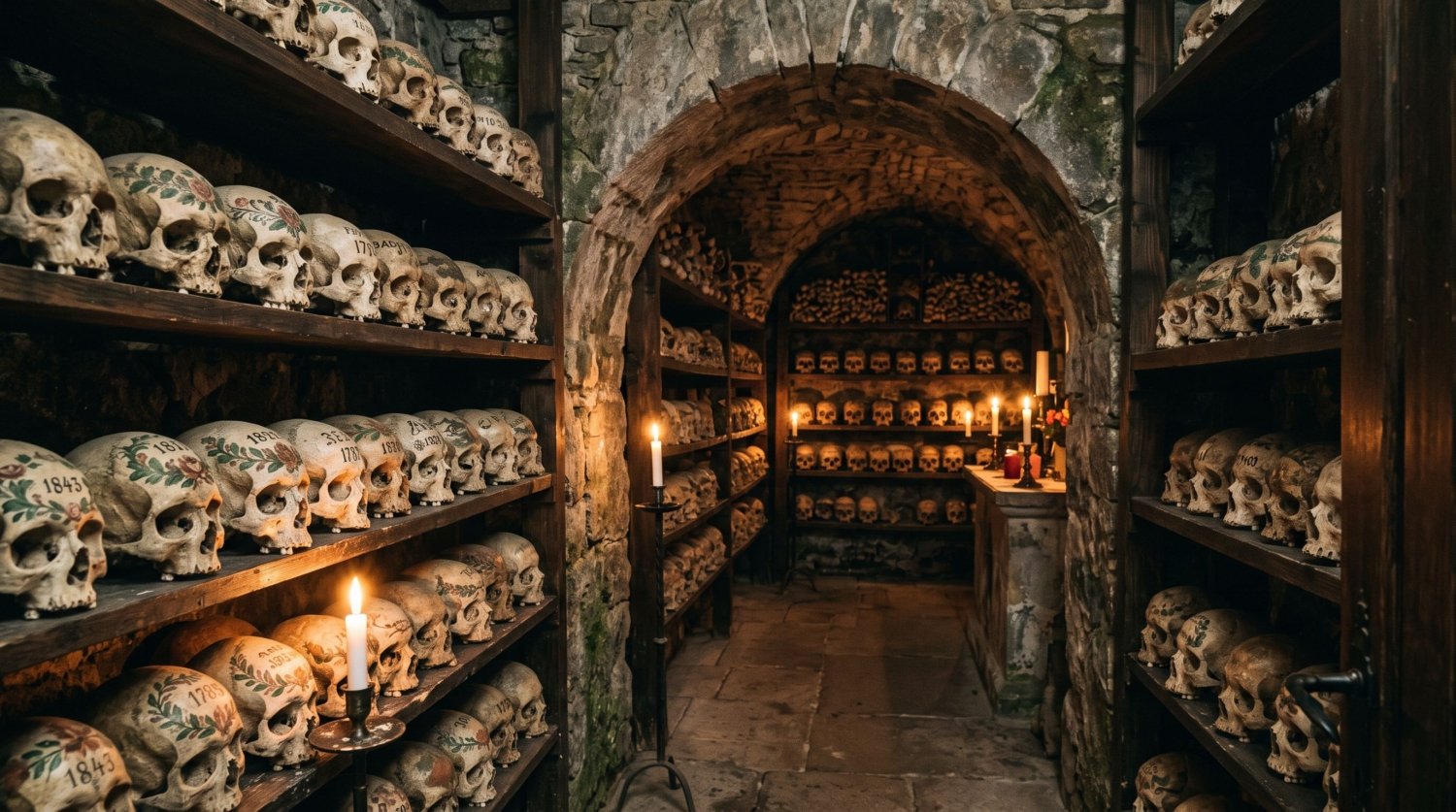
The village’s stranger, more genuinely surprising landmark sits beneath St. Michael’s Chapel: a small charnel house, or Beinhaus, holding more than 1,000 skulls, 610 of them individually hand-painted with wreaths of ivy, laurel, and roses. The tradition began because Hallstatt’s cemetery, squeezed between the mountain and the lake, had nowhere to expand — graves were reused after about 15 years, and families who wanted to keep track of their relatives’ remains started painting names and decorative wreaths directly onto the skulls, a practice that runs from around 1720 to as recently as 1995, according to Smithsonian Magazine. It’s a genuinely rare, well-documented piece of folk history, and most day-trippers never see it.
How a Village of 750 People Became a Bucket-List Photo
The most repeated explanation for Hallstatt’s modern fame is that it inspired the village of Arendelle in Disney’s Frozen. It’s worth saying plainly: that connection has never been confirmed, and the film’s own creators have said the opposite. Filmmakers stated that Arendelle was based on research done in Norway and Canada, not Austria. What actually happened is that a rumor linking Hallstatt to Frozen began circulating in China around 2013 and spread widely on social media, and East Asian day-trip and tour-bus traffic to the village increased sharply in the years afterward — a real tourism effect built on an unconfirmed premise.
There’s a detail that undercuts the Frozen story even further: a full-scale replica of Hallstatt already existed in China a year before the movie came out. China Minmetals Corporation completed a physical replica village in Huizhou, Guangdong province, in 2012, reproducing Hallstatt’s church, lakefront, and pastel houses in detail. Whatever drove that project, it wasn’t a Disney movie that hadn’t been released yet — the real village’s visual appeal, amplified through social media and travel content years before Frozen, appears to be the more durable explanation for its fame than any single film.
What 10,000 Visitors a Day Actually Does to a Place This Size
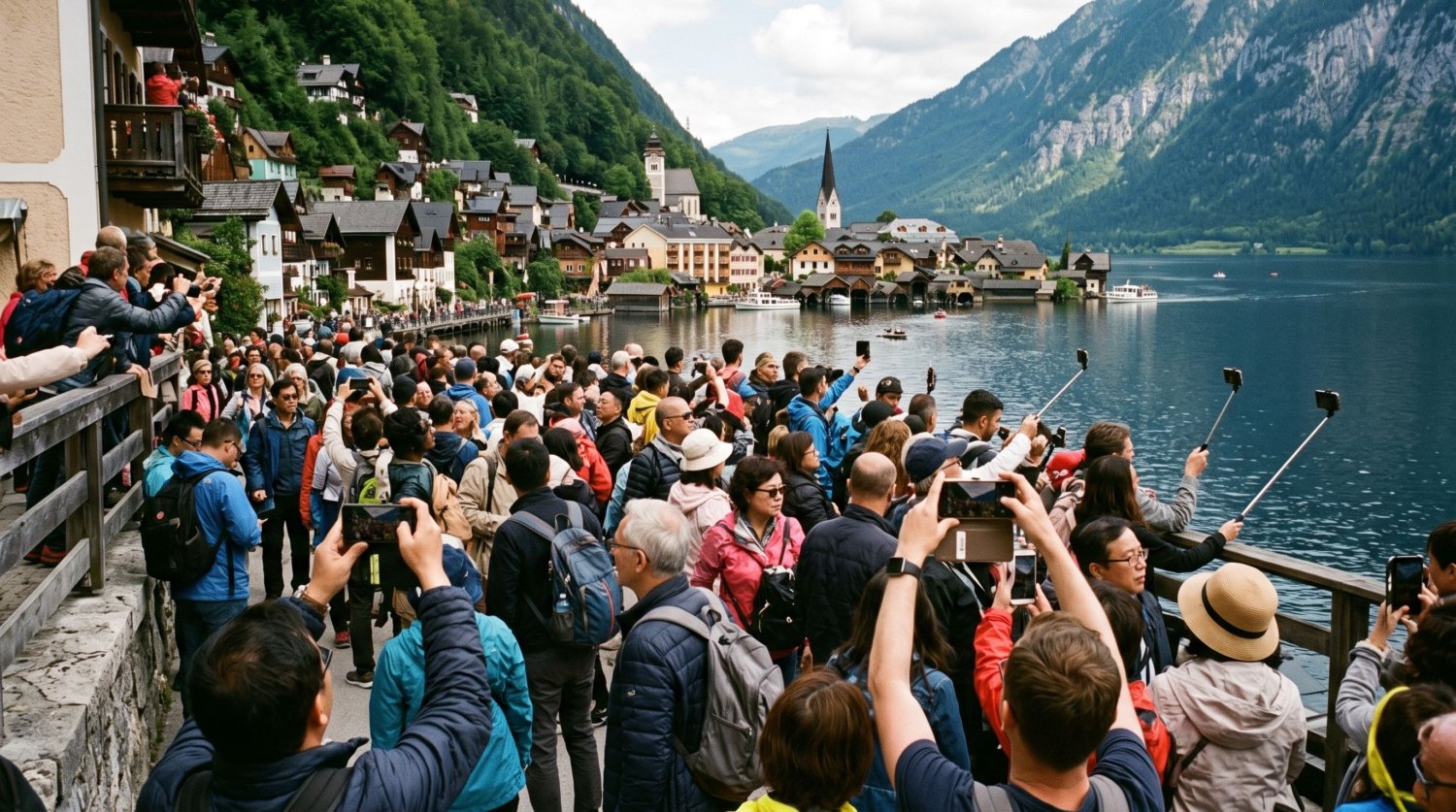
Hallstatt’s tourism numbers only make sense once you picture the geography: one narrow shelf of buildable land between a lake and a mountain wall, with a single road tunnel as the main vehicle access point. Into that space, the village now absorbs visitors from as many as 87 different nations in a single year, according to NBC News, and has had to build 450 dedicated parking spaces and employ 12 full-time traffic-management staff just to keep vehicles moving through it. In 2023, the mayor’s office installed a wooden fence at the village’s most-photographed lakefront viewpoint specifically to block the view and discourage the crowds of selfie-takers gathering there — a highly visible admission that the problem had outgrown ordinary crowd management. The fence didn’t last long before it came down, but it captured, more than any statistic, how far things had gone.
The pressure shows up in smaller ways too: by 2017, the local church had started employing bouncers to manage tourist disruption during services, after visitors treated the churchyard and cemetery — including the historic Beinhaus site — as a photo backdrop rather than a place of worship and burial. None of this is exaggerated for effect; it’s what happens when a settlement built for a few hundred residents processes tens of thousands of visitors on its busiest days.
The Village Pushes Back
On August 27, 2023, close to 100 Hallstatt residents blocked the tunnel that forms the main road access into the village, holding signs reading “Stop the traffic craziness, it makes us sick” and “Everything for tourists, nothing for us,” as reported by Time Out and NBC News. One 62-year-old resident described it bluntly: “Hallstatt no longer lives on tourism, it is being squashed by overcrowding.” Mayor Alexander Scheutz put the core problem in a single sentence: “Nobody can handle the masses. Hallstatt is too small for the many people who come.”
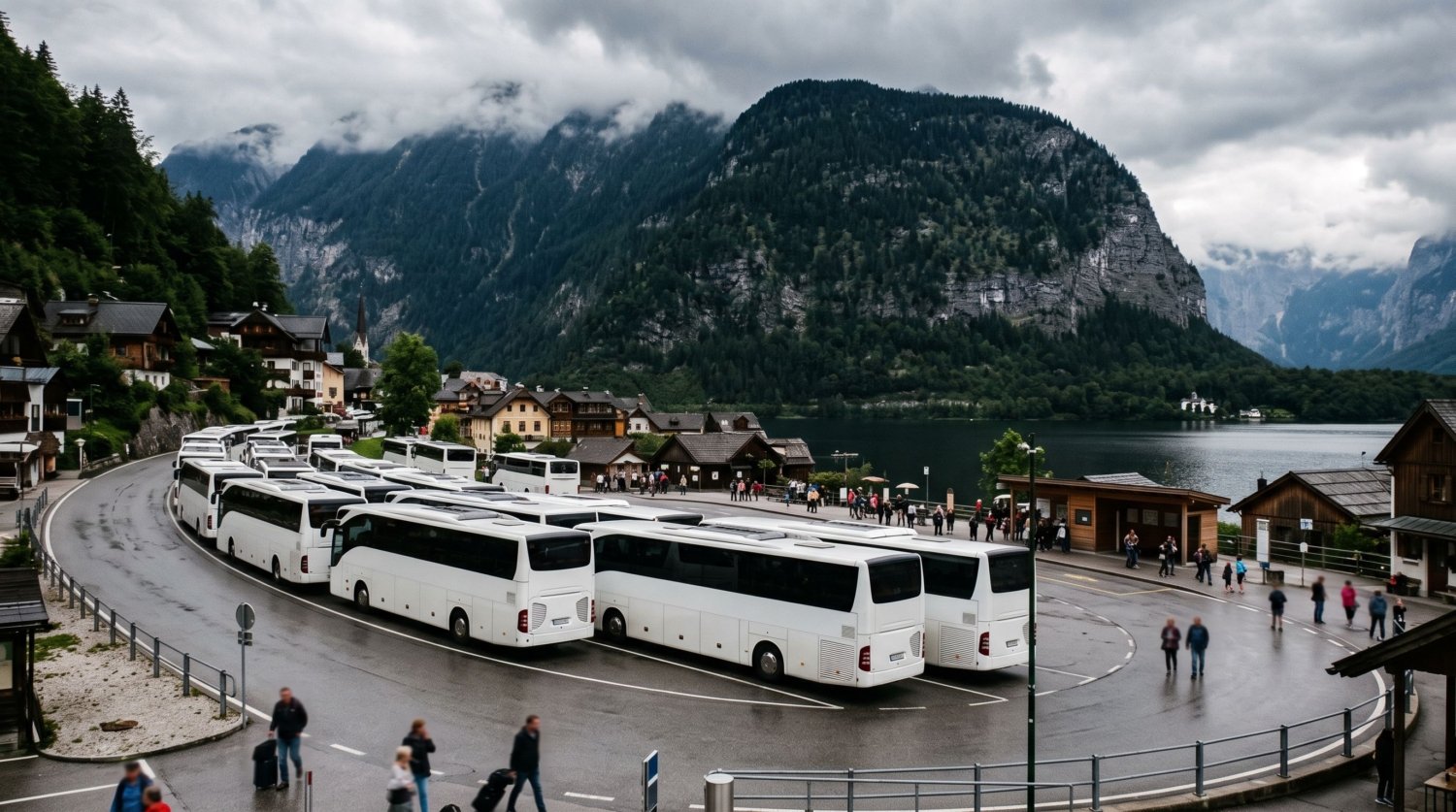
The response since then has been incremental rather than dramatic. Coach buses, which numbered around 90 a day in 2019, are now managed through a booking system that has brought daily numbers down to roughly 30–35, and The Local Austria reported in 2024 that further time-slot restrictions were added for tour coaches specifically, which the mayor’s office said was “already working very well” for that one segment of traffic — though it does nothing to limit individual visitors arriving by car, train, or public bus. By 2025, deputy mayor Alfred Gamsjäger was more blunt about where things stood: “We are literally overrun.” Local leaders have floated a daily visitor cap of roughly 5,000–5,500 people, close to half of a current peak day, along with a digital reservation or slot-booking system similar to those used at crowded national parks. Both ideas remain proposals rather than active policy, and would need sign-off from Upper Austria’s regional government, which officials say has been slow to respond.
Who Should Actually Go
None of this means Hallstatt isn’t worth seeing — it means the version most visitors experience is the worst version of it. A midday arrival by tour bus or day-trip train during peak season puts you in the same packed viewpoint and narrow lanes documented above, competing for the same handful of photo spots as several thousand other people. Staying overnight changes the calculus almost completely: once the day-trip buses and tour groups clear out in the late afternoon, the village empties out to something much closer to its actual population, and an early-morning walk before the first tour groups arrive is the closest thing to seeing Hallstatt the way it looked before 2013.
If solitude matters more to you than checking off the specific view, it’s worth being honest that the wider Salzkammergut region has other lakeside villages — Gosau and Bad Goisern among them — with similar alpine scenery and a fraction of the crowds, precisely because they never went viral. Hallstatt’s real draw, the oldest working salt mine in the world and 300 years of painted-skull folk history, doesn’t actually require fighting a crowd at one lakefront railing to appreciate — it just requires timing your visit around when that railing is empty.
Frequently Asked Questions
Did Hallstatt really inspire Frozen?
Not according to Disney’s own filmmakers, who said Arendelle was based on research in Norway and Canada. The connection is an unconfirmed rumor that began circulating in China in 2013 and drove a real surge in visitors despite never being verified.
Is Hallstatt still worth visiting?
Yes, but the experience depends heavily on timing. An overnight stay with an early-morning or late-afternoon walk looks nothing like a midday tour-bus visit during peak season.
Has Hallstatt actually limited tourist numbers?
Only partially. Tour bus numbers have been reduced through a booking and time-slot system, but a proposed daily visitor cap and digital reservation system for all visitors remain proposals, not active policy, as of this writing.
What is the Hallstatt Beinhaus?
A small charnel house beneath St. Michael’s Chapel holding more than 1,000 skulls, 610 of them hand-painted with names and floral wreaths — a roughly 300-year-old local tradition born from the cemetery’s lack of space to expand.
Hallstatt’s fight with its own fame is really a fight over what the village is allowed to be: a functioning place where 750 people live, or a backdrop for a rumor that was never even true. Both the protests and the painted skulls point to the same thing — the real story here is older, stranger, and more interesting than the postcard. If you’re planning trips around honest logistics rather than viral photos, our guides to the small Welsh village behind Wales’ newest UNESCO site and why the Wave in Arizona limits visitors to just 64 people a day cover two more places where the real story is worth knowing before you go.