
South Beach is roughly seven square miles of a county that covers more than two thousand. Most visitors never leave that seven, which means most of Miami’s actual history — a civil rights beach that reopened after decades of neglect, a jazz-era theater district that once rivaled Harlem, an Afro-Caribbean cultural hub, the oldest house in Miami-Dade, and a 444-acre estate hiding a Native American burial mound — goes unseen by the people who fly in for it. This guide covers five places that sit within a half hour of the beach and tell you almost nothing about it.
Last verified: September 1, 2026. This guide was built from Miami-Dade County and City of Miami sources, Florida State Parks records, local historical archives, and current news coverage — not personal visits — and every factual claim below is linked to its source in the sentence that makes it.
- Historic Overtown — Miami’s jazz-era “Harlem of the South,” anchored by the restored Lyric Theater.
- Little Haiti — the country’s most concentrated Afro-Caribbean cultural district, centered on its Cultural Complex.
- The Barnacle Historic State Park — a pioneer-era bayfront homestead in Coconut Grove, and the oldest house in Miami-Dade still on its original site.
- Historic Virginia Key Beach Park — Miami’s segregation-era “colored only” beach, now a restored 80-acre park with its own civil rights history.
- Deering Estate — a 444-acre former estate in Palmetto Bay combining a Mediterranean-Revival mansion with an ancient burial mound and a virgin tropical hammock.
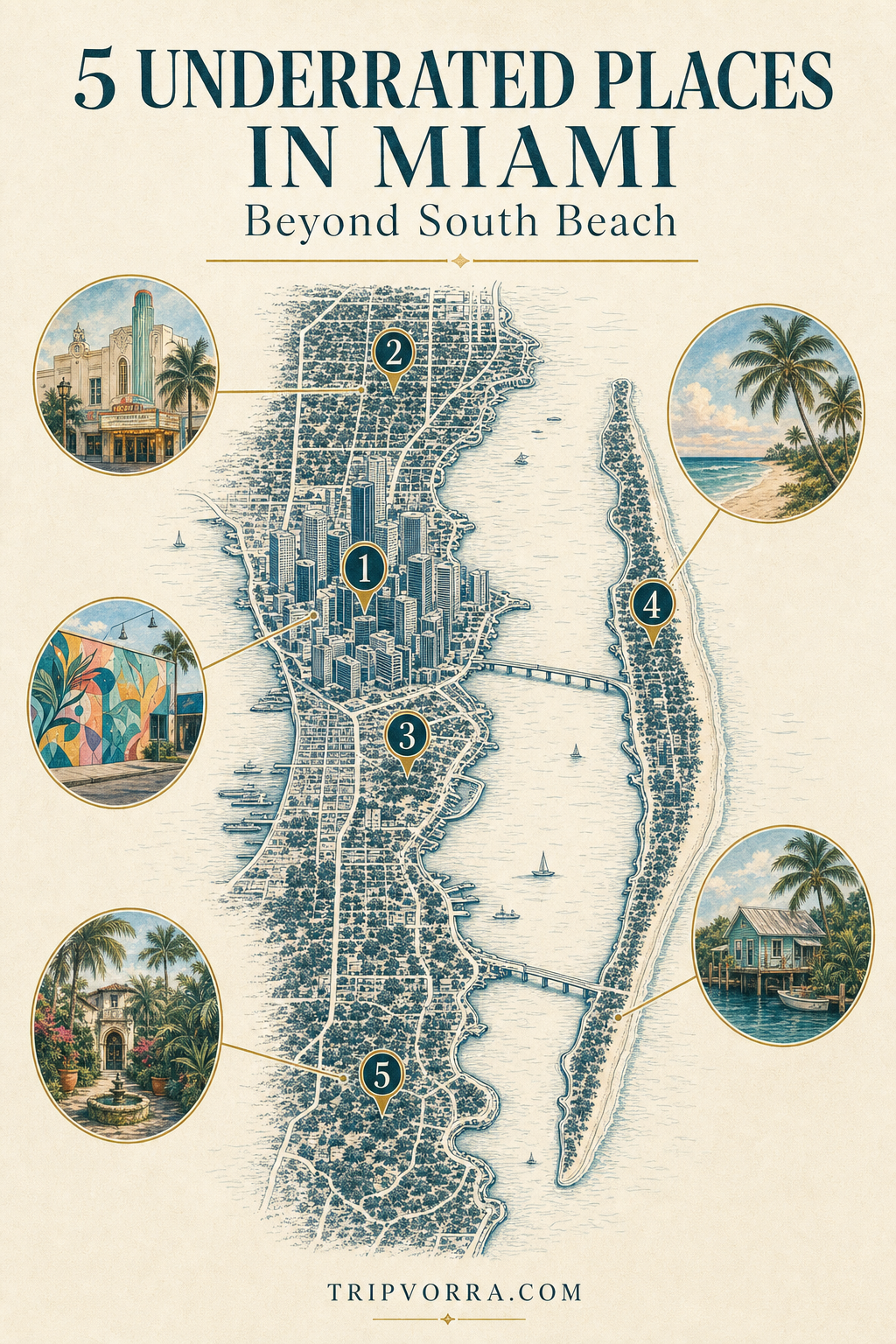
Map key: 1) Historic Overtown • 2) Little Haiti • 3) The Barnacle Historic State Park (Coconut Grove) • 4) Historic Virginia Key Beach Park • 5) Deering Estate
1. Historic Overtown
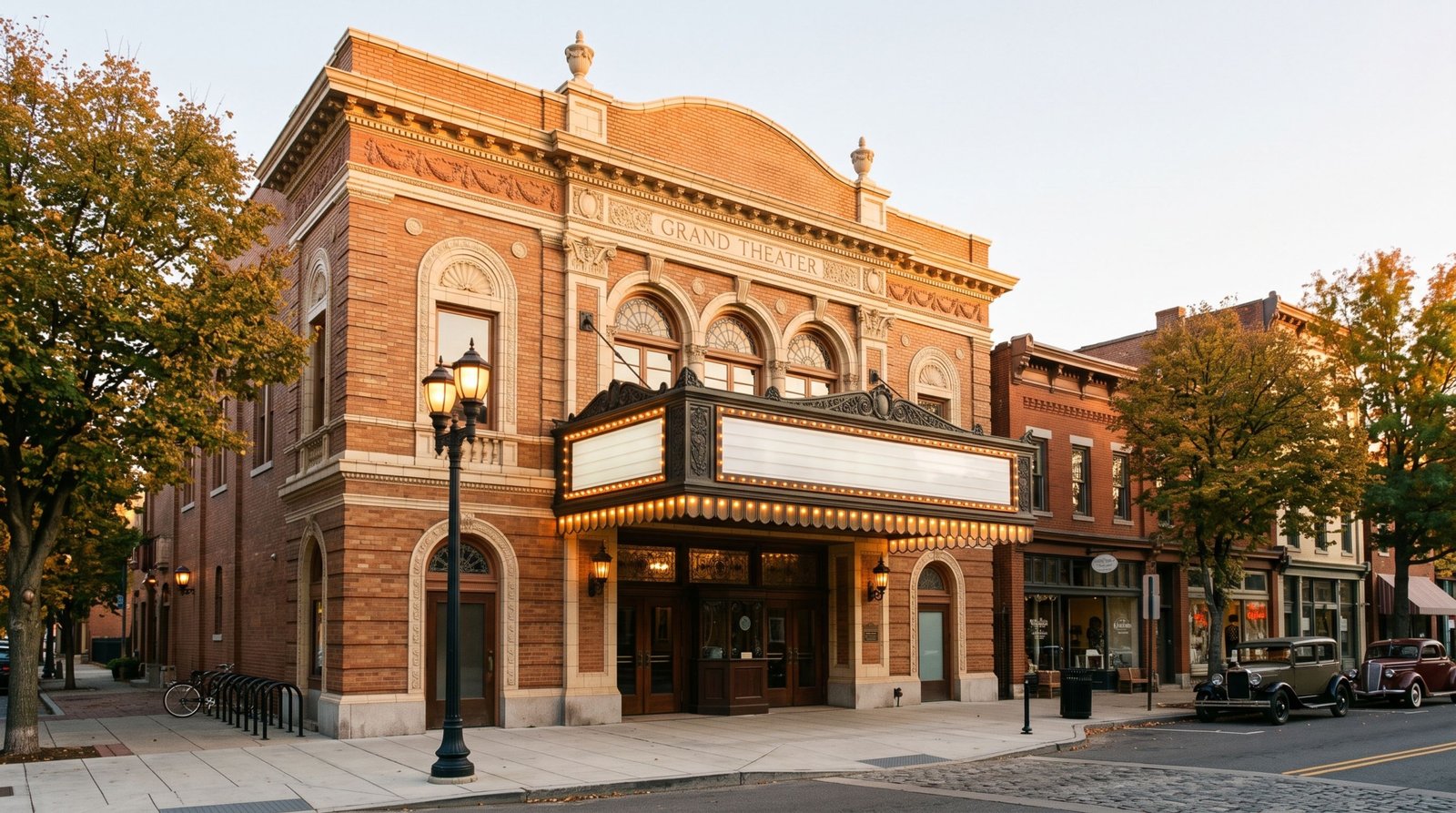
Overtown sits a few blocks north of downtown Miami, close enough to walk to the arena, yet it draws almost none of downtown’s foot traffic. In the 1930s and ’40s, Jim Crow-era segregation meant Black performers who headlined the whites-only hotels on Miami Beach at night had nowhere to sleep — so they came here, to what was then called Colored Town, and stayed. The neighborhood’s entertainment strip along NW 2nd Avenue became known as “Little Broadway,” and the whole district earned the nickname “the Harlem of the South.” Louis Armstrong, Ella Fitzgerald, and Billie Holiday all performed here, most often at the Lyric Theater, a 400-seat venue built in 1913 by Geder Walker, a Black businessman, that hosted vaudeville and film for nearly fifty years.
The neighborhood’s decline wasn’t gradual — it was engineering. In the 1960s, construction of I-95 and I-395 cut directly through Overtown, displacing thousands of residents and fragmenting what had been one of the most self-sufficient Black business districts in the South. The Lyric itself survived by luck rather than design, closing as a theater in 1959 and sitting largely dormant for decades. The Black Archives acquired it in 1988, and after multiple restoration phases it reopened in 2000 as the Black Archives Historic Lyric Theater Cultural Arts Complex, which still hosts performances and now anchors a genuine, ongoing neighborhood revival — Purvis Young’s street murals, the Black Police Precinct and Courthouse Museum, and Jackson Soul Food, open since 1946, all within a few blocks.
Getting There and Practical Info
- Transit: Metrorail and Metromover both stop at Overtown/Historic Overtown station — no car needed if you’re already downtown.
- Walkability: the historic core along NW 2nd and 3rd Avenues is a compact, walkable few blocks.
- Distance from South Beach: about 20–25 minutes by car or rideshare, closer by Metromover connection if you’re coming from downtown.
- Best time: weekday afternoons, when the Black Archives offers tours of the Lyric; check ahead, since hours can be limited outside scheduled performances.
- Time to allow: 1–2 hours for the Lyric and a walk past the murals and the Black Police Precinct Museum.
Why It’s Worth the Trip
Overtown is one of the only places in Miami where you can stand in a building that hosted Ella Fitzgerald and Billie Holiday and understand exactly why they had to play there instead of on the beach a few miles away. It’s a working, still-recovering neighborhood rather than a polished tourist attraction, which is precisely the point — the honest version of this history, not a sanitized one.
2. Little Haiti
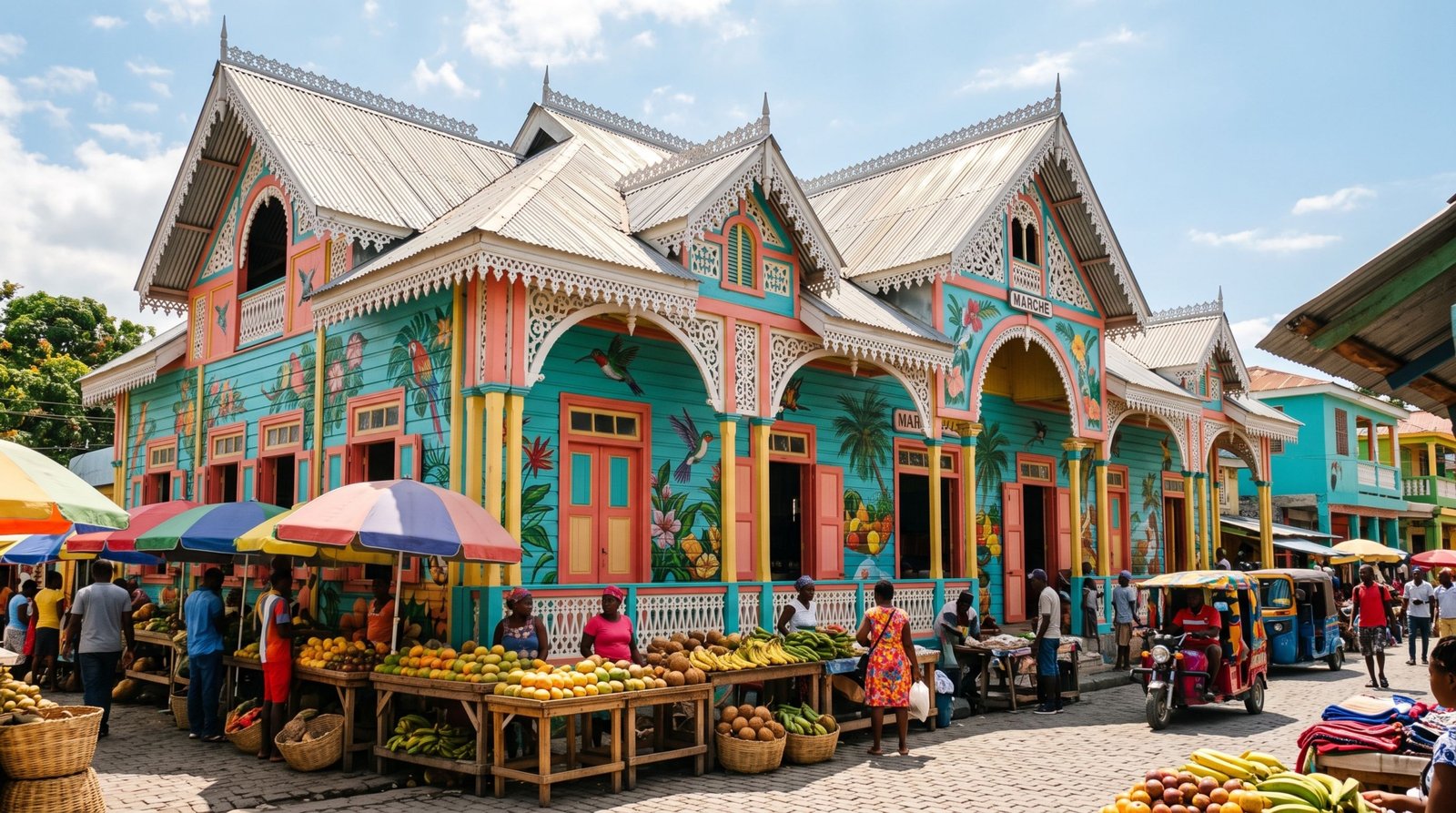
North of downtown, Little Haiti is the largest and most concentrated Haitian and broader Afro-Caribbean community in the United States, built up starting in the 1970s and ’80s by waves of Haitian immigrants who settled into what was then the older Lemon City neighborhood. Its civic anchor is the Little Haiti Cultural Complex, which broke ground in 2006 on a vision from the late Commissioner Arthur E. Teele Jr. The complex now draws over 100,000 visitors a year to its Caribbean Marketplace, a proscenium theater, an art gallery, and dance studios — a working cultural institution, not a museum piece, built explicitly to “present and preserve Afro-Caribbean cultures.”
What makes the neighborhood worth a visit is that its culture is still lived-in rather than performed for tourists: colorful gingerbread-trimmed storefronts, Haitian Creole spoken on the street, konpa music from open doorways, and food — griot, pikliz, conch fritters — that hasn’t been adjusted for a visitor palate. It’s genuinely a working neighborhood, so the Cultural Complex itself is the easiest, most reliable entry point for a first visit rather than wandering without a destination.
Getting There and Practical Info
- Transit: no direct Metrorail station; Metrobus routes and the neighborhood’s own trolley service connect from downtown, or it’s a straightforward 15–20 minute drive.
- Walkability: the Cultural Complex and NE 2nd Avenue’s shops and murals form a walkable strip once you’ve arrived.
- Hours to know: the Cultural Complex is closed Sundays — plan a weekday or Saturday visit.
- Distance from South Beach: roughly 20–25 minutes by car.
- Time to allow: 1.5–2 hours for the Cultural Complex and a walk through the Marketplace.
Best For
Travelers who want Miami’s Caribbean identity, not just its Cuban one — most visitors know Little Havana; far fewer know Little Haiti exists at all. It’s a weaker fit if you’re looking for a curated, English-first tourist experience; this is a real immigrant neighborhood going about its business, and that’s the appeal.
3. The Barnacle Historic State Park, Coconut Grove
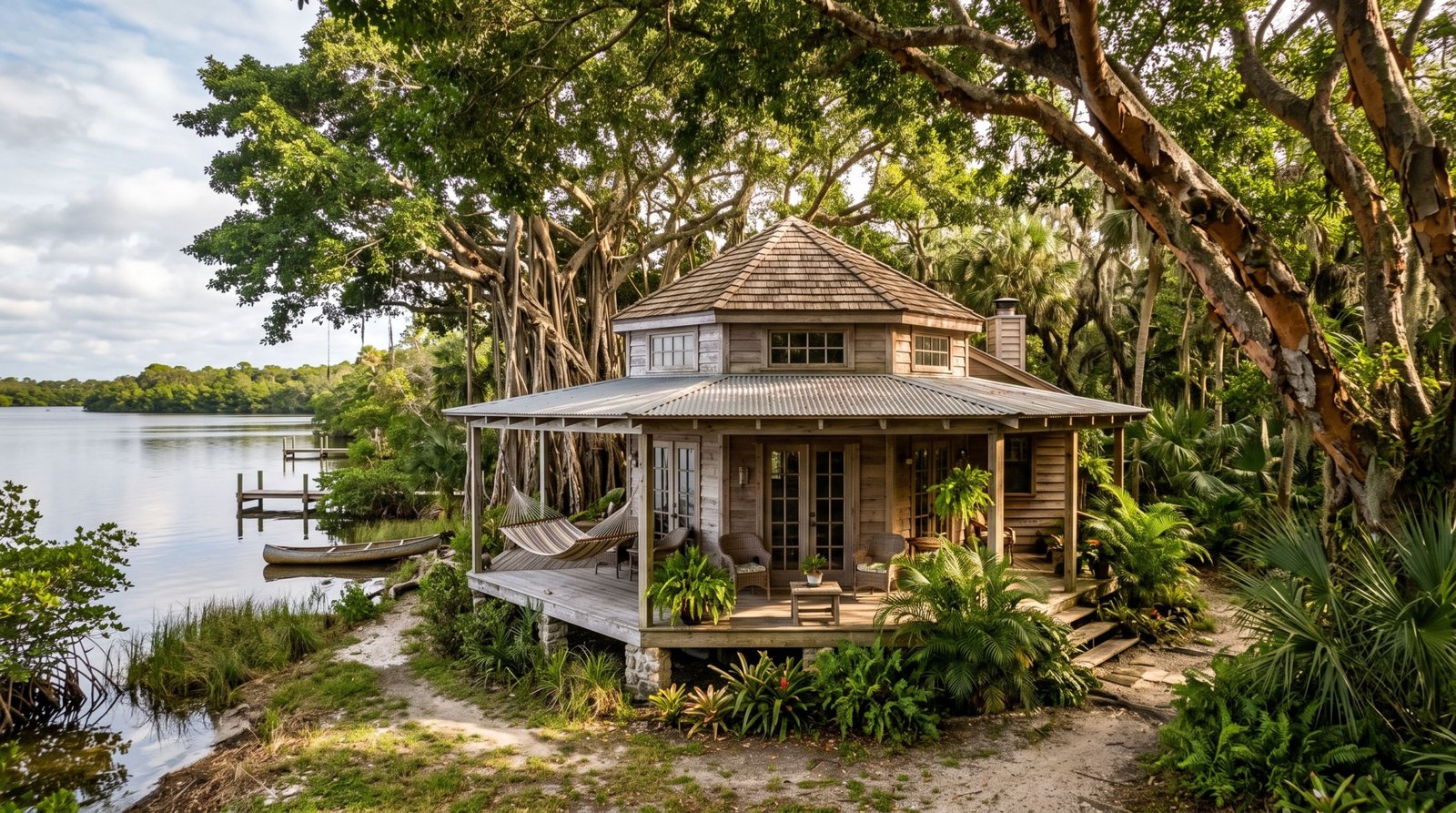
Coconut Grove itself isn’t a secret — it’s one of Miami’s oldest and best-known neighborhoods. But tucked into five bayfront acres just off its main commercial strip is a genuine outlier: the oldest house in Miami-Dade County still standing on its original site. Ralph Middleton Munroe, a widower and the first commodore of the Biscayne Bay Yacht Club, built it in 1891 with help from his neighbors, framing it with timber salvaged from a nearby shipwreck. He named it “the Barnacle” because its distinctive octagonal roofline reminded him of the shellfish.
Munroe’s design was practical long before “climate-adapted architecture” was a phrase anyone used: wide porches for shade, a rope-operated cupola for ventilation, and in 1908 — when his family had outgrown the house — he simply jacked the entire structure up on railroad jacks and built a new ground floor underneath it. The house survived the catastrophic 1926 Great Miami Hurricane with only modest upgrades needed afterward. The state acquired the property in 1973, and it’s now a working museum, fully furnished with Munroe family heirlooms, set inside one of the last remaining stretches of Coconut Grove’s original waterfront hammock.
Getting There and Practical Info
- Transit: Metrorail’s Coconut Grove station is about a 15-minute walk, or take the trolley the rest of the way.
- Walkability: the park sits right off Main Highway, Coconut Grove’s walkable village center of shops and restaurants.
- Hours: grounds open Thursday–Monday, 9 a.m.–5 p.m.; closed Tuesdays and Wednesdays. The house itself is guided-tour-only, at 10 a.m., 11:30 a.m., 1 p.m., and 2:30 p.m.
- Cost: $2 pedestrian/bicycle entry; $3 for the house tour (ages 13+), $1 for ages 6–12. No cars permitted inside the park.
- Distance from South Beach: about 20 minutes by car.
Worth Knowing Before You Go
Coconut Grove as a neighborhood gets plenty of visitors already, so this isn’t a hidden destination in the way some others on this list are — the honest pitch is narrower: most people walking the Grove’s restaurant strip have no idea a 19th-century time capsule sits five minutes away on foot. Check the tour schedule before you go, since the house itself is only accessible at set times, not on demand.
4. Historic Virginia Key Beach Park
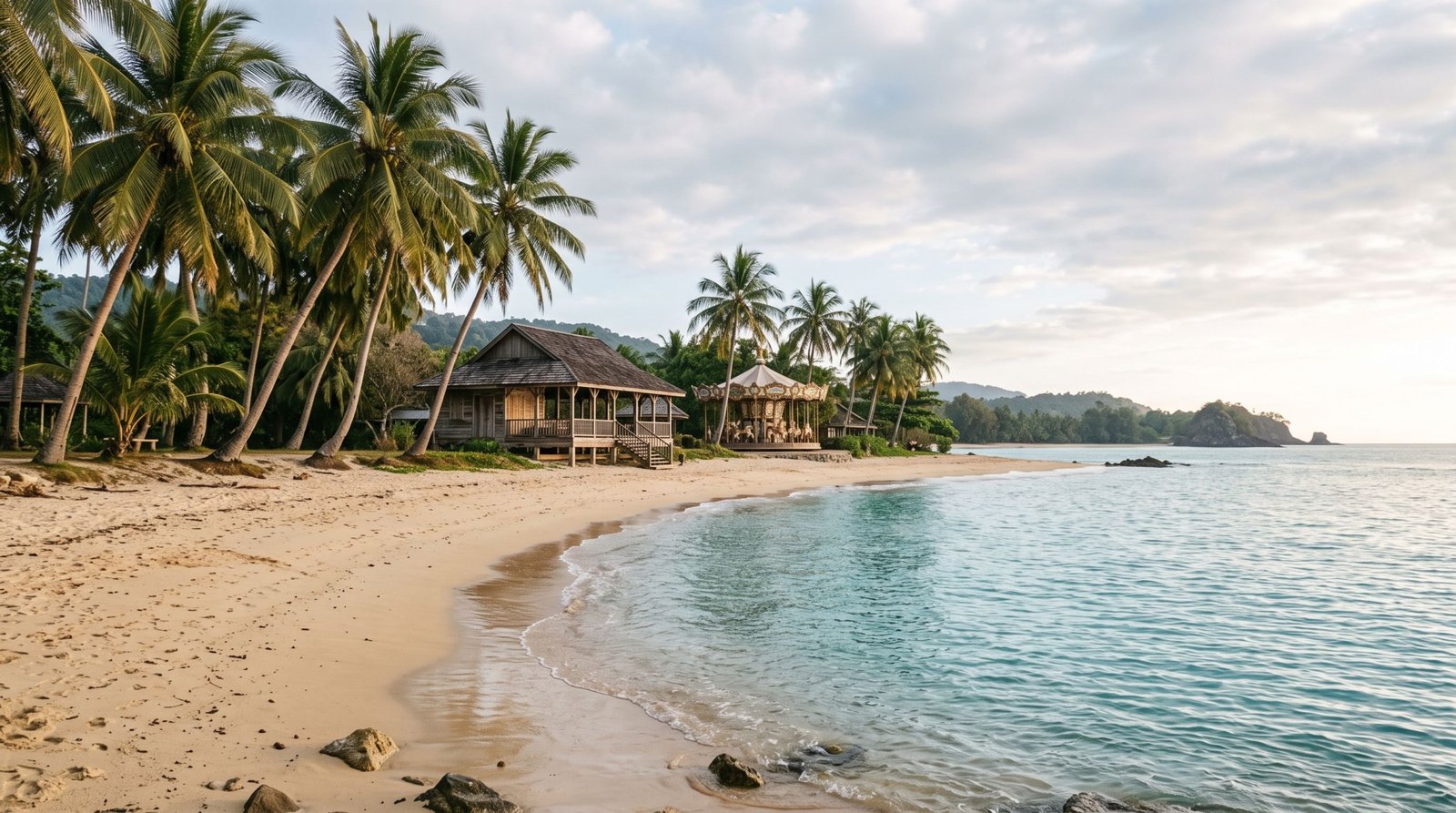
Across the Rickenbacker Causeway from downtown, on the barrier island that also holds Key Biscayne, sits a beach with a specific and heavy history. In May 1945, Black Miamians organized a “wade-in” protest at Haulover Beach after being excluded from every public beach in the county. Rather than make arrests, officials opened an alternative that August: a designated “Colored Only” beach, unusually well-equipped for a segregation-era Black facility, with a dance floor, amusement rides, a bathhouse, and rental cottages.
The county closed the park in 1982 over maintenance costs, and it sat abandoned for nearly two decades — until activist Dinizulu Gene Tinnie discovered plans to develop the land privately and organized a preservation campaign, joined by former city commissioner M. Athalie Range, then in her 80s, who said simply, “I think I’ve got one more good fight left in me.” The park was listed on the National Register of Historic Places in 2002 and fully reopened in February 2008, restored carousel and mini-train included. It marked 80 years since its 1945 opening in 2025, and a long-planned on-site museum is now moving toward groundbreaking.
Getting There and Practical Info
- Getting there: no Metrorail access; the easiest routes are by car, rideshare, or bicycle along the Rickenbacker Causeway’s dedicated bike path.
- Hours: 7 a.m. to sunset, daily except Thanksgiving and Christmas.
- Parking: can be genuinely congested on weekends and holidays — arrive early if you’re driving.
- Distance from South Beach: about 20 minutes by car via the causeway.
- Time to allow: a half day if you want the beach itself plus the nature trails and mangrove areas, an hour or two for a shorter visit.
Who Is This For?
Anyone who wants a real Miami beach without South Beach’s density — and anyone who wants that beach’s history to mean something rather than being incidental. It’s less suited to travelers looking purely for nightlife or beach-club amenities; this is a county park with genuine civil rights weight behind it, not a resort stretch.
5. Deering Estate
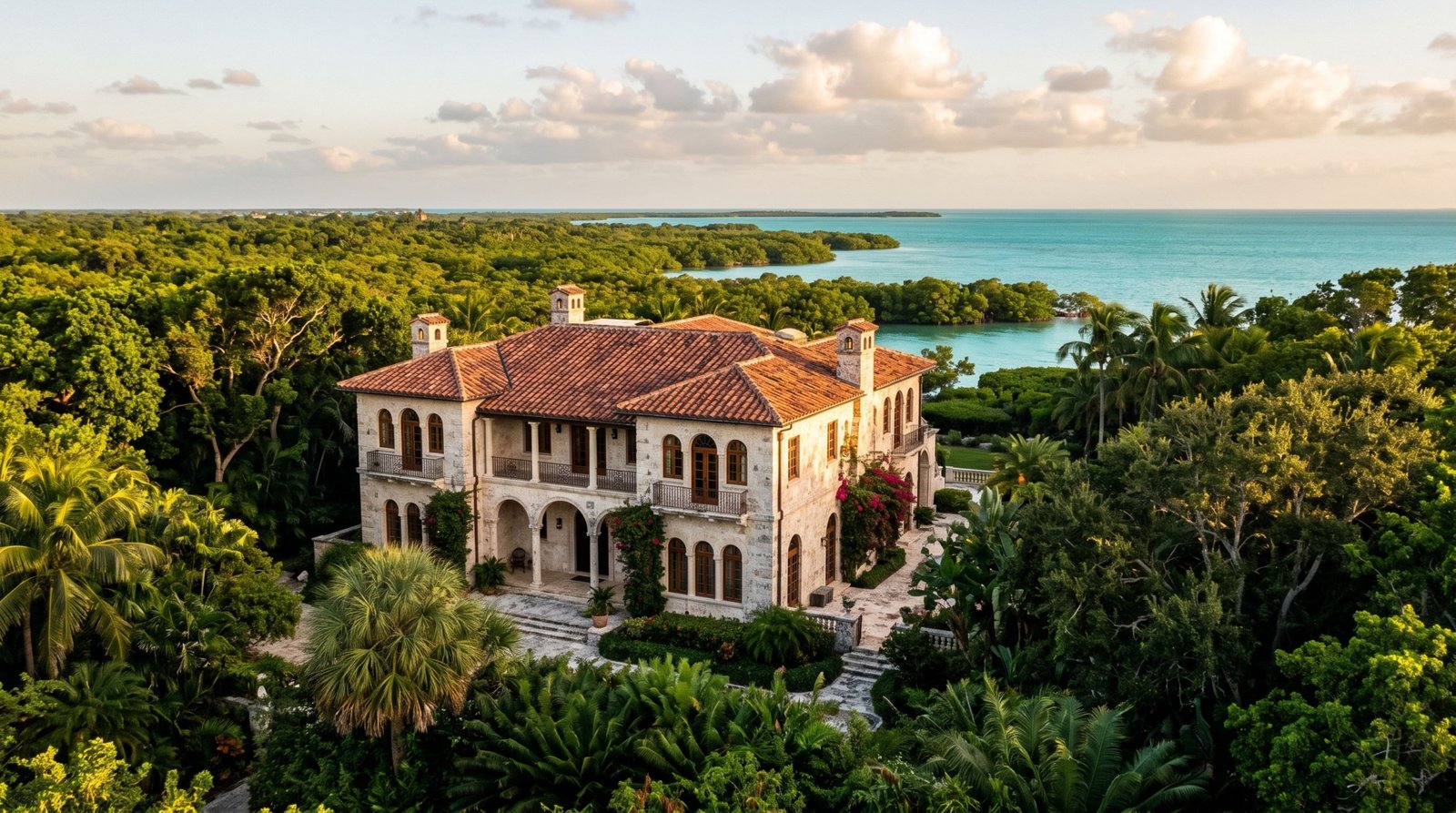
South of Coconut Grove, in Palmetto Bay, the 444-acre Deering Estate is the kind of place that would be a headline attraction almost anywhere else, yet barely registers on most Miami itineraries. Industrialist Charles Deering bought the property in the early 1900s and, in 1922, completed the Stone House — a Mediterranean-Revival mansion with 18-inch limestone walls, designed by architect Phineas Paist specifically to display Deering’s art collection. Next to it stands the Richmond Cottage, a wooden three-story building from 1900 once run as the southernmost hotel on the U.S. mainland.
The estate’s real depth is underground and in the trees. A boardwalk leads to the Cutler Burial Mound, containing Native American remains from the Glades II and III periods, and a sinkhole discovered on the property in 1979 turned up Pleistocene-era animal bones alongside early human artifacts. The grounds also hold what’s believed to be the largest surviving virgin coastal tropical hardwood hammock in the continental United States. One practical note worth knowing before you plan around it: the Stone House began a multi-phase restoration in June 2025, so its interior may be closed to tours depending on when you visit — the estate has been running an alternate exhibition, “Stone House Next Door,” out of the Richmond Cottage in the meantime.
Getting There and Practical Info
- Getting there: a car is the most practical option; Metrorail plus Metrobus connections work, and a free on-demand shuttle service also serves the area Monday–Saturday.
- Hours: daily, 10 a.m.–5 p.m. (last entry 4 p.m.), closed Thanksgiving and Christmas.
- Cost: timed admission, roughly $18 for adults, $16 seniors/military, $10 ages 4–14.
- Distance from South Beach: about 30–35 minutes by car.
- Time to allow: 2–3 hours to cover the guided museum tour, the burial mound boardwalk, and at least part of the hammock trails.
One Thing to Know Before You Go
This is the most substantial single site on this list — a real museum, a real archaeological site, and a real nature preserve in one 444-acre property — and it’s consistently overlooked simply because Palmetto Bay isn’t part of the mental map most visitors draw of Miami. Confirm the Stone House’s current tour status before you go, since restoration work may limit interior access.
One Place We Left Off
Wynwood is the obvious candidate for a “beyond South Beach” list, and it’s deliberately not on this one. It genuinely was an under-the-radar warehouse district when the Wynwood Walls murals opened in 2009 — but that description hasn’t been accurate for close to a decade. Miami Today reported that the neighborhood’s annual visitor count grew roughly 2,400% between 2013 and 2023, from about 600,000 visitors a year to 15 million, making it one of the most-photographed neighborhoods in the country and a bigger tax contributor to the city than most of downtown. It’s a legitimately fun neighborhood, but “underrated” is no longer an honest word for it — it’s arguably now more mobbed than South Beach on a busy weekend.
Frequently Asked Questions
Do I need a car to visit these five places?
Not for all of them. Historic Overtown and The Barnacle both sit near Metrorail stations, and Little Haiti is reachable by bus or trolley. Virginia Key Beach and the Deering Estate are realistically car, rideshare, or bike-path destinations — there’s no direct rail line to either.
Is Historic Overtown safe to visit?
The historic core around the Lyric Theater and the Black Archives, visited during the day, is a normal, actively revitalizing urban neighborhood with regular foot traffic from the museum and nearby businesses — treat it the way you’d treat any city neighborhood you don’t already know, and plan daytime visits around the Lyric’s posted tour hours.
Can I fit more than one of these into a single day?
Overtown and Little Haiti pair reasonably well as a half-day, both being on the mainland north of downtown. Virginia Key Beach and the Deering Estate are each better as their own outing given drive times and the amount there is to see once you arrive. The Barnacle fits easily alongside a Coconut Grove afternoon.
What’s the best time of year to visit?
November through April, Miami’s dry season, is the most comfortable stretch for walking neighborhoods and spending time outdoors at Virginia Key Beach or the Deering Estate’s trails. Summer is workable for the indoor sites (the Lyric, the Cultural Complex, the Stone House) but expect heat, humidity, and afternoon thunderstorms if you’re outside.
Between a jazz-era theater, a living Caribbean cultural district, the oldest house in the county, a segregation-era beach with an 80-year-old legacy, and a 444-acre estate with its own burial mound, these five places make the case that Miami’s most interesting stories were never really about the beach. If you’re planning a wider Florida trip, our guides to Florida’s underrated beach towns beyond Miami and Orlando and Paris’s overlooked corners cover the same instinct — looking past the postcard — in two very different places.