
Florida’s beach reputation runs almost entirely through two cities that don’t actually have great beaches of their own: Miami, whose sand is real but whose scene overwhelms it, and Orlando, which has no coastline at all. Meanwhile the state has more than 1,300 miles of tidal shoreline, and a handful of small towns along it that built their whole identity around the water long before “spring break destination” was a category. This guide covers five of them — a Victorian-era Atlantic seaport, a Panhandle oyster town rebuilding its signature industry in real time, a Big Bend fishing village that never got a highway bridge to sprawl, a low-rise Gulf Coast island holding the line against high-rises, and an old-money tarpon-fishing retreat — scattered from the Georgia line to the Fort Myers area.
Last verified: September 1, 2026. This guide was built from Florida state tourism sources, county and municipal records, historical societies, and current news coverage — not personal visits — and every factual claim below is linked to its source in the sentence that makes it.
| Place | Region | Known For | Vibe |
|---|---|---|---|
| Amelia Island | Northeast Atlantic coast | Victorian architecture, working shrimp fleet | Historic seaport town |
| Apalachicola | Panhandle / Forgotten Coast | Oyster industry, 19th-century warehouses | Working fishing town |
| Cedar Key | Big Bend Gulf coast | Clam farming, 1896 hurricane history | Small, slow, off the grid |
| Anna Maria Island | Central Gulf coast (Sarasota/Bradenton) | No high-rises, three connected beach towns | Low-key barrier island |
| Boca Grande | Southwest Gulf coast (Charlotte Harbor) | Tarpon fishing, old-money history | Quiet, exclusive retreat |
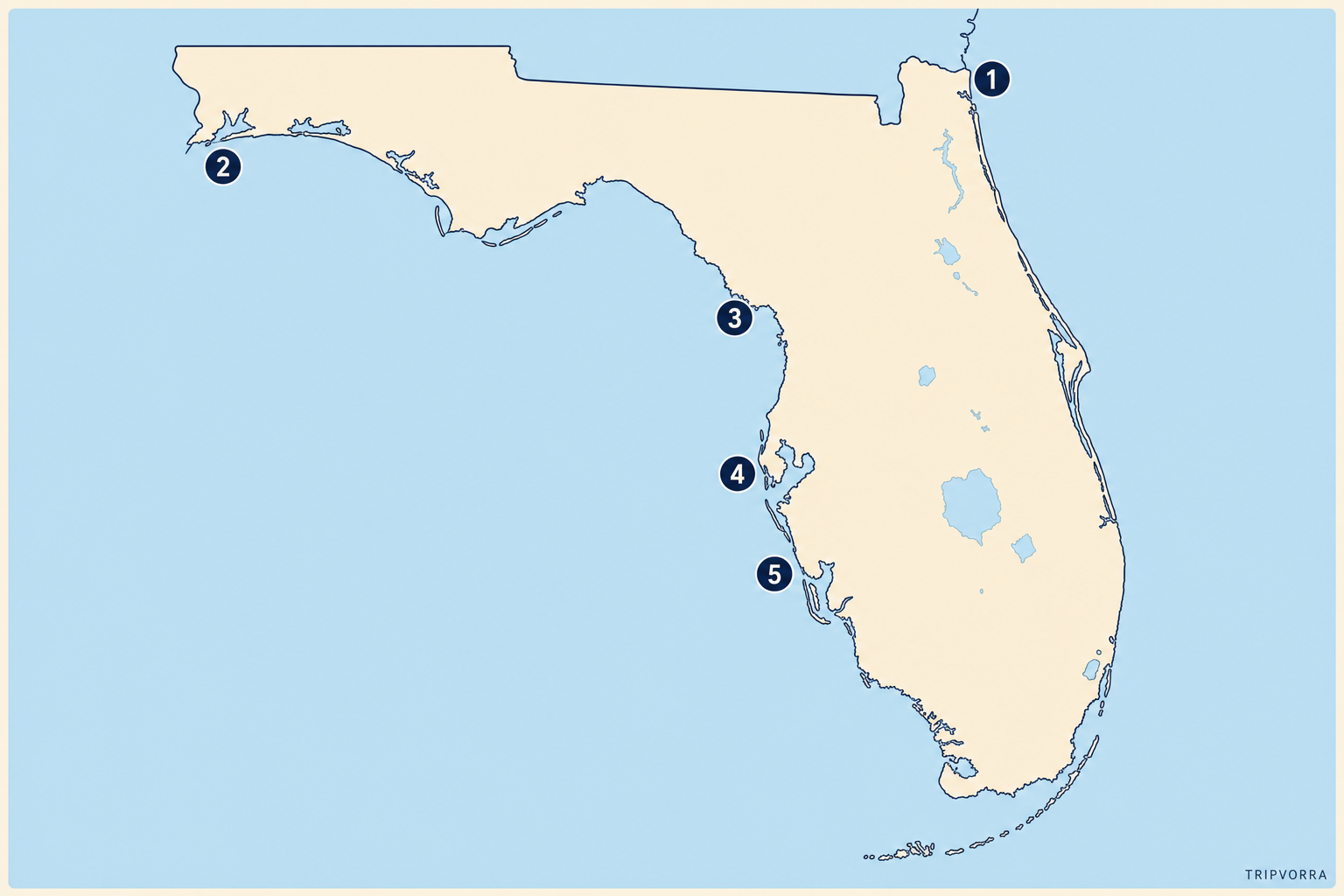
Map key: 1) Amelia Island • 2) Apalachicola • 3) Cedar Key • 4) Anna Maria Island • 5) Boca Grande
1. Amelia Island
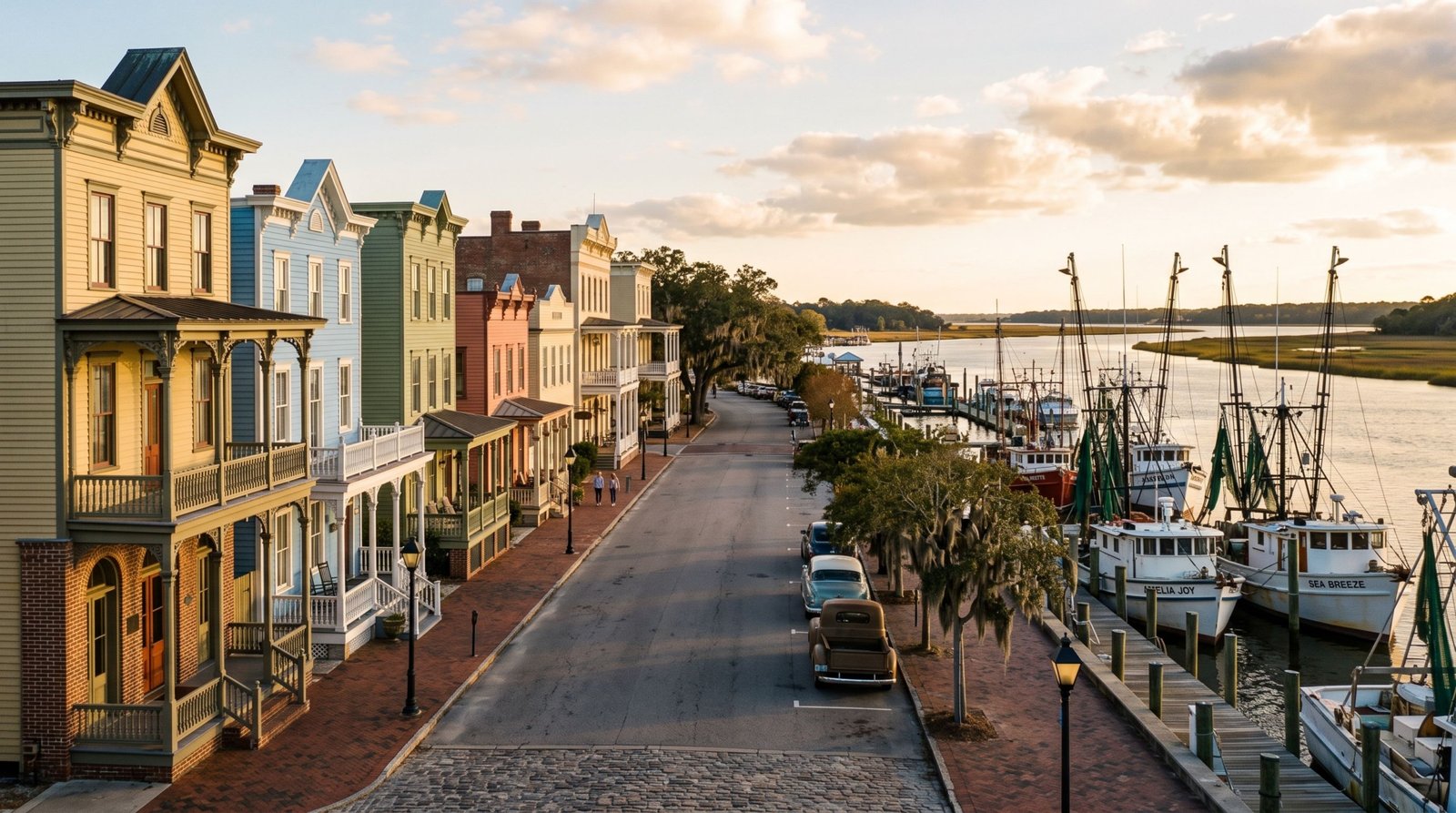
Tucked into Florida’s northeasternmost corner, just south of the Georgia line, Amelia Island’s main town of Fernandina Beach was largely built out in the 1850s by U.S. Senator David Yulee, then boomed further starting around 1875 as steamships brought waves of Northern tourists south for the winter — enough of them that an 1896 travel magazine crowned it “The Queen of Summer Resorts.” That Victorian-era building boom is still standing: over 50 blocks of Fernandina’s downtown are listed on the National Register of Historic Places, dense with Queen Anne gingerbread houses that have nothing in common with the concrete high-rises most people picture when they think “Florida beach town.”
What keeps Amelia Island from feeling like a museum piece is that it’s still a working harbor. The modern shrimping industry was effectively born here in the early 20th century, and roughly 80% of Florida’s entire Atlantic white shrimp harvest still comes out of Amelia’s waters today — the shrimp boats docked downtown aren’t a photo prop, they’re the local economy.
Getting There and Practical Info
- Nearest airport: Jacksonville International Airport (JAX), about 30 miles southwest.
- Car necessity: helpful for reaching the island and the beaches, but downtown Fernandina Beach’s historic district is genuinely walkable once you’re there.
- Lodging character: restored Victorian inns and bed-and-breakfasts downtown, beach resorts and vacation rentals along the shore — no high-rise towers.
- Best season: spring and fall shoulder seasons, avoiding both the thick summer humidity and the heart of Atlantic hurricane season (August through October).
- Budget: moderate; historic-inn stays and fresh shrimp dinners run a bit above Florida’s budget-beach-town average, well below South Florida resort pricing.
Who Should Go
Travelers who want an actual historic town attached to their beach trip — carriage-house inns, a walkable downtown, a real working waterfront — rather than a strip of hotels facing the sand. It’s a weaker fit if nightlife, big-name resort amenities, or a lively bar scene are the point of the trip; Amelia Island’s pace is closer to a quiet New England coastal town than to South Beach.
2. Apalachicola
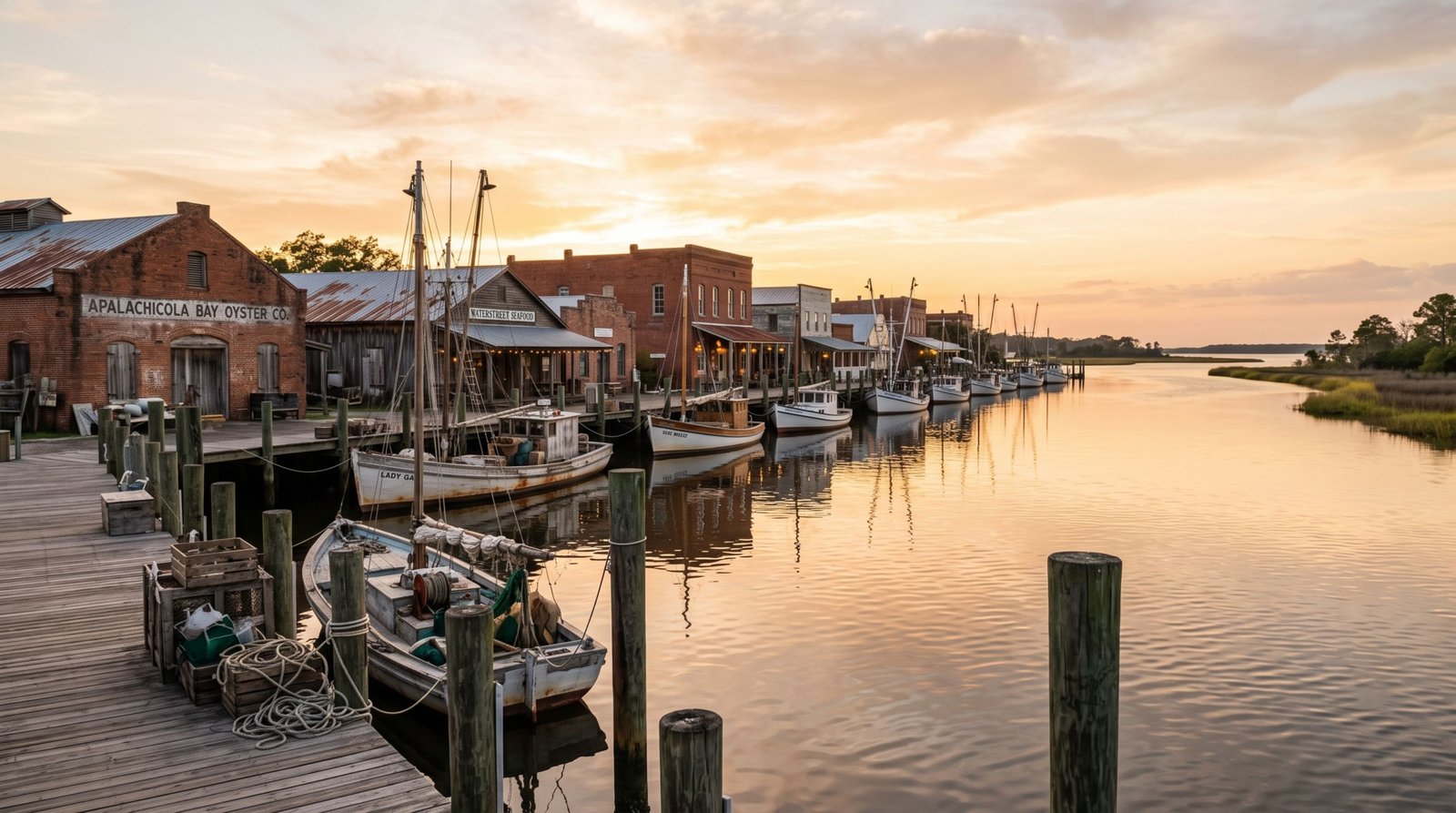
On Florida’s Panhandle, along the stretch of coast locals call the Forgotten Coast, Apalachicola is a real working fishing town of roughly 2,300 people, its downtown built from 19th-century cotton warehouses now doing duty as restaurants and shops. For generations the town’s whole identity ran through one thing: at its peak, more than 90% of Florida’s entire oyster harvest came out of Apalachicola Bay.
That signature industry has been through a genuine crisis, and this is worth knowing before you plan a visit around it. Apalachicola Bay’s oyster reefs collapsed from roughly 10,000 acres of healthy habitat down to fewer than 500 acres — a 95% loss driven by reduced river freshwater, warming water, disease, and hurricanes — which led the state to shut down harvesting entirely from 2020 through the end of 2025. The ban was lifted on January 1, 2026, but only for a tightly limited partial season running through February 28, capped at 31 bags per harvester for the entire stretch. One local official put it bluntly: “No one is going to be quitting their day job.” The town’s oyster culture is real and its history is real, but as of this writing the fishery itself is only just beginning to reawaken.
Getting There and Practical Info
- Nearest airport: Tallahassee International Airport, about 65 miles and just under two hours by car.
- Car necessity: required — there’s no meaningful public transit connecting Apalachicola to the rest of the Panhandle.
- Lodging character: small historic hotels and inns downtown, no chain properties on the waterfront.
- Best season: fall through spring; Panhandle summers are hot and humid and fall directly within the Atlantic hurricane season’s peak window.
- Budget: affordable to moderate, though expect current oyster-menu prices and availability to reflect the fishery’s still-limited harvest.
The Honest Verdict
Worth the trip for the history, the historic downtown, and a genuinely slow-paced working-waterfront atmosphere you won’t find on most Florida coastlines — just don’t build the visit entirely around eating your weight in local oysters, since the industry that made the town famous is still climbing back from a five-year shutdown. It’s a poor match for travelers who want a swimmable, sandy resort beach as the centerpiece; Apalachicola’s water access is mostly working dock and bay, not beach club.
3. Cedar Key
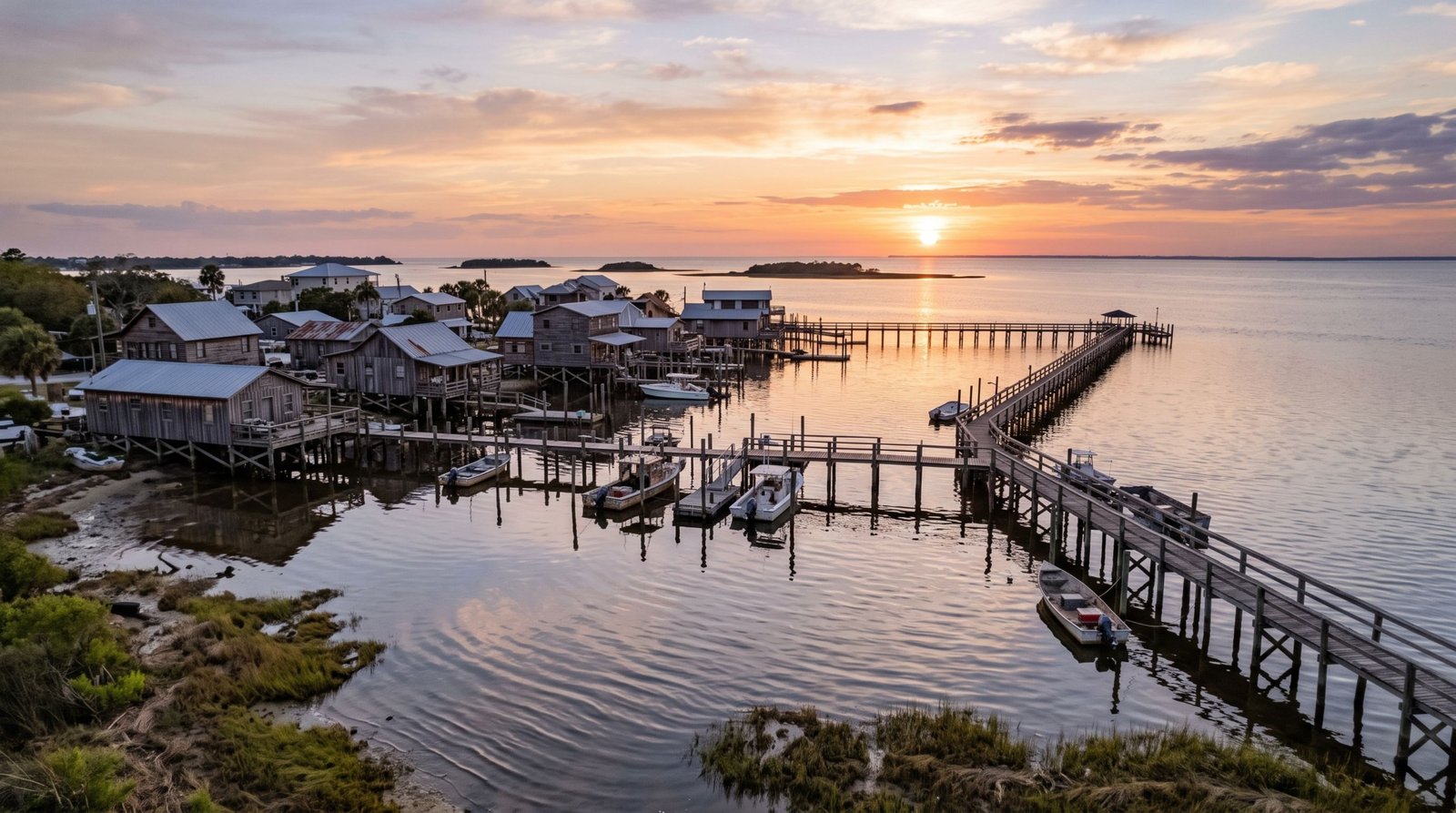
On Florida’s sparsely developed Big Bend coast, Cedar Key was settled in the early 1840s across a cluster of small islands, with the modern town incorporating in 1869. By the mid-1850s it had grown into a genuine industrial outpost: Eberhard Faber built a pencil mill on nearby Atsena Otie Key, and by 1860 more than 200 people lived and worked around it.
That first version of Cedar Key ended abruptly. A Category 3 hurricane struck on September 28, 1896, with winds reaching 100 mph that obliterated Atsena Otie Key and destroyed the mill, forcing the remaining residents to relocate to the neighboring, slightly more sheltered Way Key. The town’s economy pivoted permanently to the water — oystering and clamming — and that’s still exactly what Cedar Key is today: a working aquaculture village of well under 1,000 year-round residents, with no bridge-fed sprawl and no interest in becoming a resort town.
Getting There and Practical Info
- Nearest airport: Gainesville Regional Airport (GNV), about 57 miles and roughly an hour and 25 minutes by car.
- Car necessity: required to get there; once in town, the small historic core is entirely walkable or golf-cart-friendly.
- Lodging character: small inns and cottages, no chain hotels or high-rises anywhere on the key.
- Best season: fall through spring, for the same hurricane-season and summer-heat reasons as the rest of this list.
- Budget: affordable — one of the least expensive stops on this list.
Is It Worth a Special Trip?
Yes, if what you want is genuinely small and slow: fresh clams pulled from the surrounding aquaculture leases, a historic core you can cover on foot in an afternoon, and close to zero commercial development. It’s not the right stop if a wide, swimmable sand beach is the point of your trip — Cedar Key’s shoreline is mostly marsh and mudflat rather than the classic Gulf Coast sand found elsewhere on this list.
4. Anna Maria Island
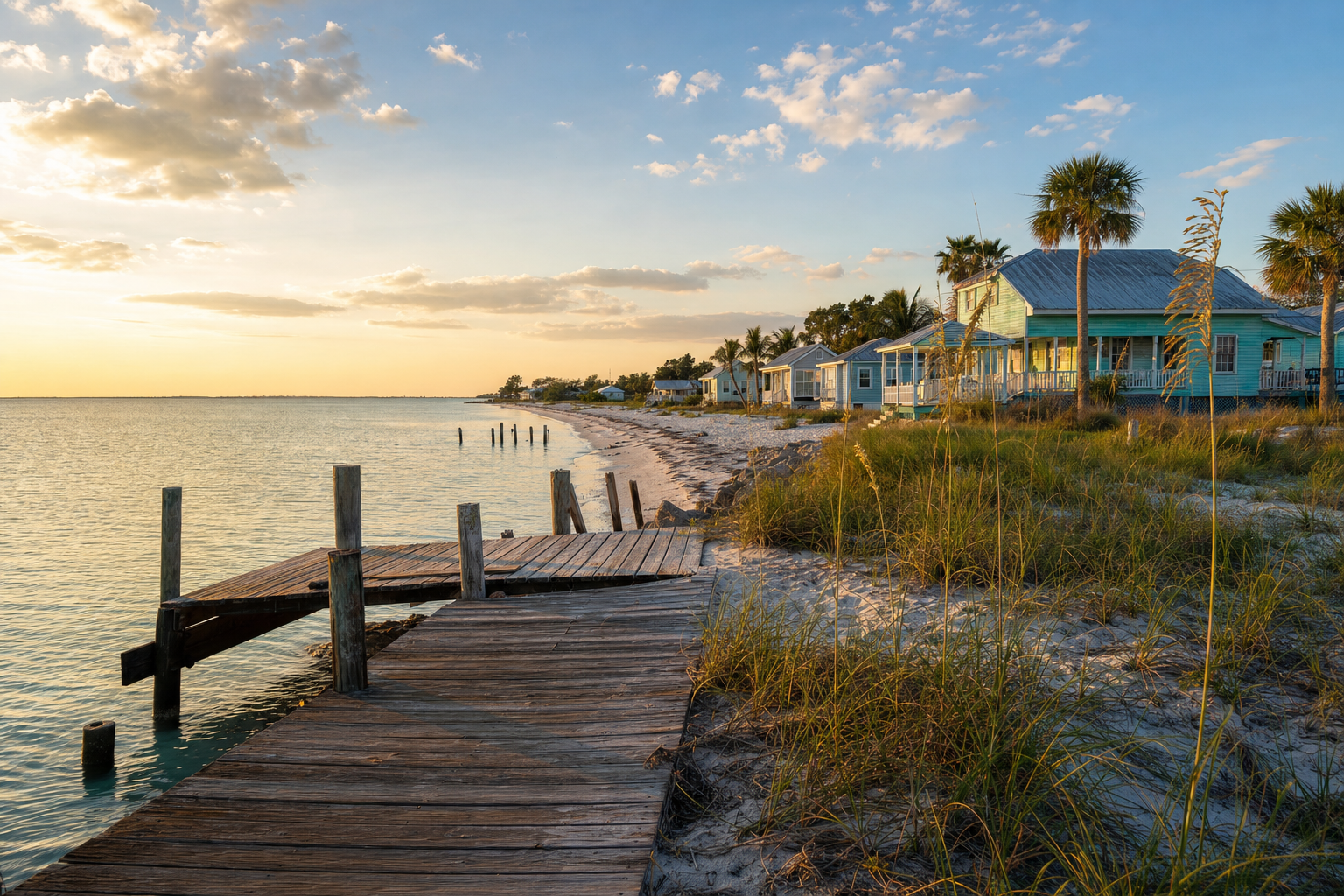
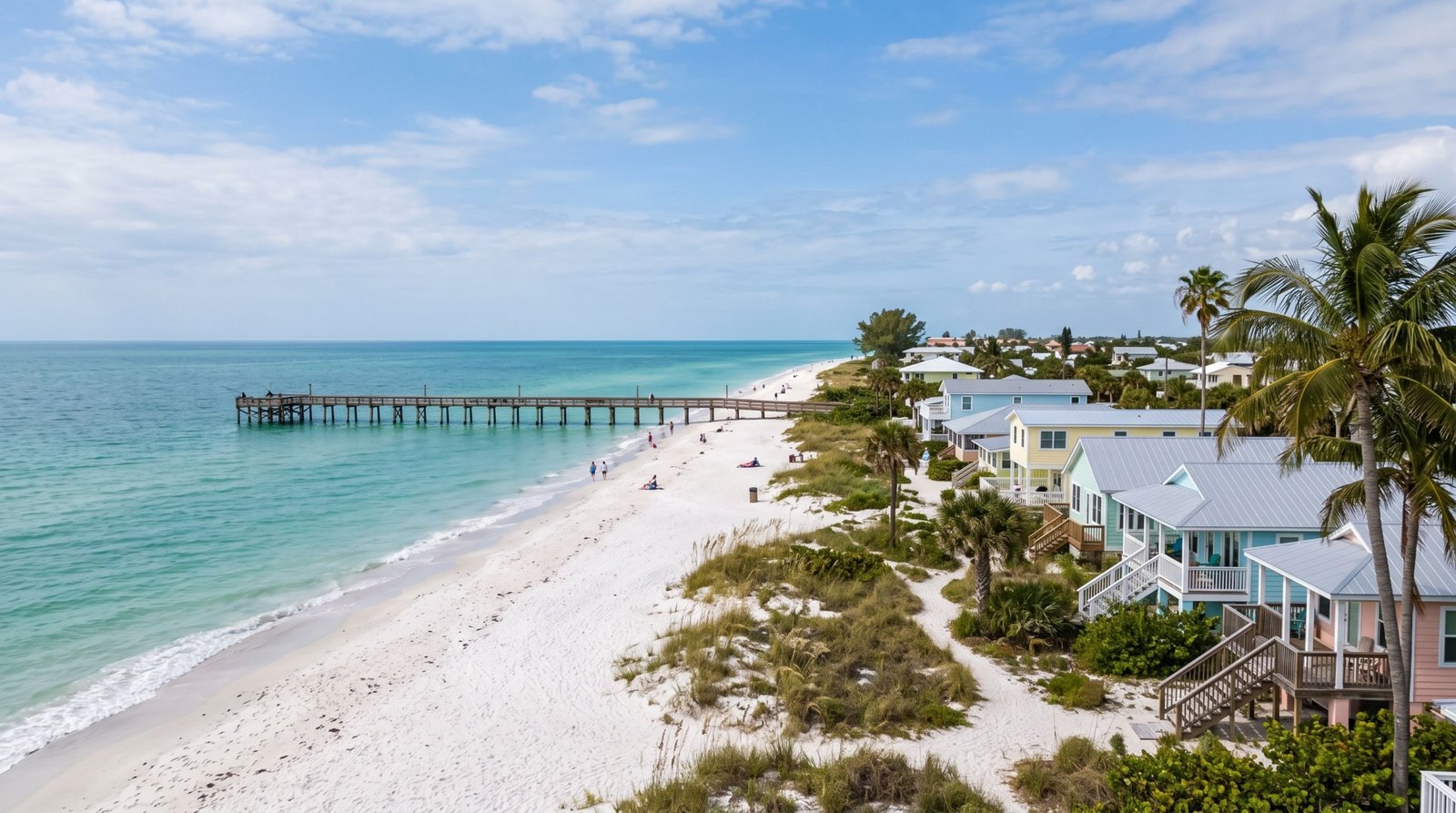
A slender barrier island off Sarasota and Bradenton, Anna Maria Island is really three small towns — Anna Maria, Holmes Beach, and Bradenton Beach — with a combined year-round population of roughly 6,450. What sets it apart from most of Florida’s Gulf Coast is what isn’t there: there are no high-rises and few chain restaurants anywhere on the island, and it remains largely residential, with visitors leaning on vacation rentals rather than big beachfront resort towers.
That low-key character hasn’t come for free. Growth pressure is real and visible — more traffic and more short-term rentals than a decade ago — but the island’s low-rise zoning has held where plenty of comparable Gulf beach towns gave way to towers decades ago. A free trolley connects all three towns, which helps keep car trips (and parking headaches) to a minimum once you’ve arrived.
Getting There and Practical Info
- Nearest airport: Sarasota-Bradenton International Airport (SRQ), about a 30-minute drive.
- Car necessity: optional once on the island — the free island trolley and flat, bikeable streets cover most day-to-day trips.
- Lodging character: cottages and vacation rentals rather than resort towers; inventory is tighter than it looks given the no-high-rise rule.
- Best season: winter through spring, avoiding peak summer heat, the thick of hurricane season, and the loudest spring-break weeks.
- Budget: moderate to high and rising — the island’s growing popularity has pushed rental and dining prices up in recent years.
Who It’s Not For
Budget travelers looking for cheap beachfront lodging, or anyone specifically wanting a big-name resort with a full amenities list — that’s not what the island’s zoning allows, and prices have climbed as the secret has gotten out. It’s an excellent fit for families and repeat visitors who want an unhurried, walkable Gulf beach town without a single high-rise interrupting the view.
5. Boca Grande
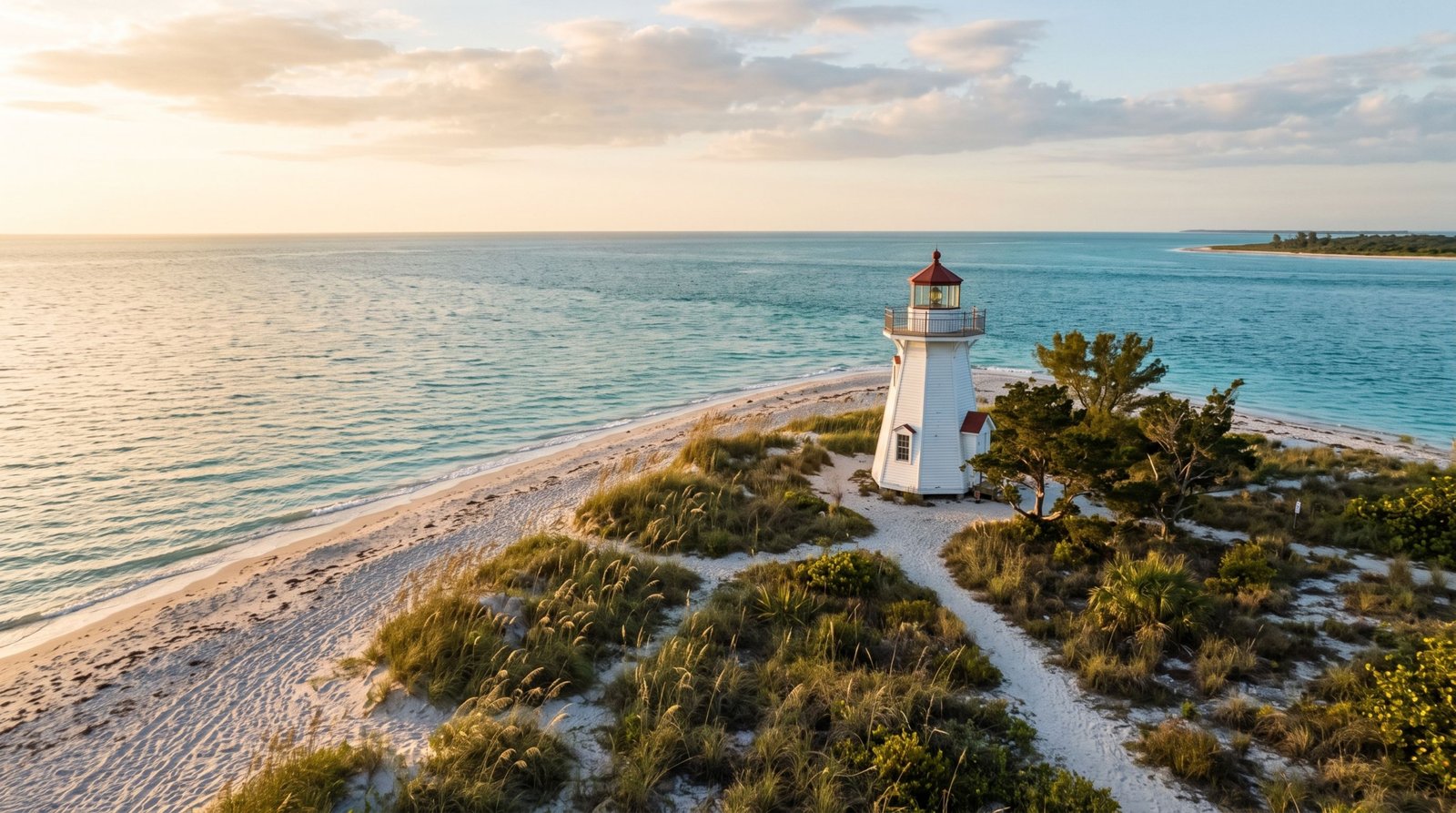
At the southern tip of Gasparilla Island, on the Gulf side of Charlotte Harbor, Boca Grande has been known as the “Tarpon Capital of the World” since the early 1900s, when wealthy sport anglers began arriving specifically to fish Boca Grande Pass. The Port Boca Grande Lighthouse, built in 1890 and the oldest structure on the island, still marks the point where they came ashore; it was restored and rededicated as a historic site in 1986 after decades of abandonment.
The old-money reputation isn’t marketing gloss — it’s the town’s founding story. Industrialist Peter Bradley built the Gasparilla Inn between 1910 and 1913, and its early guest list included J.P. Morgan, Henry Ford, Harvey Firestone, and Delaware Senator Henry du Pont; the du Pont, Biddle, Cabot, and Drexel families all bought property in the area not long after. That quiet, moneyed, low-visibility character has proven durable — there’s no strip of hotels or chain anything here, and that’s very much by design.
Getting There and Practical Info
- Nearest airport: Punta Gorda Airport, about 31 miles and roughly 54 minutes by car; Southwest Florida International (Fort Myers) and Sarasota-Bradenton are the nearest larger options.
- Car necessity: needed to reach the island via the toll causeway, though bikes and golf carts cover most trips once you’re there.
- Lodging character: the historic Gasparilla Inn plus a limited stock of private rentals — no chain hotels, and availability is genuinely limited.
- Best season: winter through spring, which is also peak tarpon season and keeps you clear of hurricane season.
- Budget: the highest on this list by a wide margin; this is a splurge destination, not a budget one.
Best Fit
A quiet, low-key luxury few days away, or a serious tarpon-fishing trip — either works well here, and the lack of crowds is the actual product being sold. It’s a poor fit for value-focused travelers or anyone who wants nightlife and options; Boca Grande’s whole appeal is having almost none of either.
One Beach Town We Left Off
Siesta Key. This one isn’t left off for being unknown — quite the opposite. In February 2025, Tripadvisor named Siesta Beach the #1 beach in the United States and #4 in the world, based on millions of traveler reviews collected over the previous year, largely thanks to its signature sand — composed of 99% pure quartz, which stays cool underfoot even in peak summer heat. That’s a genuinely deserved honor, and a wonderful beach to visit — it’s just already about as far from hidden as a Florida beach gets, which is exactly why it doesn’t belong on a list about the ones beyond the famous names.
Frequently Asked Questions
Is Apalachicola’s oyster industry still active?
Barely, and only very recently. After a five-year harvesting ban (2020–2025) prompted by a 95% collapse in oyster reef habitat, the state reopened a strictly limited season on January 1, 2026, capped at 31 bags per harvester through February 28. Expect the town’s oyster culture and history to feel much bigger than the current, still-recovering harvest.
Do I need a car to visit these five towns?
Yes, to reach every one of them and to travel between them — they’re spread from the Georgia border to the Fort Myers area with no train or meaningful bus connection. Once you’ve arrived, several (Fernandina Beach’s downtown, Cedar Key, Anna Maria Island’s trolley route, Boca Grande) are walkable, bikeable, or golf-cart-friendly for getting around locally.
When is hurricane season, and should it change when I visit?
Atlantic hurricane season runs June through November, peaking August through October, and all five of these towns sit directly on the coast. Fall-through-spring travel (roughly November through April) avoids the highest-risk window and also sidesteps the thickest summer humidity.
Are any of these good for a family with young kids?
Anna Maria Island is the strongest fit — gentle beaches, a free trolley, and a genuinely walkable layout across its three towns. Amelia Island’s beaches and historic downtown work well for families too. Boca Grande and Apalachicola lean more toward adults, given the fishing- and food-focused draw and more limited lodging options.
Planning a Trip Around These Five
These five towns are spread the length of Florida’s coastline rather than clustered together, so this isn’t a single road trip so much as a reason to build any Florida itinerary around small towns instead of big cities: pair Amelia Island with a Jacksonville-area trip, or string Apalachicola, Cedar Key, Anna Maria Island, and Boca Grande together along a slower Gulf Coast route. If it’s the small-town, off-the-obvious-path instinct that appeals to you rather than Florida specifically, our guide to 5 Underrated Towns and Trails in California Worth the Detour scratches the same itch on the other coast. And if you’re drawn to the historic-seaport character of Amelia Island in particular, our roundup of 5 Underrated Towns in Ireland Beyond Dublin has more of that same quiet, well-worn coastal-town feeling.