
Spain’s most-photographed towns get that way for a reason, and nobody needs another list telling you Ronda and Toledo are beautiful. This one looks past them, to four towns that hold up just as well on their own terms but rarely make it onto an international itinerary.
Last verified: August 30, 2026. This guide was built from official regional and municipal tourism sites, national tourism board pages (spain.info), transport operator information, and local government sources — not from personal travel, since Tripvorra’s research is desk-based. Where a fact couldn’t be confirmed from a reliable source, it was left out rather than guessed at.
All four towns below are genuinely worth the detour, but none of them are secrets in the “nobody’s heard of this” sense — some are locally celebrated and simply under-visited by international travelers, which is a different, more honest kind of underrated.
Quick Answer: Four Towns, Four Different Reasons to Go
Quick Answer: If you only have time to pick one, here’s the shorthand.
- Albarracín (Aragón) — for the single best-preserved medieval streetscape on this list, if you don’t mind a car and a limited bus schedule.
- Morella (Castellón) — for intact city walls and truffle season, best reached by car since weekend buses don’t run at all.
- Zahara de la Sierra (Cádiz) — for a reservoir-view hill town that’s quieter than its Pueblos Blancos neighbors, car essentially required.
- Trujillo (Extremadura) — for conquistador history and a genuinely uncrowded Plaza Mayor, reachable by direct coach from Madrid.
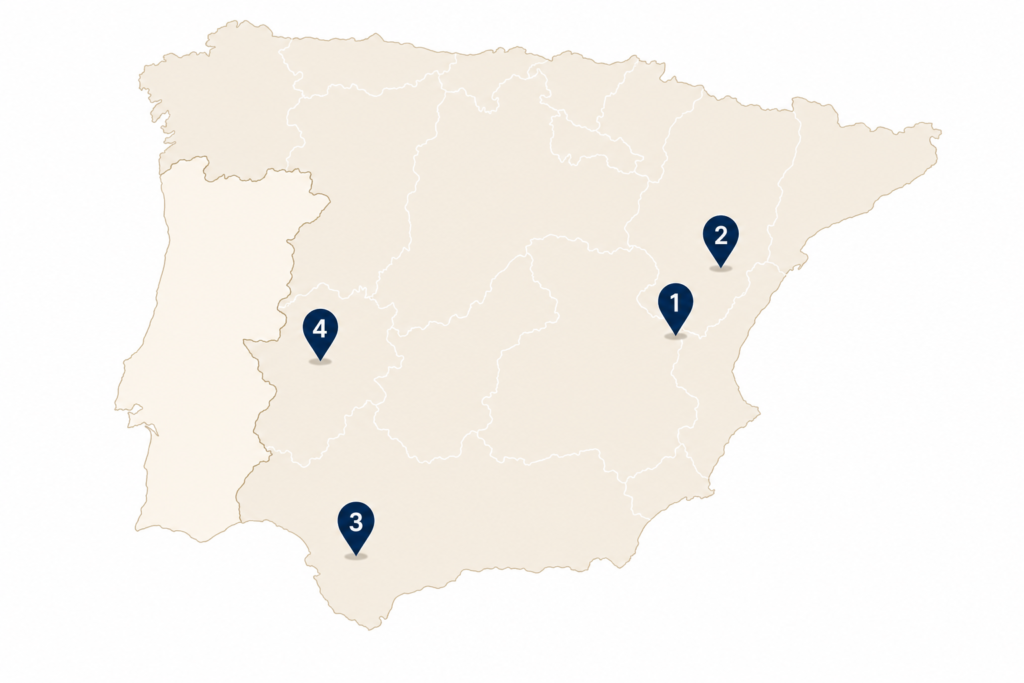
Map key: 1) Albarracín, Aragón — 2) Morella, Castellón — 3) Zahara de la Sierra, Cádiz — 4) Trujillo, Extremadura.
1. Albarracín, Aragón
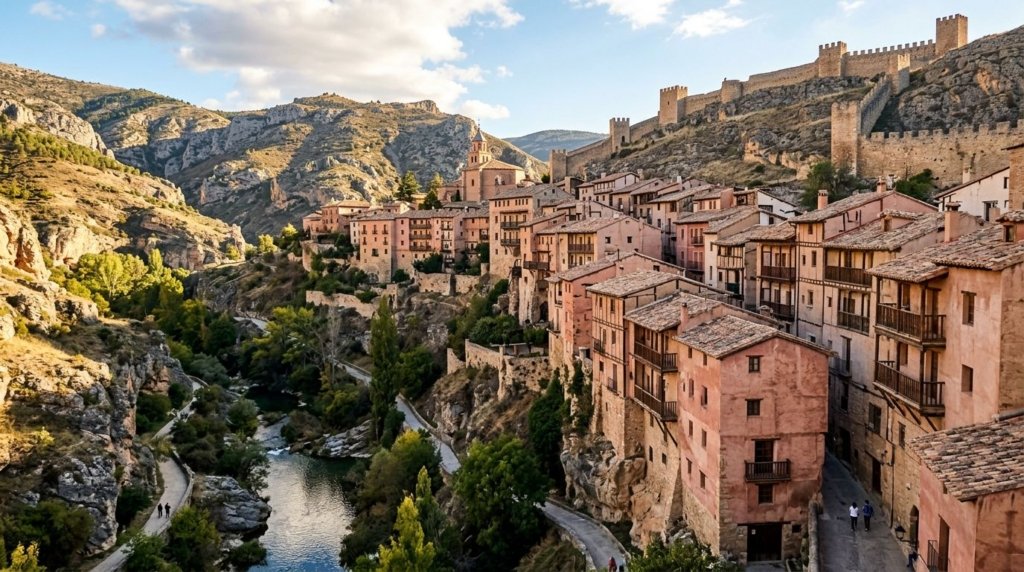
Albarracín is well known among Spaniards — it regularly turns up on domestic “most beautiful village” rankings, and its own tourism office markets it confidently. What it isn’t, is easy to reach, and that alone keeps international numbers modest. The town sits on a bend of the Guadalaviar river in the hills of Teruel, its pink and ochre houses stacked along a walled ridge that’s changed remarkably little in centuries.
The walk through the old town does most of the work. Timber balconies lean out over streets too narrow for cars, the walls climb a stepped ridge to the Torre del Andador watchtower, and the 16th-century Cathedral of El Salvador holds a small Diocesan Museum of Flemish tapestries that most visitors skip. None of it is staged for tourists — this is simply what a well-preserved Aragonese hill town looks like when it hasn’t been flattened by mass visitation.
The catch is access. There’s no train station in Albarracín, and the one public bus from Teruel runs a single round trip on weekdays only, with no Sunday or holiday service at all. A car makes this an easy stop; without one, plan around that solitary bus and expect it to shape your schedule.
- Nearest city: Teruel, about 38 km away (Teruel has its own rail links to Zaragoza and Valencia).
- Getting there: One weekday bus each way from Teruel (no weekend service, per the town’s own transport page); a car is the practical choice for most visitors.
- Car necessary? Effectively yes, unless your schedule matches the single daily bus.
- Time to allow: Half a day covers the walled town; an overnight stay lets you see the pink houses in early or late light, when the color is most striking.
- Seasonal notes: This is a genuinely cold, high-altitude interior climate — winter brings real frost and snow, so spring and early autumn are the more comfortable seasons for the steep, stepped streets.
- Where to stay: Small casas rurales and family-run hotels rather than chain lodging — book ahead in high season, since capacity is limited.
- Budget: OFFICIAL PRICE — the guided Cathedral visit is €8.50 per adult (free under age 10), and the Diocesan Museum alone is €4 (per Fundación Santa María de Albarracín, the official ticketing body). Lodging and meals beyond that are a TRIPVORRA PLANNING ESTIMATE based on third-party booking sites, since no official average rate is published.
Who Is This Best For?
Travelers with a rental car and a taste for architecture over nightlife. It’s a poor fit if you’re relying entirely on public transport or want a lively evening scene — Albarracín is quiet after the day-trippers leave, which is either the whole point or a dealbreaker depending on what you’re after.
2. Morella, Castellón
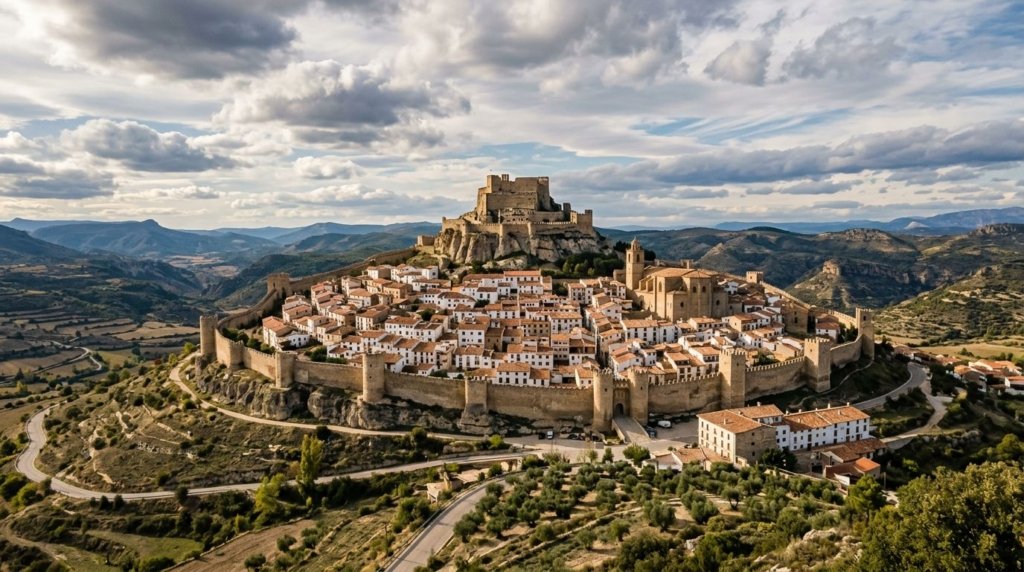
Morella sits inland from the Costa Blanca resorts, which is precisely why most international itineraries never reach it. It’s a member of Spain’s official “Most Beautiful Villages” network and gets steady domestic press, but it rarely appears on English-language “best towns in Spain” lists — a gap that has more to do with geography than merit.
Nearly two kilometers of medieval wall, punctuated by sixteen watchtowers, still fully encircle the town. Above it all sits a 14th-century castle built over Neolithic and Iron Age remains, and below, the Gothic Basílica Arxiprestal de Santa Maria has a spiral stone staircase unlike anything else on this list. Morella is also one of Spain’s serious truffle towns, with an annual truffle festival that draws food-focused visitors rather than sightseeing crowds.
Getting there takes some planning. There’s no rail line to Morella, and the town’s own tourism site lists just two weekday bus departures from Castellón de la Plana — with no service at all on weekends or holidays. If you’re not driving, build your visit around a weekday.
- Nearest city: Castellón de la Plana, roughly 100 km away by road.
- Getting there: Weekday-only bus from Castellón (Autos Mediterráneo, two departures daily); no weekend bus service exists, per Morella’s official tourism site.
- Car necessary? Strongly recommended, and effectively required for a weekend visit.
- Time to allow: A full day covers the walls, castle, and basilica comfortably; stay overnight to enjoy the old town without day-trip traffic and to justify a truffle-focused dinner.
- Seasonal notes: Truffle season runs into mid-March with a dedicated local festival; the town sits at around 1,000 meters elevation, so winters are cold.
- Where to stay: A mix of small hotels, hostales, and casas rurales in and around the walls — availability is reasonable for the town’s size but limited during truffle season.
- Budget: OFFICIAL PRICE — per Morella’s own museum tariff page, the castle is €3.50 (€2.50 reduced), the basilica €2.50, and the Torres de Sant Miquel €1.50, with free entry Tuesday afternoons. Accommodation costs beyond that are a TRIPVORRA PLANNING ESTIMATE, since no official average rate is published.
Worth Knowing Before You Go
The near-total lack of weekend public transport is the one fact that actually changes how you should plan this trip — if you don’t have a car, a weekday visit isn’t a nice-to-have, it’s close to mandatory. Everything else about Morella is straightforward and rewarding once you’re there.
3. Zahara de la Sierra, Cádiz
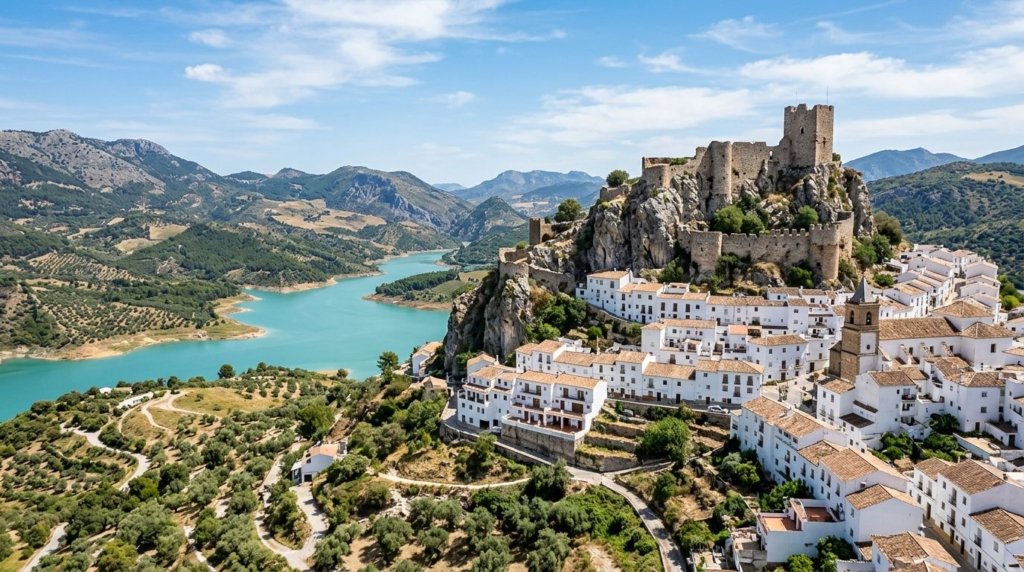
Andalucía’s Pueblos Blancos route is not obscure — Ronda alone draws heavy international traffic. Zahara de la Sierra, one stop along that same white-village route, gets a fraction of that attention despite a comparably dramatic setting: a Moorish castle keep on a rocky outcrop above a turquoise reservoir, with the Sierra de Grazalema’s peaks behind it.
There’s no hard visitor-count data confirming Zahara sees fewer travelers than Ronda, but the circumstantial evidence is consistent — a single dedicated Tripadvisor attraction page, no rail link, and repeat mentions from visitors describing it as overlooked relative to its beauty. Treat that as a reasonable inference, not a proven statistic.
One honest caveat: the reservoir view is not guaranteed year-round. Cádiz went through a serious drought in 2024 that dropped the reservoir below 10% capacity at points, and levels do fluctuate with rainfall. Check current levels if the postcard shot is the main draw for you.
- Nearest city: Ronda, about 50 km away, or Sevilla at roughly 100 km.
- Getting there: A single weekday bus connects Zahara and Ronda (departing Zahara early morning, returning early afternoon); no direct bus from Sevilla was found.
- Car necessary? Essentially yes — the one-bus-a-day schedule makes a car-free day trip impractical.
- Time to allow: Half a day for the castle and old town; a full day if you’re adding the Garganta Verde gorge trail, which requires an advance permit through the Junta de Andalucía’s regulated-trail booking system.
- Seasonal notes: Summers are hot even by Andalucían standards; spring and autumn are more comfortable, and reservoir levels are typically higher after winter rains.
- Where to stay: A small number of hotels and casas rurales — book ahead for weekends, since capacity is limited.
- Budget: No official entry fee could be confirmed for the castle itself at time of research — the town’s own heritage page lists opening hours but not a ticket price, so treat any figure you see elsewhere as a TRIPVORRA PLANNING ESTIMATE, not an official quote. Lodging from roughly €50-60/night upward is likewise an estimate drawn from booking aggregators.
Who Should Skip It?
If a guaranteed reservoir view is the whole reason you’re going, check water levels first — they’re genuinely variable. And if you don’t have a car, the transport schedule alone may rule this one out; it’s not a place you can easily wing without your own wheels.
4. Trujillo, Extremadura
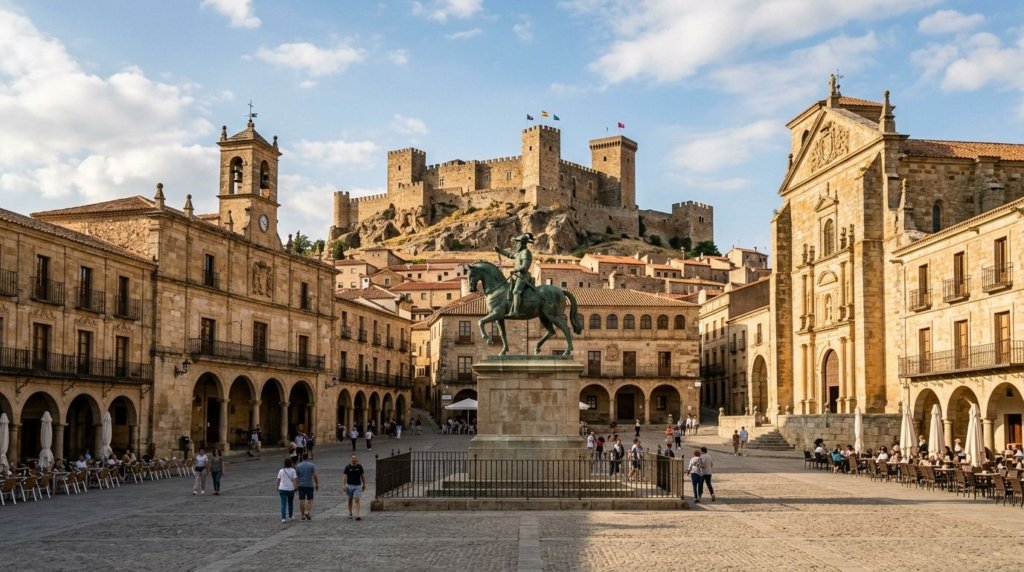
Extremadura doesn’t get the international attention that Andalucía or Castilla do, and Trujillo is the clearest example of what that leaves overlooked. Its Plaza Mayor — anchored by an equestrian statue of Francisco Pizarro, who was born here — is as handsome as any main square in central Spain, and the crowds are a fraction of what you’d find in Toledo or Segovia.
Trujillo’s history is genuinely distinctive rather than generically “medieval Spain.” This was the birthplace of several conquistadors, and the Renaissance palaces ringing the plaza were built on fortunes made in the Americas — the Palace of the Marquises of the Conquista is the most striking of them. Above the town, an Islamic-era castle looks out over the plains, and storks nest on the old rooftops much as they do across the rest of Extremadura.
Unlike the other three towns on this list, Trujillo is reachable without a car: Avanza runs direct coaches from Madrid in roughly three hours, and ALSA connects it to nearby Cáceres in under an hour. A car adds flexibility for exploring the wider region — Monfragüe National Park is close by — but it isn’t required just to visit the town itself.
- Nearest city: Cáceres, about 45 minutes away by bus.
- Getting there: Direct Avanza coach from Madrid (roughly 3 hours) or ALSA bus from Cáceres; there’s no passenger rail station in Trujillo.
- Car necessary? No — bus access is genuinely workable — though a car helps for side trips to Monfragüe or Guadalupe.
- Time to allow: A full day covers the plaza, castle, and old town; an overnight at the Parador (a former convent) lets you catch the Plaza Mayor at dusk without day-trip crowds.
- Seasonal notes: Extremadura’s summers run hot and dry; spring and autumn are markedly more comfortable for walking the hilltop streets.
- Where to stay: The Parador de Trujillo is the standout option, alongside smaller hotels around the old town.
- Budget: OFFICIAL PRICE — castle entry is €2, per a secondary source citing the castle’s own posted price (Trujillo’s official tourism page could not be independently accessed at time of research, so this figure should be spot-checked before publishing anywhere it matters). Parador rates from roughly €70/night are a TRIPVORRA PLANNING ESTIMATE from booking aggregators, not an official quoted rate.
Is It Worth the Trip?
Yes, particularly if you’re already routing between Madrid and Extremadura’s other highlights, like Cáceres or the monastery at Guadalupe. The honest downside is that Trujillo alone may not justify a special trip from Madrid if it’s the only stop — it earns its place best as part of a wider Extremadura itinerary.
One Town We Left Off: Besalú
Besalú, in Girona province, was on our initial research list, and it’s a genuinely beautiful medieval town with a striking fortified bridge and one of Europe’s best-preserved medieval mikvehs. But it didn’t survive the “underrated” test. It’s a fixture of nearly every “day trips from Barcelona” and “day trips from Girona” list we found, it’s actively marketed by Catalonia’s own tourism board, and it has extra profile from Game of Thrones-adjacent filming-location tourism. That’s not a knock on the town — it’s simply not overlooked, and this list is about places that are.
Planning Around These Four
These four towns don’t share a single road trip route, and that’s fine — Albarracín and Morella both sit in inland Aragón and the Valencian Community respectively, close enough that an ambitious traveler could combine them, while Zahara de la Sierra and Trujillo belong to separate trips through Andalucía and Extremadura. Treat this list as four independent detours rather than one itinerary.
If you’re building out a wider tour of Europe’s overlooked towns, our guide to underrated towns in Italy and our guide to underrated towns in France cover similar ground in neighboring countries, with no overlap in the towns featured.
Reasearch & Sources
Albarracín:
Albarracín town hall — location and transport
spain.info — Albarracín
Turismo de Aragón — Albarracín
Fundación Santa María de Albarracín — ticket prices
Morella:
Morella official tourism site — how to arrive
Morella official tourism site — transport schedules
Morella official tourism site — museum and monument tariffs
spain.info — Morella
Zahara de la Sierra:
andalucia.org — Zahara de la Sierra
Zahara de la Sierra municipal site — heritage sites
Cádiz provincial tourism — Zahara de la Sierra
Reservoir level data — Zahara-El Gastor
Trujillo:
spain.info — Trujillo
INE — FRONTUR international tourism statistics, December 2025
Besalú (context, not featured):
spain.info — Besalú
Catalonia Tourism Board — Besalú