
The title is a promise, and it needs one correction up front. Alcobaça is not a secret: its monastery is a UNESCO World Heritage Site, and it appears on standard Lisbon day-tour itineraries alongside Óbidos, Nazaré, Batalha and Fátima. What is true is narrower and more useful. Many visitors give the monastery a short stop and leave, and the town around it, with its two rivers, its convent-sweet shops and its Monday market, gets far less attention than the building that made it famous. This profile is for travellers deciding whether Alcobaça deserves more than a quick look.
Last verified: October 2026. How this guide was built: it draws on UNESCO, Wikipedia, the monastery’s own site for ticketing, a regional tourism page for hours, and two independent travel blogs for local detail. Where sources disagree or only one source exists, the text says so. Opening hours and fees change, so confirm them before you go.
Alcobaça at a glance
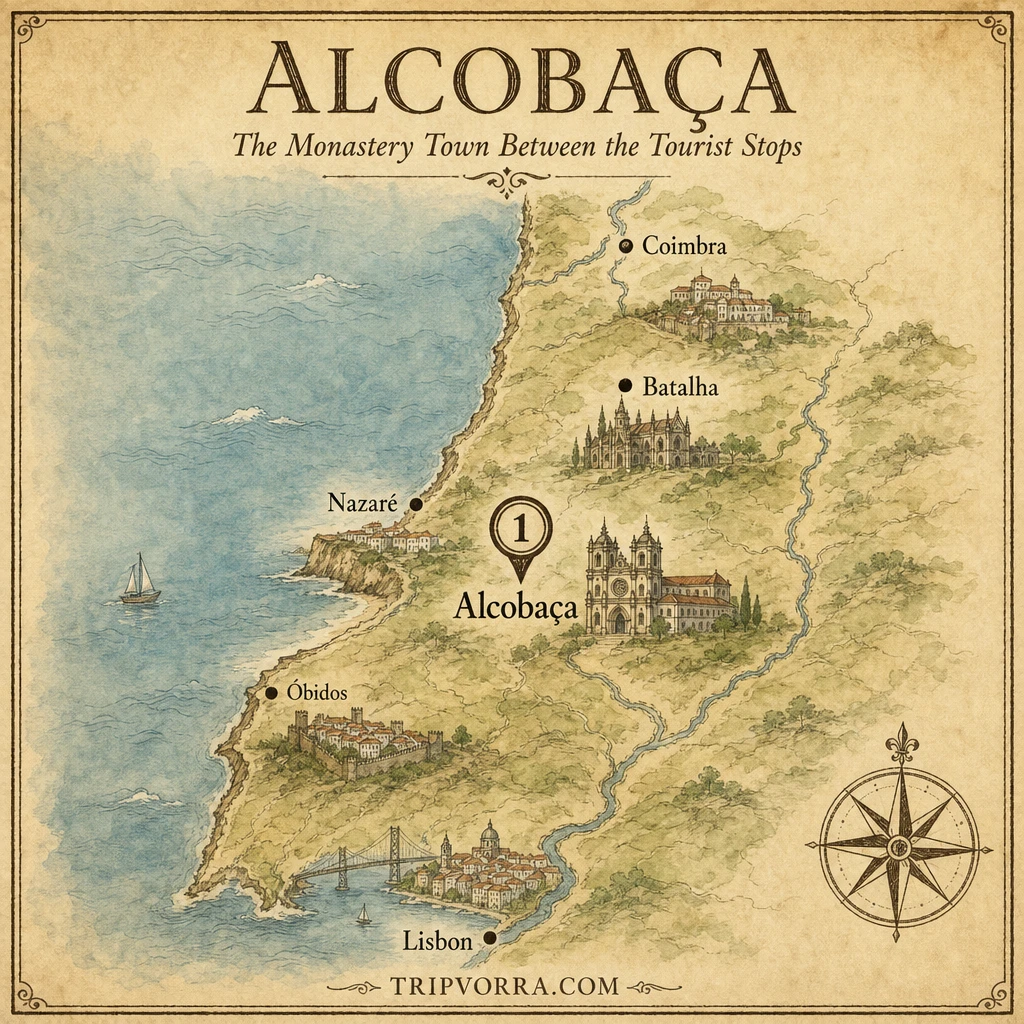
- Where: the Oeste region of Portugal, in Leiria district, roughly 120 km north of Lisbon and 110 km south of Coimbra.
- The draw: the Monastery of Santa Maria de Alcobaça, a Cistercian foundation listed by UNESCO in 1989, and the tombs of King Pedro I and Inês de Castro.
- The town: about 15,800 people in the city proper according to Wikipedia (the municipality is several times larger), built where the rivers Alcoa and Baça meet.
- Getting there: there is no direct train; most visitors arrive by bus or car.
- Best for: medieval architecture, convent sweets and an unhurried half day. Trade-off: it is a working town, not a polished heritage village.
How “overlooked” is it, really?
Not very, by the numbers. A Portuguese property-news roundup of national monument visits reported that the monastery received almost 200,000 visitors in 2022, a figure it gave only approximately. Tour operators sell combined days from Lisbon that bundle Óbidos, Nazaré, Alcobaça, Batalha and Fátima, which is why the monastery sees so many coaches.
The “drive past” idea is better understood as a pattern of time. One regional blogger who lives nearby says that on an organised tour you can end up rushing through the monastery and leaving, and that many road-trippers choose Nazaré and Óbidos instead. That is one writer’s view, not a measured statistic, but it matches how the town is packaged: as one stop among several rather than a place to stay.
A monastery founded on a conquest
The story starts with Afonso Henriques, Portugal’s first king, who took Santarém from the Moors in 1147. Wikipedia and regional sources say that in 1153 he gave the land to the Cistercians and to Bernard of Clairvaux, and that the monastery’s design followed the abbey at Clairvaux in France. Building began in 1178, and the monks moved into the new monastery in 1223. Sources differ on the church’s consecration, giving 1252 in one account and 1262 in another, so the safest statement is that it was completed in the mid-13th century.
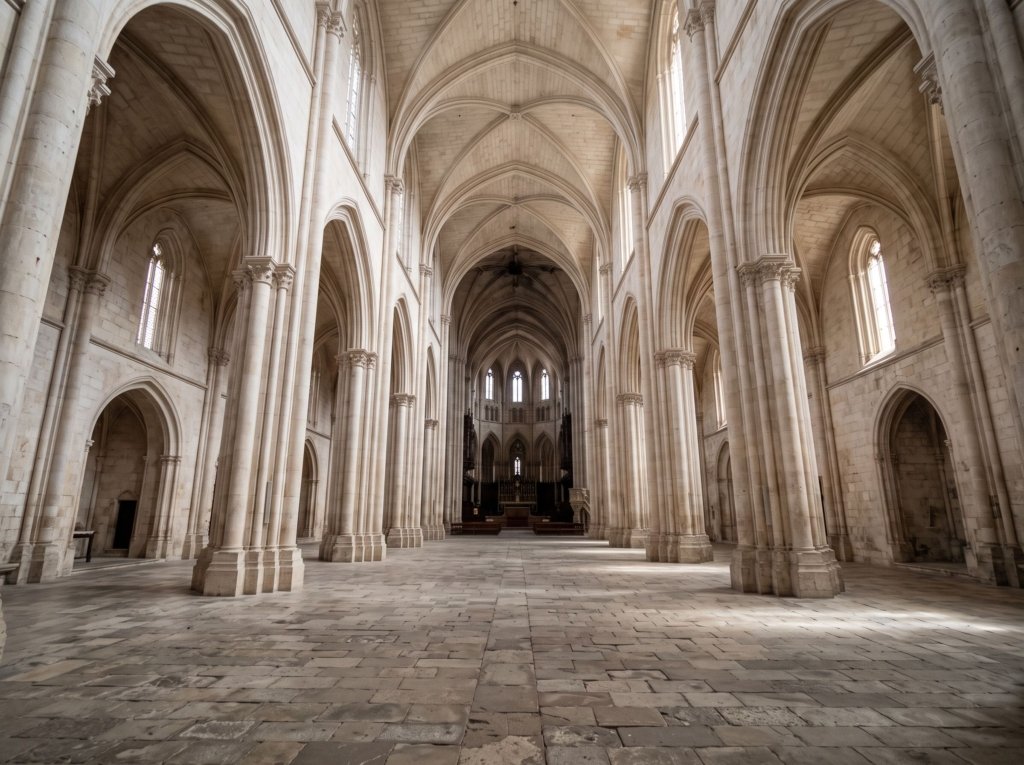
UNESCO lists the site for two reasons: it describes the monastery as a masterpiece of Cistercian Gothic art, and it points to an unusual system of hydraulic and functional buildings. The church is often described as the largest in Portugal, at about 106 metres long, though that claim is repeated without a firm citation in the sources checked here. Wikipedia also says the monastery had nearly 1,000 monks by around 1300 and was among the richest in the country. The last monks left in 1834, when Portugal dissolved its religious orders.
What to see inside
The tombs. Pedro I and Inês de Castro lie in the transept, with their tombs placed facing each other. One regional tourism page says they were set so the couple could meet again at the Resurrection, which is best read as tradition rather than documented intent. Inês was killed in 1355 on the orders of Pedro’s father, Afonso IV, which is historical. The popular story that Pedro later had her crowned and made courtiers kiss her hand is a legend. Wikipedia says the tombs are among the finest Gothic sculpture in Portugal and that the sculptor is unknown.
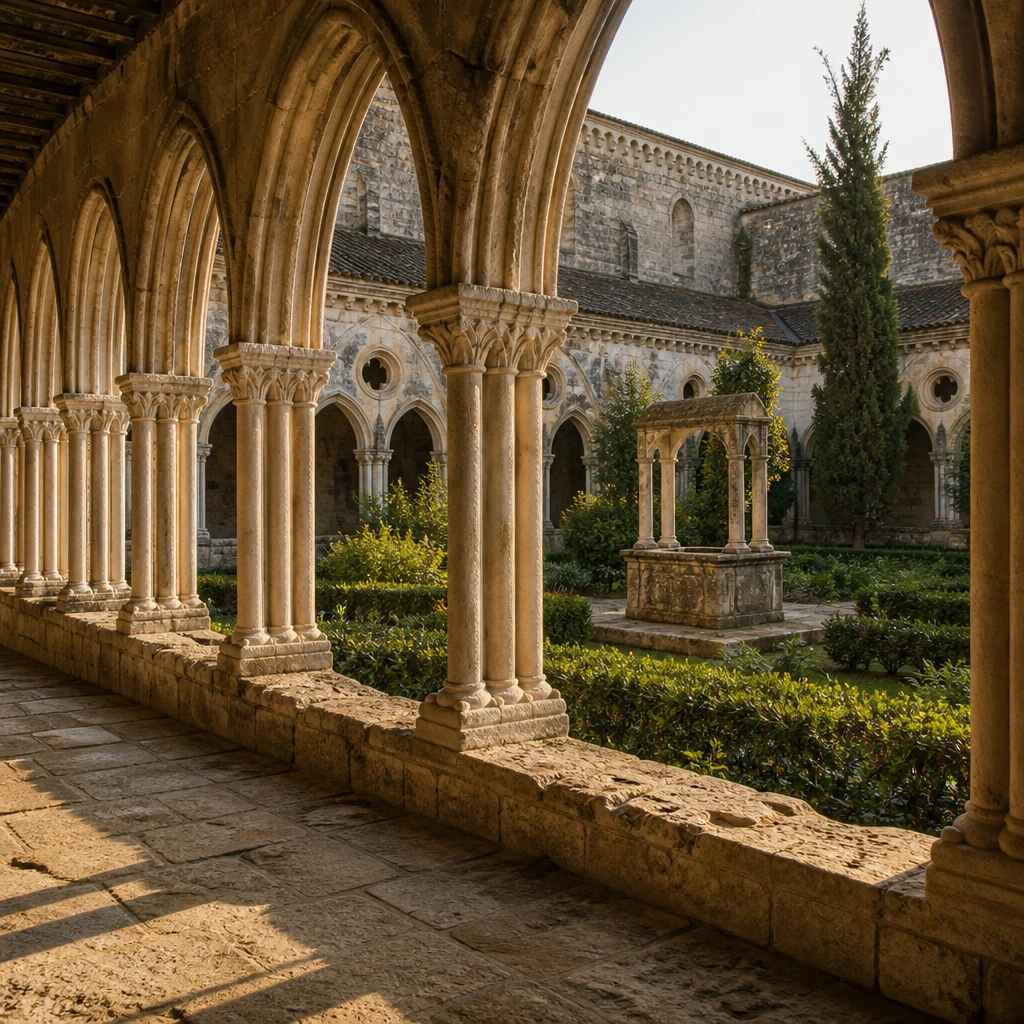
The cloister and kitchen. The Gothic cloister of King Dinis, often called the Cloister of Silence, dates from the late 13th century, with a second Manueline floor added in the early 16th. The kitchen was rebuilt in the mid-18th century and tiled in azulejo. It has a huge central chimney carried on eight iron columns, and a channel once brought water and live fish from the River Alcoa.
What is missing. French troops looted the abbey’s library in 1810, and more was stolen in an anti-clerical riot in 1834. Many surviving manuscripts are now in the National Library in Lisbon, so the monastery is a building to experience rather than a library to browse. The 1755 earthquake did not cause significant damage to the main complex, according to Wikipedia.
The town beyond the monastery
Alcobaça takes its name from the Alcoa and Baça rivers, and a small riverside park is where they meet. Local writers also point to the free castle ruins above town for the best view, and to a wine museum that runs guided visits on set days, though those details come from one blog and may have changed.
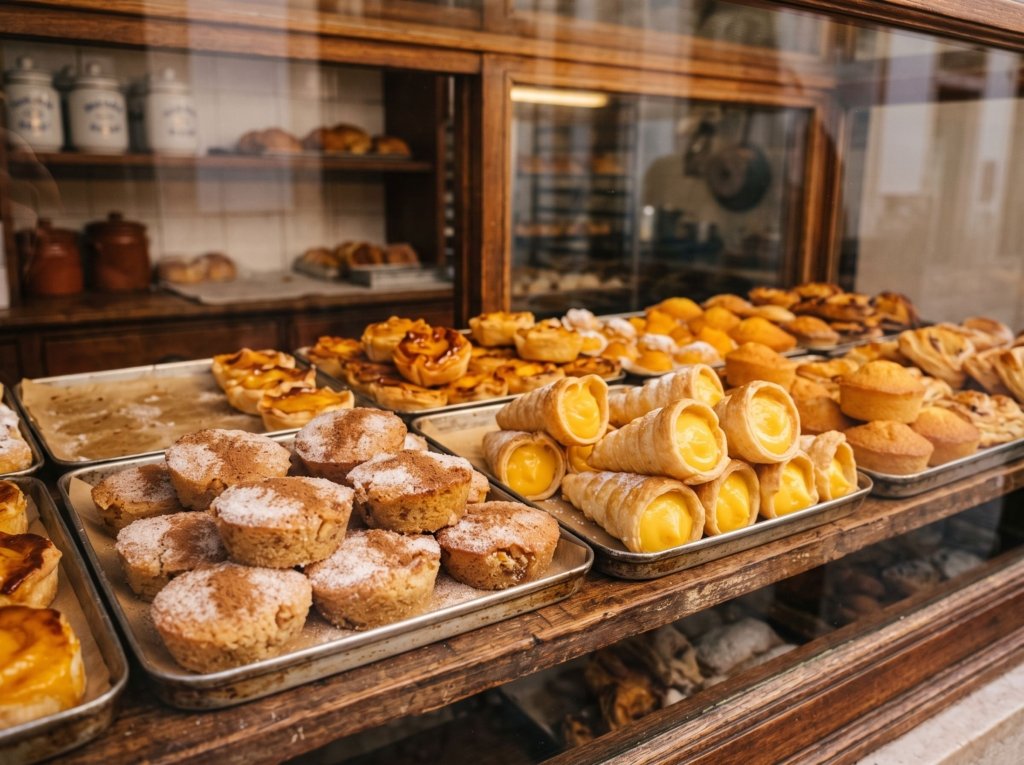
Sweets are the clearest reason to stay longer. The monks’ tradition of egg-yolk and almond confectionery survives in the town’s pastry shops, and Wikipedia notes an annual International Display of Sweets and Conventual Liqueurs each November. One long-established shop opposite the monastery, Pastelaria Alcôa, says it has made conventual pastries since 1957 and is known for the cornucópia, a fried cone filled with sweet egg cream. The Alcobaça apple is also described as having protected geographical status. The town runs a weekly market on Mondays, a classical music festival called Cistermúsica in June and July, and a puppetry festival in mid-October.
Walking beyond the monastery
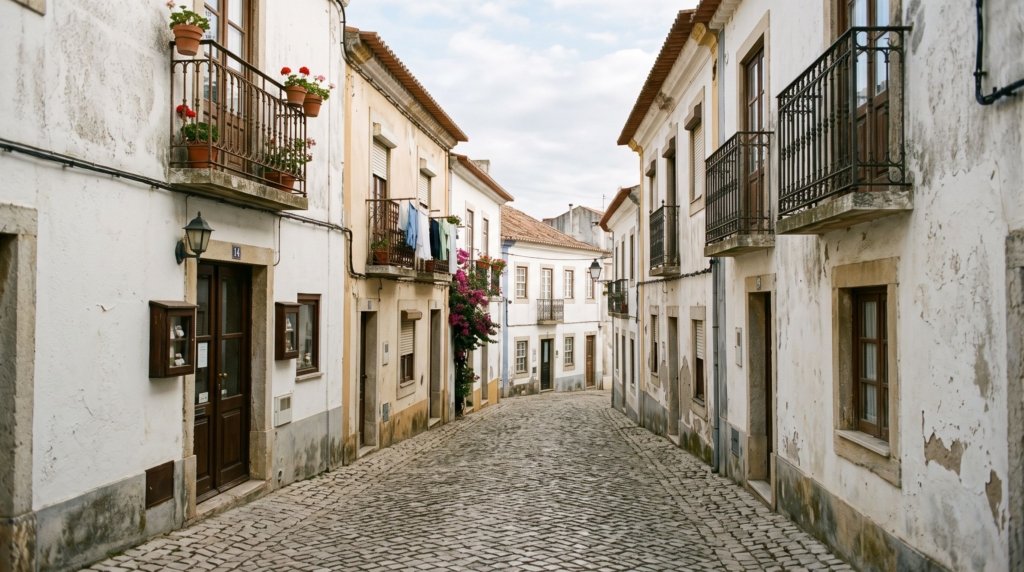
Most of what makes Alcobaça worth a longer stop sits within a short walk of the monastery, and the two have a long shared history: the monks opened a public school in 1269 and ran an agricultural school on the monastery’s estates. The centre is compact, with the bus station about a 10-minute walk from the monastery according to one guide, so it is easy to loop through the pastry shops, climb to the free castle ruins that a local writer calls the best viewpoint in town, and finish at the riverside park where the two rivers meet. Alcobaça is a working town of about 15,800 people, so the reward for leaving the monastery behind is everyday streets and shop windows rather than a preserved heritage set piece.
Practical details
Treat every figure here as a starting point. A regional tourism page lists the monastery as open from 09:00 to 18:00 in October to March (last entry 17:30) and 09:00 to 19:00 in April to September (last entry 18:30), closed on 1 January, Easter Sunday, 1 May, 20 August and 25 December. One blog gives the ticket as about €6, with a €15 combined heritage-route ticket covering Alcobaça, Batalha and Tomar; the monastery’s own site links to its ticketing service, which is where to check current prices. Wikipedia also notes that Storm Kristin hit the municipality in January 2026, so look for any notices about lingering closures before planning around a specific date.
- By bus from Lisbon: direct services run from Sete Rios, with sources giving roughly 1 hour 40 minutes to 2 hours. The bus station is about a 10-minute walk from the monastery. One guide says the last return bus is usually around 7 pm, so check the timetable.
- By car: about 125 km from Lisbon via the A8, roughly 1.5 hours according to one source. Free parking is reported near the centre and behind the monastery.
- From Nazaré: about 25 minutes by local bus, with limited evening service.
How long to give it
These are suggestions rather than rules. A half day is enough to see the monastery properly and eat sweets in town, and it is a comfortable day trip from Lisbon if you take an early bus. A night makes sense if you want the monastery without the midday coach traffic and an evening in a town that is not built for tourists. One local writer recommends basing yourself in Nazaré instead and visiting Alcobaça by bus, which suits travellers who want the coast as well.
The honest downsides
- Midday is the busiest time because of organised tours, so the monastery feels calmest early or late.
- There is no train, and the last return bus can be early, which makes spontaneous day trips harder than they look.
- Alcobaça is a working town of some 15,800 people, not a preserved medieval village, so its charm is quieter than the monastery’s reputation suggests.
- Prices, hours and closures come from secondary sources and may be out of date.
Frequently asked questions
Is Alcobaça worth visiting?
Yes, if you like medieval architecture or want a stop that is quieter than Óbidos or Nazaré. It is best treated as a half day with time for the town, not a photo stop.
How long do you need at Alcobaça Monastery?
The sources checked here give no official visit length, so plan for a couple of hours as a practical guess and add time for lunch and sweets in town.
Can you visit Alcobaça from Lisbon without a car?
Yes. Direct buses run from Lisbon’s Sete Rios terminal, and the station is a short walk from the monastery. Check the return times, because the last bus can leave in the early evening.
Is the story of Pedro and Inês true?
Part of it. Inês de Castro’s killing in 1355 is historical, and the tombs are real. The tale of Pedro crowning her after death is a legend.
For more places that reward a slower stop, see our guides to hidden gems in Europe and underrated towns in Spain.