
The Azores reward a rental car more than almost anywhere else in Europe — the islands were built for driving, with volcanic crater lakes and hot springs scattered across winding roads that no bus route was ever designed to serve. But a car-free weekend on São Miguel, the archipelago’s largest and most-visited island, is doable if you plan around what public transport and organized tours can deliver, rather than assuming you’ll improvise your way around the island the way you might in a compact European city.
This guide is built around one tradeoff: without a car, you can comfortably explore Ponta Delgada on foot and take one organized full-day tour to the volcanic interior — not two. Sources including Into the Azores, Azores Lovers, and Mile Hacker confirm the same pattern: interurban buses exist, but they run on commuter and school schedules that rarely line up with visiting Sete Cidades, Furnas, or Lagoa do Fogo on a weekend timetable.
That’s the real starting point for this plan — not a promise that you don’t need a car at all, but a realistic map of what a car-free weekend can and can’t cover.
Last verified: October 2026, against Pure Azores’ GetYourGuide tour listings, Ponta Delgada airport’s transport page, Into the Azores’ 2026 airport-transfer guide, byAcores’ public-transport overview, and reporting from Azores Lovers and Mile Hacker. Taxi and transfer prices are as quoted by those sources, and bus timetables change, so check them locally.
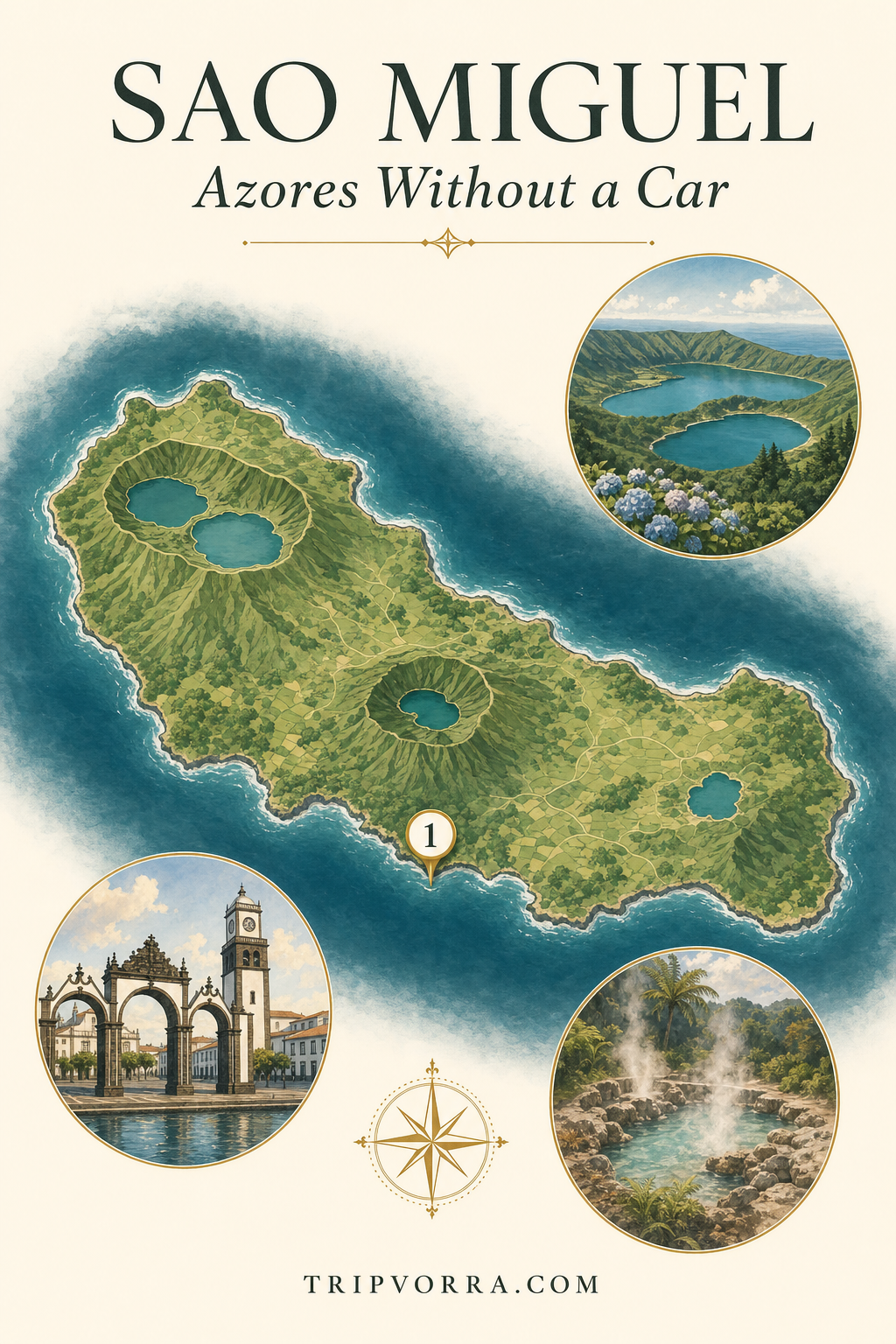
São Miguel Weekend Without a Car: The Facts
| Best base island | São Miguel — largest island, most flights, and the easiest island for a car-free weekend |
|---|---|
| Airport | João Paulo II Airport (PDL), on the edge of Ponta Delgada |
| Airport to city center | Taxi from the arrivals area (about €10, 15–20 min, per Into the Azores in 2026) or a pre-booked van transfer (about €22 for up to four people); the former ANC Aerobus shuttle has been reported discontinued |
| City walkability | Very walkable — cobblestone (calçada) streets, waterfront promenade, historic core all on foot |
| Interurban public buses | Exist (Auto Viação Micaelense, Varela and Caetano Raposo e Pereiras have run the routes) but run commuter/school schedules, not tourist-friendly timetables |
| Organized day tour cost | From about $89–95 per person (as listed on GetYourGuide in October 2026) for an 8-hour guided tour with lunch |
| Realistic day trips per weekend | One — either the west circuit (Sete Cidades, Lagoa do Fogo) or the east circuit (Furnas), not both |
Why São Miguel Is the Right Island for This
The Azores are nine separate islands, and several of the smaller ones — Pico and Flores among them — have limited public transport, which makes independent car-free travel there considerably harder. São Miguel is different: as the archipelago’s largest and most-visited island, with the busiest airport in the Azores, it has by far the most developed car-free infrastructure of any island here — taxis, rideshare, and organized tour pickups all concentrated around Ponta Delgada.
Picking one of the smaller islands for a car-free weekend would mean betting on infrastructure that, per Into the Azores, simply doesn’t exist at the same scale.
Getting From the Airport Without a Car
The airport sits close enough to Ponta Delgada that the transfer is short no matter how you do it. Taxis wait at arrivals, and the airport’s own transportation page lists taxi companies as its only public transport option. Into the Azores’ 2026 airport guide puts a taxi to the center at around €10 and 15–20 minutes, depending on where you’re staying, and it’s the simplest option if you’re arriving with luggage.
Before you go
The ANC Aerobus shuttle that used to run this route has been reported discontinued, so don’t plan around it unless your accommodation confirms it is running again.
If you’d rather book ahead, the guide quotes about €22 for a pre-arranged van transfer for up to four passengers, which works out cheaper per person than a taxi if you’re traveling with company.
The Bolt rideshare app has operated on São Miguel since 2025, but its driver fleet is small, so trips can involve a real wait and are best treated as a backup for short in-town rides rather than a primary way to get around.
What You Can Actually Walk To in Ponta Delgada
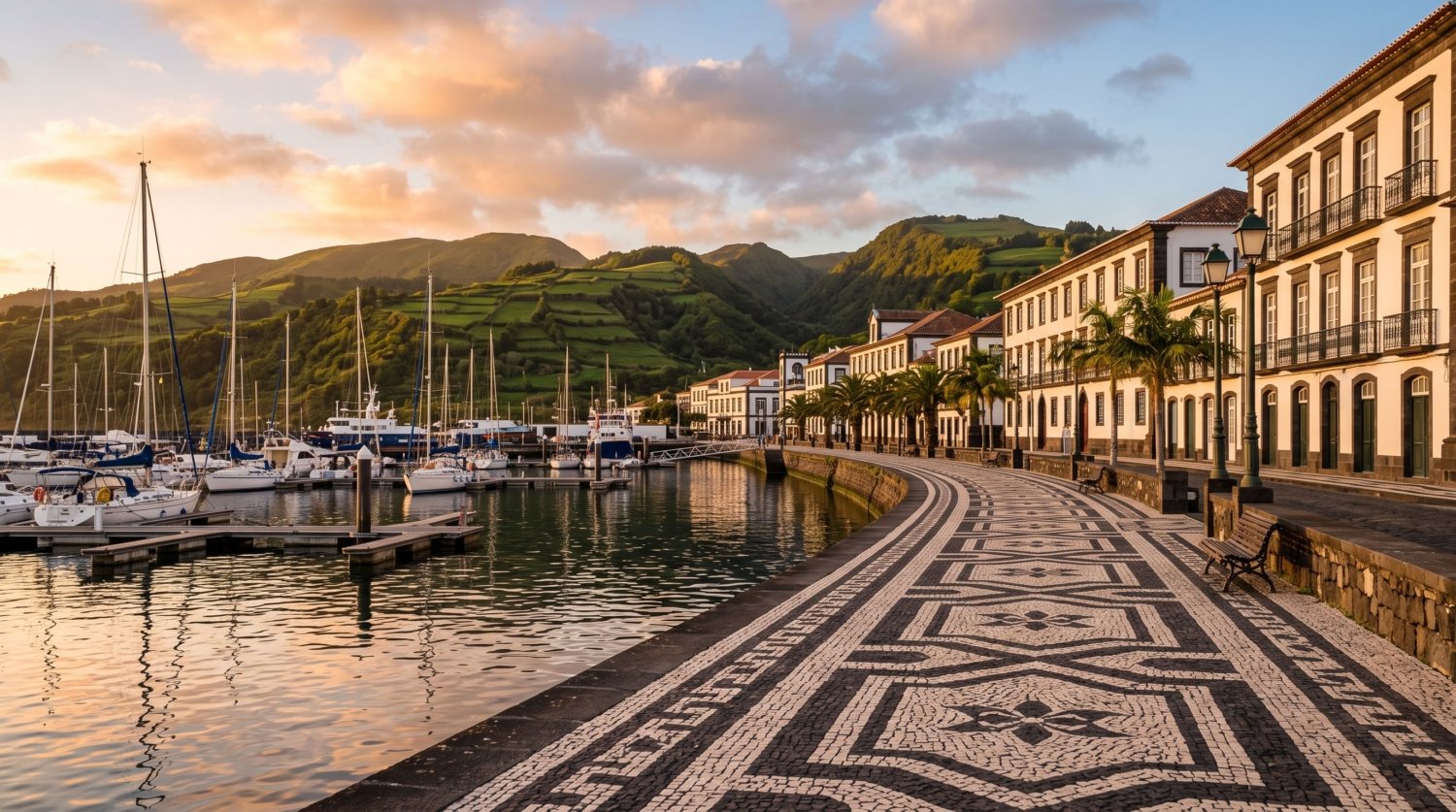
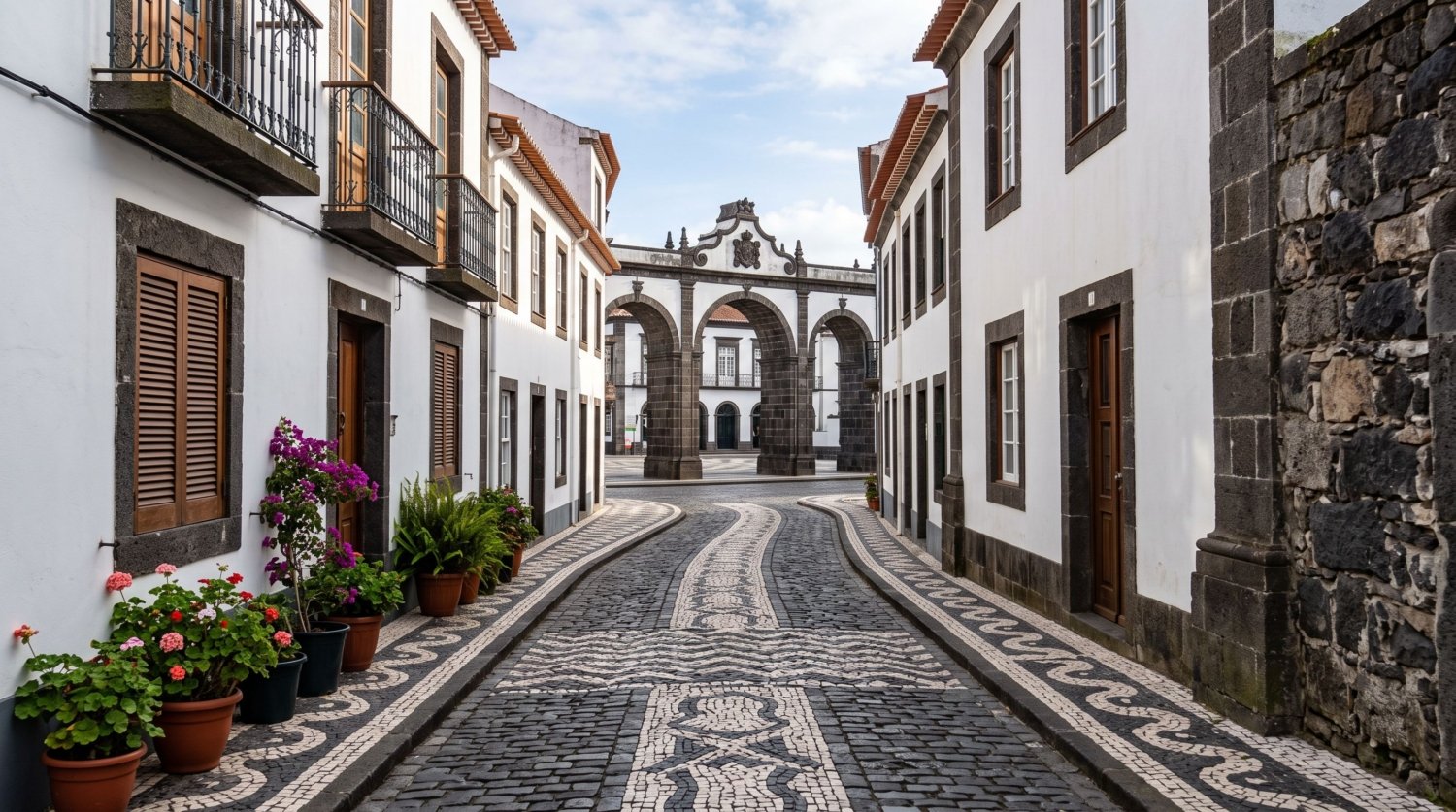
This is the part of the weekend where not having a car isn’t a compromise at all — it’s arguably the better way to experience the city. Ponta Delgada’s historic core is built around black-and-white calçada cobblestone streets that are pleasant to wander, and most of the sights that matter — the Portas da Cidade city gates, the waterfront marina and promenade, the covered market, the old fort — sit within a compact, flat, walkable radius of each other. Mile Hacker notes that the city center rewards slow walking over any kind of scheduled transport, and a full day spent just exploring on foot, with stops for coffee and seafood, is a legitimate way to use one of your weekend’s two days if you’re not adding a day tour until day two.
Why Public Buses Aren’t a Realistic Way to See the Island
São Miguel does have interurban bus companies: byAcores lists Auto Viação Micaelense, Varela and Caetano Raposo e Pereiras, and the regional government announced in 2024 that it was preparing a new tender for the island’s bus service, so operators and timetables may have changed.
The problem is what these routes are for: they exist primarily to move commuters and schoolchildren between towns, which means sparse, seasonal timetables built around weekday work and school hours rather than weekend sightseeing.
Getting to Sete Cidades, Furnas, or Lagoa do Fogo on a fixed public bus schedule is possible in theory but impractical in practice — you’d likely spend more of your one weekend waiting at stops or working around infrequent return times than seeing the crater lakes and hot springs you came for.
Important limitation
Many travelers assume a car-free Azores weekend works the way it might where tourist bus networks are dense. It does not, and planning around the buses sets up a frustrating day.
The Realistic Fix: One Organized Day Tour, Not Two
The workaround that holds up is booking a single full-day guided tour rather than trying to stitch together public transport, and choosing carefully between São Miguel’s two big volcanic circuits. For a relaxed two-night weekend, one circuit is realistically all there’s room for.
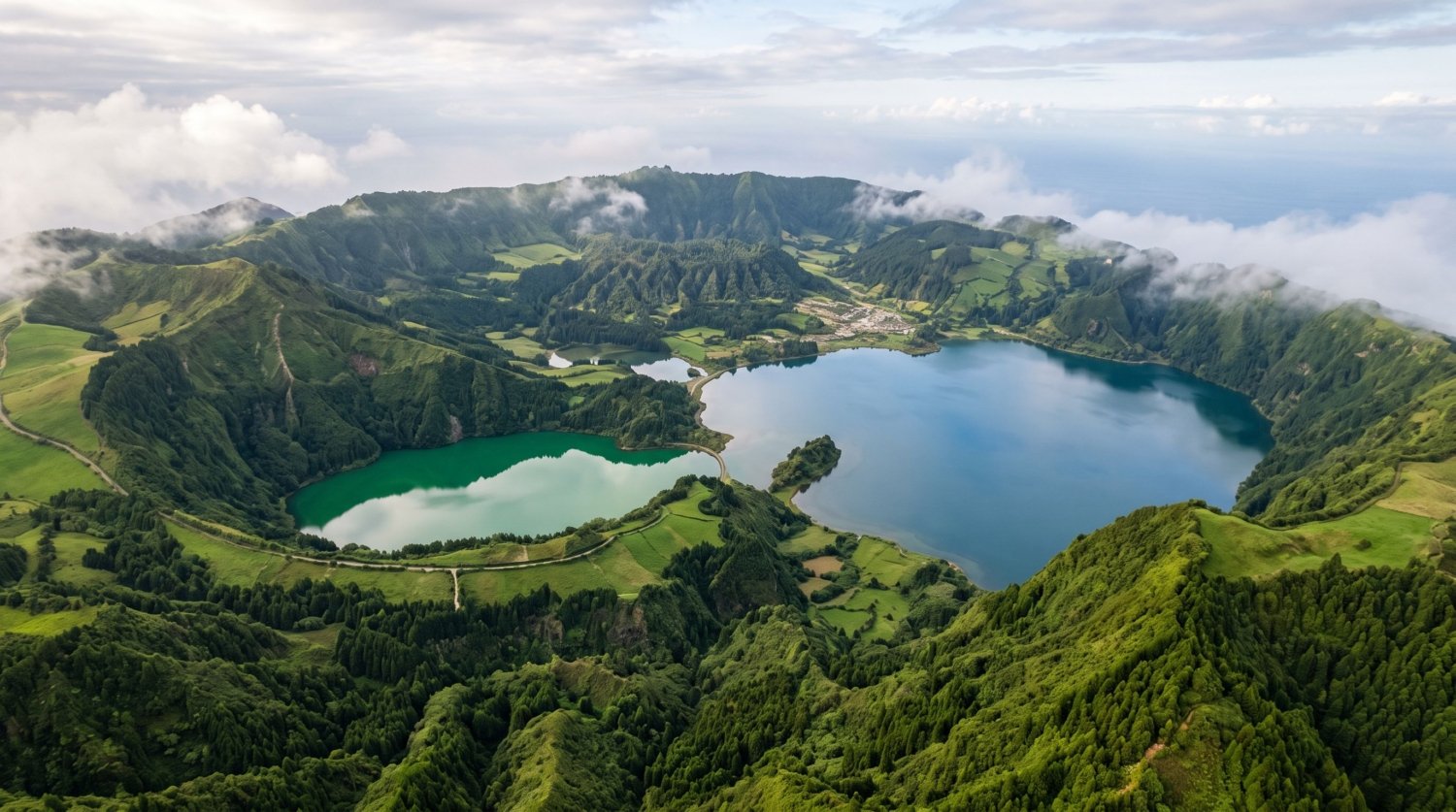
- West circuit: Pure Azores’ west tour runs about eight hours, with viewpoints over Sete Cidades’ twin crater lakes, lunch in Sete Cidades, a stop at Mosteiros on the coast, and Lagoa do Fogo on the way back.
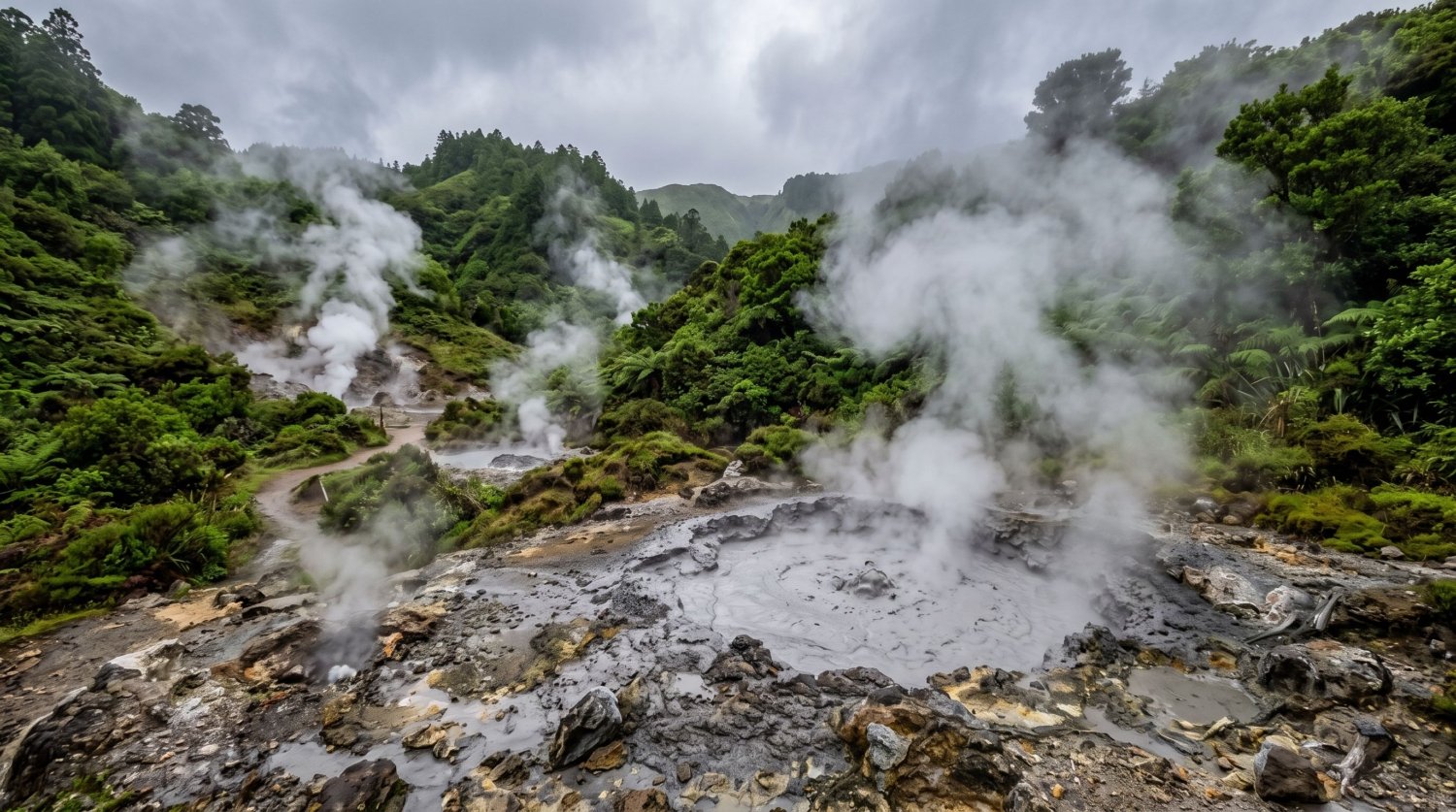
- East circuit: Pure Azores’ east tour, also about eight hours, centers on Furnas, with its steaming fumaroles and hot springs, a Furnas lunch, an optional swim at Terra Nostra Park (extra fee), and viewpoints toward the Nordeste coast.
On Pure Azores’ GetYourGuide page, both were listed from about $89–95 per person in October 2026, with pickup in Ponta Delgada.
Good to know
If your trip stretches to three full days rather than two nights, fitting in both circuits becomes possible. On a standard two-night weekend, trying to combine them, or squeeze one in around your Ponta Delgada walking day, is where car-free plans usually fall apart. Picking one and doing it properly is what makes a two-night weekend realistic.
A Realistic Car-Free Weekend Itinerary
Day 1
Arrival and Ponta Delgada
Taxi or pre-booked van from the airport into the city, check in, then spend the afternoon and evening walking the historic center, the marina promenade, and the covered market on foot.
Day 2
One full-day organized tour
Book either the west circuit (Sete Cidades, Lagoa do Fogo) or the east circuit (Furnas) with a pickup directly from your Ponta Delgada accommodation — don’t try to do both.
Day 3
Slow morning and departure
Use any remaining time for a final walk through whichever corners of the city you missed, then take a taxi or rideshare back to the airport, allowing extra buffer time if you’re relying on Bolt.
Estimated per-person cost for the car-free logistics
| Round-trip airport transfers | ~€20 by taxi, or ~€11 each in a shared pre-booked van if four people share |
| One full-day organized tour with lunch | ~€75–85, based on the $89–95 listings |
| A few short taxi or Bolt rides in town | ~€15–20 |
| Total | roughly €100–125 per person |
TRIPVORRA ESTIMATE, excludes accommodation and general meals.
Practical tip
Weather on São Miguel changes quickly, and cloud cover can roll in over the crater lakes with little warning. If your tour operator offers any flexibility on which day you go, keep an eye on the forecast and book the clearer-looking day — the crater lake viewpoints are far less dramatic in fog.
Frequently Asked Questions
Can you see both Sete Cidades and Furnas without a car in one weekend?
Not on a standard two-night weekend — each is its own full-day guided circuit on the opposite side of the island, and a two-night trip only has room for one alongside arrival, departure, and a day in Ponta Delgada. If you can stretch the trip to three full days, fitting in both becomes realistic.
Is there a shuttle bus from the airport to Ponta Delgada?
Not as far as current sources show. Into the Azores reported in January 2026 that the ANC Aerobus shuttle had been discontinued, and the airport’s own transportation-information page lists only taxis. A taxi (about €10), a pre-booked van transfer (about €22 for up to four people) or the Bolt rideshare app are the practical options.
Are São Miguel’s public buses useful for tourists at all?
They’re built for commuters and schoolchildren, with sparse and seasonal timetables. They’re not a practical way to reach attractions like Sete Cidades or Furnas on a weekend visit.
Do you need a car anywhere else in the Azores besides São Miguel?
Yes, more so. São Miguel has the visitor volume to support a car-free plan built around walking and organized tours; the smaller Azorean islands generally don’t have the same infrastructure.
A car-free weekend in the Azores works because it’s built around a real tradeoff, not a shortcut — walk what’s walkable, book one guided day into the volcanic interior, and accept that you’re choosing depth over covering the whole island. If you’re planning more trips built around practical logistics, our guides to the small Welsh village behind Wales’ newest UNESCO site and the science behind Havasu Falls’ impossible blue-green water cover two more places worth planning for properly before you go.