
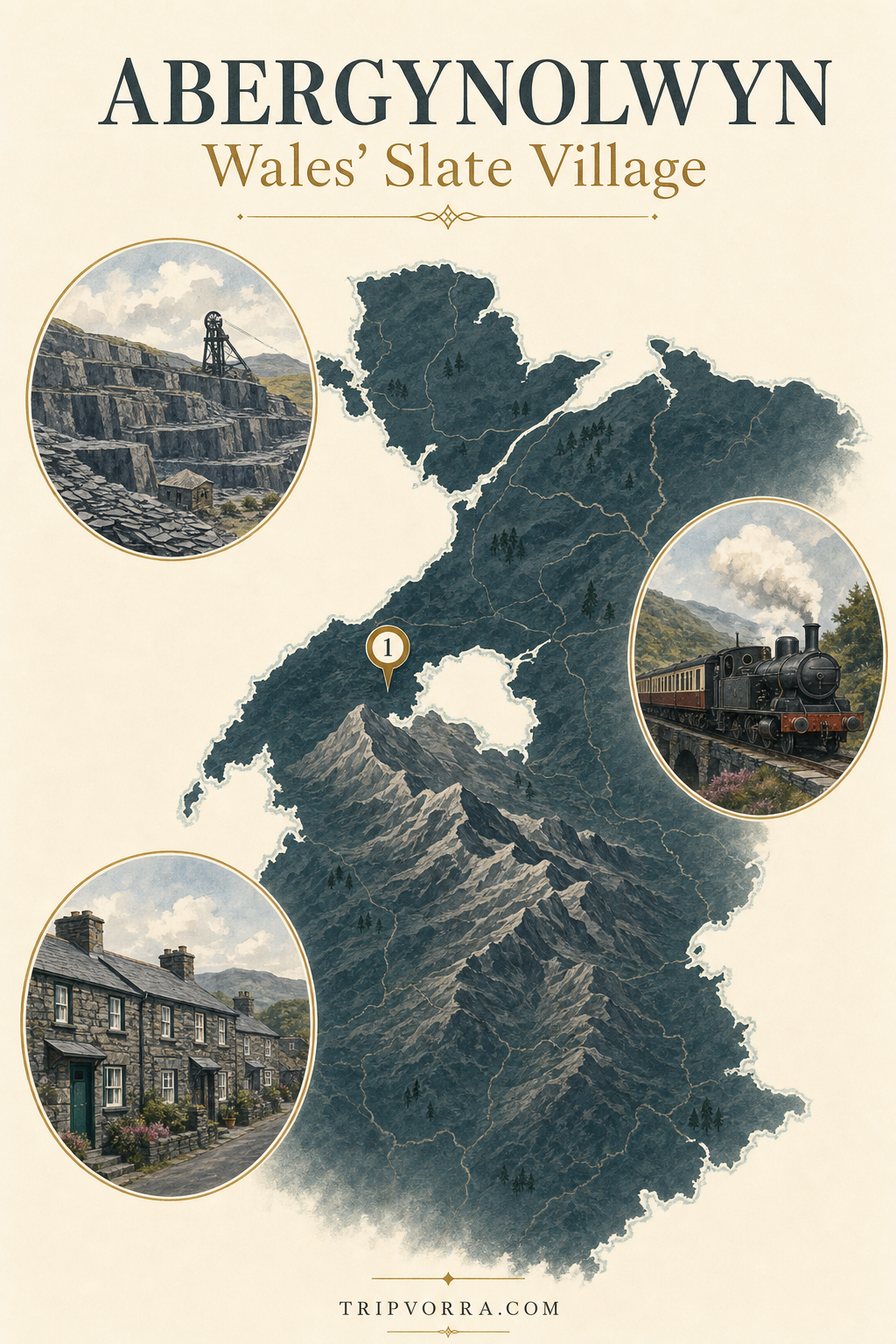
Abergynolwyn is not a place most people have heard of, and it isn’t trying to be. It’s a village of a few hundred people tucked into a green valley in Gwynedd, and it has no visitor center, no gift shop, and no queue. What it does have is a direct, documented role in one of the newest additions to the UNESCO World Heritage List: the Slate Landscape of Northwest Wales, inscribed in July 2021. While the headline attention has gone to Blaenau Ffestiniog and the National Slate Museum at Llanberis, this particular village was built, quite literally, for a single slate quarry — and the story of what happened to that quarry, and to the railway built to serve it, is one of the more remarkable industrial-heritage stories in Britain.
Last verified: September 17, 2026. This guide was built from UNESCO’s own World Heritage listing documentation, the Welsh Government’s official inscription announcement, Wikipedia’s sourced histories of Abergynolwyn, Bryn Eglwys quarry, and the Talyllyn Railway, and the Talyllyn Railway’s own official history — not a personal visit — and every factual claim below is linked to its source in the sentence that makes it.
| Location | Gwynedd, near Tywyn, on the southern edge of Eryri (Snowdonia) |
| Population | 339 residents (2011 census) |
| Founded | 1860s, purpose-built to house slate quarry workers |
| Quarry | Bryn Eglwys, commercial operation 1847–1946 |
| UNESCO status | One of six component areas of the Slate Landscape of Northwest Wales, inscribed 28 July 2021 |
| Railway | Talyllyn Railway, opened 1866, saved by volunteers in 1951 |
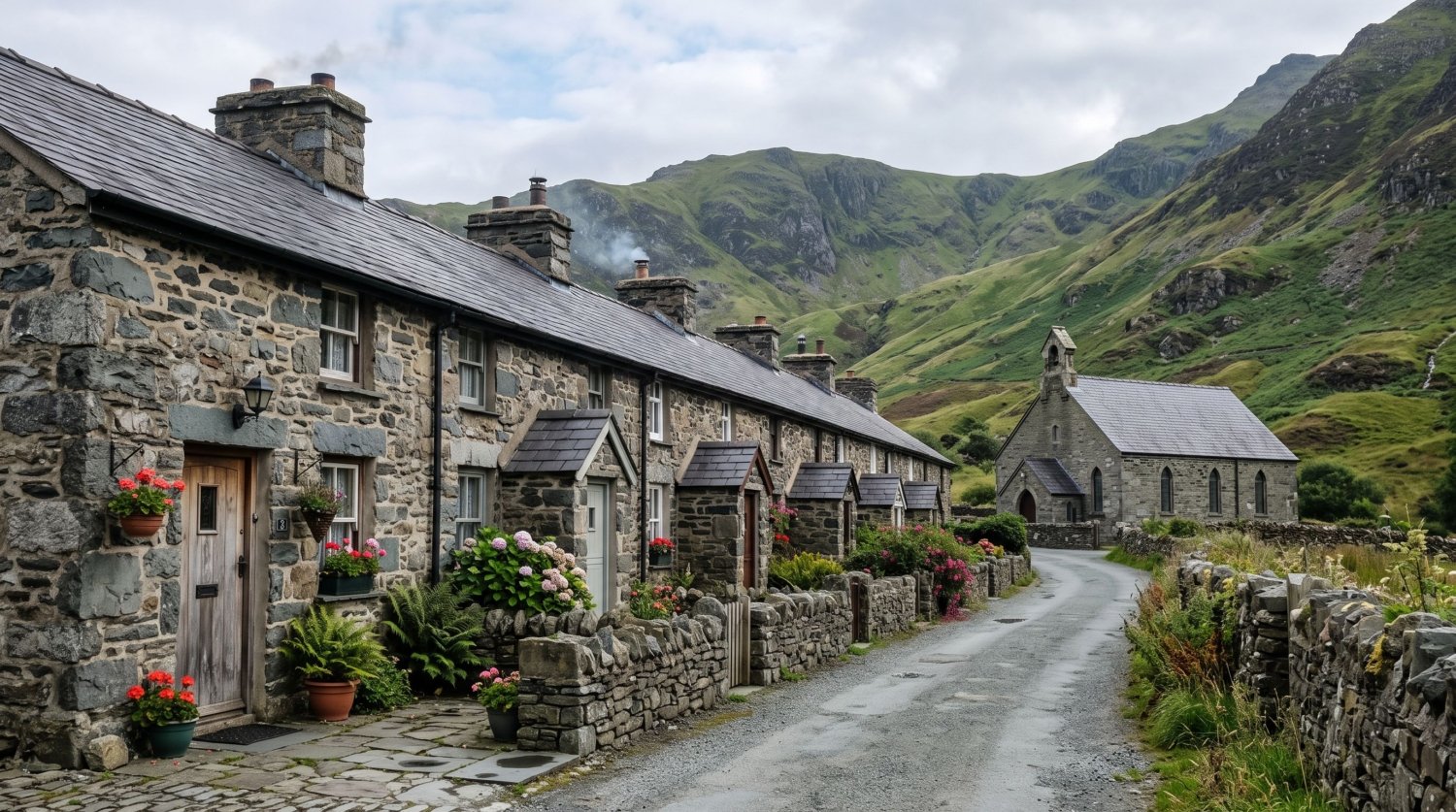
A Village Built to Order
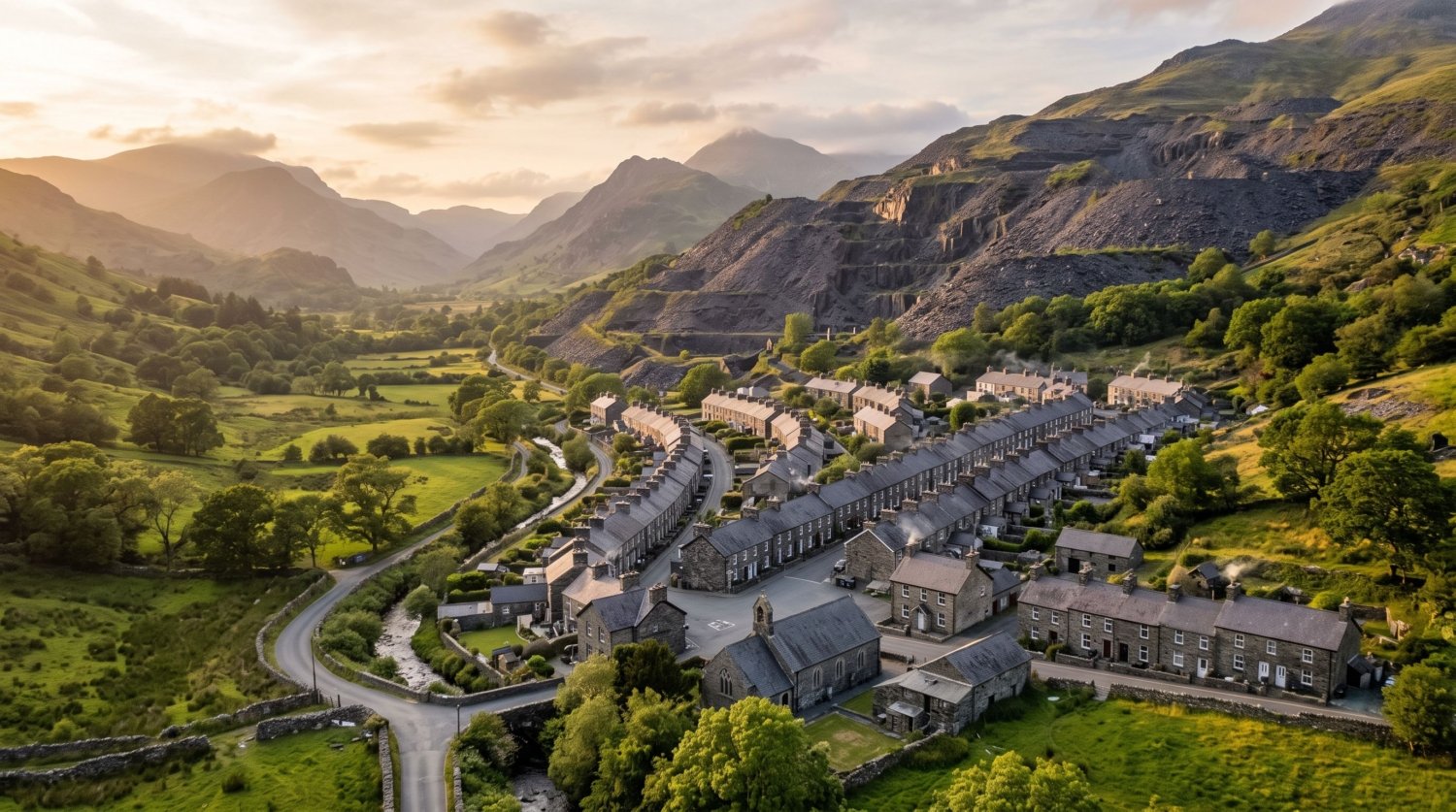
Abergynolwyn didn’t grow organically the way most villages do — it was designed. In the 1860s, Manchester architect James Stevens laid out streets of industrial-type terraced housing for the workers of the nearby Bryn Eglwys slate quarry, in a style that would have looked familiar to anyone from the mill towns of northwest England, since the quarry’s owners were themselves Lancashire cotton-mill money. Chapels, a church, a school, and shops were built alongside the housing, and materials reached the site via an incline connected directly to the quarry’s own railway network. It’s a company village in the fullest sense: everything in it, from the terraced rows to the chapel roof, exists because a slate quarry needed somewhere for its workforce to live.
The Quarry That Employed the Whole Valley
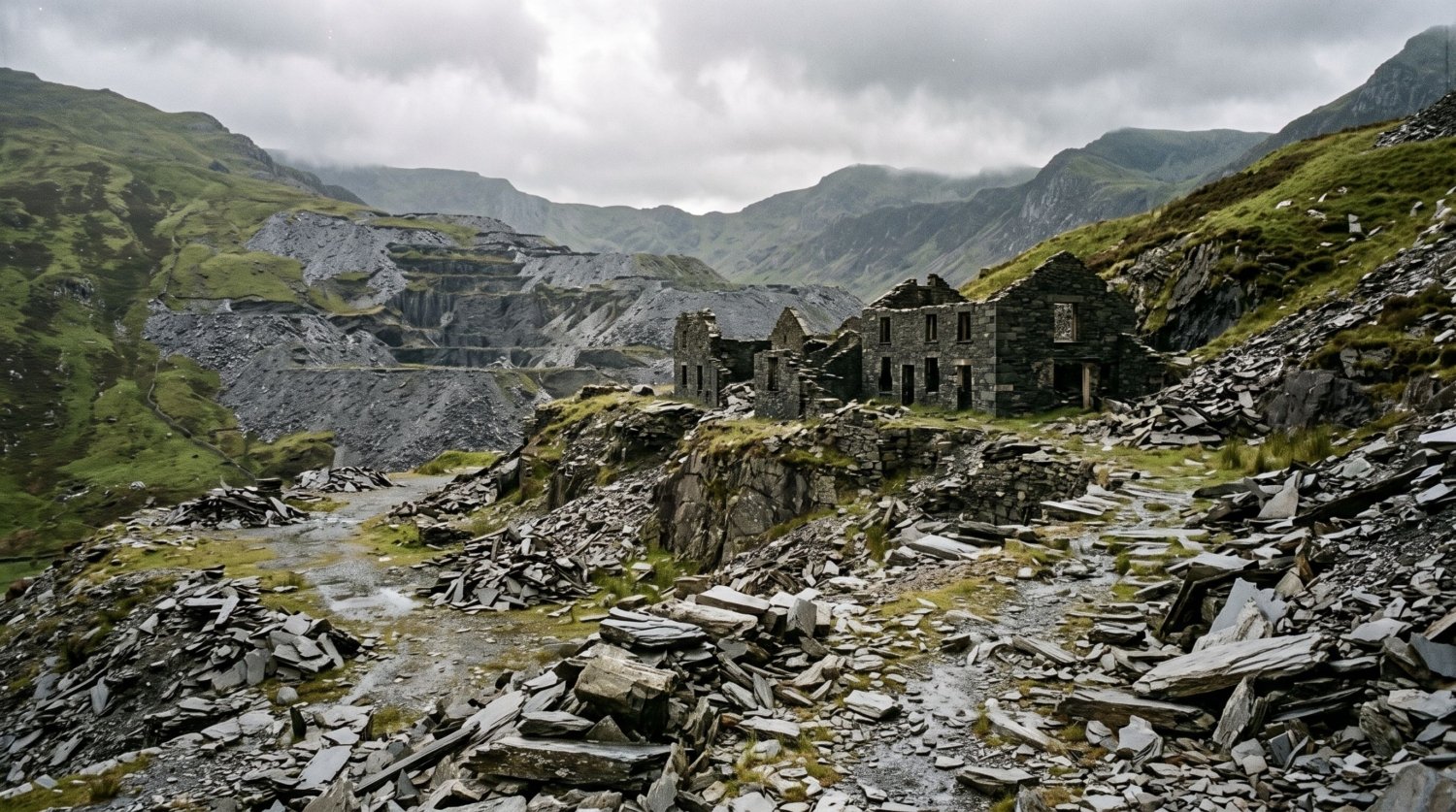
Bryn Eglwys began small: John Pugh took out a lease and started commercial-scale quarrying in 1847. Everything changed in 1863, when Lancashire mill owners the McConnel brothers acquired the operation and poured in the capital and expertise from their cotton business, renaming it the Abergynolwyn Slate Company in 1867. At its peak, more than 300 workers extracted slate from a site that eventually covered almost two square miles, honeycombed with seven underground levels and worked with an innovative rope-and-chain incline system borrowed from techniques used at Penyrorsedd Quarry further north. For close to a century, this one quarry was the economic reason the village existed at all.
The Collapse That Ended a Century of Slate
The quarry had already gone through one shutdown, closing in 1909 before reopening under new ownership in 1911 as the Abergynolwyn Slate & Slab Company. It didn’t get a second reprieve. On 26 December 1946, a serious rockfall collapsed part of the workings that had, by most accounts, been unsafe for some time. Production never resumed. A century of slate extraction that had built the village, paid its wages, and shaped its skyline of spoil terraces ended not with a planned closure but with a single structural failure the week after Christmas.
The human cost of that collapse extended well beyond the quarry gate. The narrow-gauge line that hauled Bryn Eglwys slate down to the coast had been the village’s other lifeline for eighty years — and with the quarry gone, that railway’s own future was suddenly in doubt too.
How a Dying Quarry Railway Became a World First
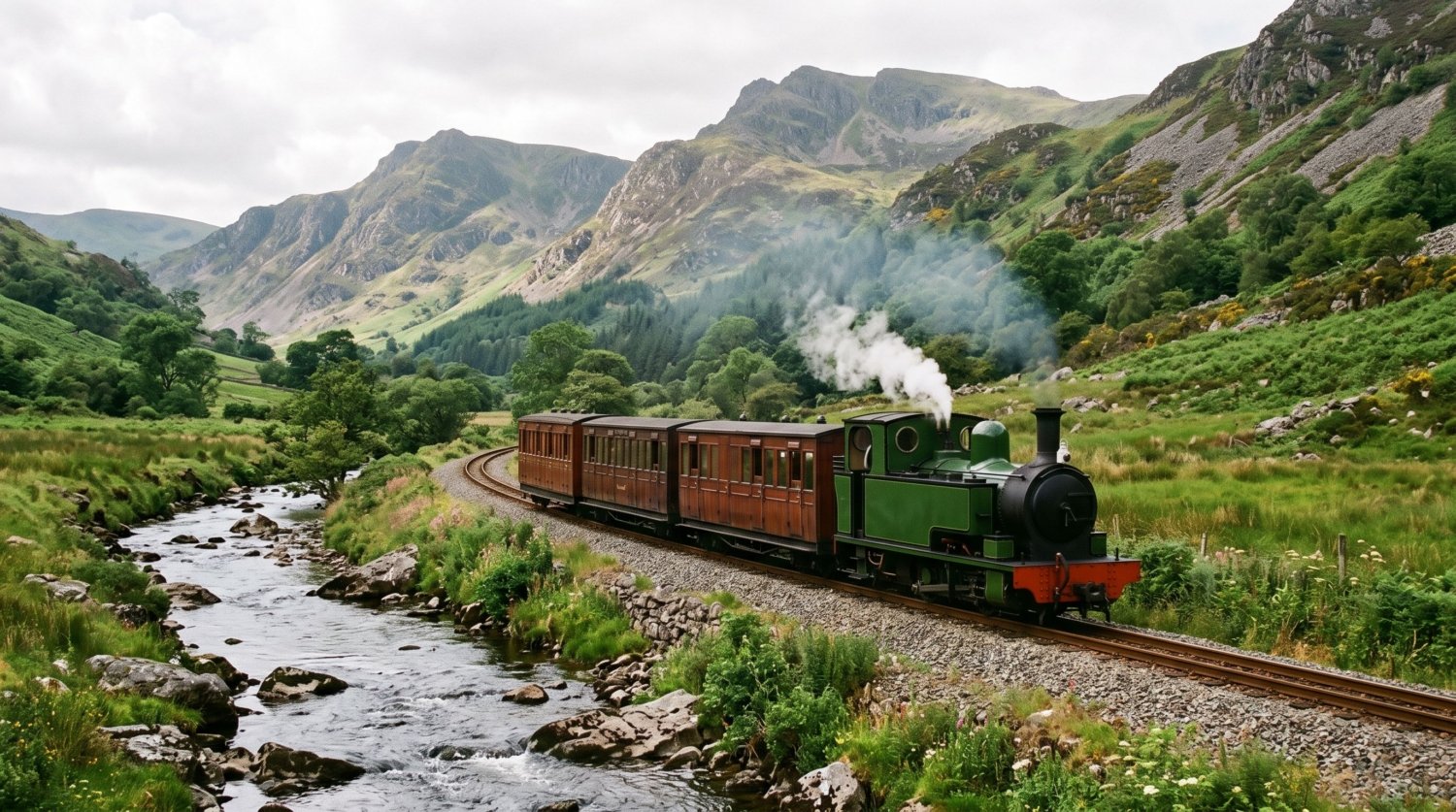
The Talyllyn Railway was built for one reason: moving Bryn Eglwys slate to a wharf at Tywyn for export. Lancashire mill owner William McConnel formed the Aberdovey Slate Company in 1864, commissioned engineer James Swinton Spooner to design the line, and opened it to passengers in December 1866 — slate paid the bills, but the railway carried people from the start. After the 1946 collapse, traffic dwindled to almost nothing, and when the line’s long-time owner, Henry Haydn Jones, died on 2 July 1950, closure looked inevitable.
What happened next is why railway historians know this line at all. Author Tom Rolt wrote to the Birmingham Post proposing a rescue, and the response was strong enough that roughly 70 enthusiasts met on 11 October 1950 to form a preservation committee. Ownership formally transferred to that committee on 8 February 1951, and regular services resumed on 4 June 1951 — making the Talyllyn the first railway in the world preserved and operated as a heritage line by volunteers, a model that has since been copied by preserved railways across Britain and beyond. The line still runs its original 7.25-mile route today, and it’s the reason Abergynolwyn has its own small station rather than just a quarry and a memory.
Why This Corner of the UNESCO Site Stays Quiet
The Slate Landscape of Northwest Wales is made up of six separate component areas, and the Welsh Government’s own inscription announcement names Penrhyn quarry, Dinorwig quarry, the Nantlle Valley, and Ffestiniog as the headline sites, alongside the National Slate Museum at Llanberis and Penrhyn Castle. Abergynolwyn and Bryn Eglwys are the smaller, more southerly component — genuinely part of the same World Heritage listing, but without a dedicated visitor center, a museum, or the marketing budget of its larger siblings. Most visitors who come this way are riding the Talyllyn Railway itself, and plenty of them never actually get off the train in the village. That’s a fair description, not a complaint: Abergynolwyn earns its place on this list through documented history, not through visitor numbers, and it’s worth knowing you’re choosing quiet industrial-heritage walking over a polished museum experience if you come here specifically.
Visiting Abergynolwyn Today
- Getting there: by car via the B4405 off the A487 near Tywyn, or by riding the Talyllyn Railway from Tywyn to Abergynolwyn station.
- Quarry ruins: Bryn Eglwys can be reached on foot from the village, though the site is unmanaged industrial ruin, not a formal trail with signage — sturdy footwear and care around old workings are worth planning for.
- Nearby stop: Dolgoch Falls, a short walk from the Dolgoch station one stop before Abergynolwyn on the same railway line.
- Railway museum: the Talyllyn Railway’s own narrow-gauge museum and main workshops are based at Tywyn Wharf station, at the coastal end of the line, not in Abergynolwyn itself.
- Best season: spring through early autumn, when the Talyllyn Railway runs its fullest timetable.
Frequently Asked Questions
Is Abergynolwyn actually part of the UNESCO World Heritage Site?
Yes. The Bryn Eglwys quarry and its associated railway and settlement fall within the Slate Landscape of Northwest Wales, inscribed by UNESCO on 28 July 2021 as one of the site’s six component areas — it’s simply the least publicized of the six.
Can you actually visit the quarry ruins?
Yes, on foot from the village, but there’s no formal visitor infrastructure, so it should be treated as an unmanaged historic industrial site rather than a maintained tourist trail.
Is the village itself touristy?
No. It’s a working residential village of a few hundred people; the Talyllyn Railway brings visitors through, but there’s no museum, gift shop, or dedicated tourism infrastructure inside Abergynolwyn itself.
What’s the best way to combine this with the rest of the Slate Landscape site?
Abergynolwyn sits well south of Llanberis and Blaenau Ffestiniog, so it’s realistically a separate day rather than a stop on the same loop — best paired with the Tywyn coast and the Talyllyn Railway’s full line rather than rushed alongside the northern quarries.
Abergynolwyn is a reminder that a UNESCO World Heritage listing doesn’t always come with a visitor center or a crowd — sometimes it’s a few hundred people living in houses a Victorian slate company built for their great-great-grandparents, next to a railway that made history twice: once for what it carried, and once for how it was saved. If you’re planning a wider trip through Britain’s industrial-heritage landscapes, our guides to the Bisti Badlands wilderness in New Mexico and the science behind Havasu Falls cover two more places where the real story is underneath the postcard version.