
Italy’s most-searched small towns follow a familiar circuit: the Cinque Terre, Positano, Alberobello, San Gimignano. All genuinely worth seeing, all now built for the volume of people who show up to see them. This guide is about four towns that offer the same basic promise — medieval or Renaissance streets, a real historical claim to fame, a slower pace — without that circuit’s crowds, because for one structural reason or another, each has stayed off it.
Last verified: August 28, 2026.
Sabbioneta lives in the shadow of its own UNESCO co-listing partner, Mantua. Gubbio sits an hour from Assisi and Perugia and draws a fraction of their visitors, according to Umbria’s own 2024 tourism figures. Castelmezzano and Pietrapertosa are two mountain villages connected by a zip-line that most people have still never heard of. Otranto is Italy’s easternmost town and genuinely popular within Italy — it’s here for what it offers that the flashier coastal towns don’t, not because it’s a secret.
The Short Version
| Town | Region | Best For | Car Needed? |
| Sabbioneta | Lombardy | Renaissance urban planning, in miniature | Effectively yes |
| Gubbio | Umbria | Medieval hill town without the Assisi crowds | Helpful, not required |
| Castelmezzano & Pietrapertosa | Basilicata | Mountain scenery and a genuine adrenaline detour | Yes |
| Otranto | Puglia | History (and a coastline) most itineraries skip | No, it has its own train line |
These four don’t share a region, so this isn’t a single-route itinerary — think of each as a worthwhile detour from wherever you’re already headed: Sabbioneta from Mantua or Parma, Gubbio from Assisi or Perugia, Castelmezzano/Pietrapertosa from a Basilicata trip built around Matera, and Otranto from a Salento coast itinerary based in or near Lecce.
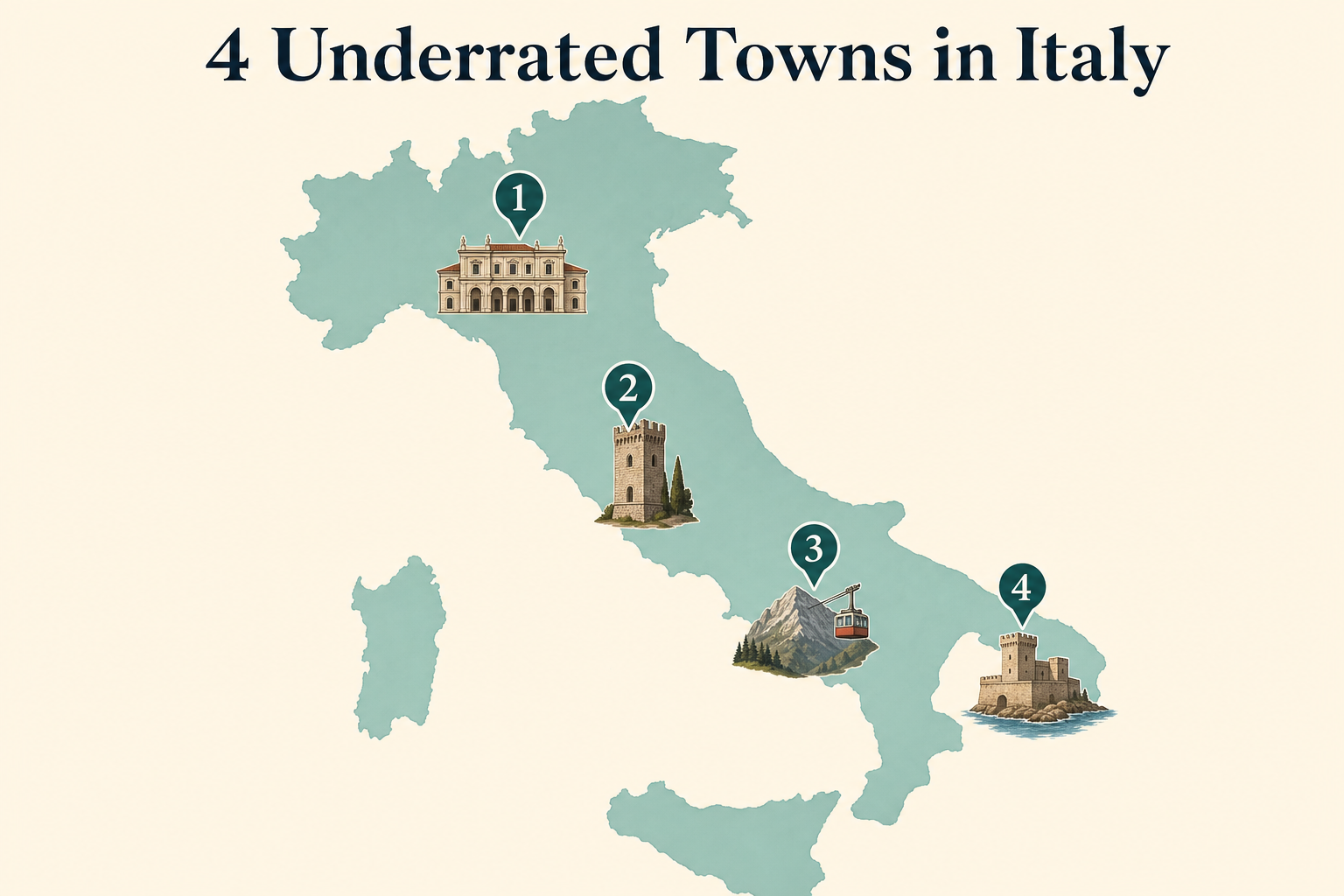
Map key: 1. Sabbioneta • 2. Gubbio • 3. Castelmezzano & Pietrapertosa • 4. Otranto
1. Sabbioneta, Lombardy: The Ideal City Overshadowed by Its Own UNESCO Partner
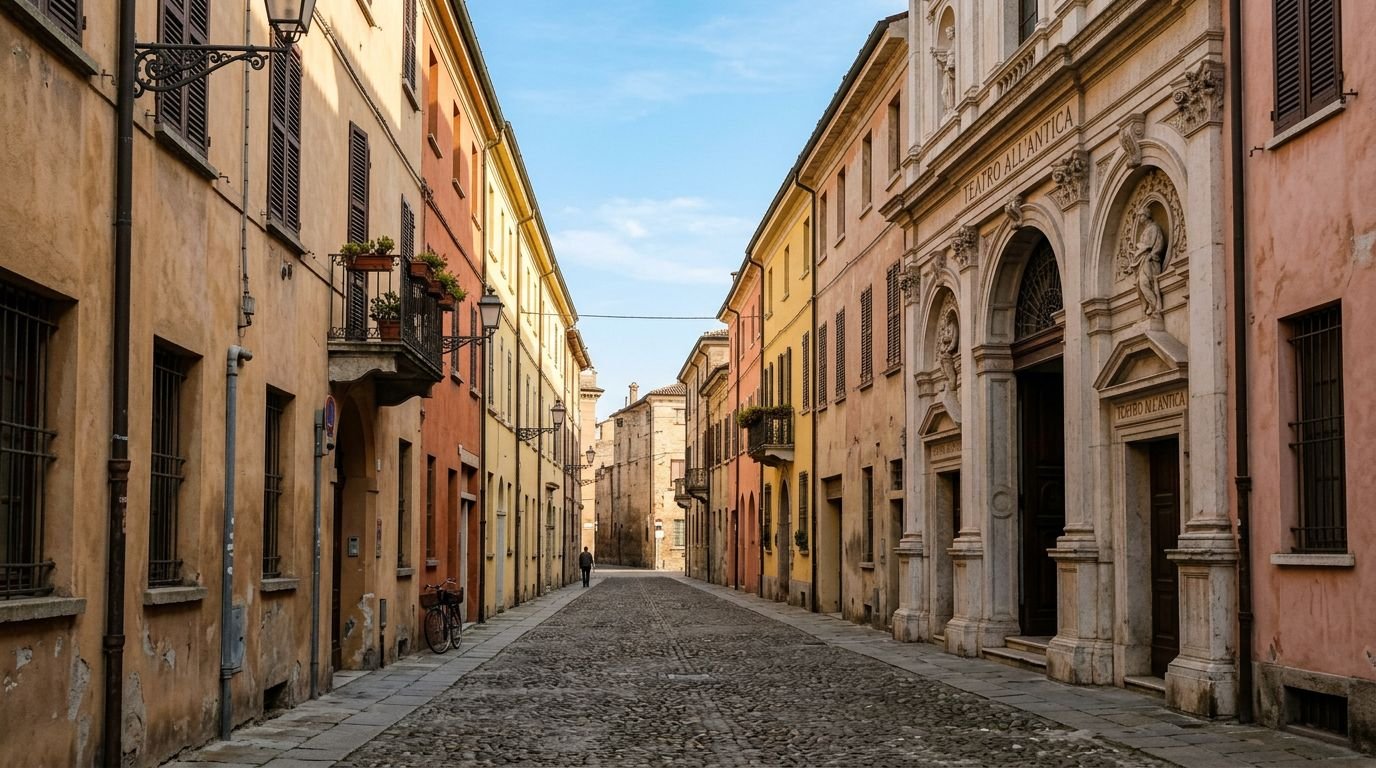
Sabbioneta isn’t a town that grew organically over centuries — it was designed and built essentially from scratch in the second half of the 16th century by Vespasiano Gonzaga Colonna, on a strict grid, inside a star-shaped defensive wall. UNESCO inscribed it jointly with Mantua in 2008, and its own listing text explains why the pairing exists: Mantua shows how an existing medieval city was renewed during the Renaissance, while Sabbioneta shows the opposite case — an entirely new town built in one go according to Renaissance planning ideals. It’s a genuinely rare thing to see intact, and it’s also, structurally, the reason Sabbioneta gets a fraction of Mantua’s name recognition: it shares a UNESCO listing with a much larger, much more visited city 30 kilometers away.
The historic center holds six sites on one combined ticket: the Teatro all’Antica (one of Europe’s first purpose-built, freestanding theaters), the Palazzo Ducale, the Palazzo Giardino and adjoining Galleria degli Antichi, a 16th-century synagogue, and the Museo del Ducato. As of the official ticketing site, the combined ticket runs €20 full / €17 reduced / €8 for ages 13–25, with single-site tickets available for €8–10 if you only want to see one or two buildings. Hours run Tuesday through Sunday, roughly 10am–1pm and 2:30–6pm on weekdays, until 7pm on weekends.
- Nearest larger city: Mantua, about 30 km away.
- Getting there: Sabbioneta has no train station of its own; the nearest stations are Casalmaggiore and Bozzolo, both a further bus or taxi ride away. Regional bus line 17 (APAM) connects from Mantua; line 2812 (TEP) connects from Parma.
- Do you need a car? Realistically, yes. The bus connections exist but are limited to two routes, with no rail link at all — this is the town’s main practical drawback, not a small one if you’re not driving.
- How long to stay: A half day covers the historic center and the six-site ticket comfortably; it’s a stop, not a base — most visitors see it as a detour from Mantua rather than an overnight.
Who Should Skip It?
If you don’t have a car and aren’t willing to plan around a limited regional bus schedule, Sabbioneta is a harder sell than most entries on this list — the payoff is real, but the access friction is the most serious of the four. If you’re already road-tripping through Lombardy or Emilia-Romagna and have an afternoon free near Mantua, it’s a clean, uncrowded add-on with no real competition for your attention once you’re inside the walls.
2. Gubbio, Umbria: The Medieval Hill Town Umbria’s Own Numbers Say Is Overlooked
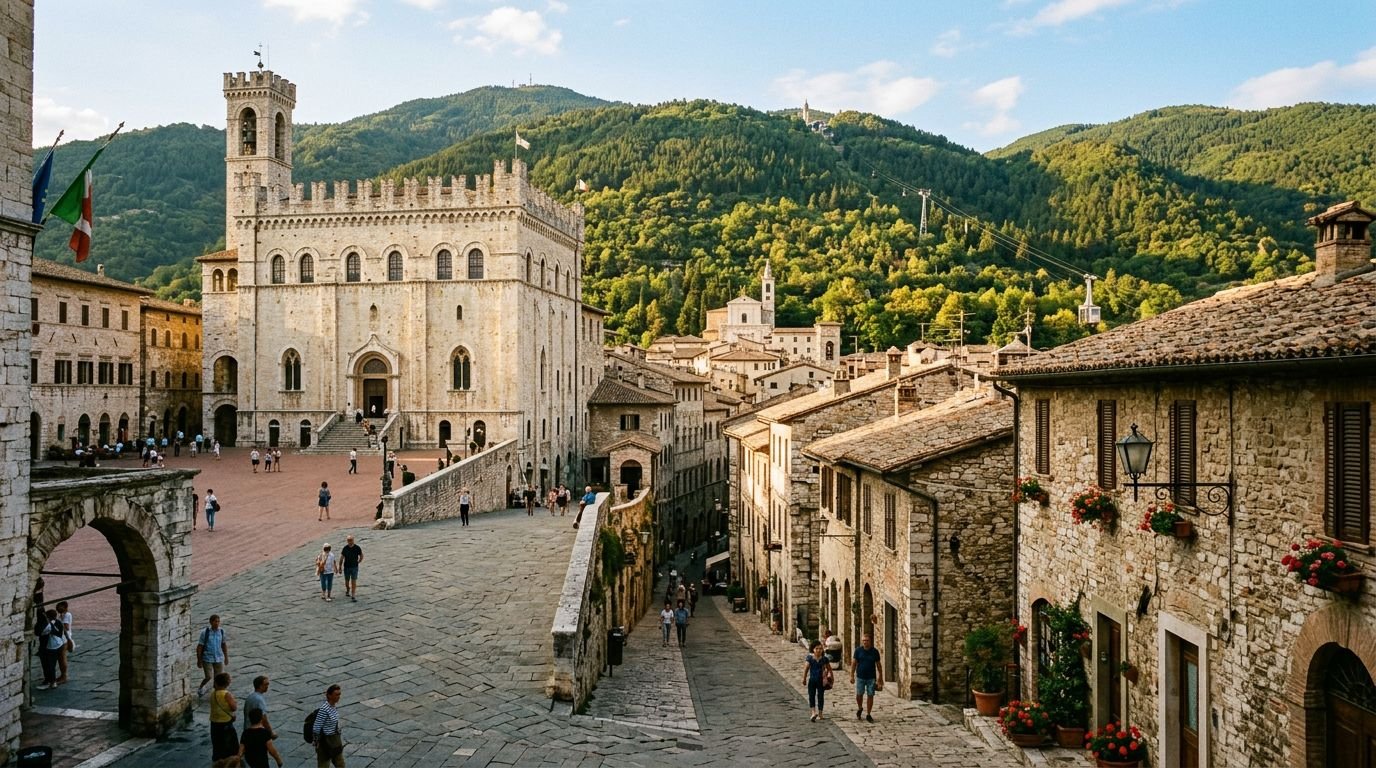
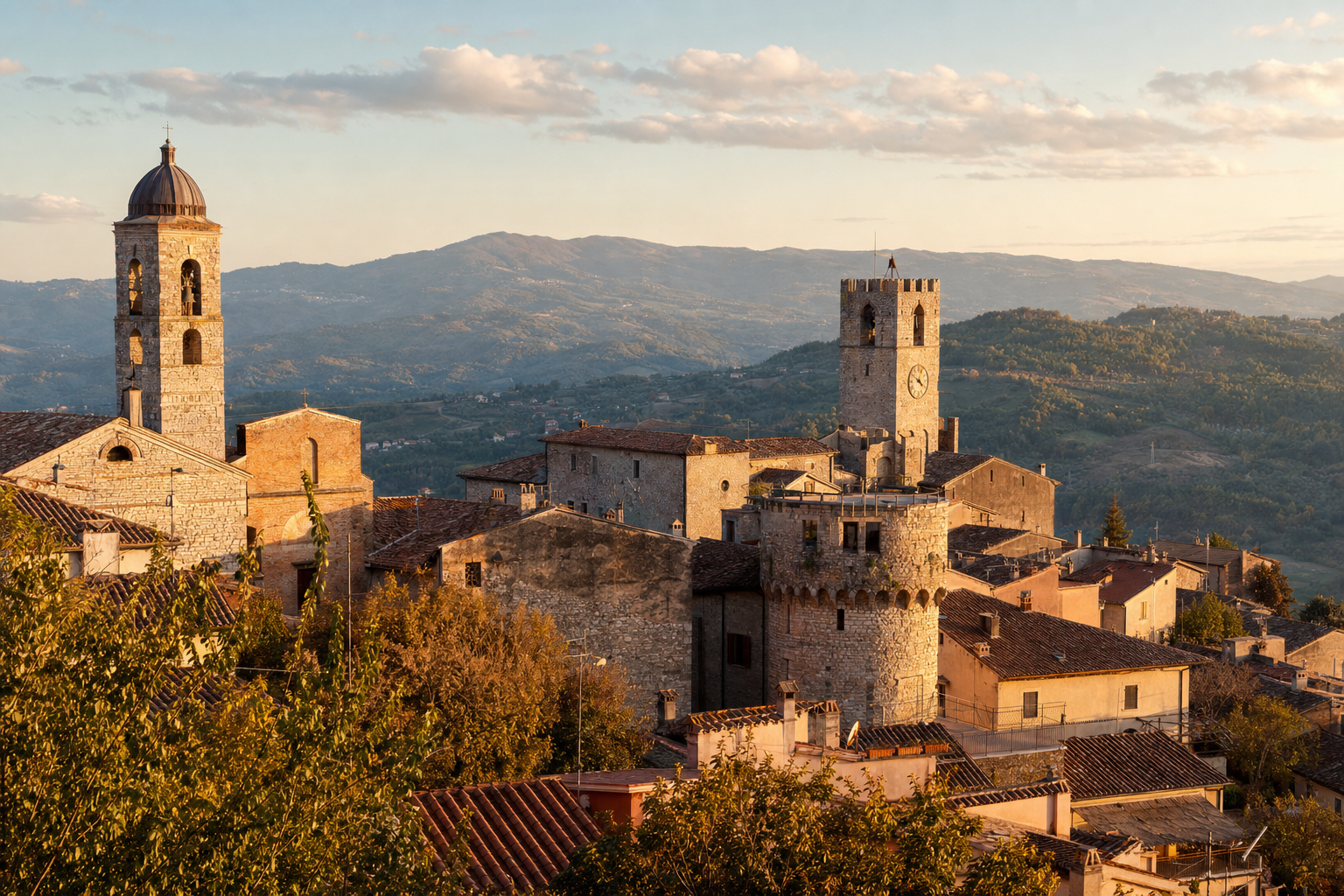
Most people who visit Umbria go to Assisi, Perugia, or Orvieto. Gubbio is the same region’s other major medieval hill town, and Regione Umbria’s own 2024 tourism data makes the gap explicit: Gubbio recorded 143,257 arrivals and 343,021 overnight stays that year, against 686,804 arrivals and 1.6 million overnight stays for Assisi, roughly 519,000 arrivals for Perugia, and even Orvieto — itself often called underrated — pulled in more than 207,000. That’s not a subjective impression; it’s the region’s own reporting.
The town itself has the medieval architecture to justify a visit on its own terms: the Palazzo dei Consoli, built 1332–1338, dominates the main square and now houses the town’s civic museum, including the Iguvine Tablets, among the most important surviving records of the pre-Roman Umbrian language. A cable car (the Funivia Colle Eletto, an open two-person cage rather than an enclosed car) runs up Monte Ingino to the Basilica di Sant’Ubaldo, closed Wednesdays, generally running mid-morning to late afternoon depending on season. Once a year, on May 15, the town runs the Corsa dei Ceri, a centuries-old race in which teams carry three enormous wooden “candles” through the streets and up the mountain — a genuinely singular event if your dates line up, and a completely different, much quieter town if they don’t.
- Nearest larger cities: Perugia and Assisi, both within a manageable regional-bus trip.
- Getting there: Gubbio has no train station of its own; the nearest is Fossato di Vico–Gubbio, with onward bus or taxi into town. Busitalia runs the regional bus network connecting Gubbio to Perugia.
- Do you need a car? Not strictly, but it helps — the bus network works, and a car mostly buys you flexibility rather than access you couldn’t otherwise get.
- Seasonal note: If the Corsa dei Ceri (May 15) matters to you, plan around it deliberately; outside that one day, Gubbio is a calm, unhurried town year-round rather than a seasonal destination with a single peak.
Is It Worth the Detour?
Yes, and the numbers back up why it doesn’t feel that way when you’re there: you’re seeing comparable medieval architecture and history to Assisi with a small fraction of the foot traffic. The honest trade-off is accessibility — no train, and public transit that requires more planning than hopping off a regional line in Assisi or Perugia.
3. Castelmezzano & Pietrapertosa, Basilicata: Two Villages, One Zip-Line, and Very Few Visitors
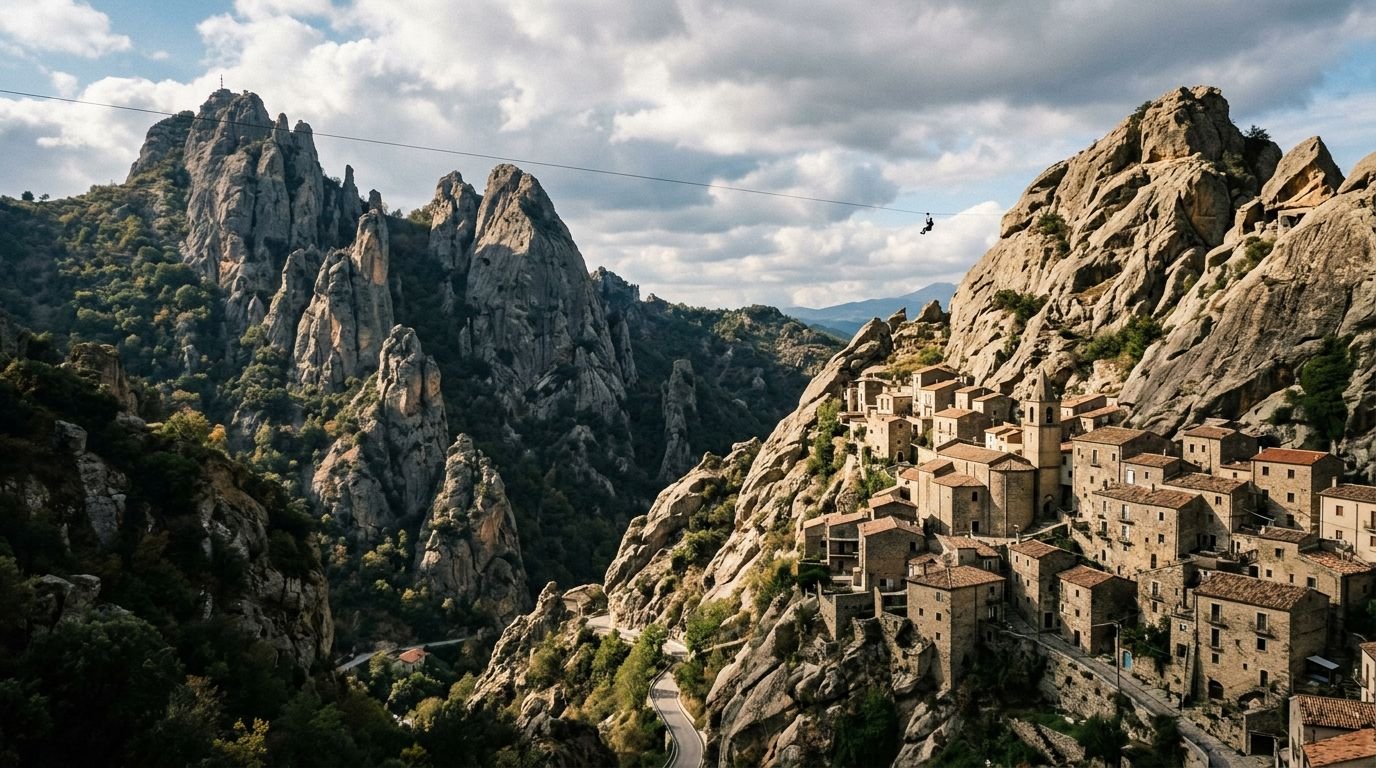
These two villages, each home to fewer than a thousand people, sit on adjacent sandstone spires in Basilicata’s Dolomiti Lucane — a mountain range with no geological relation to the actual Dolomites, named for a passing resemblance. What connects them literally is the Volo dell’Angelo (“Flight of the Angel”): two separate steel-cable lines, the San Martino line running Pietrapertosa to Castelmezzano and the Peschiere line running the return, each over 1.4 kilometers long and reaching speeds authorities put around 110–120 km/h. A single ticket covers both directions plus shuttle transport between the villages; riders must weigh between 35 and 120 kg and be at least 135 cm tall. The season officially runs May through early November, with exact 2026 pricing best confirmed directly through the operator (volodellangelo.com) before you plan a budget around it — published figures vary by source and by year, so this is one detail worth a direct check rather than trusting a fixed number here.
Basilicata’s tourism has been growing quickly, but almost entirely because of Matera: regional data shows Matera’s foreign arrivals up 82% and overnight stays up 56% from 2019 to 2024, well ahead of the region’s overall growth. Castelmezzano and Pietrapertosa sit less than two hours from Matera by car, but the region’s own growth numbers suggest most of that new attention is staying in Matera itself rather than reaching these two villages.
- Nearest larger city: Potenza, the provincial capital.
- Getting there: No rail station serves either village directly. A regional bus (F.lli Renna’s Line 248) runs from Potenza to Pietrapertosa, with a connecting stop for Castelmezzano, but service is infrequent and varies by school-term schedule.
- Do you need a car? Yes, for any reasonably flexible visit. This is the most car-dependent destination on this list.
- Best time to visit: Within the May–November zip-line season if that’s your reason for coming; outside it, the villages themselves are still visitable, just without the main draw running.
Best For
Travelers who already have a car in Basilicata (most likely as part of a Matera trip) and want a genuine outdoor adventure alongside the historical sightseeing. It’s a weaker fit if you’re relying on public transport or want a relaxed, low-effort day — getting here takes real planning, and the zip-line itself requires an advance booking, not a walk-up ticket.
4. Otranto, Puglia: Italy’s Easternmost Town, Popular at Home, Overlooked Abroad
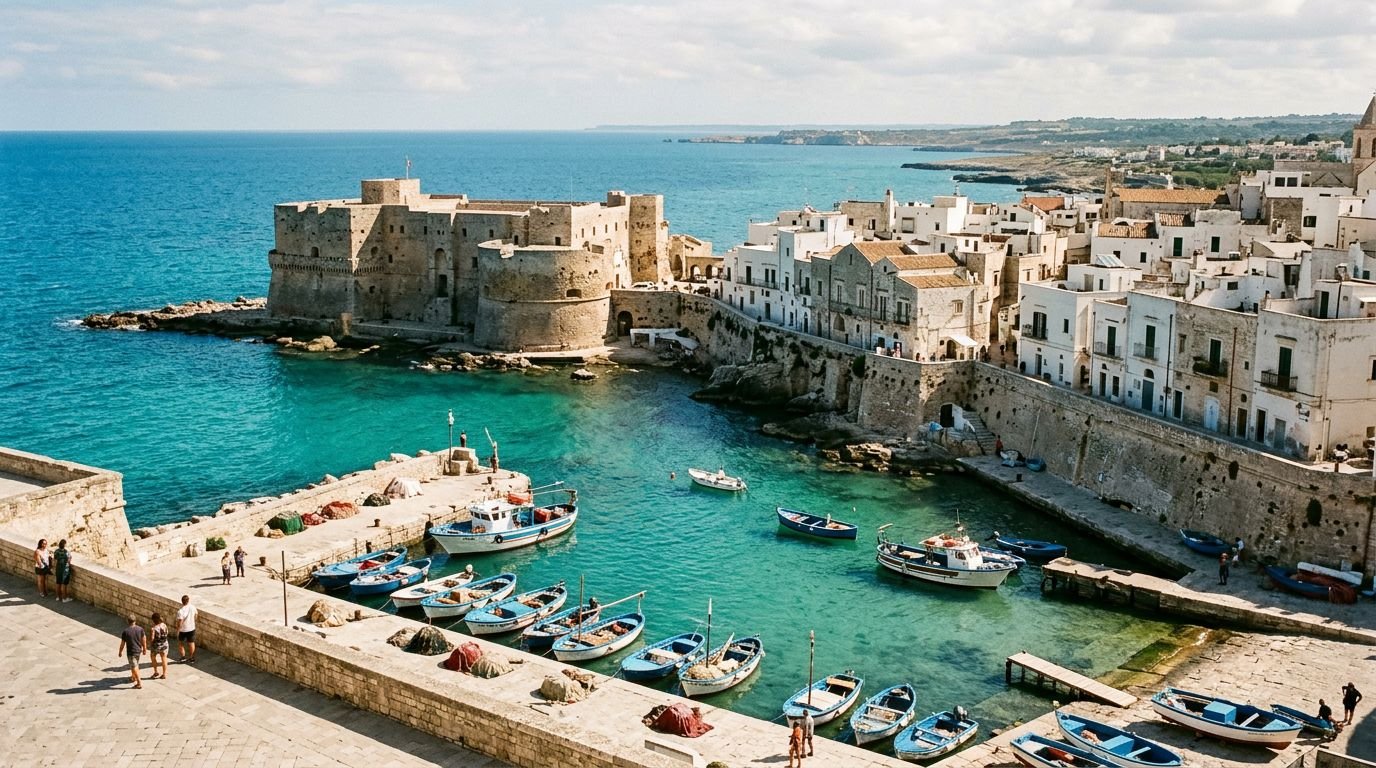
Otranto isn’t hidden, and it shouldn’t be presented as if it were — it’s a well-established stop on the Salento coast for Italian travelers, and Puglia’s tourism numbers have been climbing fast (the region logged over 6.7 million arrivals in 2025, up 13% year over year). What Otranto doesn’t get, compared to Cinque Terre or the Amalfi Coast, is much international attention relative to what it actually offers: it’s the easternmost point in Italy, its cathedral holds a mosaic floor laid between 1163 and 1165 depicting the Tree of Life, biblical scenes, and zodiac imagery across the entire nave, and its 15th-century Castello Aragonese sits at the harbor’s edge, open daily with a straightforward €12 admission. The town also carries a harder history: in 1480, roughly 800 residents were beheaded following an Ottoman siege rather than renounce their faith, a group later canonized as the Martyrs of Otranto by Pope Francis in 2013.
Otranto has its own regional rail line from Lecce (about an hour), which puts it in a different practical category from the other three towns here — you genuinely don’t need a car to reach it or get around its walkable historic core, though one helps if you want to explore the wider Salento coastline.
- Nearest larger city: Lecce, connected by its own regional rail line (roughly an hour).
- Nearest airport: Brindisi, about 90 minutes by car.
- Do you need a car? No, for the town itself — it’s rail-served and walkable. A car adds flexibility for the surrounding coast.
- When to go: July and August are genuinely crowded and priced accordingly, by Puglia’s own tourism board’s description; June and September are the more balanced months, and winter is quiet enough to feel like a different town entirely.
Worth Knowing Before You Go
Come for the history and the cathedral floor specifically, not for solitude in peak summer — Otranto in August is a busy Italian beach town, not a quiet escape. Outside July and August, it’s a legitimately calm, walkable, historically dense stop that most non-Italian visitors to Puglia still skip in favor of Alberobello or the Valle d’Itria.
Planning Around These Four
None of these pair naturally with each other — they’re a Lombardy town, an Umbrian town, a pair of Basilicata villages, and a Puglia town, spread across most of the length of the country. The realistic way to use this guide is one at a time, folded into a trip you’re already taking: Sabbioneta if you’re near Mantua, Gubbio if you’re in Umbria and have already done Assisi, Castelmezzano and Pietrapertosa if you’re driving through Basilicata around a Matera visit, and Otranto if you’re based in Lecce or working your way down the Salento coast. If you’re building out a wider “skip the crowds” itinerary across the rest of the country, our guide to five underrated places in Italy beyond Rome, Florence, and Venice covers a different set of five destinations with no overlap with this list.
Frequently Asked Questions
Which of these four is easiest to visit without a car?
Otranto, by a wide margin — it has its own regional train line from Lecce and a walkable historic center. Gubbio is manageable by regional bus with more planning. Sabbioneta and Castelmezzano/Pietrapertosa are both realistically car trips.
Are any of these actually crowded at certain times of year?
Otranto is, in July and August specifically — it’s a genuine Italian beach-holiday destination in peak summer, not an undiscovered one. Gubbio has a single very busy day, May 15, for the Corsa dei Ceri. Sabbioneta and the two Basilicata villages don’t have a comparable single peak.
Can I visit more than one of these in a single trip?
Only if your trip already spans that much of Italy. They sit in four different regions with no efficient route connecting them, so this works better as four separate detours from four separate base trips than as one combined itinerary.
Is the Volo dell’Angelo the only reason to visit Castelmezzano and Pietrapertosa?
It’s the main draw and the reason most people plan a special trip, but both villages are worth walking through on their own architectural and scenic terms even outside the May–November zip-line season, if you’re already in the area.
Research & Sources
This guide was compiled through desk research using official and primary sources rather than an in-person visit. Key sources used:
- Sabbioneta: UNESCO World Heritage Centre — Mantua and Sabbioneta; Visit Sabbioneta, official ticketing site; Mantova Sabbioneta UNESCO, official transport information.
- Gubbio: Regione Umbria, 2024 tourism arrivals/overnight-stay data; Umbria Tourism, official regional tourism board; Ceri.it, official Corsa dei Ceri site.
- Castelmezzano & Pietrapertosa: Comune di Pietrapertosa — Il Volo dell’Angelo, official description; Regione Basilicata, official tourism and press updates; F.lli Renna, regional bus operator.
- Otranto: Regione Puglia official tourism portal — Otranto; Italian Ministry of Culture — Castello di Otranto; Comune di Otranto, official municipal site; Regione Puglia, 2025 tourism arrivals data.
Prices, hours, and transport schedules above reflect the most recent information available at the time of research and can change — particularly the Volo dell’Angelo’s current pricing, which is best confirmed directly with the operator before booking.